
Loading, please wait...
LOT 0485
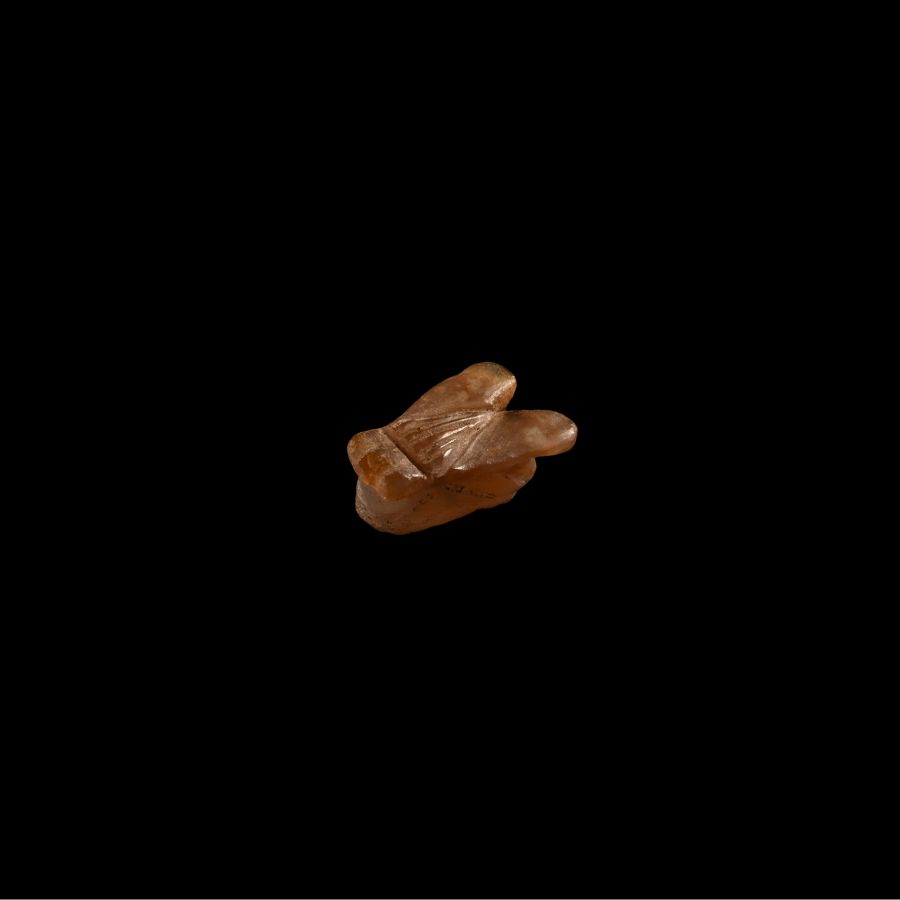
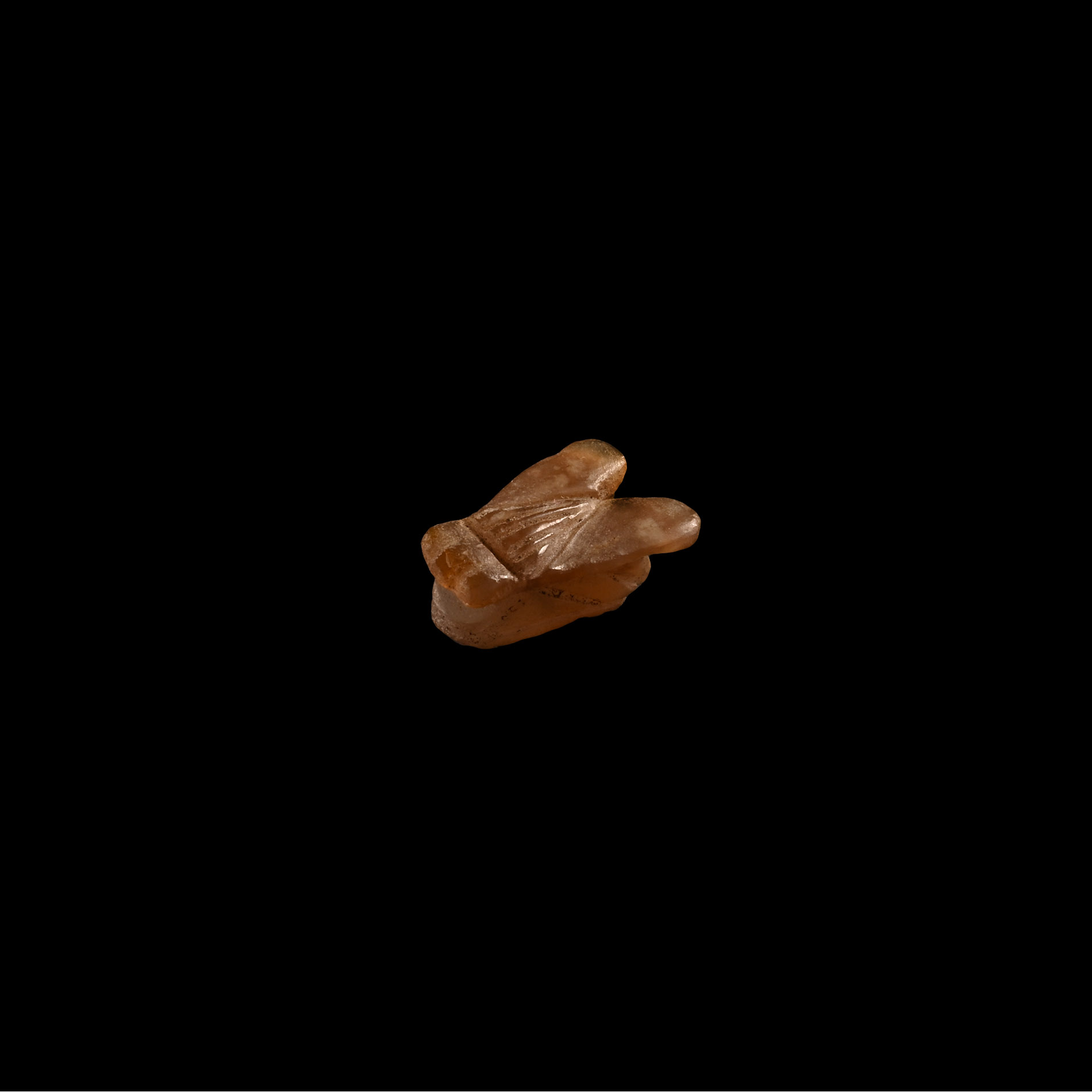
Egyptian Stone Fly Amulet
LATE PERIOD, 664-525 B.C.
1/2 in. (0.85 grams, 14 mm).
A carnelian fly amulet with simple stylised detailing to the body, legs and head; drilled for suspension.
ProvenanceFrom an early 20th century UK collection.
CONDITIONTimeLine Auctions follows a vetting process to ensure the authenticity and legality of all items, reinforcing our commitment to integrity and responsible trading. Each antiquity, antique, and coin lot undergoes thorough examination by a vetting committee of at least ten external specialists, professional trade association members, scientists, and archaeologists: Our Vetting Process
AUCTIONS:
TimeLine is a leading auction house specialising in antiquities, ancient art, collectables, natural history, coins, medals, and books. Our auctions offer museums, collectors, historians, and enthusiasts the opportunity to acquire unique and historically significant pieces.
-
Egyptian Glass Anubis Head Inlay
Late Period, 664-332 B.C.Sold for (Inc. bp): £572
An opaque black glass inlay in the form of the head of Anubis in jackal form; repaired. 19.2 grams, 58 mm high
French collection, 1960s-early 2000s. From an important Paris gallery, France. -
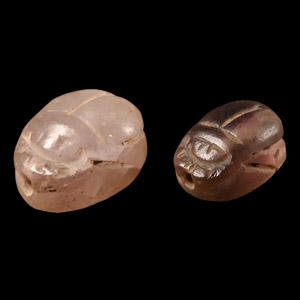
Egyptian Agate Scarab Group
Graeco-Roman Period, 332 B.C.-323 A.D.Sold for (Inc. bp): £364
A group of two carved agate scarabs, pierced for suspension; simple detailing to the wings, heads and legs. 1.6 grams total, 9-11 mm
Acquired 1980s. Private collection of L.H., Staffordshire, UK. Property of a Sussex, UK, teacher. -
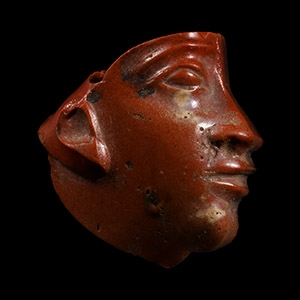
Egyptian Red Glass Face Inlay
Ptolemaic Period, circa 332-32 B.C.Sold for (Inc. bp): £3,640
A red glass insert of a profile face with remains of a pharaonic crown to the forehead. 16.7 grams, 31 mm wide
Ex Joseph Altounian (1889-1954), Paris and Macon, thence by decent. with Christie's, London, 3 July 2018, lot 29. English private collection. This lot has been checked against the Interpol Database of stolen works of art and is accompanied by search certificate no.11603-199738.
Joseph Altounian opened his shop in 1906 in Paris and then relocated to Mâcon in 1924 when he was joined by his wife Henriette Lorbet. They specialised in Egyptian and Greek art, medieval sculpture and decorative arts, selling to major museums both in Europe and in the United States. At his death in 1954 the business was taken over by his daughter, Jacqueline Altounian-Lorbet, and her husband Bernard Rousset, who then specialised in antique furniture.
