
Loading, please wait...
LOT 0449
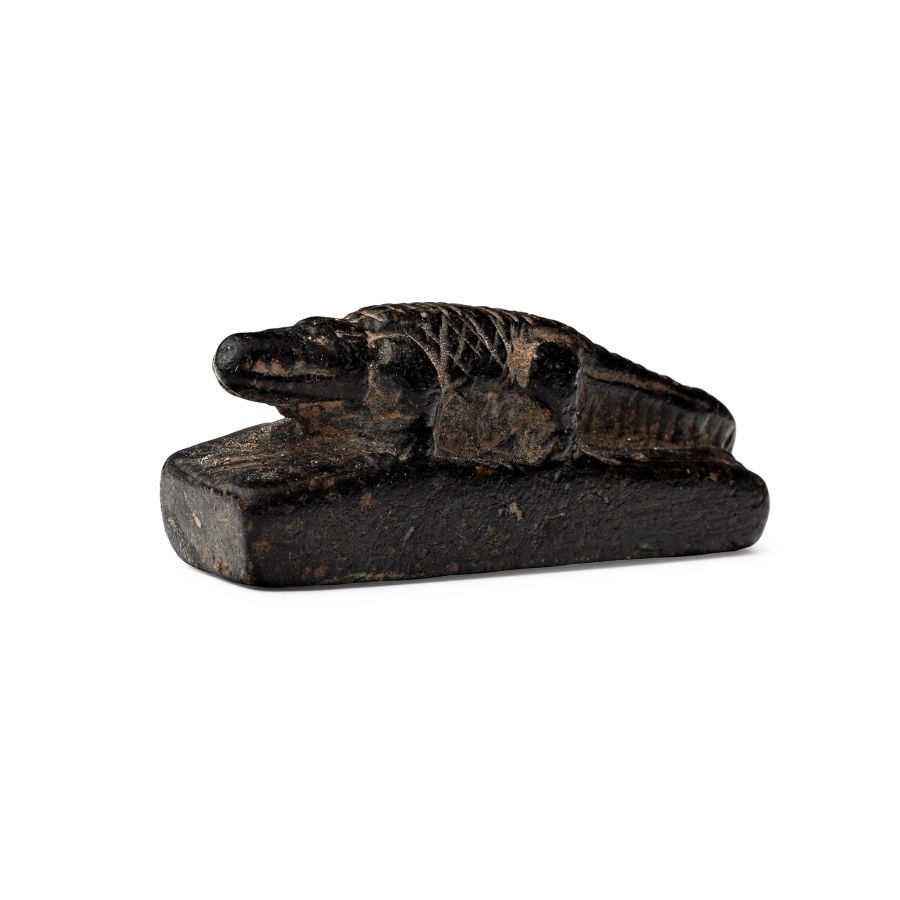
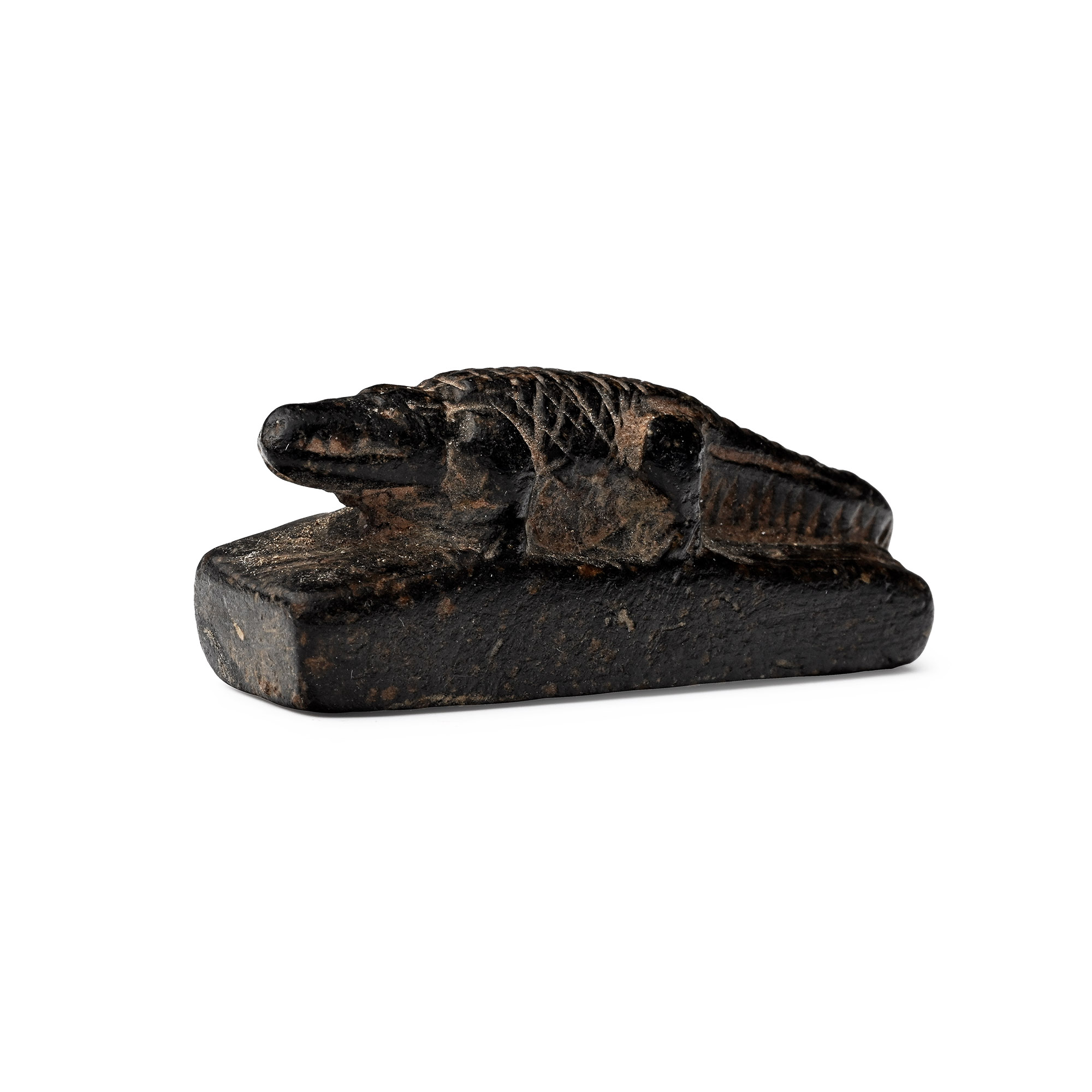
Egyptian Stone Crocodile Amulet
LATE PERIOD, 664-332 B.C.
1 3/4 in. (17.8 grams, 46 mm).
Gently trapezoidal plinth with the finely detailed figure of a crocodile on top. [No Reserve]
ProvenanceFrom a UK dealer since the 1970s.
From an old London, UK, collection since circa 1985.
This lot is accompanied by an illustrated lot declaration signed by the Head of the Antiquities Department, Dr Raffaele D'Amato.
Crocodile amulets represent the god Sobek - a complex Egyptian god embodying both destructive and creative forces. As the god of the Nile, fertility, and water, he played a vital role in agriculture and the land's prosperity. Sobek was revered for his dual nature as a protector and life-giver, particularly in times of war or need. His strength and protective qualities were essential to daily life and the Egyptians’ understanding of the cosmos, leaving a lasting impact on their culture.
CONDITIONTimeLine Auctions follows a vetting process to ensure the authenticity and legality of all items, reinforcing our commitment to integrity and responsible trading. Each antiquity, antique, and coin lot undergoes thorough examination by a vetting committee of at least ten external specialists, professional trade association members, scientists, and archaeologists: Our Vetting Process
AUCTIONS:
TimeLine is a leading auction house specialising in antiquities, ancient art, collectables, natural history, coins, medals, and books. Our auctions offer museums, collectors, historians, and enthusiasts the opportunity to acquire unique and historically significant pieces.
-
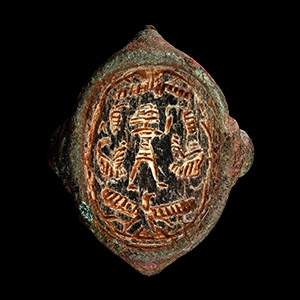
Phoenician Scarab in Bronze Pendant
6th-4th century B.C.Sold for (Inc. bp): £351
With integral loop and flanking uraei, underside features reserved depictions of a winged sun disc, with central human or divine figure below flanked by uraei and quadrupeds, and a vulture with outspread wings beneath; accompanied by a museum-quality impression. 9.06 grams, 22 mm
Ex London, UK, gentleman 1980-2000s. This lot is accompanied by an illustrated lot declaration signed by the Head of the Antiquities Department, Dr Raffaele D'Amato. -
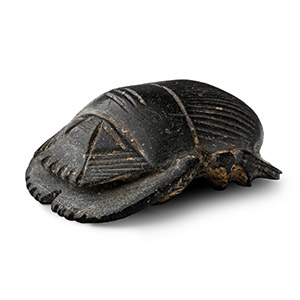
Egyptian Hardstone Heart Scarab
Late Period, 664-332 B.C.Estimate: £500 - 700 (+bp*)
Opening Bid: £250
With stylised geometric ribbed carapace and underside. 16.6 grams, 33 mm
From an early 20th century collection. Ex London, UK, gallery. From a private UK collection This lot is accompanied by an illustrated lot declaration signed by the Head of the Antiquities Department, Dr Raffaele D'Amato.
The scarab amulet was one of ancient Egypt’s most widespread symbols, signifying rebirth, transformation, and protection. Modelled on the dung beetle associated with the sun god Khepri—believed to roll the sun across the sky—it symbolised the cycle of life and renewal. Widely used from the early Middle Kingdom onwards, scarabs served as funerary amulets (as here), personal charms, and seals, often inscribed with prayers or names. They reflect both spiritual beliefs and daily life in ancient Egypt. -
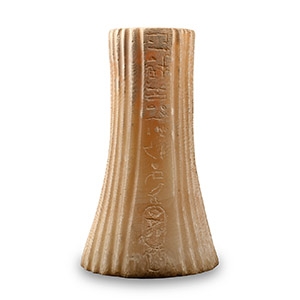
Egyptian Alabaster Headrest Pillar with Hieroglyphic Inscription
Old Kingdom, 5th-6th Dynasty, 2494-2181 B.C.Sold for (Inc. bp): £1,950
Formed as a carved cone with fluting to the vertical face; plain panel with incised hieroglyphic text and cartouche; one part of a head-rest assembly. 628 grams, 12 cm
Private collection of Mr A., Montreal, acquired in the early 1980s. Private collection, Switzerland, acquired from the above in 1993. Thence by descent, family collection, from the late 1990s. This lot has been checked against the Interpol Database of stolen works of art and is accompanied by a search certificate number no.12849-241633. This lot has been cleared against the Art Loss Register database, and is accompanied by an illustrated lot declaration signed by the Head of the Antiquities Department, Dr Raffaele D'Amato.
