
Loading, please wait...
LOT 0047
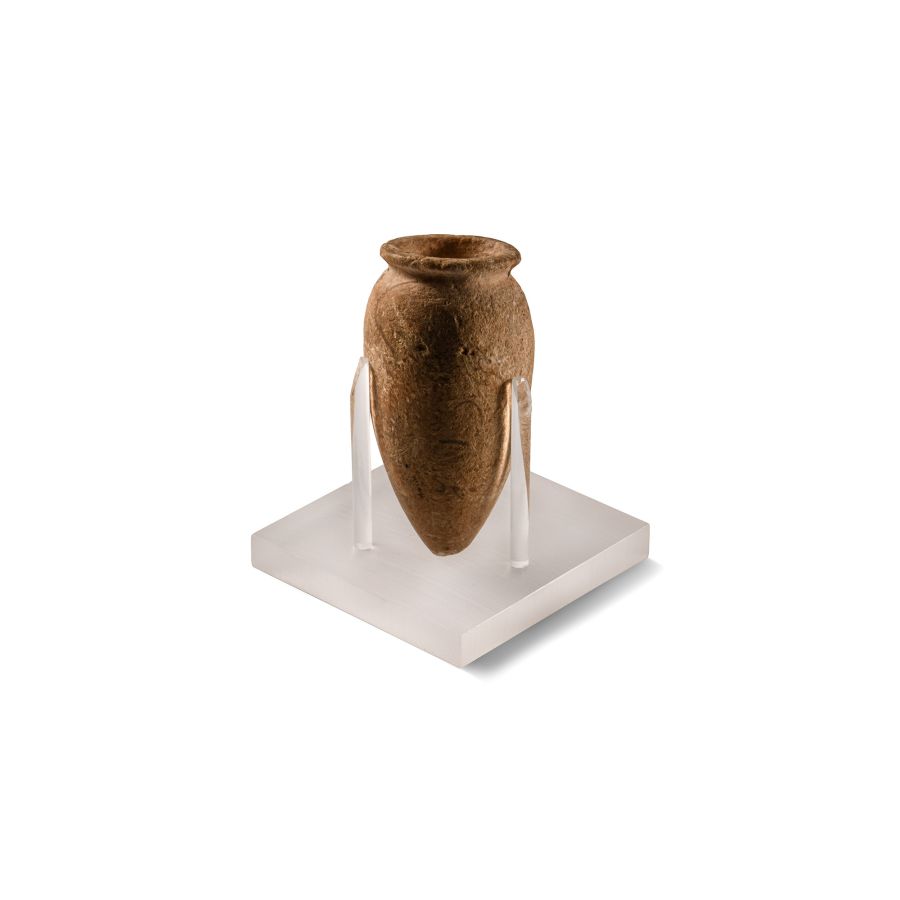
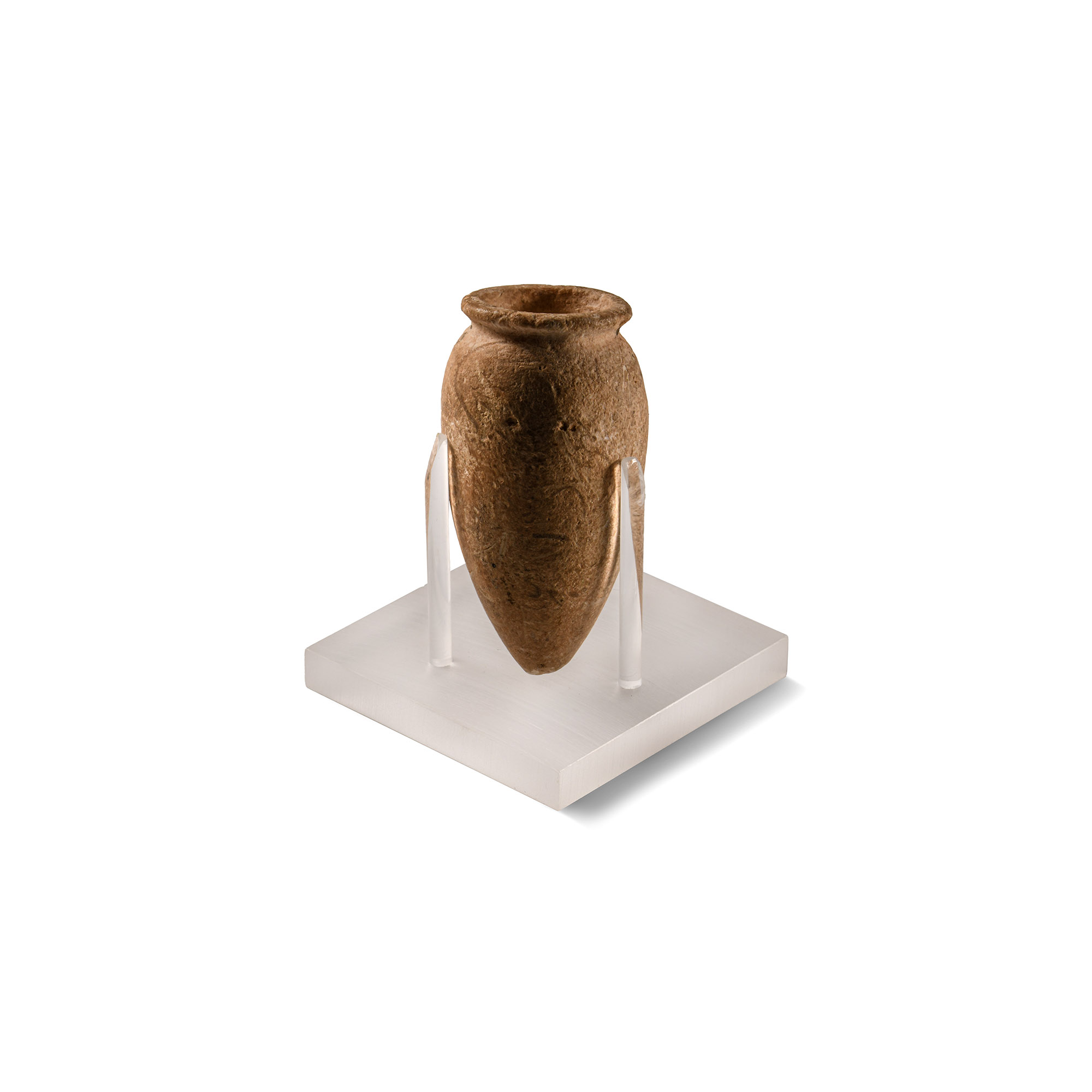
Egyptian Stone Alabastron
LATE PERIOD, 664-332 B.C.
1 7/8 in. (2 1/8 in.) (34.2 grams, 48 mm high (48.9 grams, 55 mm including stand)).
The body with rounded shoulders, convex outer face and pointed base, everted rim; accompanied by a custom-made display base.
ProvenanceAcquired in Europe before 1994.
European collection.
TimeLine Auctions follows a vetting process to ensure the authenticity and legality of all items, reinforcing our commitment to integrity and responsible trading. Each antiquity, antique, and coin lot undergoes thorough examination by a vetting committee of at least ten external specialists, professional trade association members, scientists, and archaeologists: Our Vetting Process
AUCTIONS:
TimeLine is a leading auction house specialising in antiquities, ancient art, collectables, natural history, coins, medals, and books. Our auctions offer museums, collectors, historians, and enthusiasts the opportunity to acquire unique and historically significant pieces.
LOT 0047
Egyptian Stone Alabastron
Estimate £400 - 600€460 - 700 (for guidance only)$540 - 810 (for guidance only)
-
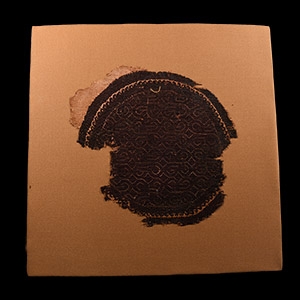
Egyptian Mounted Coptic Textile
Circa 5th-7th century A.D.Sold for (Inc. bp): £72
Composed of a medallion (orbiculus) decorated with geometric interlaced patterns on a purple background, framed by a minute recurring spiral, surrounded by an external circle. 149 grams, 36.5 x 36.5 cm
Acquired 1970s-1996. Property of a North American collector. London collection, 2016.
Tapestry technique on natural linen. It is highly probable that this tapestry was part of a tunic decoration, an orbiculus, medallion in purple applied to the shoulders and the lower part of the garment, front and back. -
.jpg)
Egyptian Alabaster Trussed Duck
Old Kingdom, 6th Dynasty, circa 2345-2181 B.C.Estimate: £10,000 - 14,000 (+bp*)
Opening Bid: £5,000
Carved dressed and ready for consumption, with a plump, stylised form, head and neck resting along the animal's breast, simple linear incising delineating two folded wings to either side, circular recesses for eyes; mounted on a custom-made display stand; cleaned. 354 grams, 12.2 cm (893 grams total including stand)
Acquired before 1970. Private French collection. with Bonhams, New Bond Street, London, 29 April 2009, lot 58. Ex Middle Eastern royal family, living in the UK, 2013-2017. Accompanied by a copy of a French cultural passport no.099505. This lot has been checked against the Interpol Database of stolen works of art and is accompanied by search certificate number no.11841-206397. -
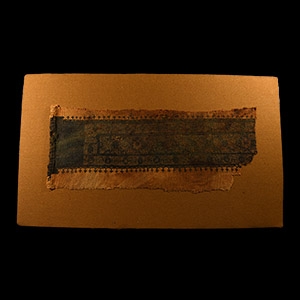
Egyptian Mounted Coptic Textile with Crenellated Blossoms
Circa 5th-7th century A.D.Sold for (Inc. bp): £78
Part of a tunic, the rectangular segment in yellow and green linen and wool, the central part decorated with interlaced geometric motifs, surrounded by an edge of similar motifs and border edged of crenellated blossoms. 264 grams, 64 x 37 cm
Acquired 1970s-1996. Property of a North American collector. London collection, 2016.
Among the many fragments from wool tunics are several long strips that match to form nearly full-length central pectoral clavi. They are patterned with a profusion of small figures or interlaced abstract designs, birds, plants and animals with a contrasting border filled with geometric motifs.
