
Loading, please wait...


LOT 0406
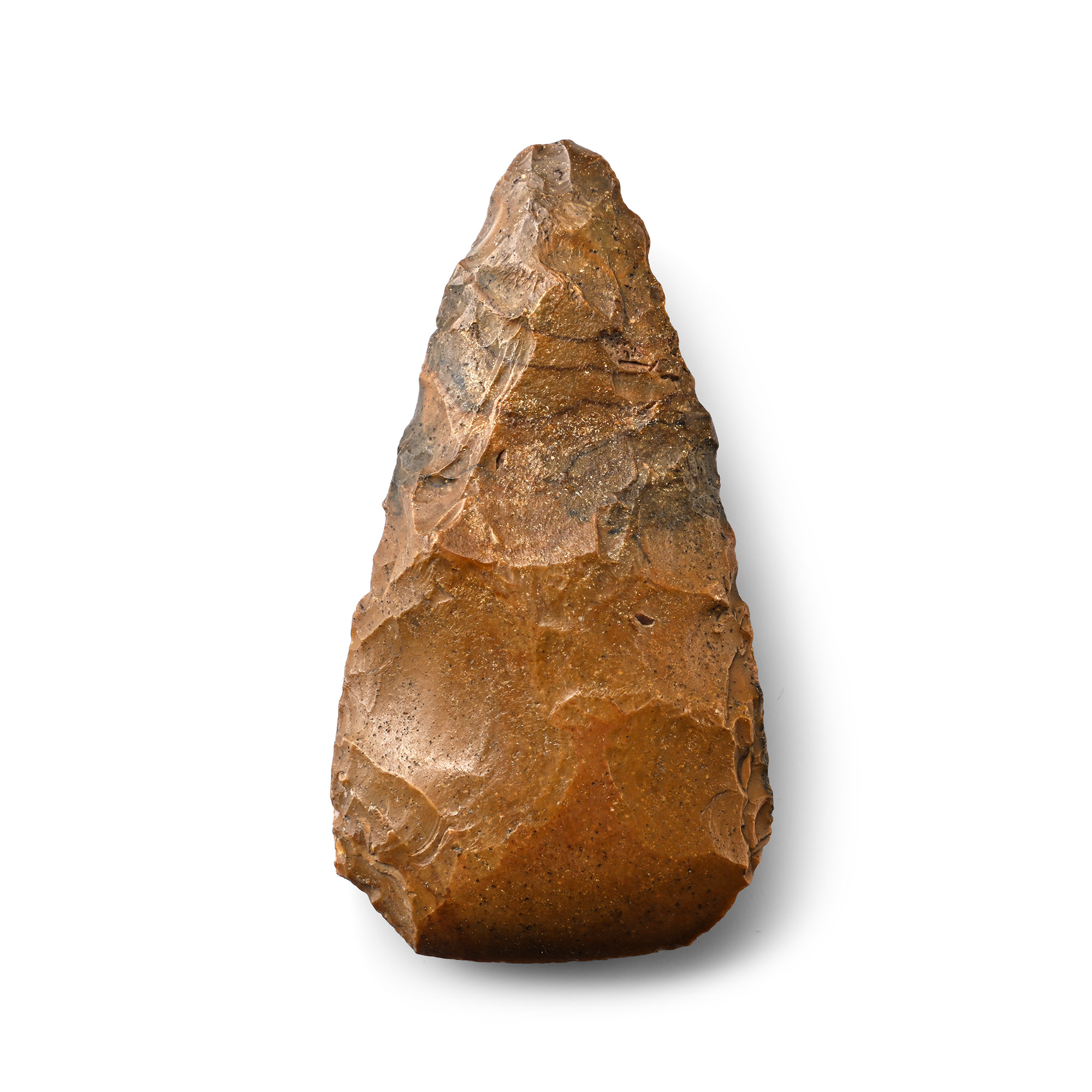
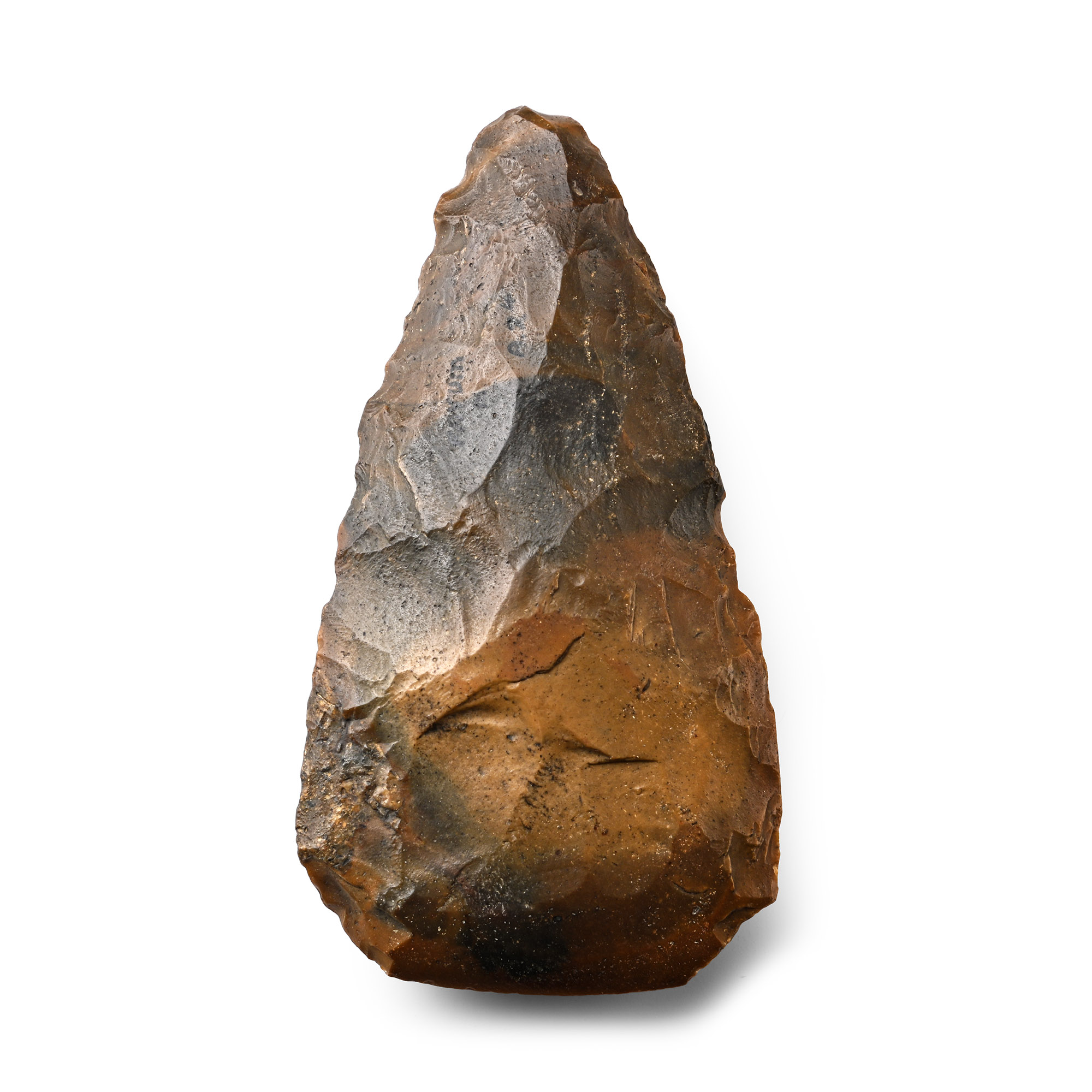
Egyptian Stone Age Polished Knapped Axehead
NEOLITHIC PERIOD, 11,000-5,200 B.P.
3 3/8 in. (58.3 grams, 86 mm).
Teardrop-shaped flint, featuring a classic, symmetrical lanceolate plan, tapering to a point at one end and a wider basal end. [No Reserve]
ProvenanceFound at Fayum North.
From the collection of A.D. Passmore (1879-1958), his collection of flints from the area of Stonehenge was donated to the Ashmolean Museum in the 1950s.
From the private collection of Peter Clayton, FCILIP, Dip, Arch, FSA, FRNS, Hemel Hempstead, Hertfordshire, UK; formed since the late 1950s.
Accompanied by a copy of an old handwritten information card by Peter Clayton.
TimeLine Auctions follows a vetting process to ensure the authenticity and legality of all items, reinforcing our commitment to integrity and responsible trading. Each antiquity, antique, and coin lot undergoes thorough examination by a vetting committee of at least ten external specialists, professional trade association members, scientists, and archaeologists: Our Vetting Process
AUCTIONS:
TimeLine is a leading auction house specialising in antiquities, ancient art, collectables, natural history, coins, medals, and books. Our auctions offer museums, collectors, historians, and enthusiasts the opportunity to acquire unique and historically significant pieces.
LOT 0406
Egyptian Stone Age Polished Knapped Axehead
Estimate £100 - 140€120 - 160 (for guidance only)$140 - 190 (for guidance only)
-
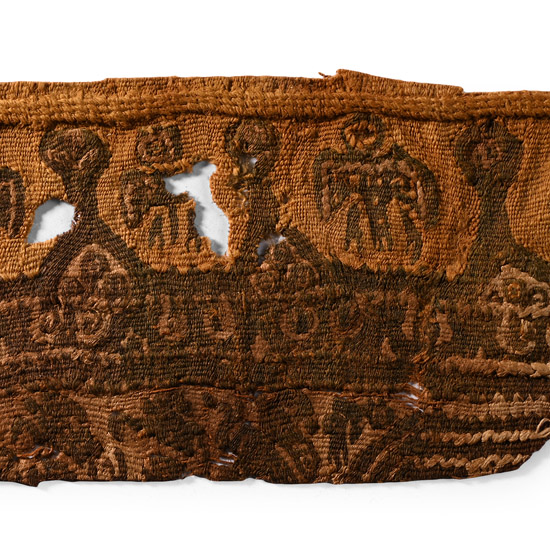
Egyptian Coptic Tunic Textile Fragment of a Segmentum with Eagles and Other Birds
Circa 7th century A.D.Estimate: £50 - 70 (+bp*)
Bids: 1 | Current Bid: £5
Fragment of a large segmentum in linen and wool, embroidered with rows of eagles and other birds, the borders with geometric decorations. 8 grams, 19 cm
Acquired 1970s-1996. Property of a North American collector. London collection, 2016.
The segment is realised in the tapestry technique. They were part of the decoration of a tunic, and the presence of the Imperial eagle, not a common pattern, could refer to a military tunic. -
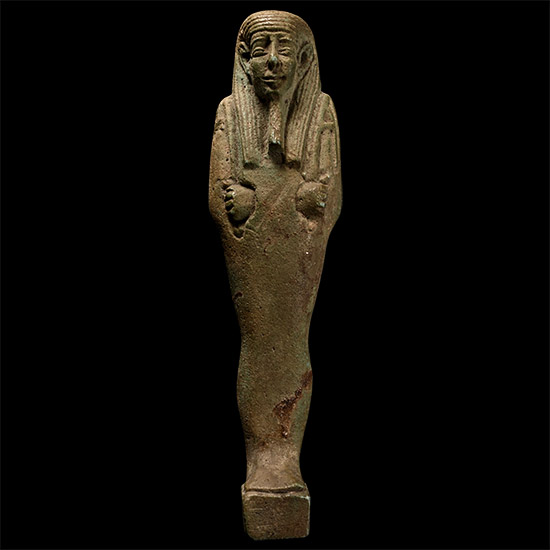
Egyptian Green Glazed Faience Shabti
Late Period, 664-332 B.C.Estimate: £1,000 - 1,400 (‡+bp*)
Opening Bid: £550
Modelled with a slender mummiform body on a small rectangular base; the long face framed by a striated tripartite wig and false beard; the hands of the imperceptibly crossed arms hold a hoe and a pick; the right hand also holds a cord from which a seed bag hangs over the figure's back; a dorsal pillar on the reverse; uninscribed. 102 grams, 14 cm
Ex Ms.E.C.(1923-2014), Israel. Inherited by his son D.L., Switzerland.
Although uninscribed, the distinctive long face, manner of hand styling and long striated wig lappets suggest that it may come from the same mould as another shabti in the World Museum, Liverpool (Janes, G., The Shabti Collections 6: A Selection from the World Museum, Liverpool, Lymm, 2016, p. 501, no. 264b). -
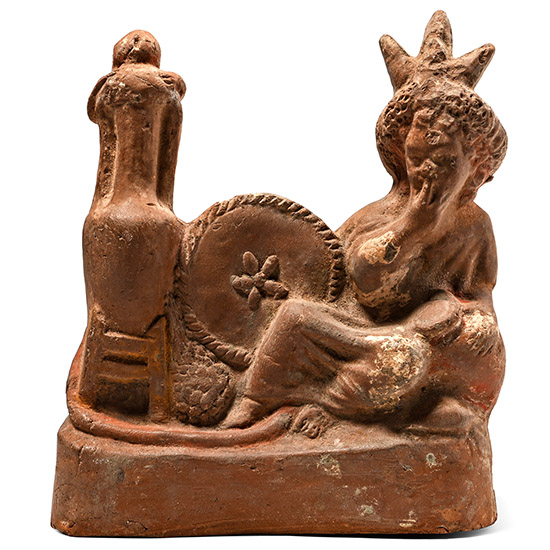
Romano-Egyptian Terracotta Figure of Seated Harpocrates
Alexandria, 1st century A.D.Estimate: £500 - 700 (‡+bp*)
Opening Bid: £275
Hollow-formed and moulded in the half-round, reclining figure with wreath and diadem, amphora and other items; hollow to the underside. 236 grams, 12.4 cm
The Erotica Collection of Christian von Faber-Castell, Küsnacht ZH, Switzerland; acquired in November 1997 or 1998 from Galerie Puhze, TEFAF Basel, no.137. with Jean-David Cahn Auktionen AG, Basel, 9 November 2013, no.66.
