
Loading, please wait...


LOT 0454
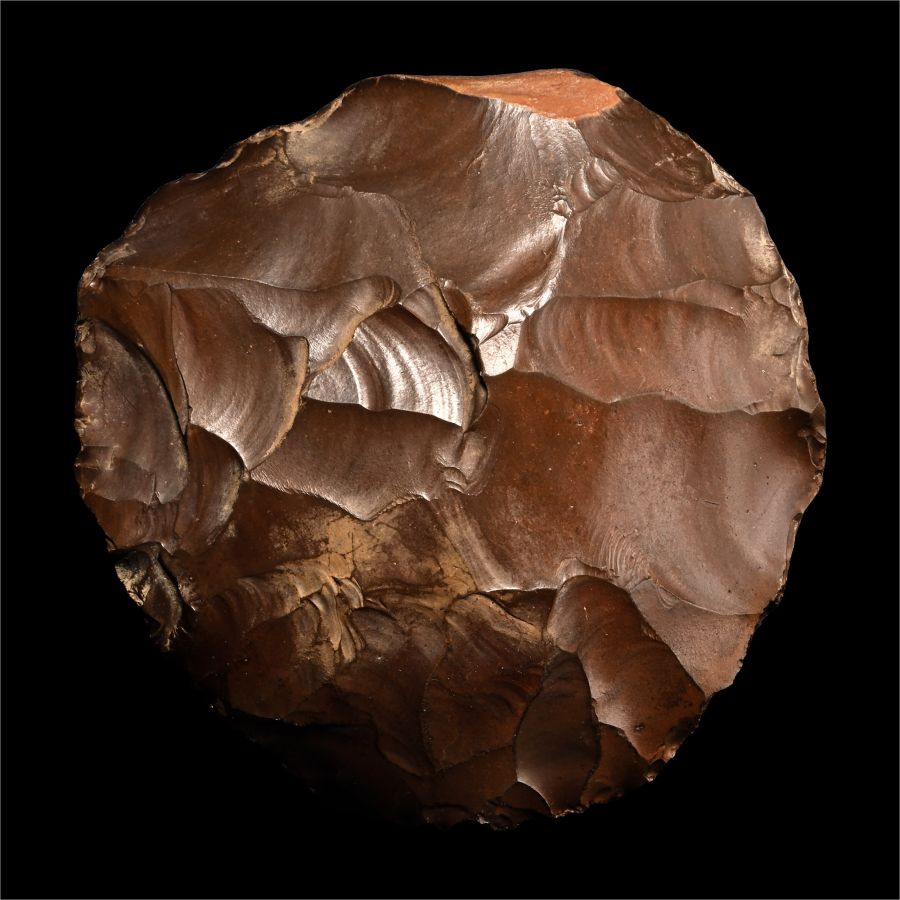
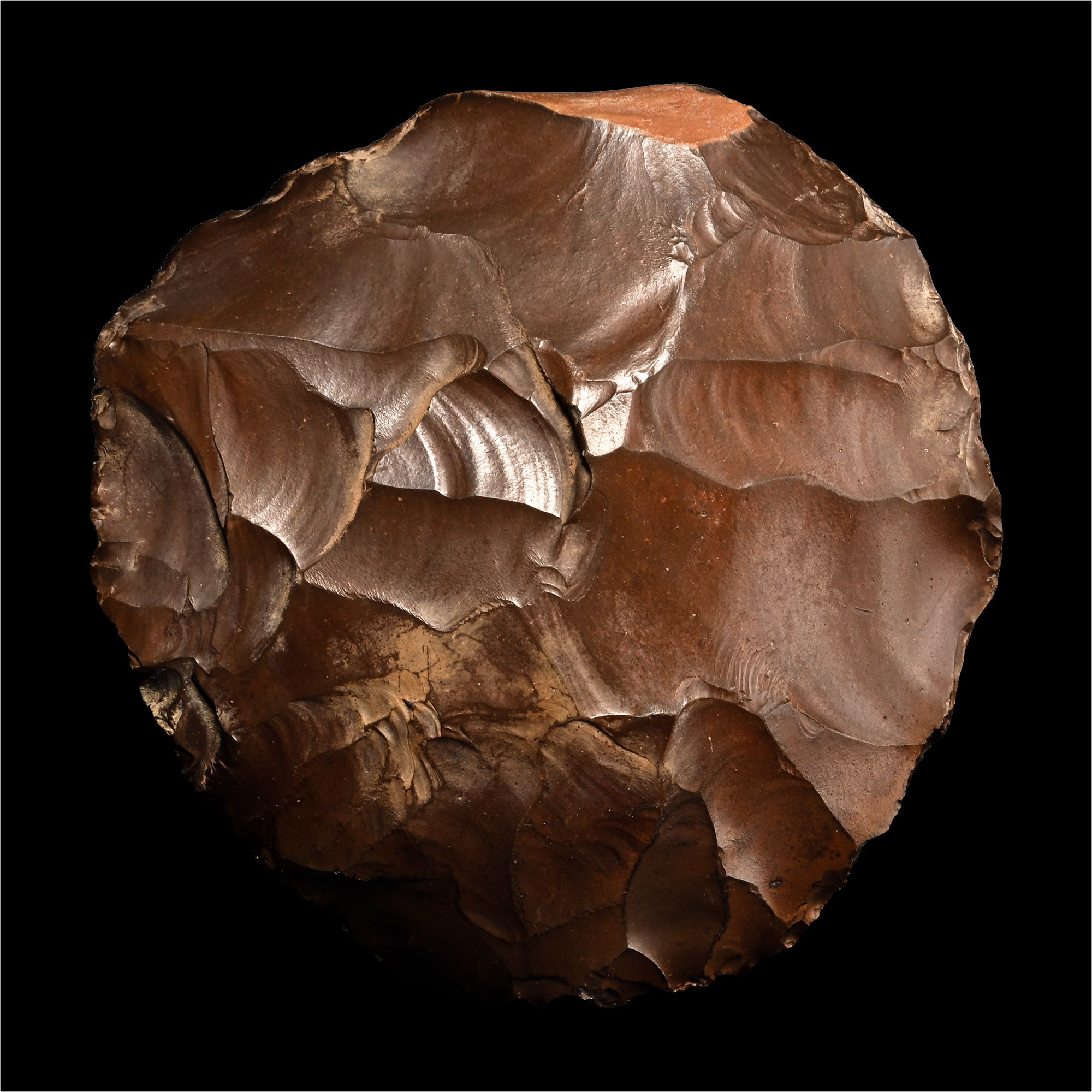
Egyptian Stone Age Knapped Ovate Hand Axe from Thebes
LOWER PALAEOLITHIC PERIOD, CIRCA 40,000-35,000 B.P.
3 3/4 in. (325 grams, 95 mm).
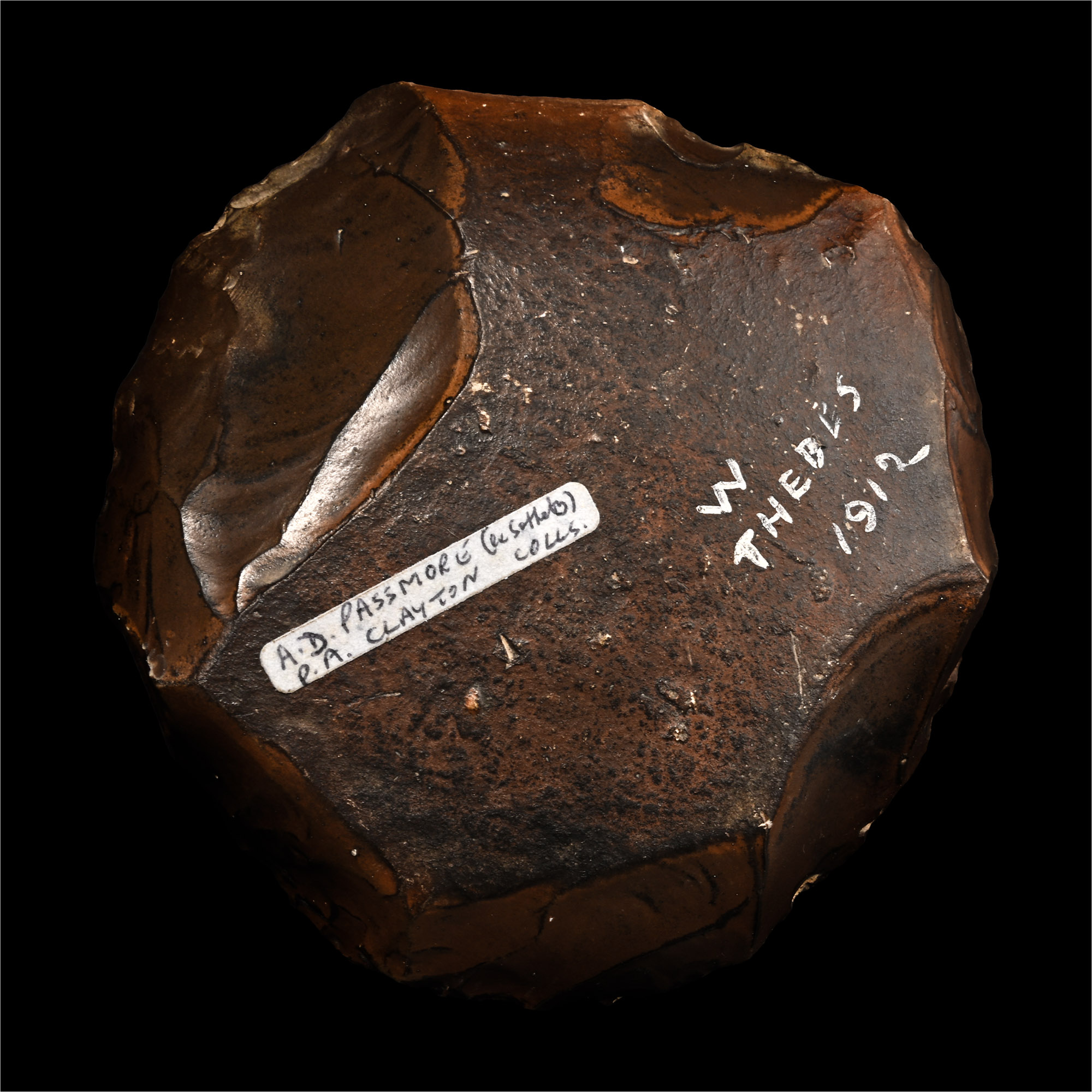
Biconvex in profile with broad cutting edge; marked in ink 'W Thebes 1912' and old paper label 'A.D Passmore (ex Sotheby) P.A. Clayton Colls'. [No Reserve]
ProvenanceFound in the desert west of Thebes, Egypt, 1912.
Ex A.D. Passmore collection.
Acquired from Sotheby's, 16 June 1959 (part), £4.10.
From the private collection of Peter Clayton, FCILIP, Dip, Arch, FSA, FRNS, Hemel Hempstead, Hertfordshire, UK; formed since the late 1950s.
Accompanied by a copy of an old handwritten identification card written by Peter Clayton.
TimeLine Auctions follows a vetting process to ensure the authenticity and legality of all items, reinforcing our commitment to integrity and responsible trading. Each antiquity, antique, and coin lot undergoes thorough examination by a vetting committee of at least ten external specialists, professional trade association members, scientists, and archaeologists: Our Vetting Process
AUCTIONS:
TimeLine is a leading auction house specialising in antiquities, ancient art, collectables, natural history, coins, medals, and books. Our auctions offer museums, collectors, historians, and enthusiasts the opportunity to acquire unique and historically significant pieces.
LOT 0454
Egyptian Stone Age Knapped Ovate Hand Axe from Thebes
Estimate £200 - 300€230 - 350 (for guidance only)$270 - 410 (for guidance only)
-
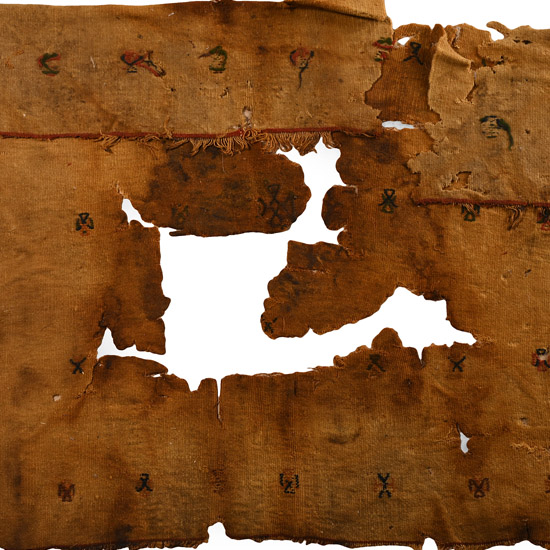
Large Egyptian Coptic Wall Tapestry Textile Fragment with Geometric Ornaments
Circa 7th century A.D.Estimate: £150 - 200 (+bp*)
Bids: 1 | Current Bid: £5
Fragment from a tapestry or a cloak in light fabric, S-twist tapestry, embroidered with red, green, yellow, and blue geometric ornaments in wool and linen. 236 grams total including paper folder, 55 cm wide
Acquired 1970s-1996. Property of a North American collector. London collection, 2016.
Most of the linen or wool garments found by A. Gayet in the Antinoe necropolis were woven in a specific pattern, in a single piece, on a horizontal warp. Another relatively common pattern for linen garments consisted of assembling three pieces woven on a single warp and forming the upper part of the garment, with the collar and sleeves. -
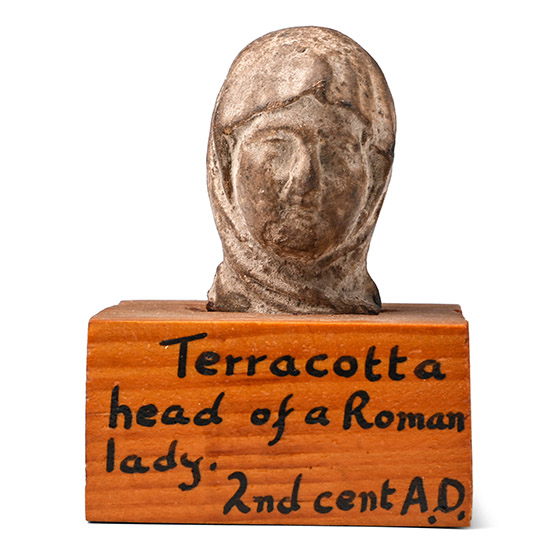
Egyptian Terracotta Head of a Roman Lady
Hellenistic Period, circa 3rd-2nd century B.C.Estimate: £100 - 140 (+bp*)
Bids: 1 | Current Bid: £5
Depicting the cloth-wrapped head of a lady, mounted on a wooden stand. 40.9 grams total, 51 mm including stand
Acquired from High Street, Herne Bay, circa June 1957, for £1.00. Certificate of antiquity no.668 of Blanchard's Egyptian Museum, Cairo. From the private collection of Peter Clayton, FCILIP, Dip, Arch, FSA, FRNS, Hemel Hempstead, Hertfordshire, UK; formed since the late 1950s. Accompanied by an old handwritten information card by Peter Clayton, collection no.11.
This head comes from a draped female figure, known as the Tanagra-type, often wearing elegant himations (cloaks) and wide-brimmed hats (tholia), or holding accessories such as fans, wreaths, and mirrors. -
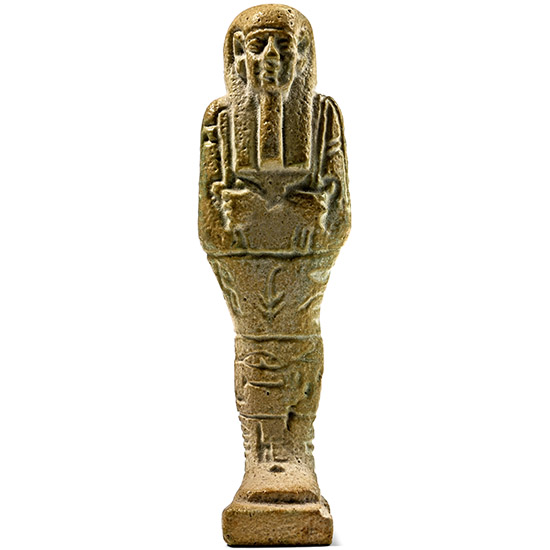
Egyptian Faience Shabti of the Overseer of Royal Children Horirani
Late Period, 26th Dynasty, 664-525 B.C.Estimate: £600 - 800 (+bp*)
Bids: 11 | Current Bid: £70
Mummiform figure standing on a square plinth, wearing a plain, long lappet wig and a long false beard, with a finely modelled face; crossed arms, the left hand holding a pick and the right a hoe and a cord belonging to a plain seed bag suspended over the left shoulder; three horizontal lines of hieroglyphic text on the lower body. 32.1 grams, 88 mm
Acquired from Portobello Road, 18th March 1967, for 30 shillings. From the private collection of Peter Clayton, FCILIP, Dip, Arch, FSA, FRNS, Hemel Hempstead, Hertfordshire, UK; formed since the late 1950s. Accompanied by an old handwritten information card by Peter Clayton, collection no.120.
