
Loading, please wait...


LOT 0475
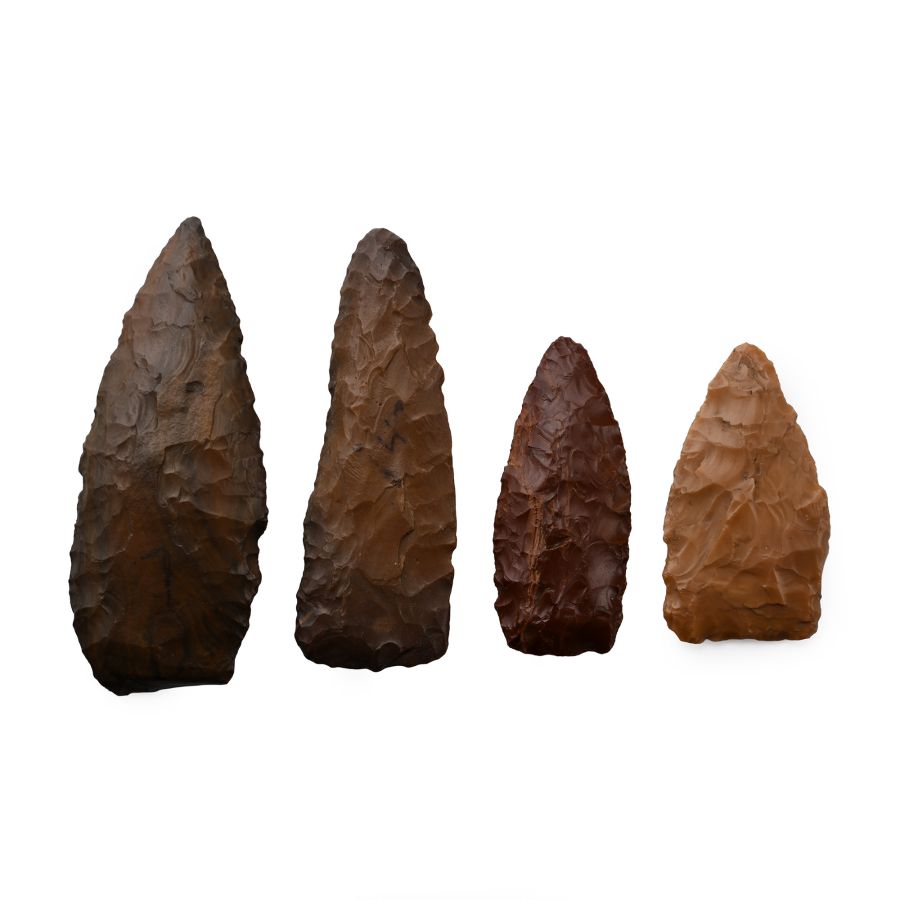
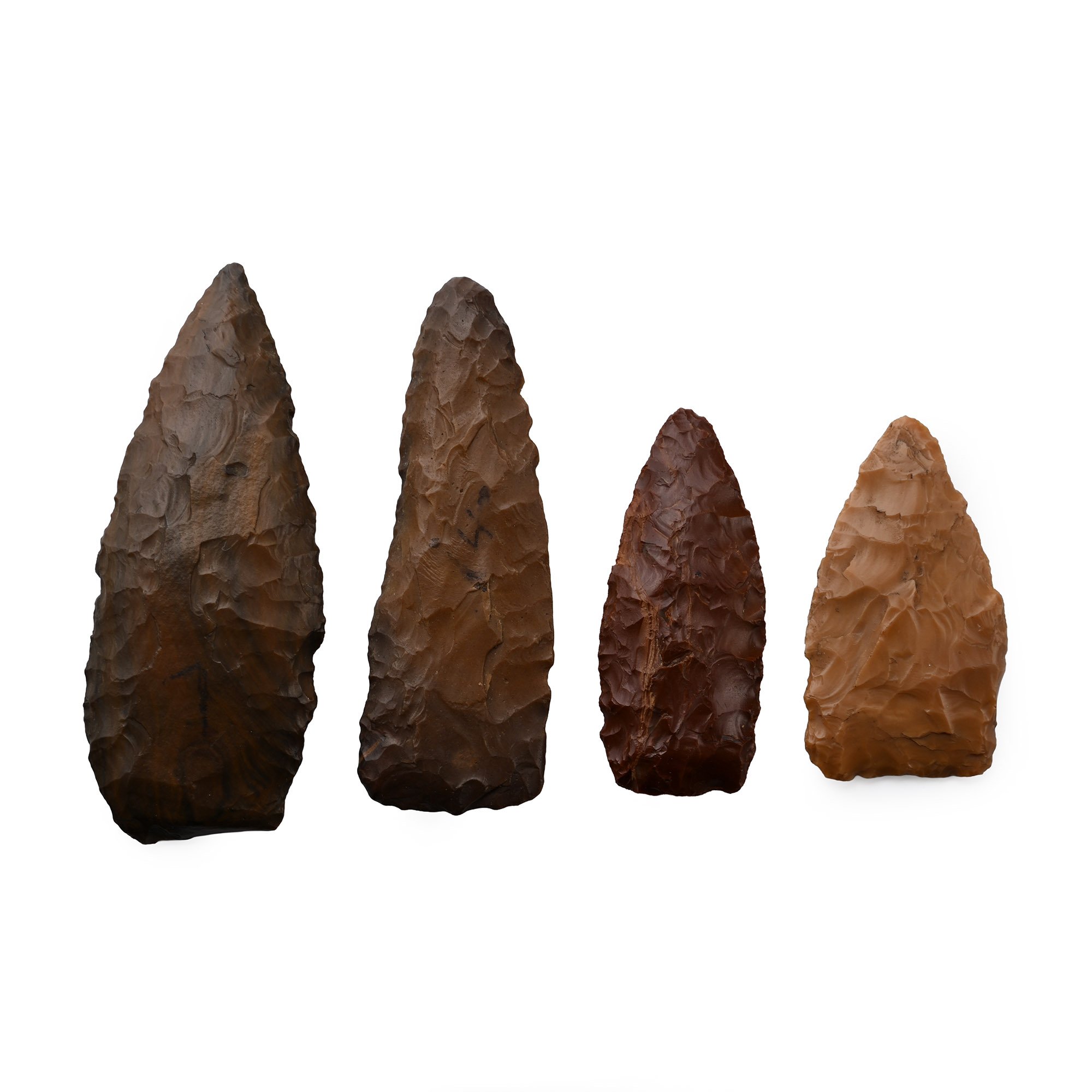
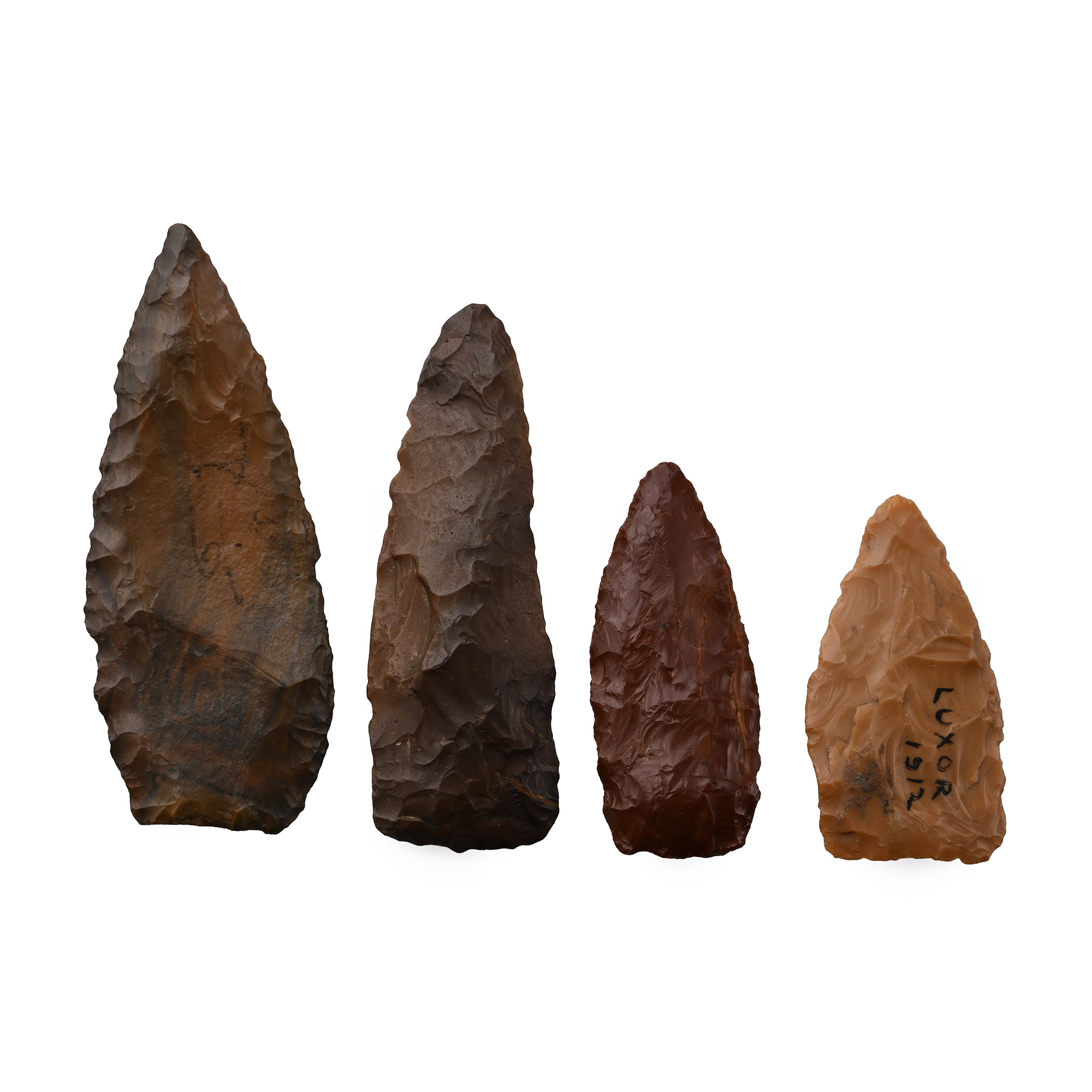
Egyptian Stone Age Knapped Lance Point Group from Luxor
NEOLITHIC PERIOD, 11,000-5,200 B.P.
2 - 3 1/4 in. (60.7 grams total, 53-84 mm).
Comprising three leaf-shaped with tapering sharp points, one tongue-shaped with a rounded point; one with an inked note 'Luxor 1912'; with an old handwritten label reading 'Weapon points- possible lance points - Neolithic'. [4, No Reserve]
ProvenanceFound Luxor.
From the collection of A.D. Passmore (1879-1958), his collection of flints from the area of Stonehenge was donated to the Ashmolean Museum in the 1950s.
From the private collection of Peter Clayton, FCILIP, Dip, Arch, FSA, FRNS, Hemel Hempstead, Hertfordshire, UK; formed since the late 1950s.
Accompanied by a copy of an old handwritten information card by Peter Clayton.
TimeLine Auctions follows a vetting process to ensure the authenticity and legality of all items, reinforcing our commitment to integrity and responsible trading. Each antiquity, antique, and coin lot undergoes thorough examination by a vetting committee of at least ten external specialists, professional trade association members, scientists, and archaeologists: Our Vetting Process
AUCTIONS:
TimeLine is a leading auction house specialising in antiquities, ancient art, collectables, natural history, coins, medals, and books. Our auctions offer museums, collectors, historians, and enthusiasts the opportunity to acquire unique and historically significant pieces.
LOT 0475
Egyptian Stone Age Knapped Lance Point Group from Luxor
Estimate £150 - 200€170 - 230 (for guidance only)$200 - 270 (for guidance only)
Opening Bid
£5 (EUR 6; USD 7) +BP*
-
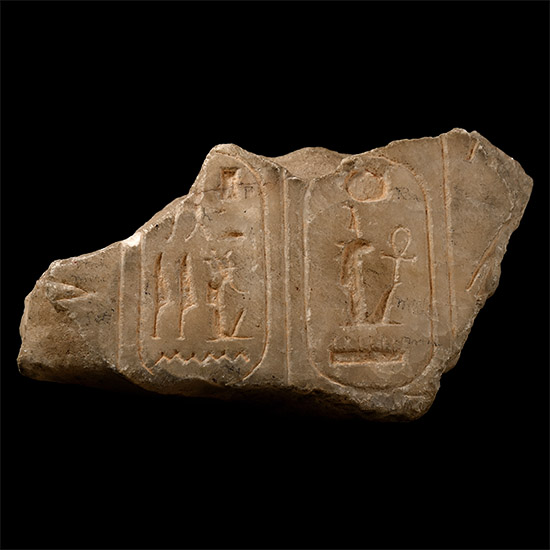
Egyptian Alabaster Fragment with Pharaoh Seti I's Cartouches
New Kingdom, 19th Dynasty, circa 1278 B.C.Estimate: £2,000 - 3,000 (+bp*)
Bids: 1 | Current Bid: £5
Thick section of alabaster with traces of four columns of hieroglyphs, including two partially preserved cartouches, one containing the birth name and epithet of Seti I, Seti mery-en-Ptah ('Seti, beloved of Ptah'), and the other his throne name, Men-Maat-Re ('Eternal is the justice of Re'). 526 grams, 13.8 cm
Received by gift from archaeologist Cyril Aldred, September 1964. From the private collection of Peter Clayton, FCILIP, Dip, Arch, FSA, FRNS, Hemel Hempstead, Hertfordshire, UK; formed since the late 1950s. Accompanied by an old handwritten information card by Peter Clayton, collection no.123. This lot has been checked against the Interpol Database of stolen works of art and is accompanied by search certificate no.13494-262900.
Peter Clayton's card suggests that the fragment may come from Seti's alabaster sarcophagus, the elaborately decorated lower half of which is in the John Soane Museum, London. The fragment may belong to the lid, which plunderers smashed in antiquity and which survives only in a relatively small number of fragments. -
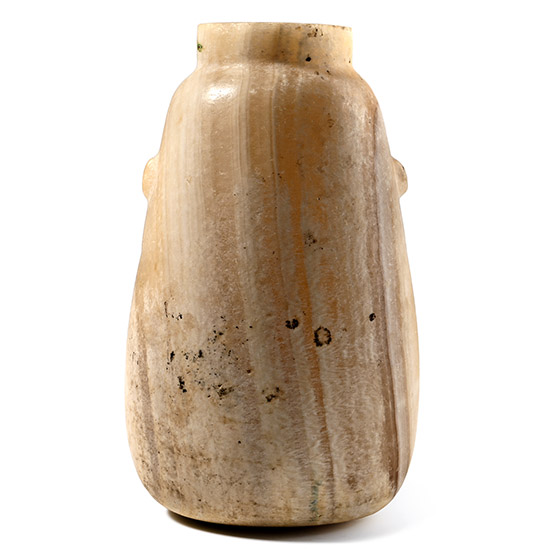
Large Egyptian Alabaster Alabastron
Late Period, 664-332 B.C.Estimate: £1,200 - 1,700 (‡+bp*)
Opening Bid: £650
Elongated vessel widening slightly towards the flat base with broad, cylindrical neck; vertical rim to the mouth, probably slightly reground; two lateral knob handles. 867 grams, 15.5 cm
Body intact. Some dark discolourations.
Acquired from Galerie Arete, Zurich, 15 April 1988. Ex private collection, Therwil, Switzerland.
The veining of the finely polished alabaster underscores the vessel’s form; the interior is smoothed, but the base lacks the same polish as the wall and was either reground or not polished in the first place. -
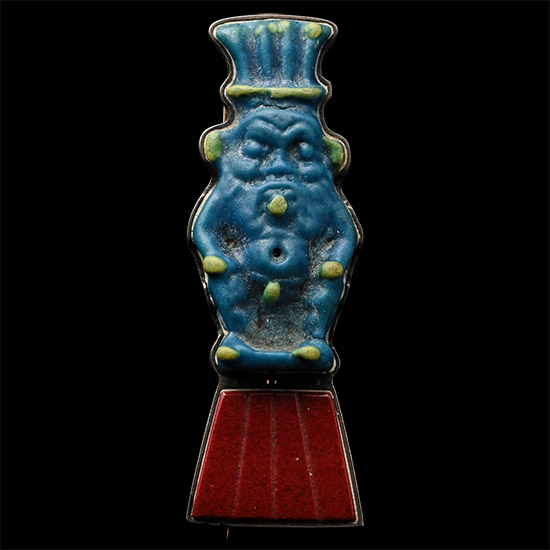
Egyptian Polychrome Faience Amulet of the God Bes Fashioned as a Dress Pin
Late-Ptolemaic Period, circa 664-30 B.C.Estimate: £300 - 400 (+bp*)
Opening Bid: £167
The dwarf god depicted in a characteristic bandy-legged stance, with his hands on his hips and a fearsome expression, wearing a plumed headdress; the deep blue glaze highlighted in yellow; set in a metal casing with hinged pins on the reverse and a red jasper insert depicting four plumes beneath his feet. 13.7 grams, 52 mm
Early 20th century UK collection. Ex A.H. collection, London, UK. Accompanied by a previous catalogue information page with provenance.
From the New Kingdom onwards, Bes became one of ancient Egypt's most popular apotropaic deities. Despite his somewhat fearsome appearance, Bes served as the patron and protector of pregnant women and children and was believed to shield them from snakes. The role of Bes as a guardian of women persisted at least until the third or fourth century A.D.
