
Loading, please wait...


LOT 0414
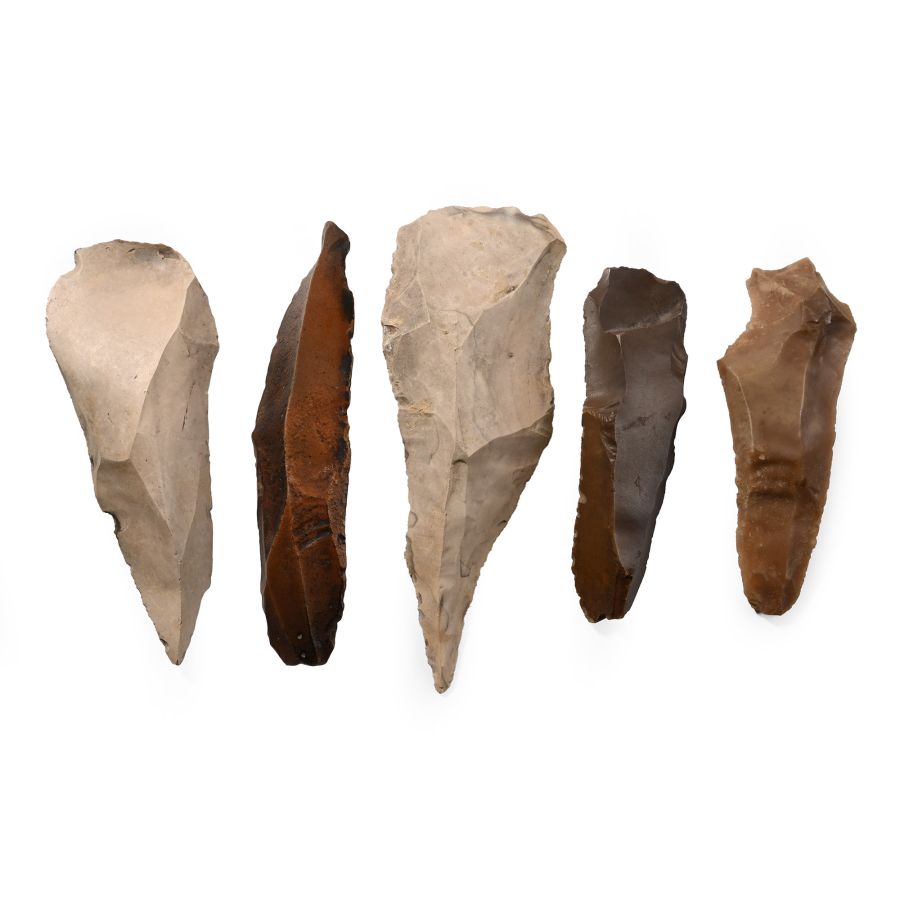
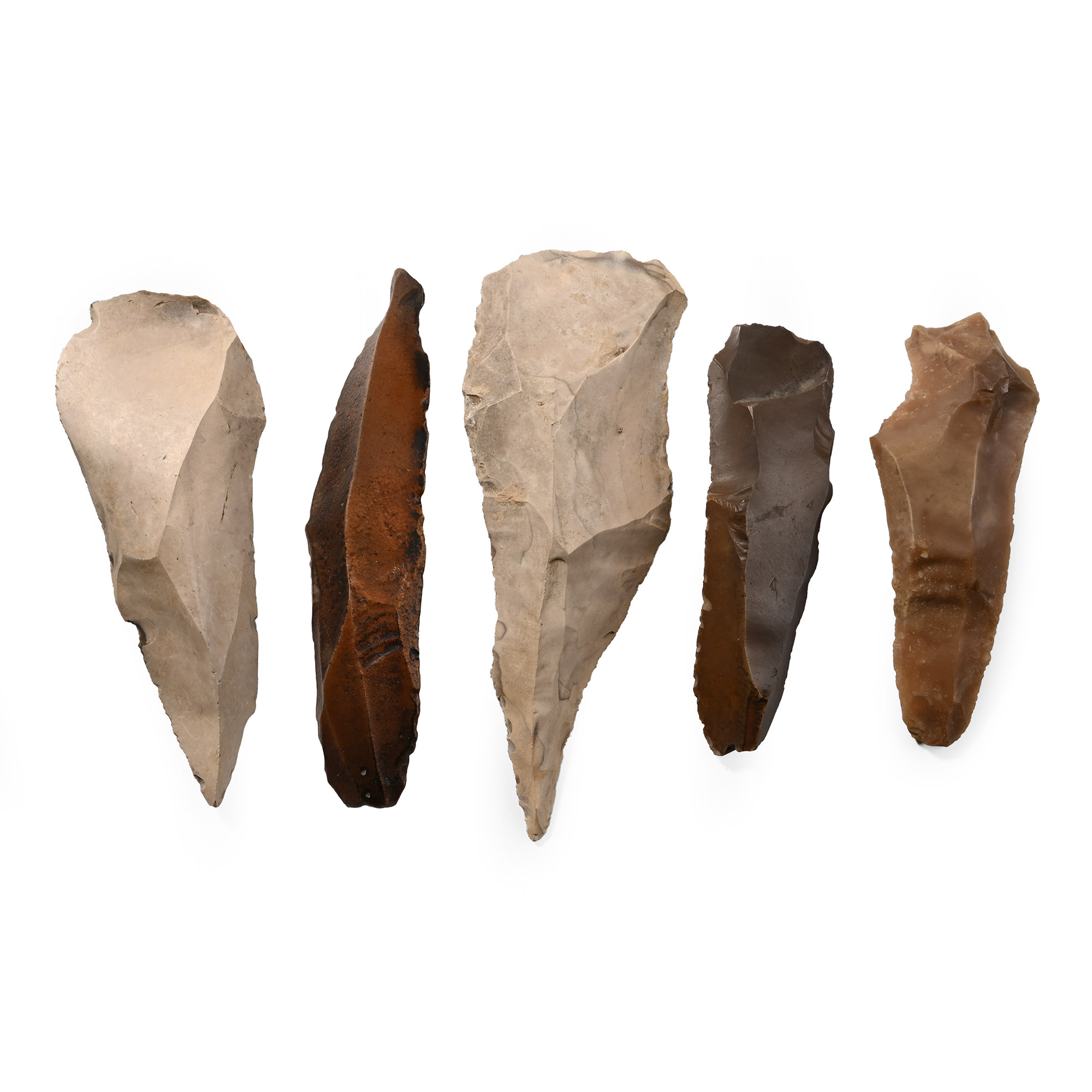
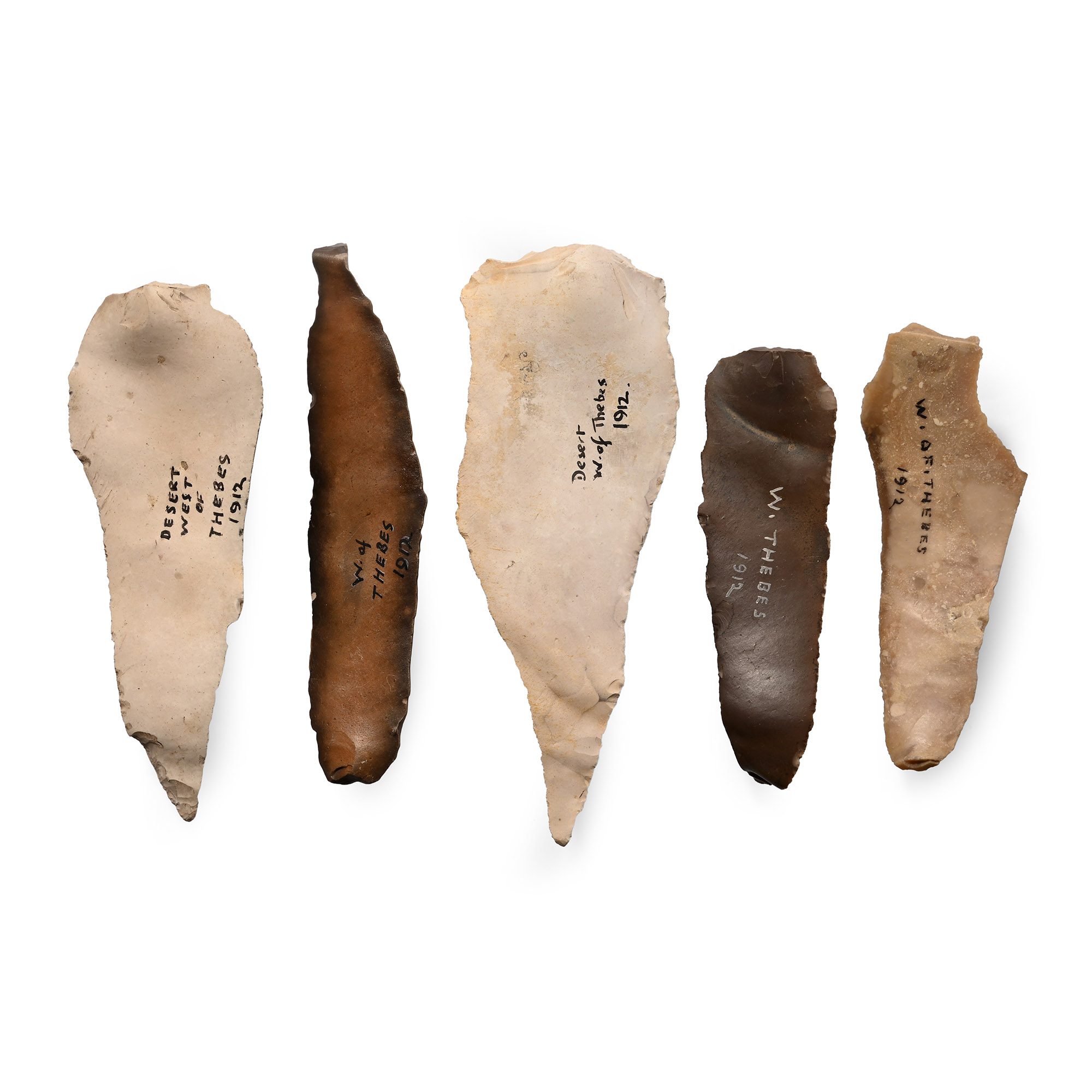
Egyptian Stone Age Knapped Knife Blades from Thebes
NEOLITHIC PERIOD, 11,000-5,200 B.P.
4 1/8 - 5 5/8 in. (279 grams total, 10.6-14.3 cm).
Each of curved profile with broad cutting edge; old inked findspots 'Desert W. of Thebes 1912' (2 examples), 'W. of Thebes 1912' (2 examples), 'W. Thebes 1912'. [5, No Reserve]
ProvenanceFound in the desert west of Thebes, Egypt, 1912.
From the private collection of Peter Clayton, FCILIP, Dip, Arch, FSA, FRNS, Hemel Hempstead, Hertfordshire, UK; formed since the late 1950s.
TimeLine Auctions follows a vetting process to ensure the authenticity and legality of all items, reinforcing our commitment to integrity and responsible trading. Each antiquity, antique, and coin lot undergoes thorough examination by a vetting committee of at least ten external specialists, professional trade association members, scientists, and archaeologists: Our Vetting Process
AUCTIONS:
TimeLine is a leading auction house specialising in antiquities, ancient art, collectables, natural history, coins, medals, and books. Our auctions offer museums, collectors, historians, and enthusiasts the opportunity to acquire unique and historically significant pieces.
LOT 0414
Egyptian Stone Age Knapped Knife Blades from Thebes
Estimate £300 - 400€350 - 460 (for guidance only)$410 - 540 (for guidance only)
-
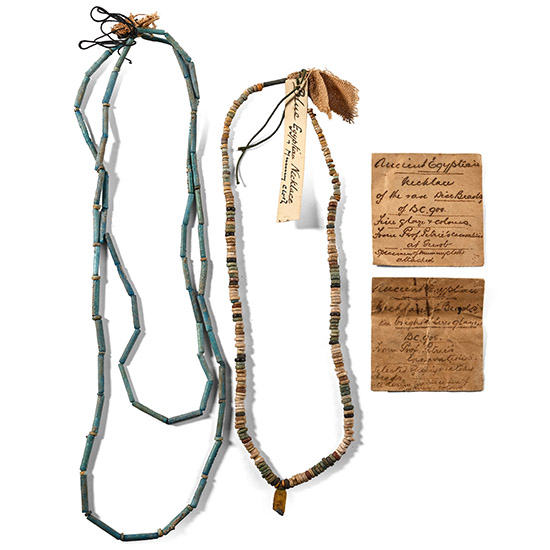
Egyptian Disc Necklace Beads and Mummy Cloth
Late Period, 664-332 B.C.Estimate: £80 - 100 (+bp*)
Bids: 2 | Current Bid: £10
Comprising: restrung necklace of mainly white annular beads and a pendant with a fragment of original mummy cloth and an old card label: 'Ancient Egyptian Necklace of Beads in bright blue glaze B.C. 900 From Prof. Petrie's excavations. Selected & finely matched beads ...specimens of ... colour' and old card label 'Blue Egyptian Necklace and Mummy Cloth'; restrung necklace of blue tubular beads with fragment of original mummy cloth and old card label 'Ancient Egyptian Necklace of the rare disc beads of B.C. 900. Fine glaze and colours. From Prof. Petrie's excavations at Gurob. Specimen of mummy cloth attached'. 20 grams total, 46-100 cm
Ex Petrie excavations early 20th century. From the estate of a deceased Sussex private collector since the early 20th century. Accompanied by two old handwritten labels. -
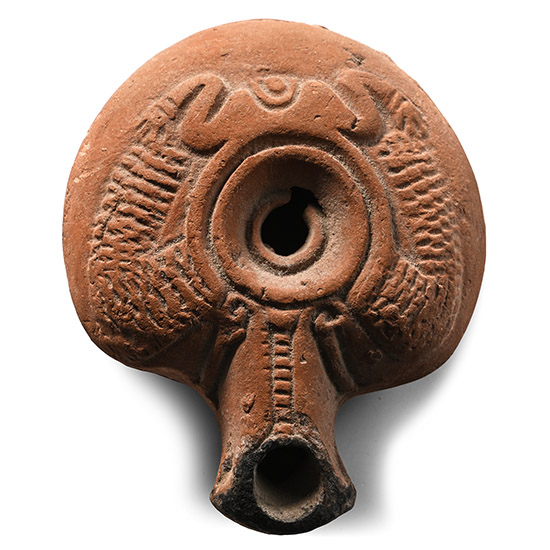
Romano-Egyptian Terracotta Frog Oil Lamp
Roman Period, 3rd-4th century A.D.Estimate: £80 - 100 (+bp*)
Bids: 1 | Current Bid: £5
Cordate in plan and biconvex in section, with a short volute nozzle and low-relief stylised frog detailing on the discus; basal ring enclosing 'B' mark; old collector's ticket: 'Buff terracotta lamp in form of a frog with nozzle standing out from front of lamp. Frog is very stereotyped, beneath B. 3-4th century A.D. Found in Alexandria. From Puys-Aubert collection in Alexandria. March 1963.' 102 grams, 92 mm
From the private collection of Peter Clayton, FCILIP, Dip, Arch, FSA, FRNS, Hemel Hempstead, Hertfordshire, UK; formed since the late 1950s. Accompanied by an old handwritten identification card written by Peter Clayton. -
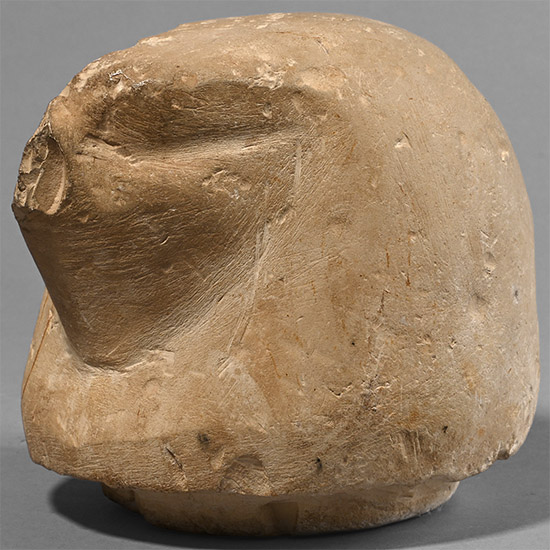
Large Egyptian Limestone Qebehsenuef Canopic Jar Lid
New Kingdom, 18th Dynasty, 1550-1292 B.C.Estimate: £200 - 300 (+bp*)
Bids: 3 | Current Bid: £30
Carved as an avian head with a discoid base to accept the rim of the canopic jar; old handwritten collector's note attached to the back of the head 'Found in rubble, literally tripped over, in tombs on West Bank, March 1963, group with Dr Veronica Seton-Williams'; old collector's card: 'Lid of hawk headed canopic jar. Duamutef (sic), guardian of the lungs and deity of the east in their general arrangement to the cardinal [?]. Made of white limestone, the right hand side much damaged...'; chipped. 2.74 kg, 14.6 cm wide
From the private collection of Peter Clayton, FCILIP, Dip, Arch, FSA, FRNS, Hemel Hempstead, Hertfordshire, UK; formed since the late 1950s. Accompanied by an old handwritten identification card written by Peter Clayton.
The Four Sons of Horus safeguarded the deceased's internal organs. The human-headed Imsety protected the liver; the baboon-headed Hapy, the lungs; the jackal-headed Duamutef, the stomach; and the falcon-headed Qebehsenuef, the intestines. They often placed the viscera in canopic jars with the head of the respective Son of Horus.
