
Loading, please wait...

LOT 0409
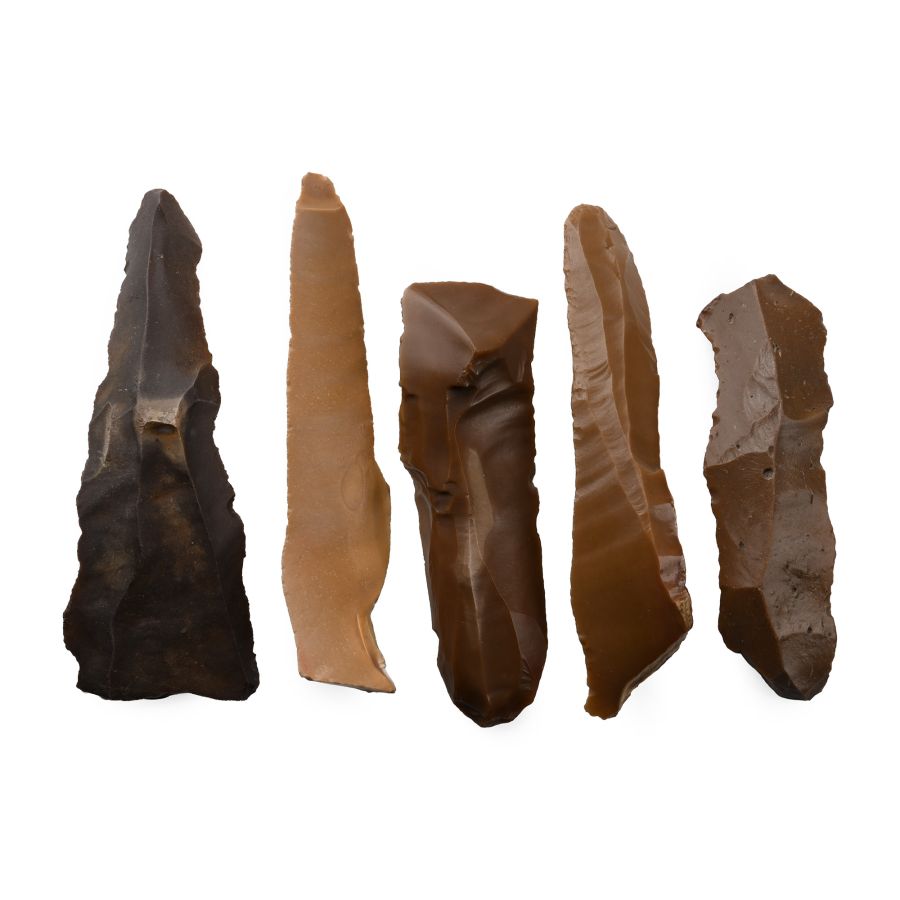
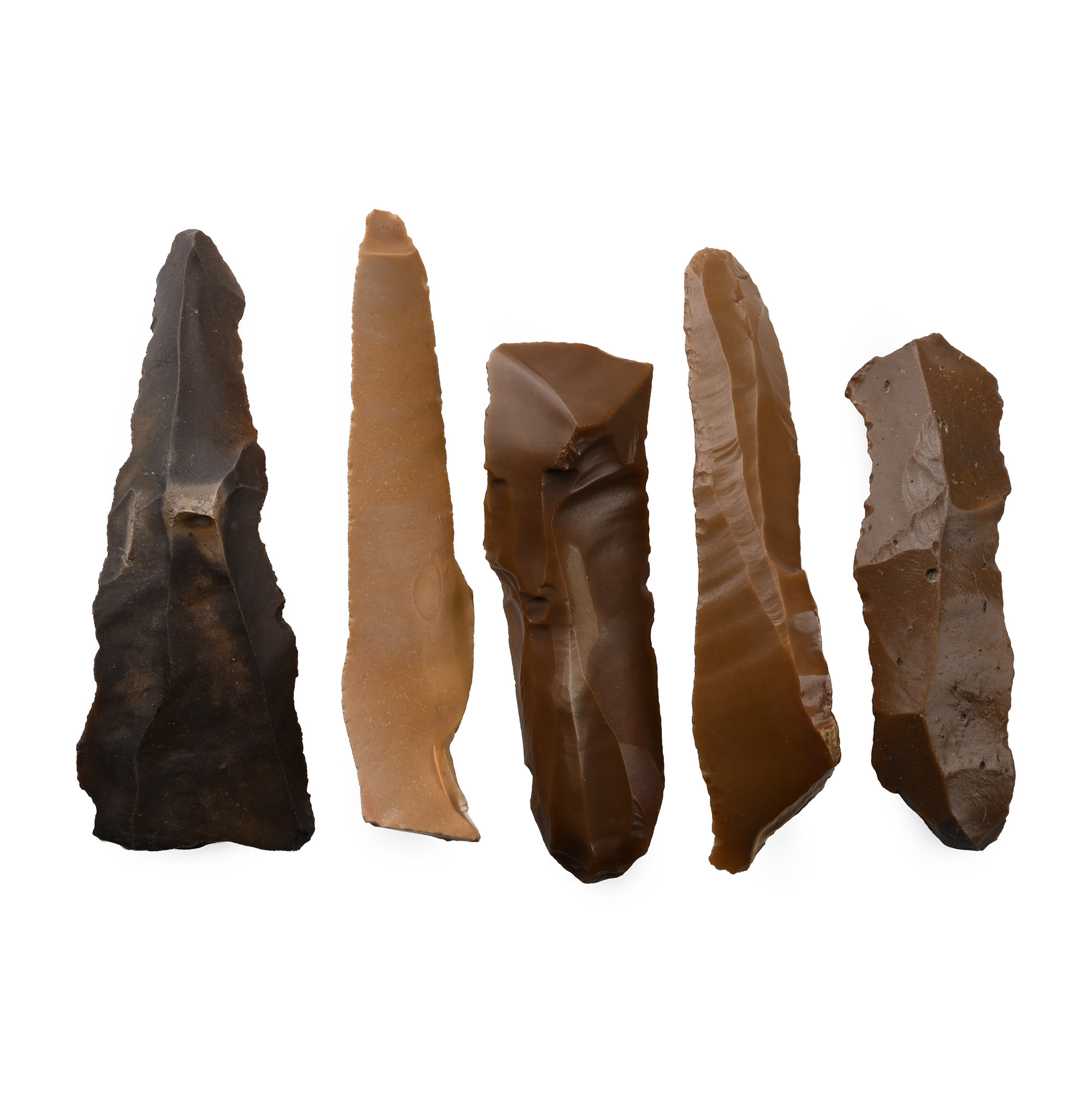
Egyptian Stone Age Knapped Knife Blade Group from Thebes
NEOLITHIC PERIOD, 11,000-5,200 B.P.
3 - 3 5/8 in. (81 grams total, 75-91 mm).
Comprising five sender tongue-shaped in plan and triangular in section, each with an inked inscription reading 'W. Thebes 1912', 'West Themes 1912' or 'Thebes 1912'; with a handwritten label reading 'Scrapers on blades'. [5, No Reserve]
ProvenanceFound Thebes, 1912 A.D.
From the collection of A.D.Passmore (1879-1958), his collection of flints from the area of Stonehenge was donated to the Ashmolean Museum in the 1950s.
From the private collection of Peter Clayton, FCILIP, Dip, Arch, FSA, FRNS, Hemel Hempstead, Hertfordshire, UK; formed since the late 1950s.
Accompanied by a copy of an old handwritten information card by Peter Clayton.
TimeLine Auctions follows a vetting process to ensure the authenticity and legality of all items, reinforcing our commitment to integrity and responsible trading. Each antiquity, antique, and coin lot undergoes thorough examination by a vetting committee of at least ten external specialists, professional trade association members, scientists, and archaeologists: Our Vetting Process
AUCTIONS:
TimeLine is a leading auction house specialising in antiquities, ancient art, collectables, natural history, coins, medals, and books. Our auctions offer museums, collectors, historians, and enthusiasts the opportunity to acquire unique and historically significant pieces.
LOT 0409
Egyptian Stone Age Knapped Knife Blade Group from Thebes
Estimate £60 - 80€70 - 93 (for guidance only)$81 - 108 (for guidance only)
-
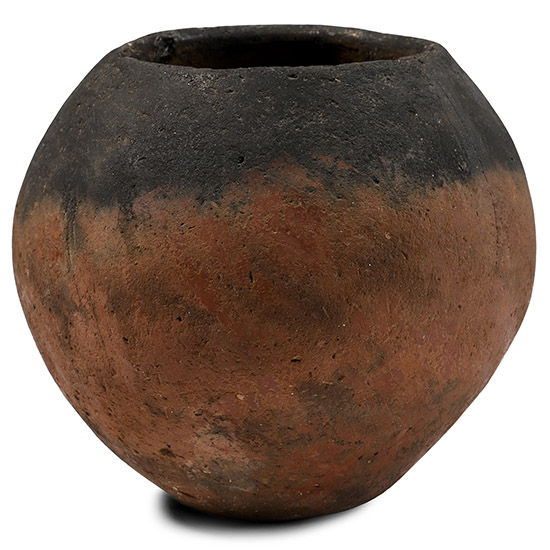
Egyptian Black-Topped Vase
Predynastic Period, Naqada II, circa 4000 B.C.Estimate: £300 - 400 (+bp*)
Bids: 3 | Current Bid: £95
Squat, spherical black-topped storage vase with a flattened base; old collector's ticket: 'Small predynastic Egyptian pot. Round form, flat bottom, usual black top and red body. From Naqada, c. 4000 B.C. Richardson St. Christopher's Mail(?), 27/10/61'. 391 grams, 10.5 cm
From the private collection of Peter Clayton, FCILIP, Dip, Arch, FSA, FRNS, Hemel Hempstead, Hertfordshire, UK; formed since the late 1950s. Accompanied by an old handwritten identification card written by Peter Clayton.
This decorative style's distinctive appearance came from an open-fire or pit-firing method in which the vessel was inverted into ash, organic matter, or smoke-heavy fuel. The buried or inverted top was starved of oxygen and turned black, while the exposed lower portion oxidised to red. -
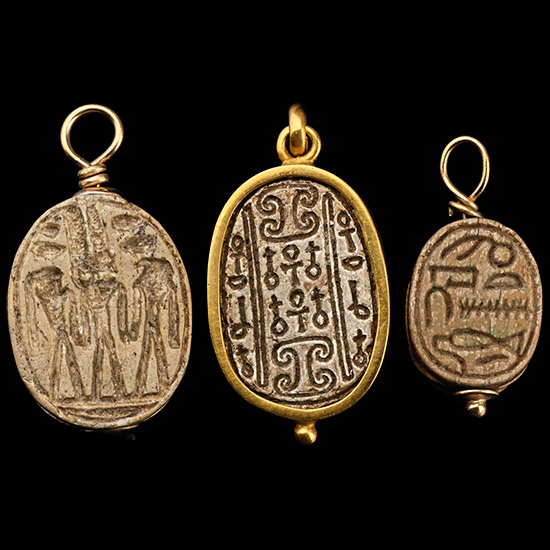
Collection of Egyptian Faience and Steatite Scarabs with Gold Mounts
Second Intermediate Period-Late Period, 1782-332 B.C.Estimate: £400 - 600 (‡+bp*)
Opening Bid: £200
Comprising: grey scarab with gold mounting pin, frame and loop, three panels on the underside with ankh and other motifs; grey scarab with traces of turquoise surface, gold mounting pin and loop, hieroglyphs on the underside; cream scarab with gold mounting pin and loop, frieze of three figures on the underside, the middle figure wearing an atef crown. 9.85 grams total, 24-32 mm
Private collection of Kal Noselson, New York, acquired between 1976 and the late 1990s; thence by descent. Accompanied by the collector's original inked images. -
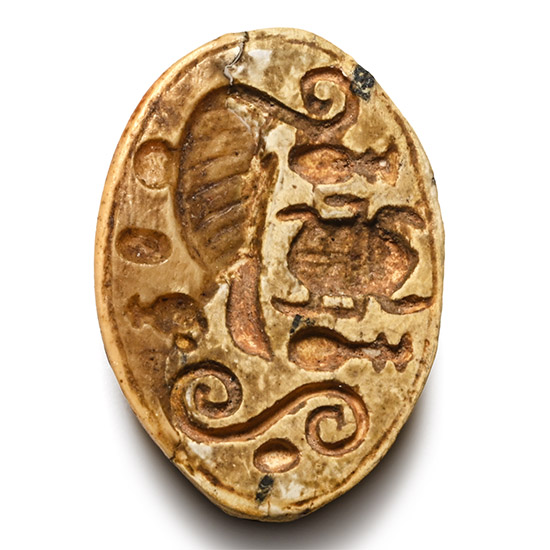
Egyptian Stone Scarab
Late Period, 664-332 B.C.Estimate: £40 - 60 (+bp*)
Bids: 1 | Current Bid: £5
Scaphoid plaque with a ribbed dome on the obverse and a flared mouth at the socket; underside with incuse hieroglyphs and symbols, including a scarab flanked by two nefer signs, an S-scroll, a standing vulture, and others; supplied with an impression. 1.22 grams, 18 mm
From the private collection of a European gentleman (1942-2024), formed since the 1970s.
