
Loading, please wait...
LOT 0003
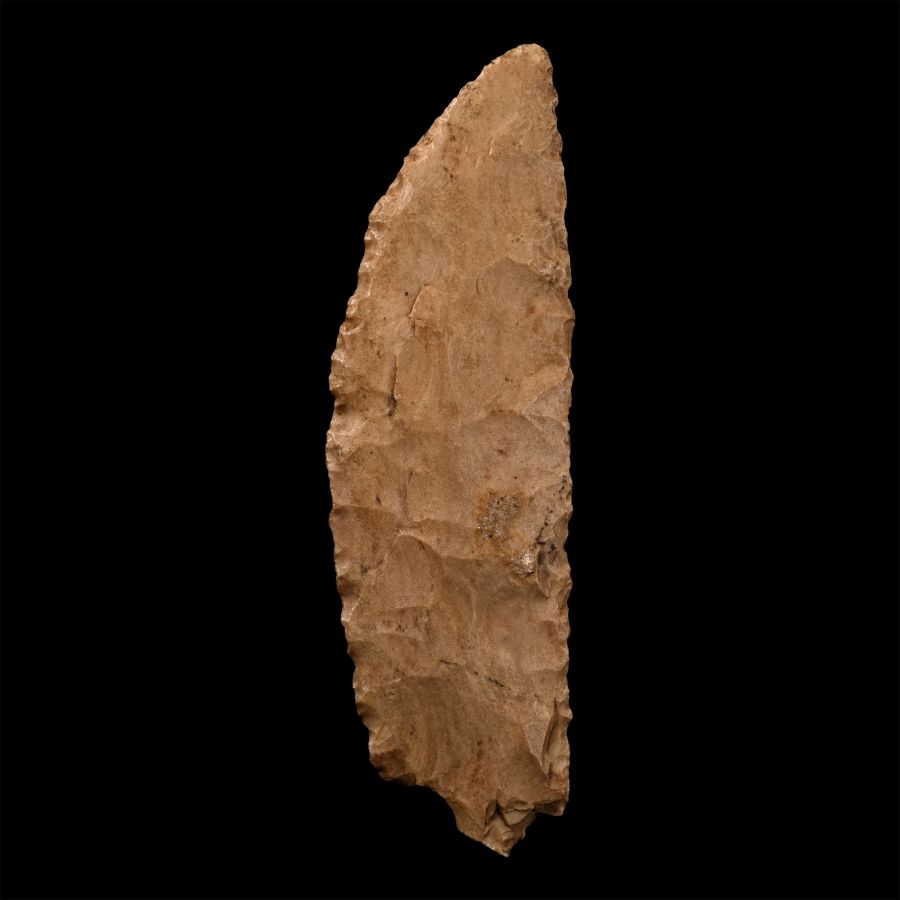
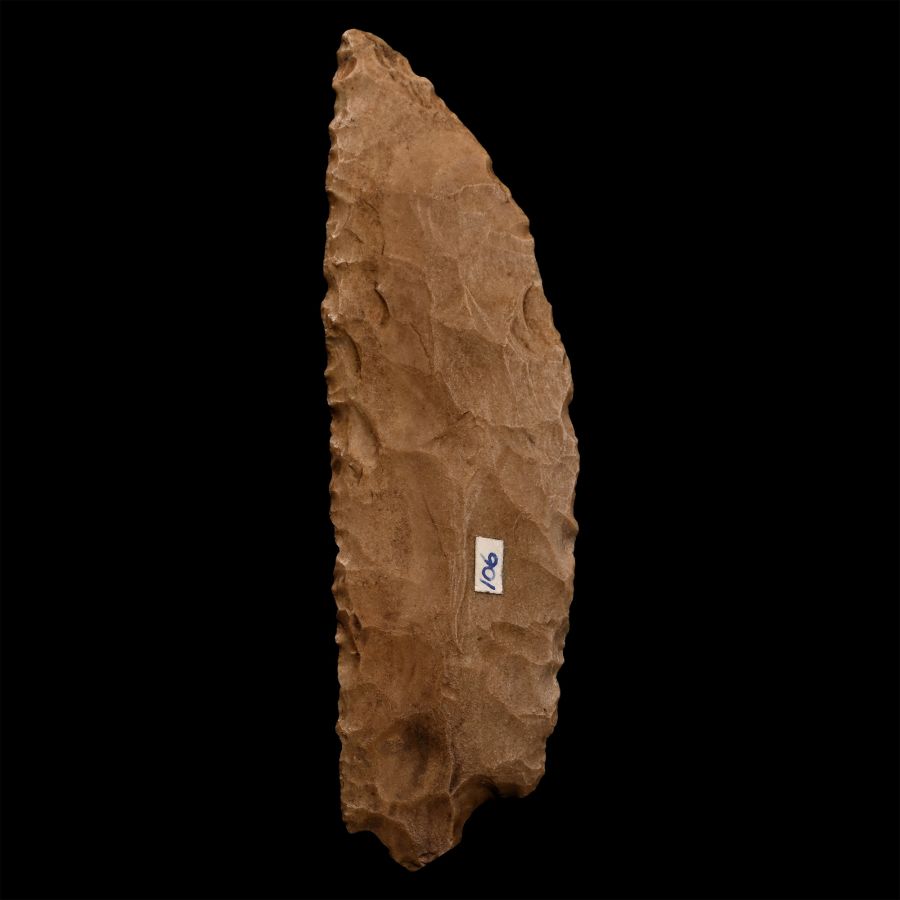
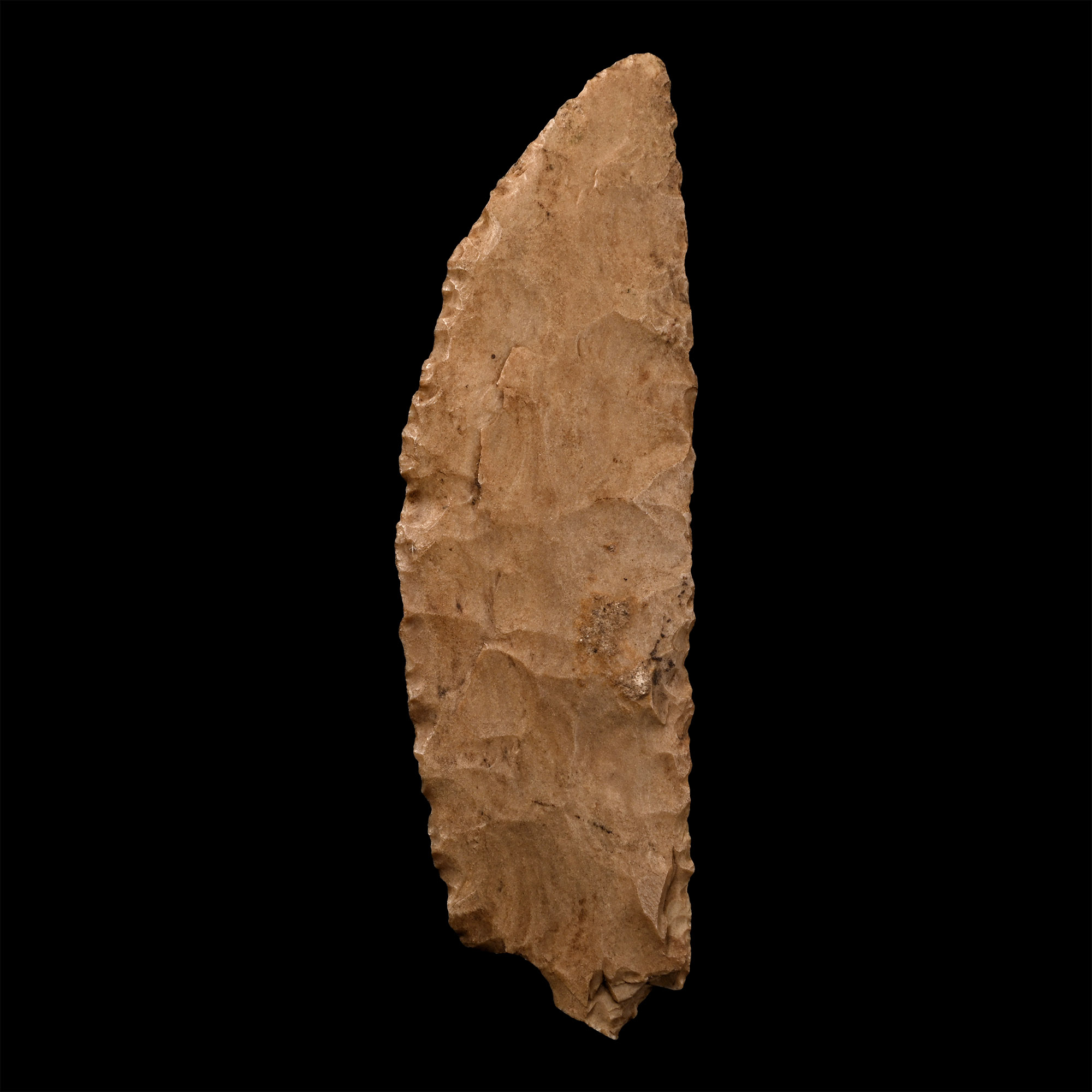
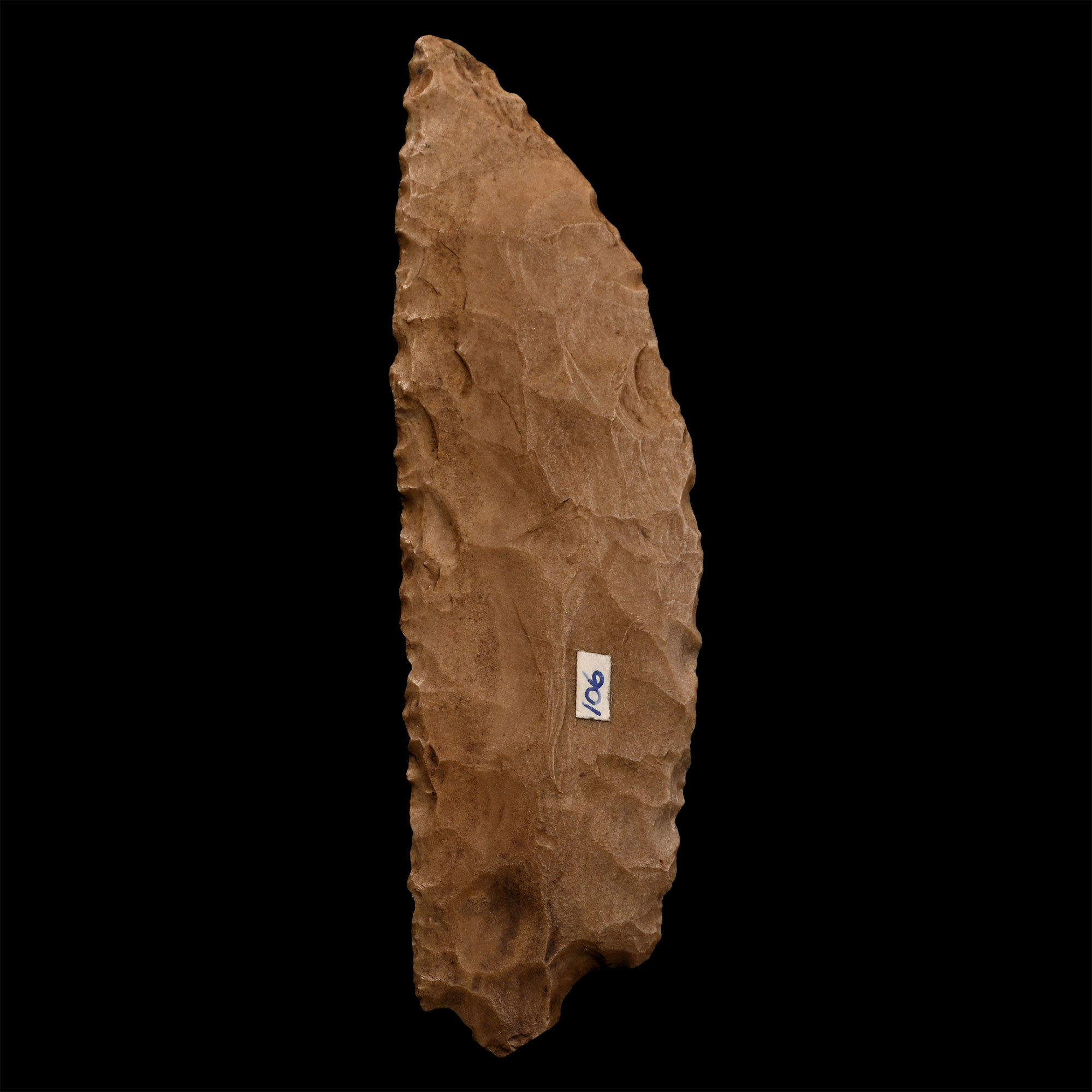
Egyptian Stone Age Knapped Honey-Coloured Flint Knife
PREDYNASTIC PERIOD, CIRCA 3500-3000 B.C.
4 7/8 in. (41.1 grams, 12.3 cm).
Knapped knife with curved edge; with old collector's record card detailing place of purchase and other details. [No Reserve]
ProvenanceEx Puys-Aubert collection, Alexandria, March 1963, for 6 shillings.
From the private collection of Peter Clayton, FCILIP, Dip, Arch, FSA, FRNS, Hemel Hempstead, Hertfordshire, UK; formed since the late 1950s.
Accompanied by an old typed information card by Peter Clayton, collection no.106.
TimeLine Auctions follows a vetting process to ensure the authenticity and legality of all items, reinforcing our commitment to integrity and responsible trading. Each antiquity, antique, and coin lot undergoes thorough examination by a vetting committee of at least ten external specialists, professional trade association members, scientists, and archaeologists: Our Vetting Process
AUCTIONS:
TimeLine is a leading auction house specialising in antiquities, ancient art, collectables, natural history, coins, medals, and books. Our auctions offer museums, collectors, historians, and enthusiasts the opportunity to acquire unique and historically significant pieces.
LOT 0003
Egyptian Stone Age Knapped Honey-Coloured Flint Knife
Estimate £400 - 600€460 - 700 (for guidance only)$540 - 810 (for guidance only)
-
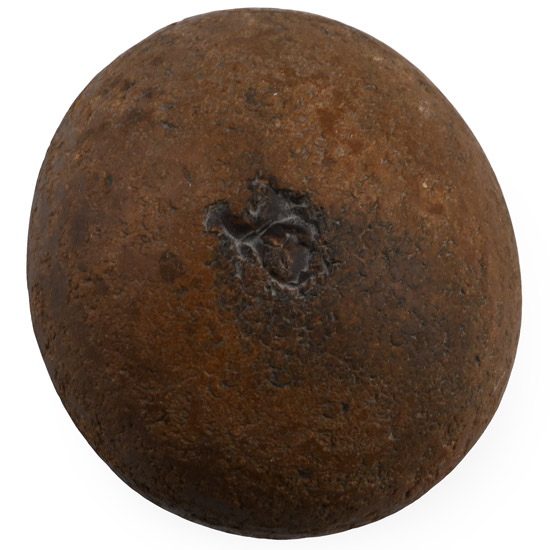
Egyptian Stone Smoothing Tool
3rd-late 1st millennium B.C.Estimate: £40 - 60 (+bp*)
Opening Bid: £5
Spherical pounder with a smooth surface. 625 grams, 86 mm
From the private collection of Peter Clayton, FCILIP, Dip, Arch, FSA, FRNS, Hemel Hempstead, Hertfordshire, UK; formed since the late 1950s. Accompanied by an old handwritten information card by Peter Clayton, collection no.134.
Stone pounders were used to shape and harden metal, as well as to pound stone architectural elements and statues. -
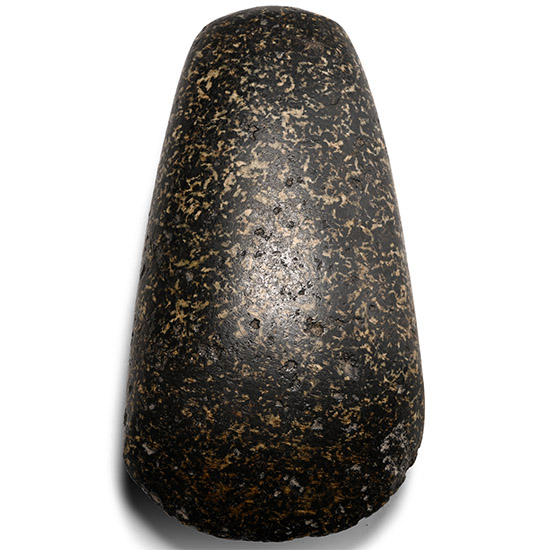
Egyptian Stone Age Diorite Polished Axehead
Early Dynastic Period, circa 3,000 B.C.Estimate: £400 - 600 (+bp*)
Opening Bid: £5
Polished to a high standard with curved cutting edge. 551 grams, 12.7 cm
Acquired Glyn Antiques, Portabello Road, 26 November 1960, for £2.00. From the private collection of Peter Clayton, FCILIP, Dip, Arch, FSA, FRNS, Hemel Hempstead, Hertfordshire, UK; formed since the late 1950s. Accompanied by an old handwritten information card by Peter Clayton, collection no.78.
The great British Egyptologist Flinders Petrie recovered numerous polished stone axes from various sites in Egypt. Flint was rarely used, though it was popular for other tools. Instead, other hardstones were favoured (Petrie, W.M.F., Prehistoric Egypt, London, 1920, p. 24, for a brief discussion; pl. XXVII, for illustrated examples). -
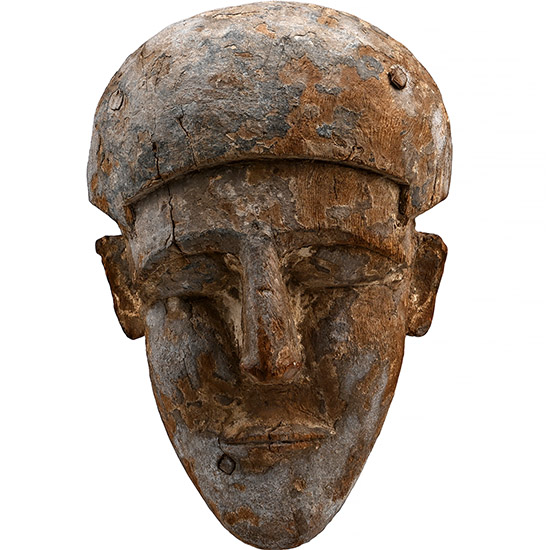
Egyptian Carved Cedar Wood Sarcophagus Mask
Ptolemaic-Roman Period, 332 B.C.-100 A.D.Estimate: £1,000 - 1,400 (+bp*)
Opening Bid: £500
From the lid of an anthropoid coffin, representing the idealised features of the deceased beneath a broad, rounded wig, the elongated face modelled with large almond-shaped eyes beneath extended brows, a prominent nose, delineated lips and projecting ears, the chin tapering to a rounded point; a curved incision separates the headdress from the forehead, the broadly flattened reverse preserving sockets and wooden plugs from the original pegged attachment to the coffin lid; preparatory gesso and traces of polychrome decoration remaining across the face and headdress; mounted on a modern metal display stand. 1.43 kg total, 32.5 cm including stand
Private collection, Yorkshire, UK, acquired in the mid-20th century.
Wooden coffins were mostly manufactured from multiple elements, often with the face and front portion of the headdress carved separately and attached to the lid using dowels.
