
Loading, please wait...


LOT 0443
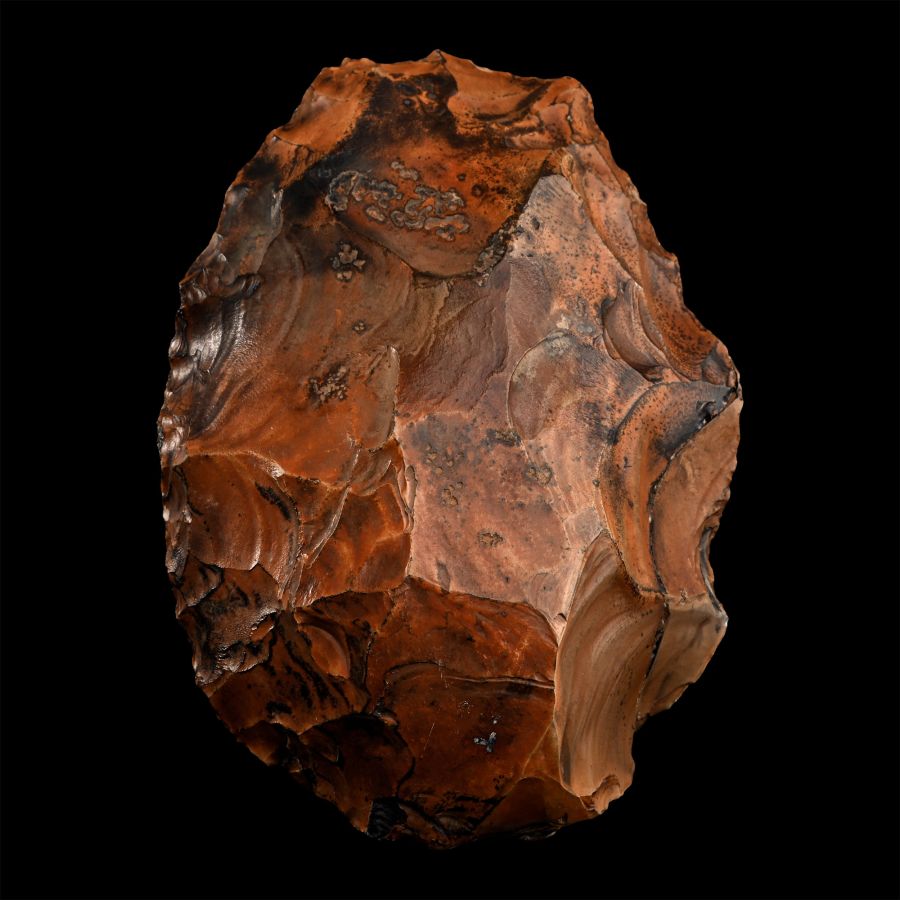
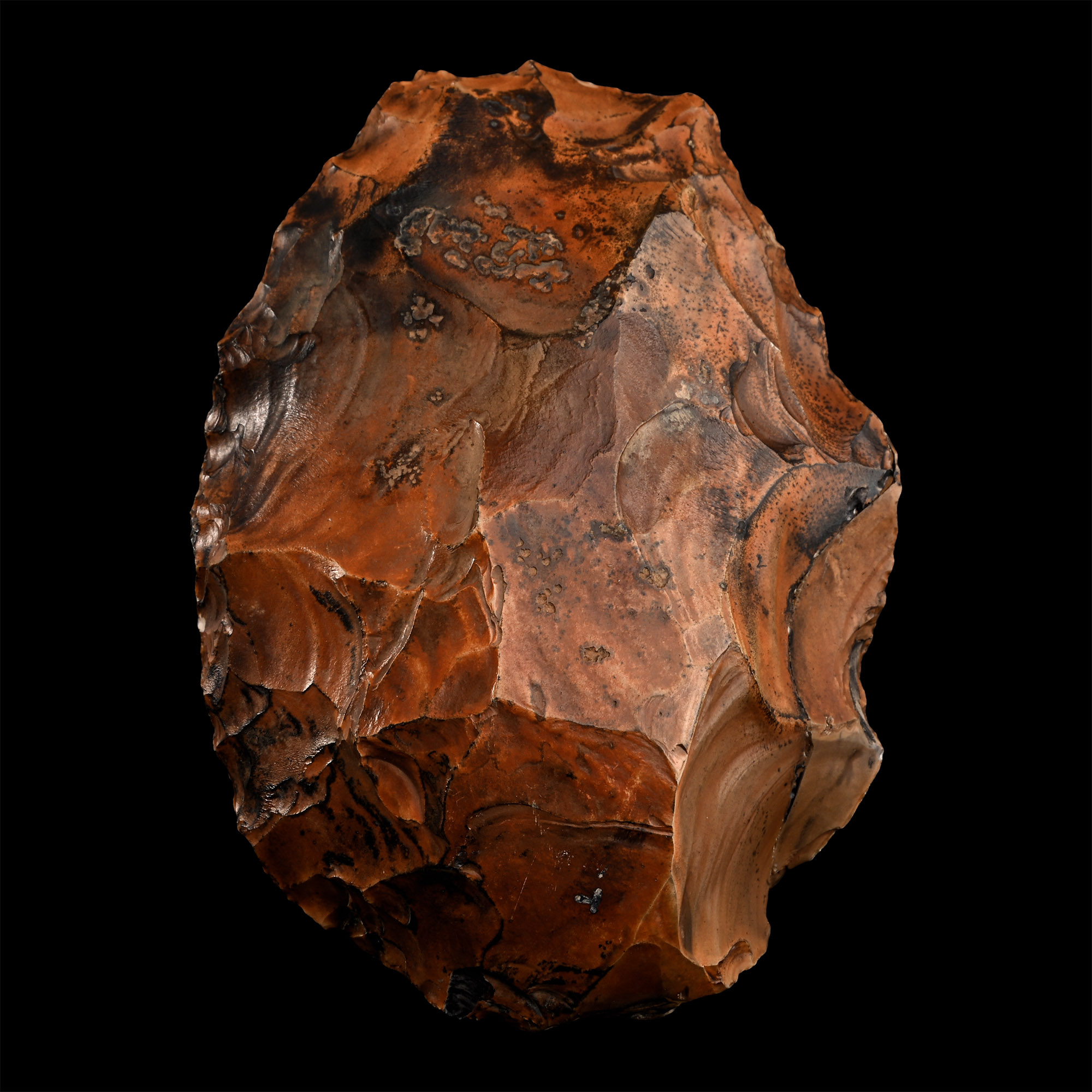
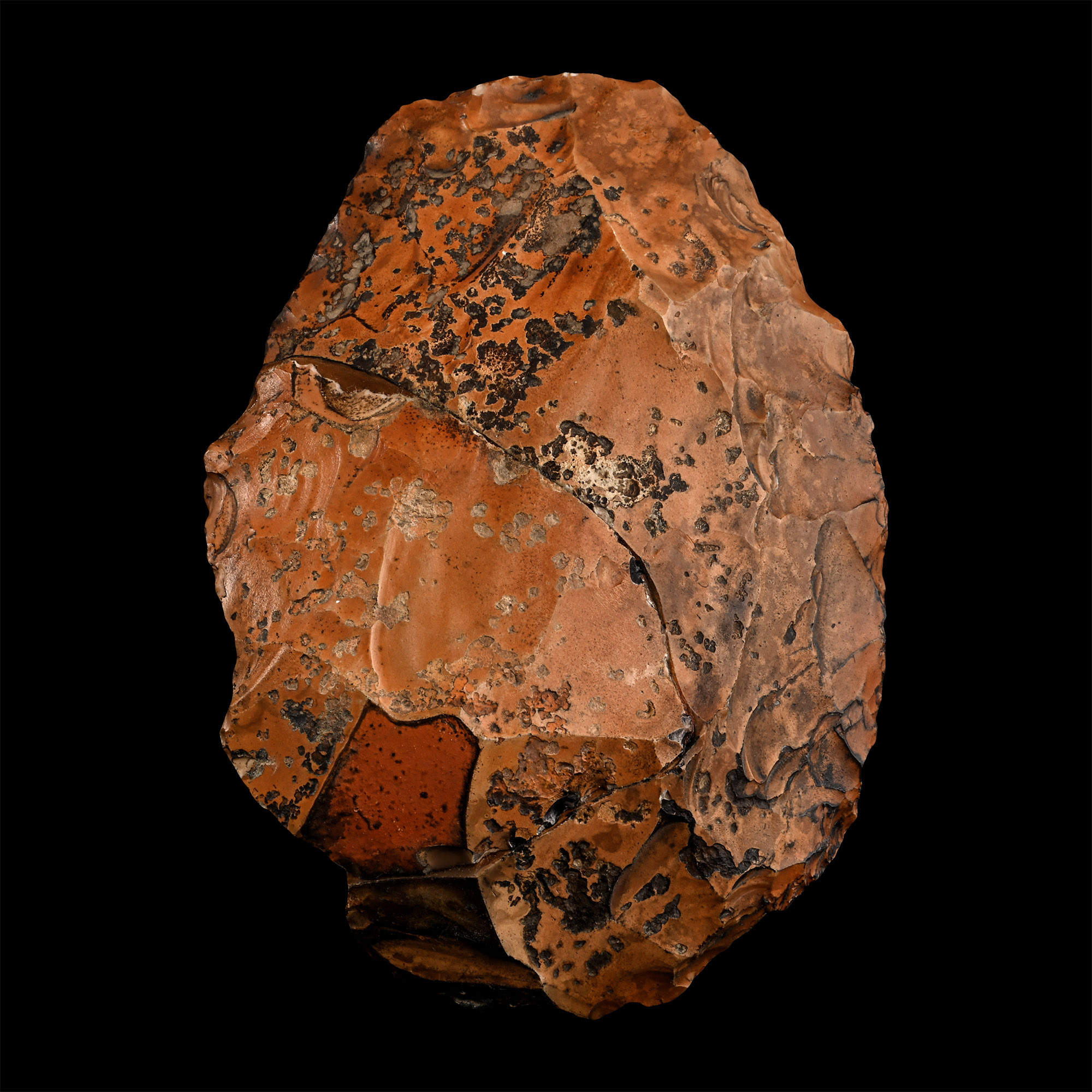
Egyptian Stone Age Knapped Handaxe
LOWER PALAEOLITHIC PERIOD, CIRCA 500,000-250,000 B.P.
4 7/8 in. (363 grams, 12.5 cm).
Expertly shaped through percussion flaking, creating zigzagging lateral edges, with a roughly ovate or teardrop form and a heavy, thick butt, tapering down to a distinct working edge. [No Reserve]
ProvenanceFrom the collection of A.D. Passmore (1879-1958), his collection of flints from the area of Stonehenge was donated to the Ashmolean Museum in the 1950s.
From the private collection of Peter Clayton, FCILIP, Dip, Arch, FSA, FRNS, Hemel Hempstead, Hertfordshire, UK; formed since the late 1950s.
Accompanied by a copy of an old handwritten information card by Peter Clayton.
The Egyptian flint hand axe, or biface, is a prehistoric stone tool with two faces. This tool holds the record for being the longest-used tool in human history. The technical term 'biface' comes from the archetypal model, generally a bifacial Lithic flake with an almond-shaped morphology. Hand axes typically have a pointed end and a rounded base, giving them their characteristic shape, and both faces have been knapped to remove the natural cortex, at least partially.
CONDITIONTimeLine Auctions follows a vetting process to ensure the authenticity and legality of all items, reinforcing our commitment to integrity and responsible trading. Each antiquity, antique, and coin lot undergoes thorough examination by a vetting committee of at least ten external specialists, professional trade association members, scientists, and archaeologists: Our Vetting Process
AUCTIONS:
TimeLine is a leading auction house specialising in antiquities, ancient art, collectables, natural history, coins, medals, and books. Our auctions offer museums, collectors, historians, and enthusiasts the opportunity to acquire unique and historically significant pieces.
LOT 0443
Egyptian Stone Age Knapped Handaxe
Estimate £150 - 200€170 - 230 (for guidance only)$200 - 270 (for guidance only)
-
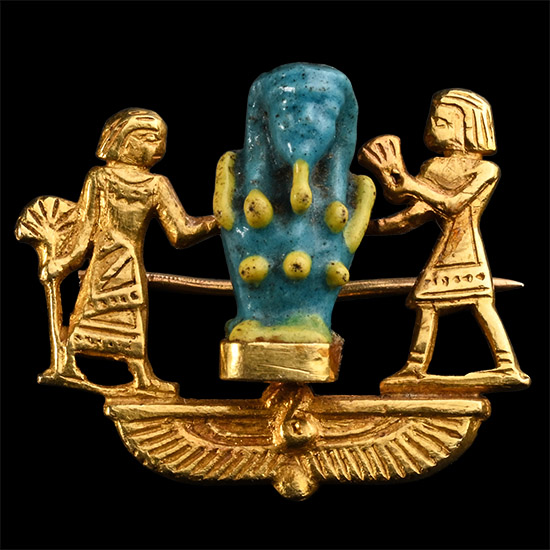
Egyptian Polychrome Faience Amulet in Revival Gold Brooch
Late Period-Ptolemaic Period, 664-30 B.C. and laterEstimate: £1,000 - 1,400 (+bp*)
Opening Bid: £500
The central blue-and-yellow polychrome faience mummiform figure, set in a nineteenth-century gold brooch, is flanked by two Egyptianising attendants, with a winged sun-disc motif below and a pin fitting on the reverse. 4.24 grams, 24 mm
Acquired on the European art market. UK, private collection. -
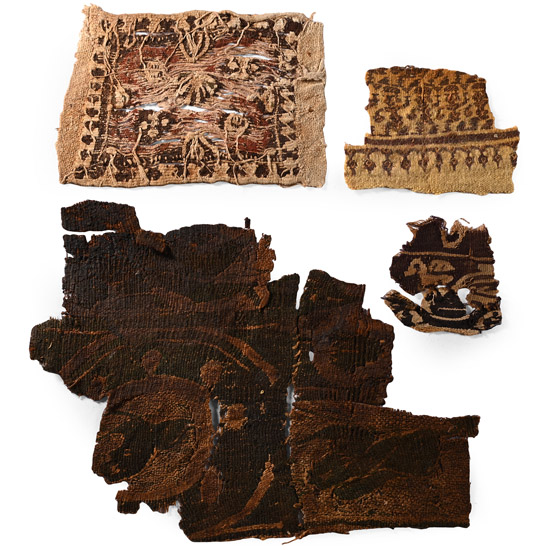
Egyptian Coptic Tunic Textile Fragments of Segmenta and Tablia with Figures, Animals and Geometric Decoration
Circa 5th-7th century A.D.Estimate: £70 - 90 (+bp*)
Bids: 1 | Current Bid: £5
Comprising: a large segmentum in linen and wool, with hares and lions, hunters with shields, purple wool on linen, S-torsion; fragment of a tabula with borders in dentellid decoration; a complete tabula in red, white and purple; small parts of a clavus with floral and animal embroidery. 27 grams total, 5.4-24.2 cm
Acquired 1970s-1996. Property of a North American collector. London collection, 2016.
The fragments are decorative parts of tunics. These are fabrics of great decorative finesse, with some elements displaying an unusual and extremely well-preserved colour palette. -
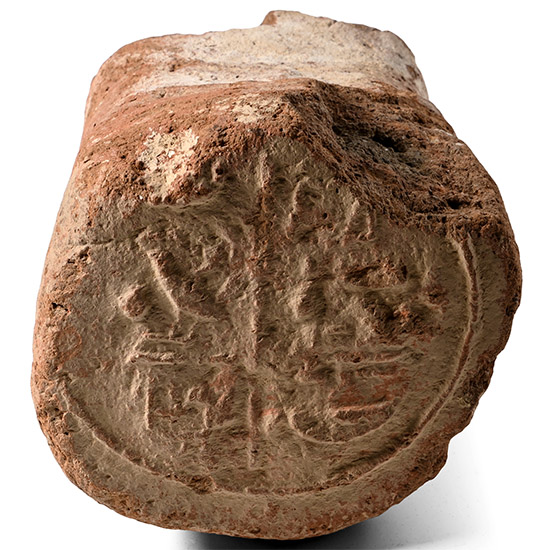
Egyptian Terracotta Funerary Cone of Amenemheb.
New Kingdom, 18th Dynasty, circa 1444-1400 B.C.Estimate: £200 - 300 (+bp*)
Bids: 4 | Current Bid: £80
Part of a tapering cone, with the circular flat end impressed with two columns of hieroglyphic text reading: 'Deputy of the great army, Amenemheb'. 333 grams, 90 mm
Acquired from Abdoul Rassoul on the West Bank at Luxor, 1974-1980 when a guest lecturer. From the private collection of Peter Clayton, FCILIP, Dip, Arch, FSA, FRNS, Hemel Hempstead, Hertfordshire, UK; formed since the late 1950s.
Amenemheb's tomb in the Theban necropolis at Sheikh Abd el-Qurna is numbered TT 85. Amenemhab (also known as Mahu), was an important military official who served under pharaohs Thutmose III and Amenhotep II.
