
Loading, please wait...


LOT 0453
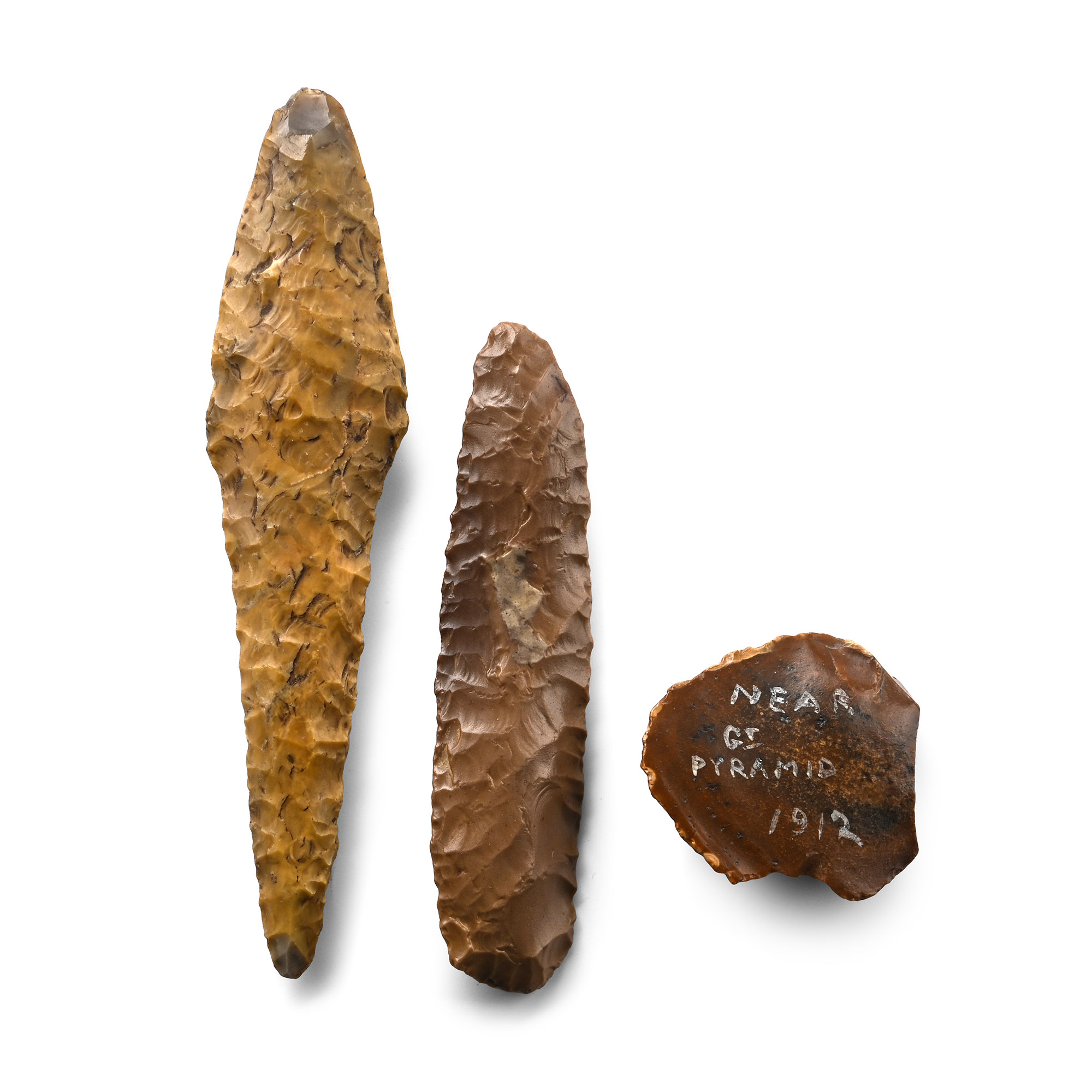
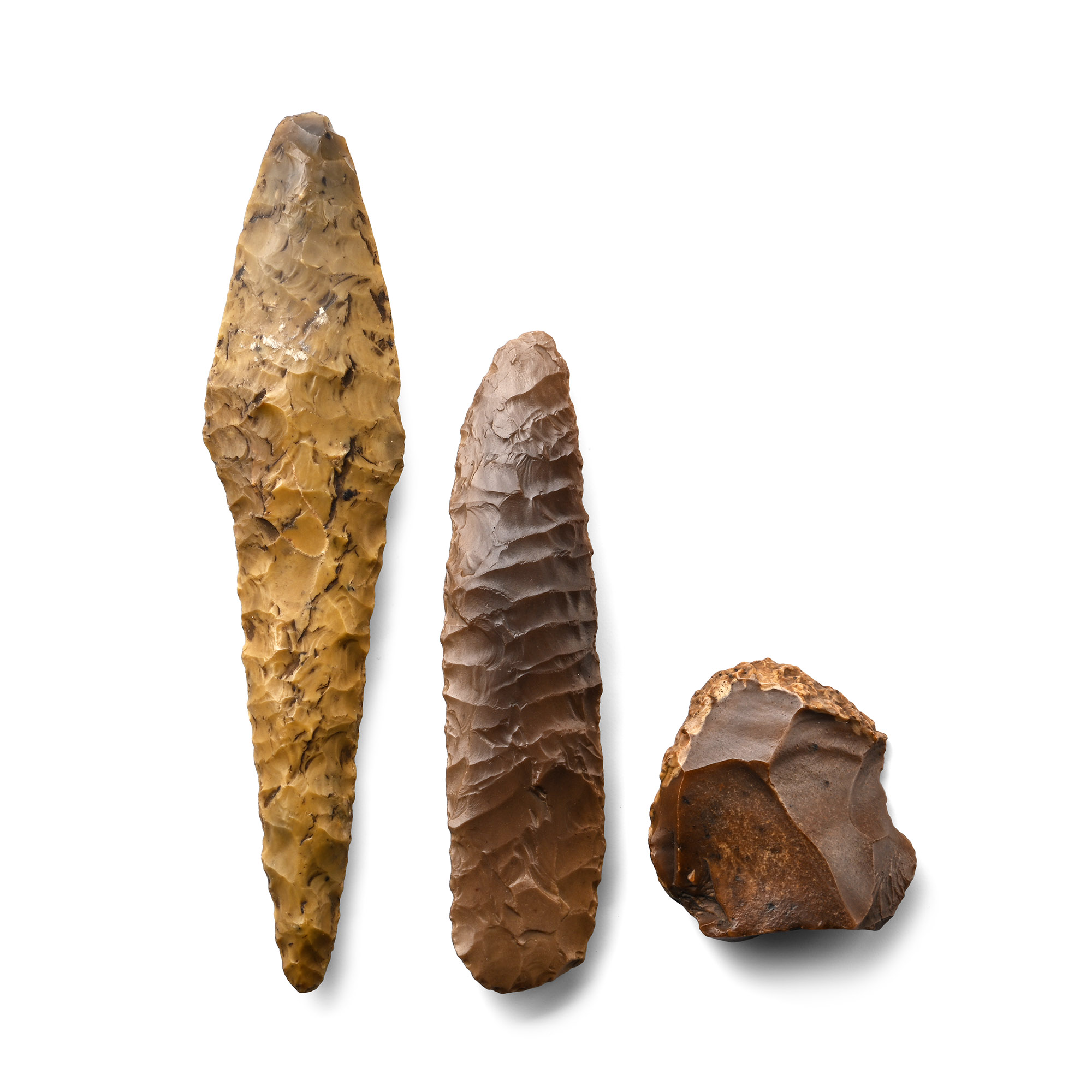
Egyptian Stone Age Knapped Daggers and Scraper
NEOLITHIC PERIOD, 11,000-5,200 B.P.
1 5/8 - 4 3/4 in. (67.4 grams total, 4.2-12.2 cm).
Comprising: an elongated lanceolate blade tapering to a point at each end, a slightly shorter knife or specialised scraper with a rounded end and a gently curved cutting edge, and a tabular flint scraper with an inked collector's note. [3, No Reserve]
ProvenanceFound Luxor and near the Great Pyramid.
From the collection of A.D. Passmore (1879-1958), his collection of flints from the area of Stonehenge was donated to the Ashmolean Museum in the 1950s.
From the private collection of Peter Clayton, FCILIP, Dip, Arch, FSA, FRNS, Hemel Hempstead, Hertfordshire, UK; formed since the late 1950s.
Accompanied by a copy of an old handwritten information card by Peter Clayton.
TimeLine Auctions follows a vetting process to ensure the authenticity and legality of all items, reinforcing our commitment to integrity and responsible trading. Each antiquity, antique, and coin lot undergoes thorough examination by a vetting committee of at least ten external specialists, professional trade association members, scientists, and archaeologists: Our Vetting Process
AUCTIONS:
TimeLine is a leading auction house specialising in antiquities, ancient art, collectables, natural history, coins, medals, and books. Our auctions offer museums, collectors, historians, and enthusiasts the opportunity to acquire unique and historically significant pieces.
LOT 0453
Egyptian Stone Age Knapped Daggers and Scraper
Estimate £150 - 200€170 - 230 (for guidance only)$200 - 270 (for guidance only)
-
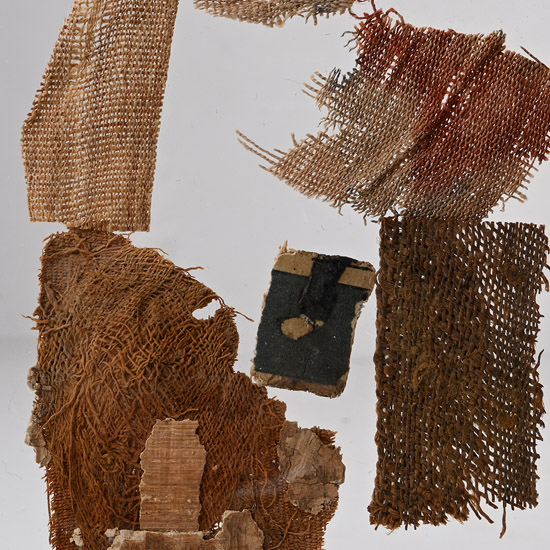
Egyptian Mummy Textile and Cartonnage Fragments in Display Stand
Circa 1500 B.C.-300 A.D.Estimate: £50 - 70 (+bp*)
Opening Bid: £5
Comprising fragments of open-structured, loose-weave brown fabric, a painted cartonnage piece, and another fabric piece with attached fragments of plaster; mounted in a protective acrylic display. 82 grams total, 16 cm including stand
with a privately curated collection, 1980s-early 2000s. From the private collection and estate of Christine Simons (1943-2025), West Midlands, UK. -
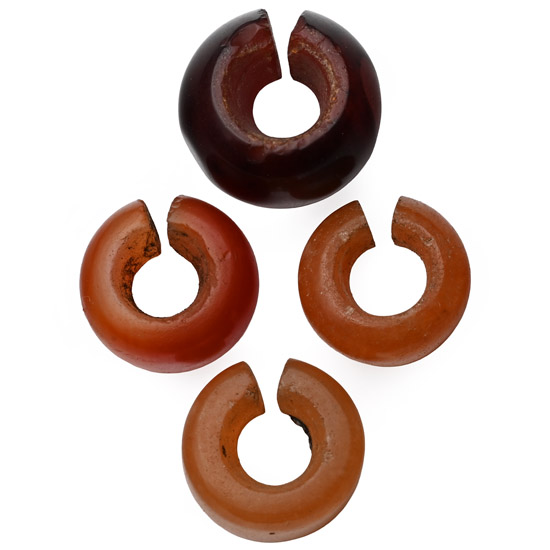
Egyptian Carnelian Hair Ring Collection
New Kingdom, circa 1400–1292 B.C.Estimate: £200 - 300 (+bp*)
Opening Bid: £100
Each a penannular lentoid-section type with narrow slot. 17 grams total, 16-20 mm
London gentleman's collection, 1970-1990s, by descent. -
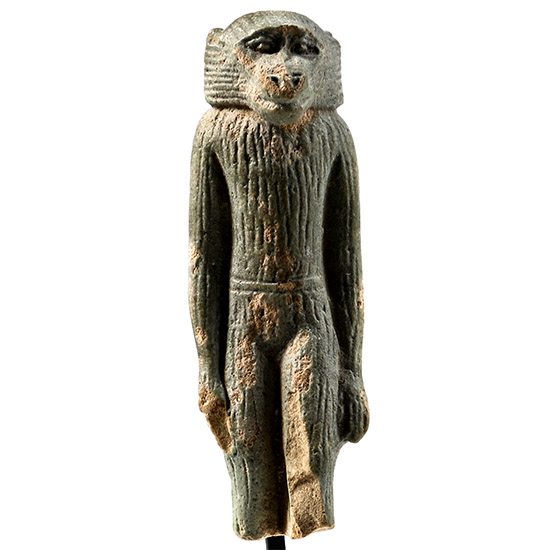
Egyptian Faience Amulet in the Shape of a Striding Monkey
Late Period, 664-332 B.C.Estimate: £1,200 - 1,700 (‡+bp*)
Opening Bid: £675
Formed as a striding African savannah monkey (Chlorocebus aethiops), or grivet, with human proportions but monkey hair texture; long arms hanging close to the body, hands extended downward; an incised belt at the waist; a suspension loop at the reverse (repaired); with a custom-made stand. 68.9 grams total, amulet: 57 mm, 13.5 cm high including stand
Private collection of an English amateur archaeologist (1849-1927), thence by descent. with Bonhams Auction, 5 October 2011, no.360. Thereafter, private collection of Erika (1934-2025) and Jakob (1927-2025) Binkert, Binningen, Switzerland; acquired in 2012 from Jean-David Cahn AG, exhibition Aegyptiaca, Basel. Thence by descent.
In the minds of the ancient Egyptians, male monkeys' behaviour may have linked them to masculinity, suggesting that, when worn as an amulet, they could have served a magical role in the reproductive cycle, facilitating birth in this life and rebirth in the afterlife. Alternatively, the prolonged care that females provide for their offspring may have linked the monkey with maternal protection and fertility. These associations may have been reinforced here by the monkey’s greenish faience, which symbolised renewal.
