
Loading, please wait...

LOT 0480
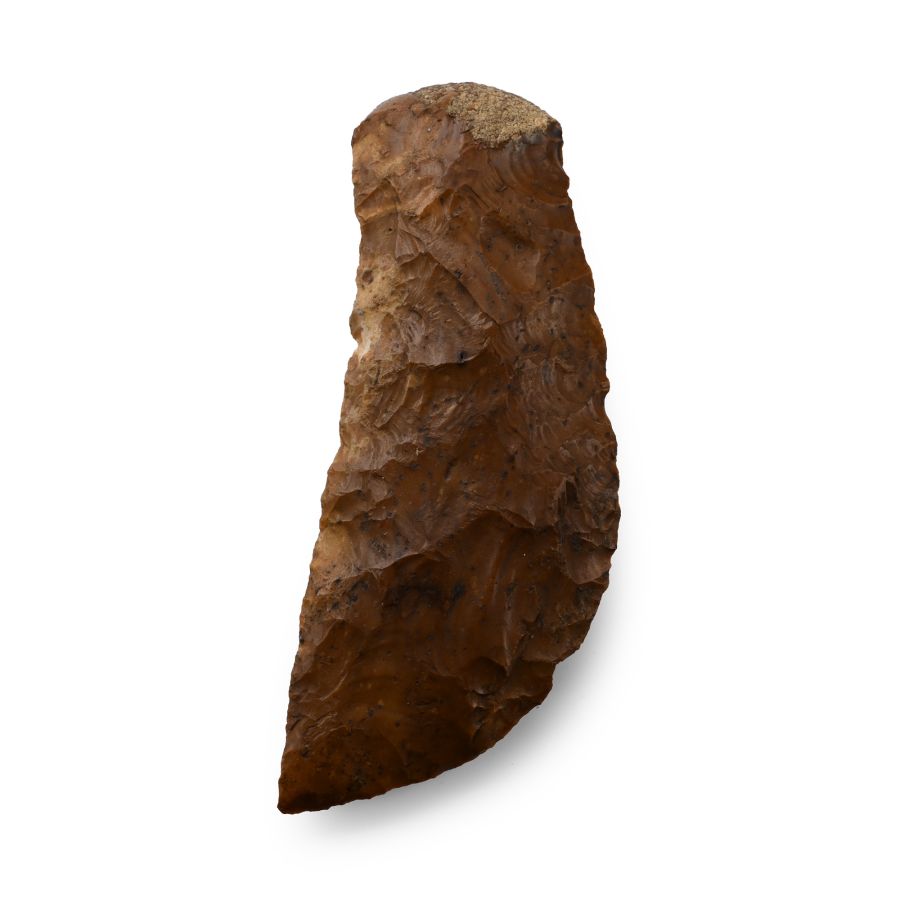
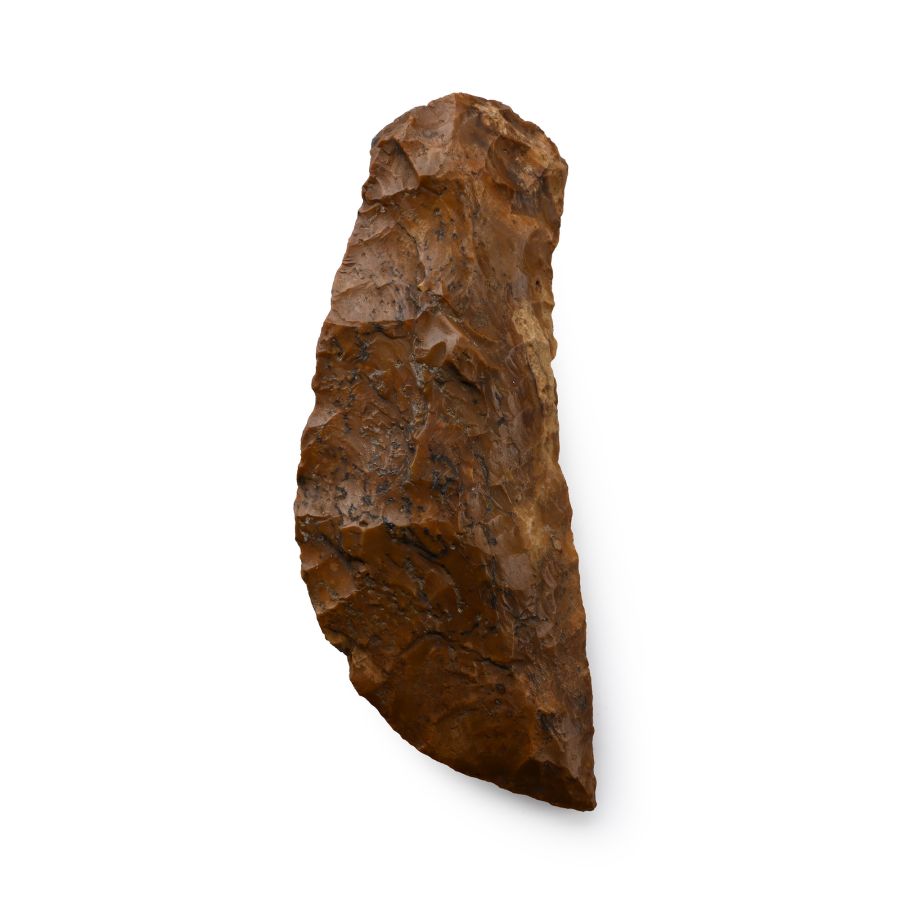
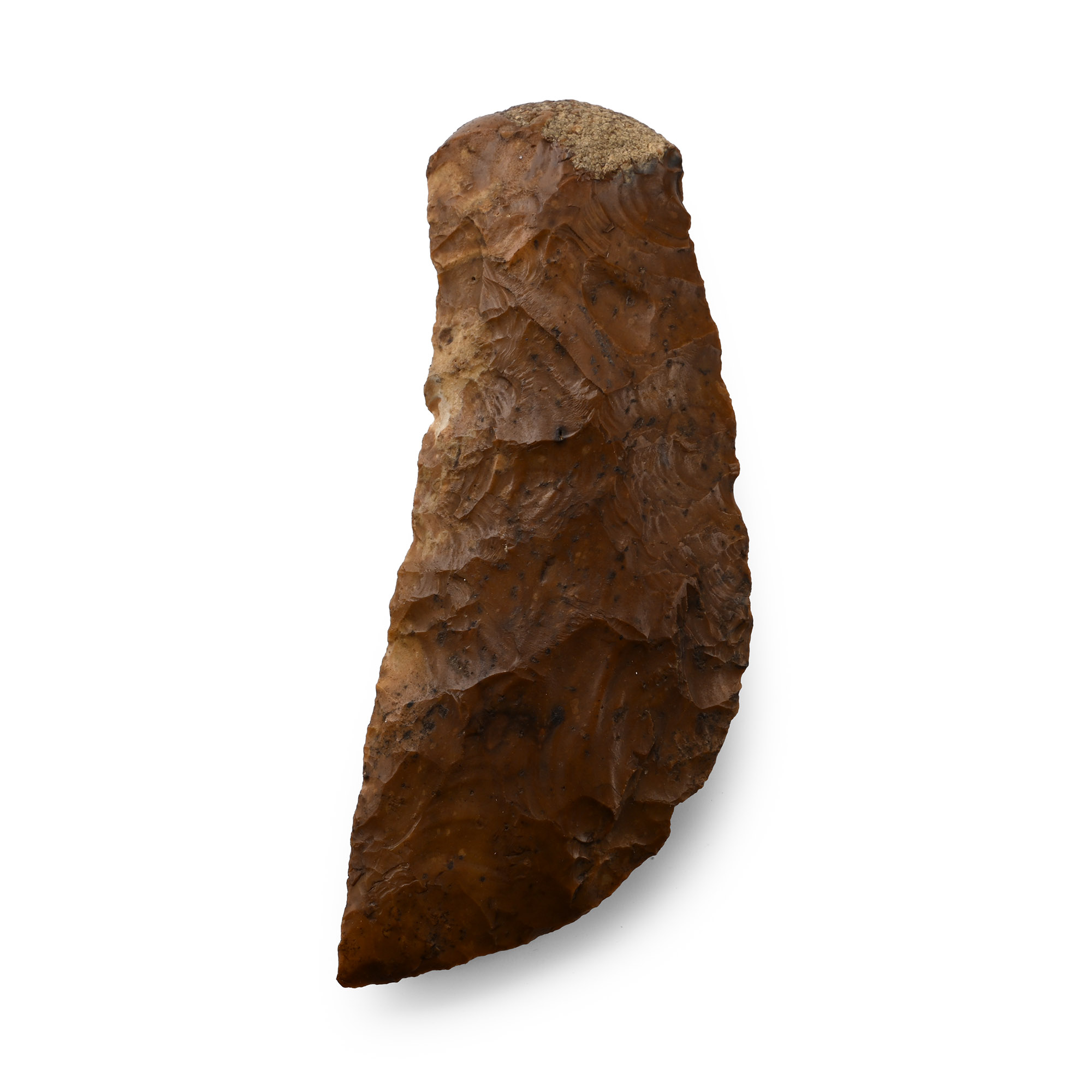
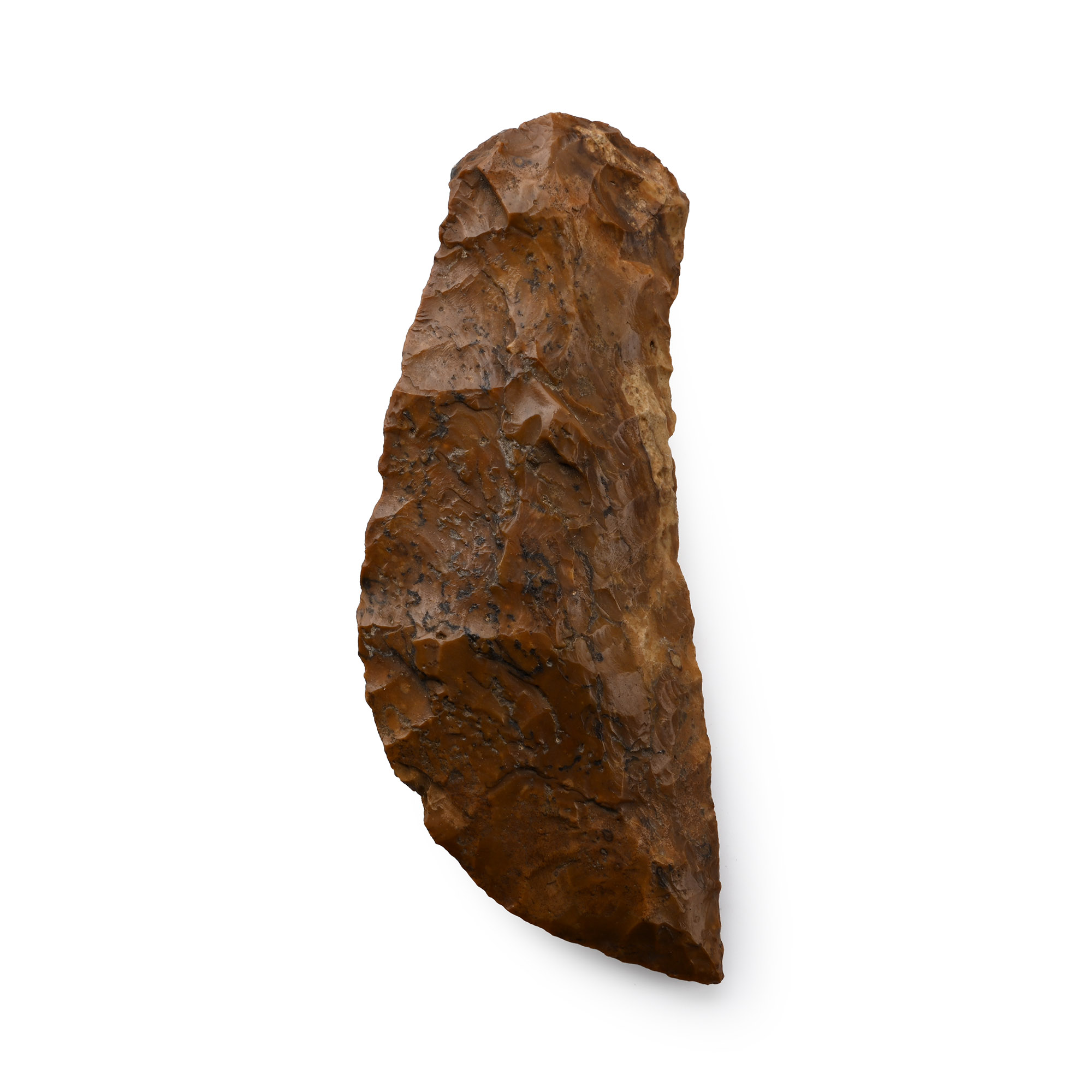
Egyptian Stone Age Knapped Curved Knife Blade from Thebes
NEOLITHIC PERIOD, 11,000-5,200 B.P.
4 in. (59 grams, 10.4 cm).
Lentoid in profile, with one curved blade and a sharp tip, rounded butt; accompanied by a handwritten label reading 'Knife with fine ripple flaking, Neolithic'. [No Reserve]
ProvenanceFound Thebes.
From the collection of A.D. Passmore (1879-1958), his collection of flints from the area of Stonehenge was donated to the Ashmolean Museum in the 1950s.
From the private collection of Peter Clayton, FCILIP, Dip, Arch, FSA, FRNS, Hemel Hempstead, Hertfordshire, UK; formed since the late 1950s.
Accompanied by a copy of an old handwritten information card by Peter Clayton.
TimeLine Auctions follows a vetting process to ensure the authenticity and legality of all items, reinforcing our commitment to integrity and responsible trading. Each antiquity, antique, and coin lot undergoes thorough examination by a vetting committee of at least ten external specialists, professional trade association members, scientists, and archaeologists: Our Vetting Process
AUCTIONS:
TimeLine is a leading auction house specialising in antiquities, ancient art, collectables, natural history, coins, medals, and books. Our auctions offer museums, collectors, historians, and enthusiasts the opportunity to acquire unique and historically significant pieces.
LOT 0480
Egyptian Stone Age Knapped Curved Knife Blade from Thebes
Estimate £80 - 100€93 - 116 (for guidance only)$108 - 135 (for guidance only)
-
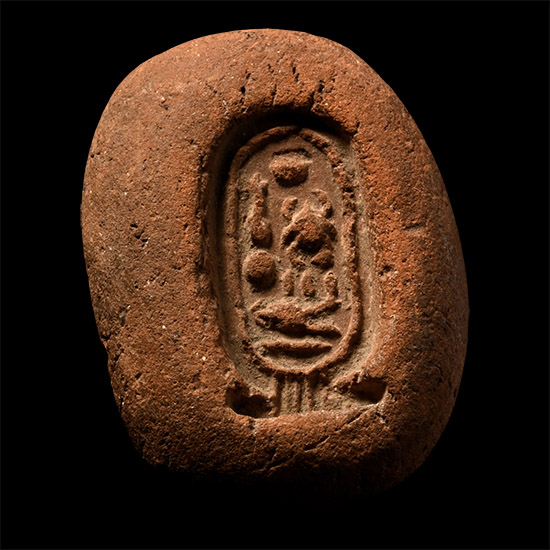
Egyptian Terracotta Mould with Impression of the Cartouche of Pharaoh Akhenaten
New Kingdom, 18th Dynasty, Amarna Period, 1353-1332 B.C.Estimate: £400 - 600 (+bp*)
Bids: 6 | Current Bid: £220
Rounded tongue-shaped mould with an impressed cartouche containing the throne name of Akhenaten, Nefer-kheperu-Re (meaning 'Beautiful are the Manifestations of Re'). 4.26 grams, 25 mm
Acquired 7th February 1962, for 5 shillings. From the private collection of Peter Clayton, FCILIP, Dip, Arch, FSA, FRNS, Hemel Hempstead, Hertfordshire, UK; formed since the late 1950s. Accompanied by an old handwritten information card by Peter Clayton, collection no.86.
Moulds like this were used to produce faience amulets or inlays bearing the pharaoh's cartouche. Akhenaten's throne name, Nefer-kheperu-Re, remained unchanged throughout his reign, while his birth name changed from Amenhotep IV ('Amun is satisfied') to Akhenaten ('Servant of the Aten'). -
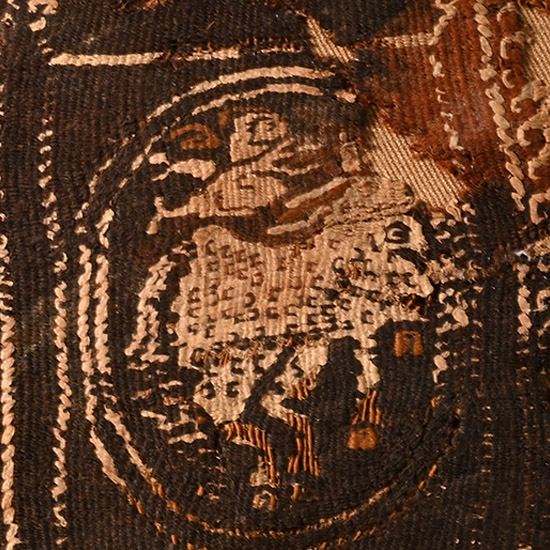
Egyptian Mounted Coptic Tunic Textile Fragment of a Tablion with Animals
Circa 4th-7th century A.D.Estimate: £60 - 80 (+bp*)
Bids: 1 | Current Bid: £5
In purple wool and coarse linen, S-torsion, embroidered with an image of a horse and a flying putto, the borders decorated with meanders; mounted on linen backing. 54 grams total, 14 cm
Acquired 1970s-1996. Property of a North American collector. London collection, 2016.
The tabula, or tablion, was a square embroidery decorating tunics and mantles. These fabrics were of great decorative finesse, displaying an unusual and extremely well-preserved colour palette. The animal design recalls Iranian motifs, while the flying putto combines Dionysiac and Christian figurative elements. -
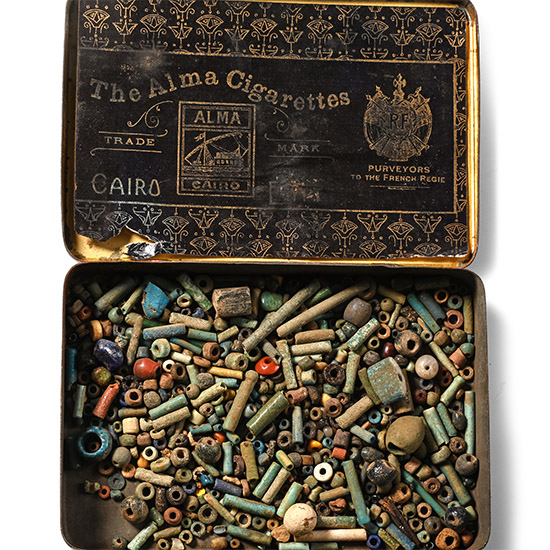
Egyptian Assorted Faience and Other Beads in Early 20th Century Tin Box
Late Period-Ptolemaic Period, circa 664-30 B.C.Estimate: £60 - 80 (+bp*)
Bids: 1 | Current Bid: £5
Comprising mostly glazed tubular, globular, barrel and other beads, in a vintage red cigarette box with an old label 'The Alma Cigarettes Company, Ltd., Boulak Square Cairo'. 87 grams total including tin, 1-18 mm
Excavated from Egypt in 1914. From the private collection of Mr David Sams and his wife Elizabeth Kate Sams, gentry and amateur archaeologists who travelled to Egypt in 1914 with their daughter Ethel. Mr Sams and his wife led digging expeditions from which these items come from the family estate of Mr and Mrs Sams, by direct descent to their granddaughter.
