
Loading, please wait...


LOT 0488
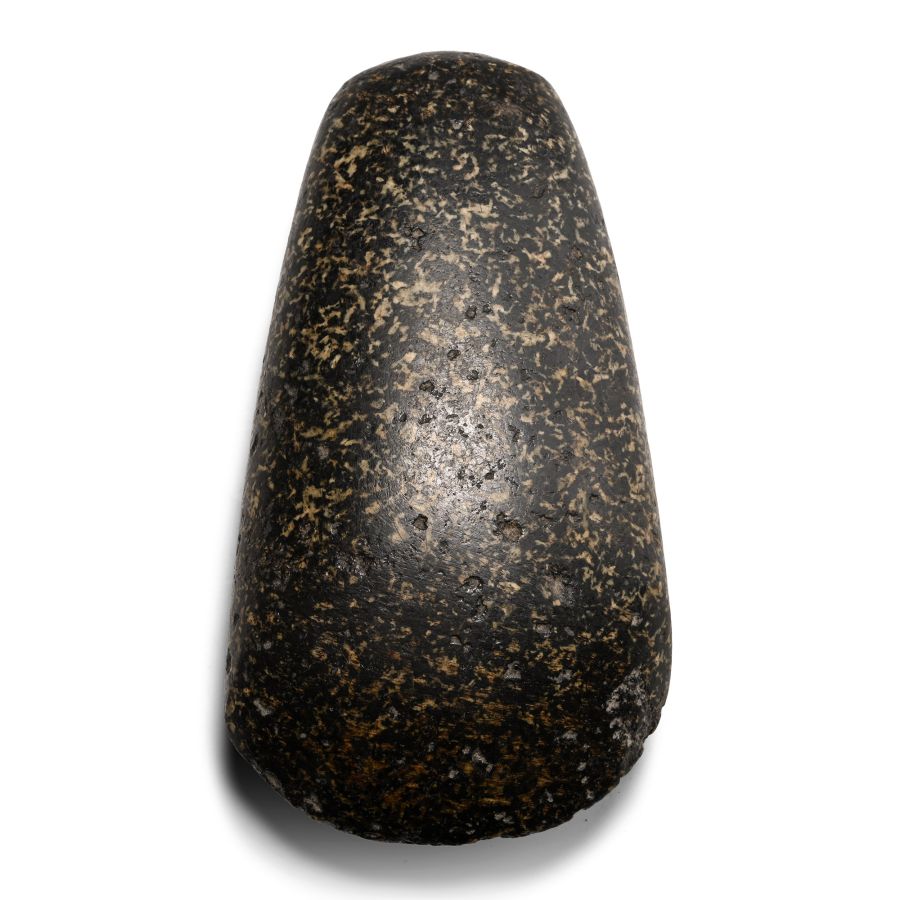
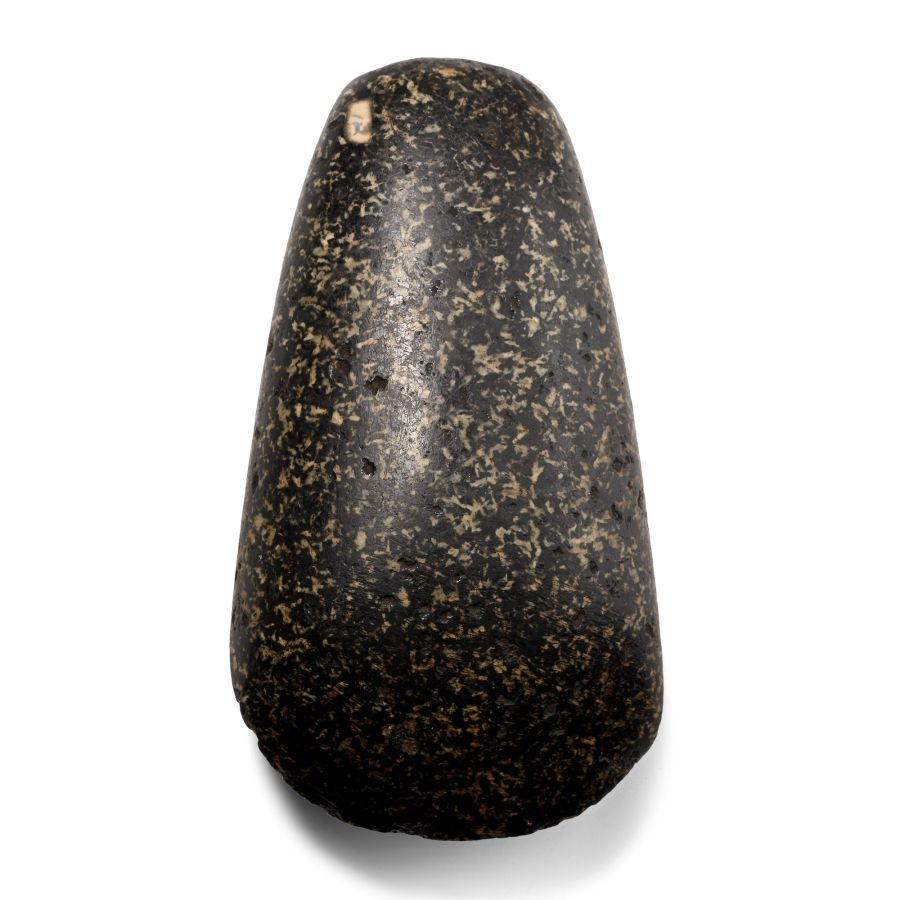
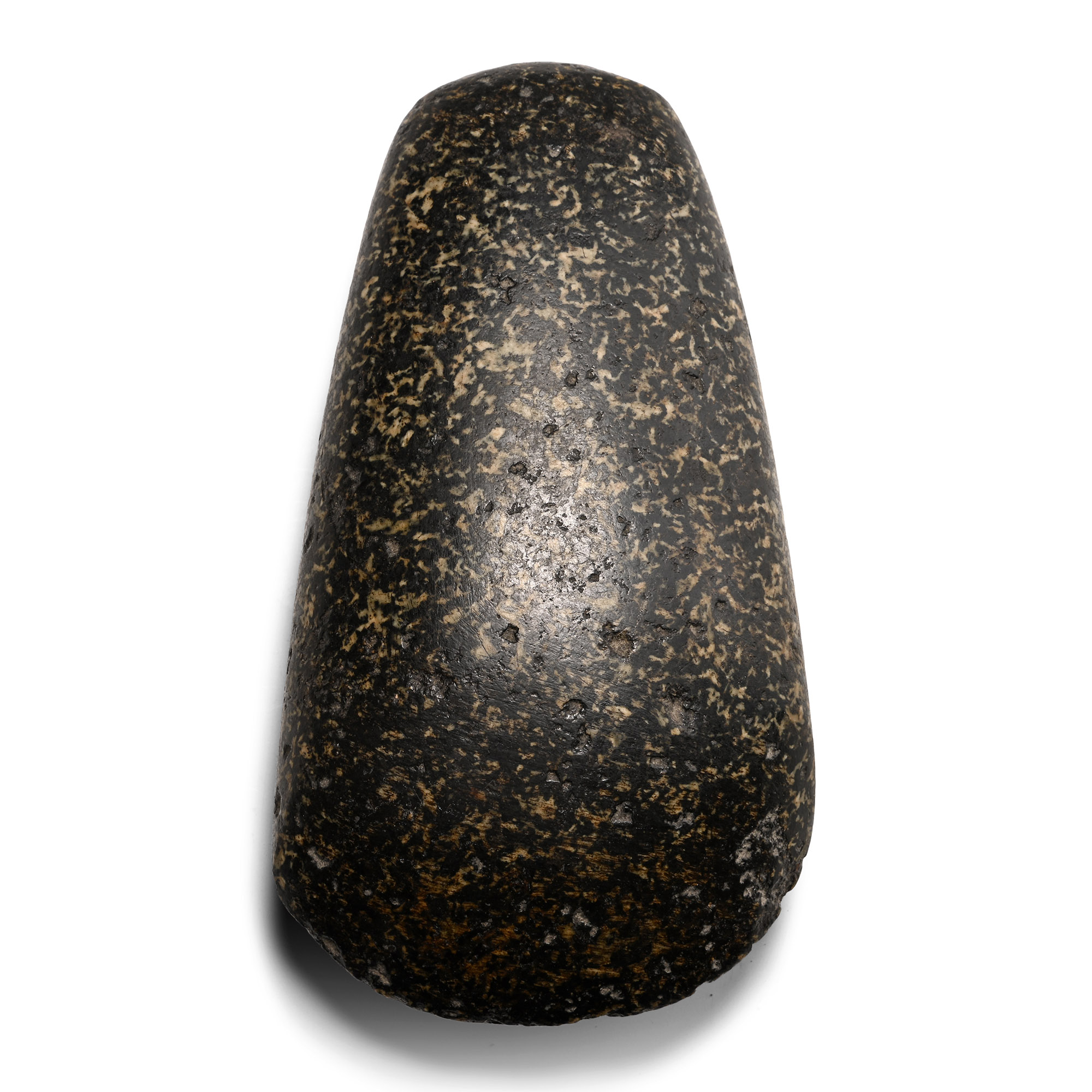
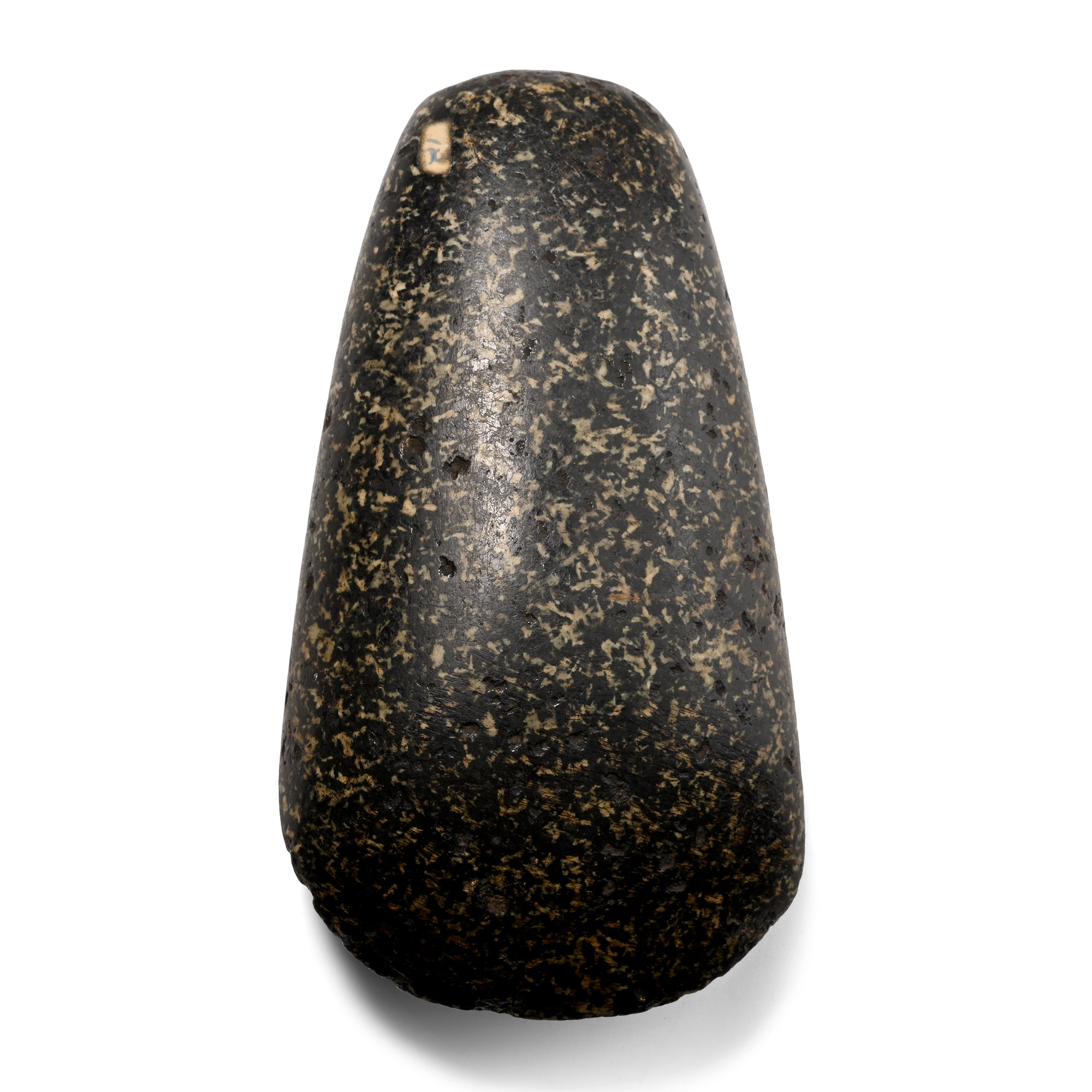
Egyptian Stone Age Diorite Polished Axehead
EARLY DYNASTIC PERIOD, CIRCA 3,000 B.C.
5 in. (551 grams, 12.7 cm).
Polished to a high standard with curved cutting edge. [No Reserve]
ProvenanceAcquired Glyn Antiques, Portabello Road, 26 November 1960, for £2.00.
From the private collection of Peter Clayton, FCILIP, Dip, Arch, FSA, FRNS, Hemel Hempstead, Hertfordshire, UK; formed since the late 1950s.
Accompanied by an old handwritten information card by Peter Clayton, collection no.78.
The great British Egyptologist Flinders Petrie recovered numerous polished stone axes from various sites in Egypt. Flint was rarely used, though it was popular for other tools. Instead, other hardstones were favoured (Petrie, W.M.F., Prehistoric Egypt, London, 1920, p. 24, for a brief discussion; pl. XXVII, for illustrated examples).
CONDITIONTimeLine Auctions follows a vetting process to ensure the authenticity and legality of all items, reinforcing our commitment to integrity and responsible trading. Each antiquity, antique, and coin lot undergoes thorough examination by a vetting committee of at least ten external specialists, professional trade association members, scientists, and archaeologists: Our Vetting Process
AUCTIONS:
TimeLine is a leading auction house specialising in antiquities, ancient art, collectables, natural history, coins, medals, and books. Our auctions offer museums, collectors, historians, and enthusiasts the opportunity to acquire unique and historically significant pieces.
LOT 0488
Egyptian Stone Age Diorite Polished Axehead
Estimate £400 - 600€460 - 700 (for guidance only)$540 - 810 (for guidance only)
-
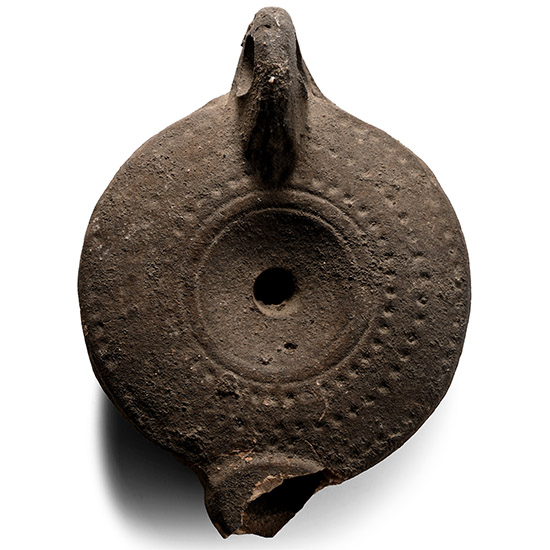
Romano-Egyptian Terracotta Toad Oil Lamp
Roman Period, 3rd century A.D.Estimate: £40 - 60 (+bp*)
Bids: 1 | Current Bid: £5
Squat in profile and discoid in plan, with a central perforation on the upper face and a pierced lug handle at the rear; concentric bands of pointillé ornament on the upper face and incised rings on the base; nozzle broken; supplied with an old handwritten collector's record slip made from an envelope. 97 grams, 11.3 cm
Found Alexandria, Egypt. From the estate of a deceased Sussex private collector since the early 20th century. Accompanied by an old original handwritten information slip. -
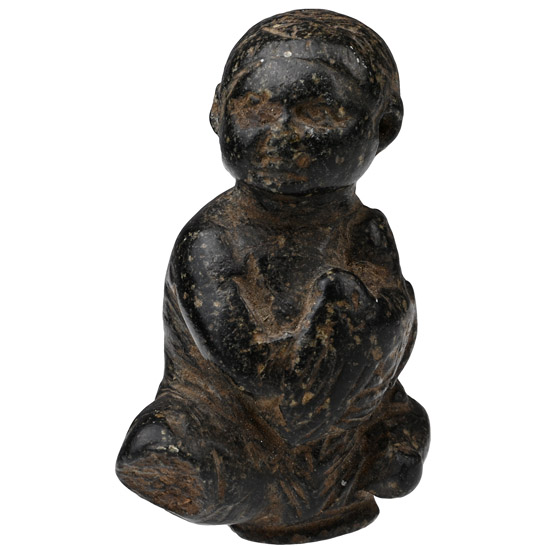
Egyptian Steatite Statuette of a Boy
Alexandria, 3rd century B.C.Estimate: £250 - 350 (‡+bp*)
Opening Bid: £135
Modelled in the round figure of a child crouching holding a bird close to his chest; socket to each ear; mounted on a custom-made stand. 67.4 grams total, 5 cm, 10 cm high including stand
Ex Herbert A.Cahn, Basle, 1960s. -
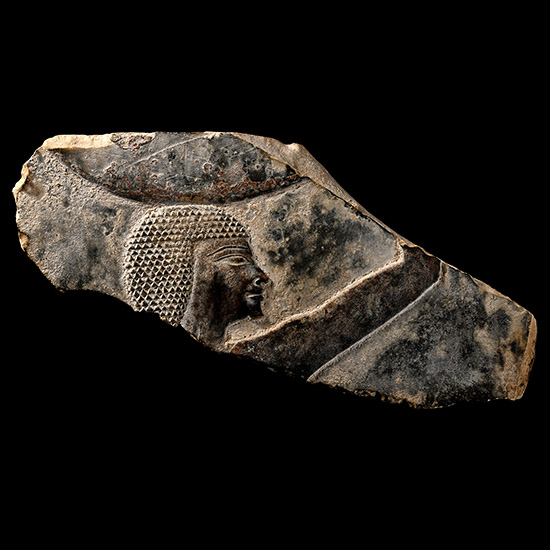
Egyptian Limestone Relief Fragment of a Man
26th Dynasty, 664-525 B.C.Estimate: £1,000 - 1,400 (+bp*)
Bids: 10 | Current Bid: £550
An irregular, elongated limestone fragment intricately carved in low, raised relief, depicting the head and neck of a male figure facing right, wearing a tightly curled wig and a short beard, his arm extended upwards, likely to support the large basket resting on his head. 180 grams total including stand, fragment: 14.5 cm wide
From the private collection of Peter Clayton, FCILIP, Dip, Arch, FSA, FRNS, Hemel Hempstead, Hertfordshire, UK; formed since the late 1950s.
The downturned eyebrow above an almond-shaped eye with a sharply defined eyelid and a long, thin cosmetic line, the small, fairly rounded nose with a lightly drilled nostril above rather thick lips, and the chin below obscured by the short beard are characteristic of the archaising style of the early 26th Dynasty. Artisans of that period adapted and refined earlier Old Kingdom artistic traditions, most apparent in the tomb scenes of high officials at Thebes, particularly those of Montuemhat (see the discussion: der Manuelian, P., 'Two Fragments of Relief and a New Model for the Tomb of Montuemhet at Thebes', Journal of Egyptian Archaeology 71 (1985), pp. 98–121).
