
Loading, please wait...
LOT 0668
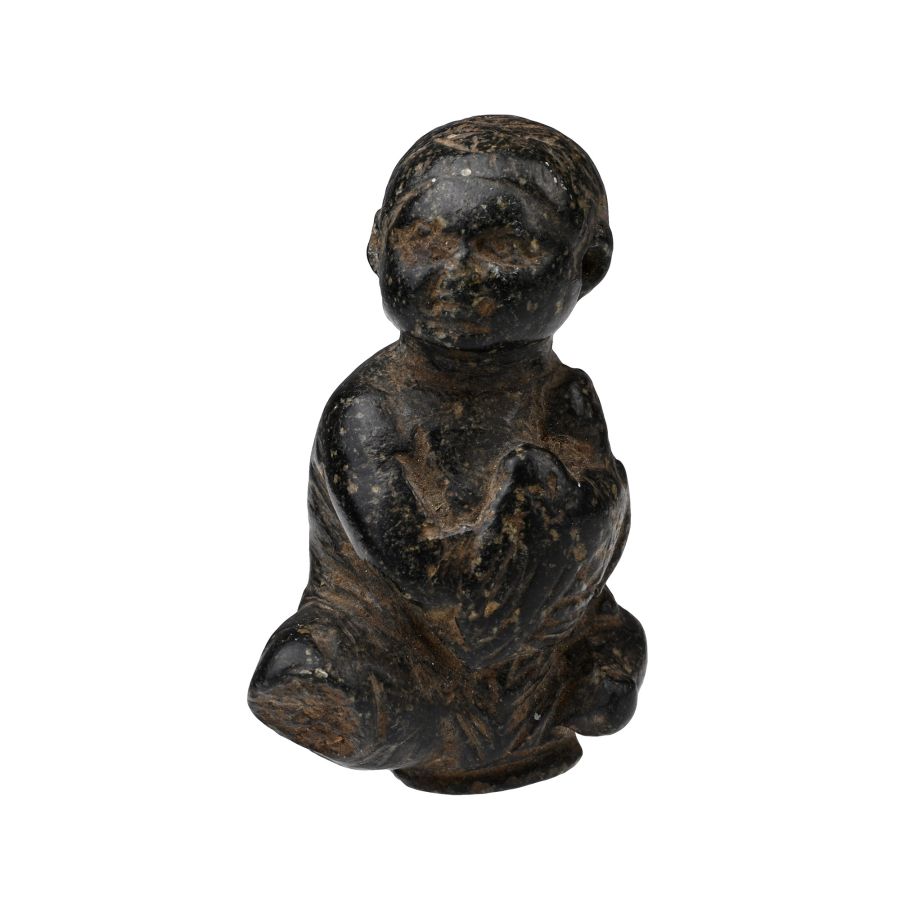
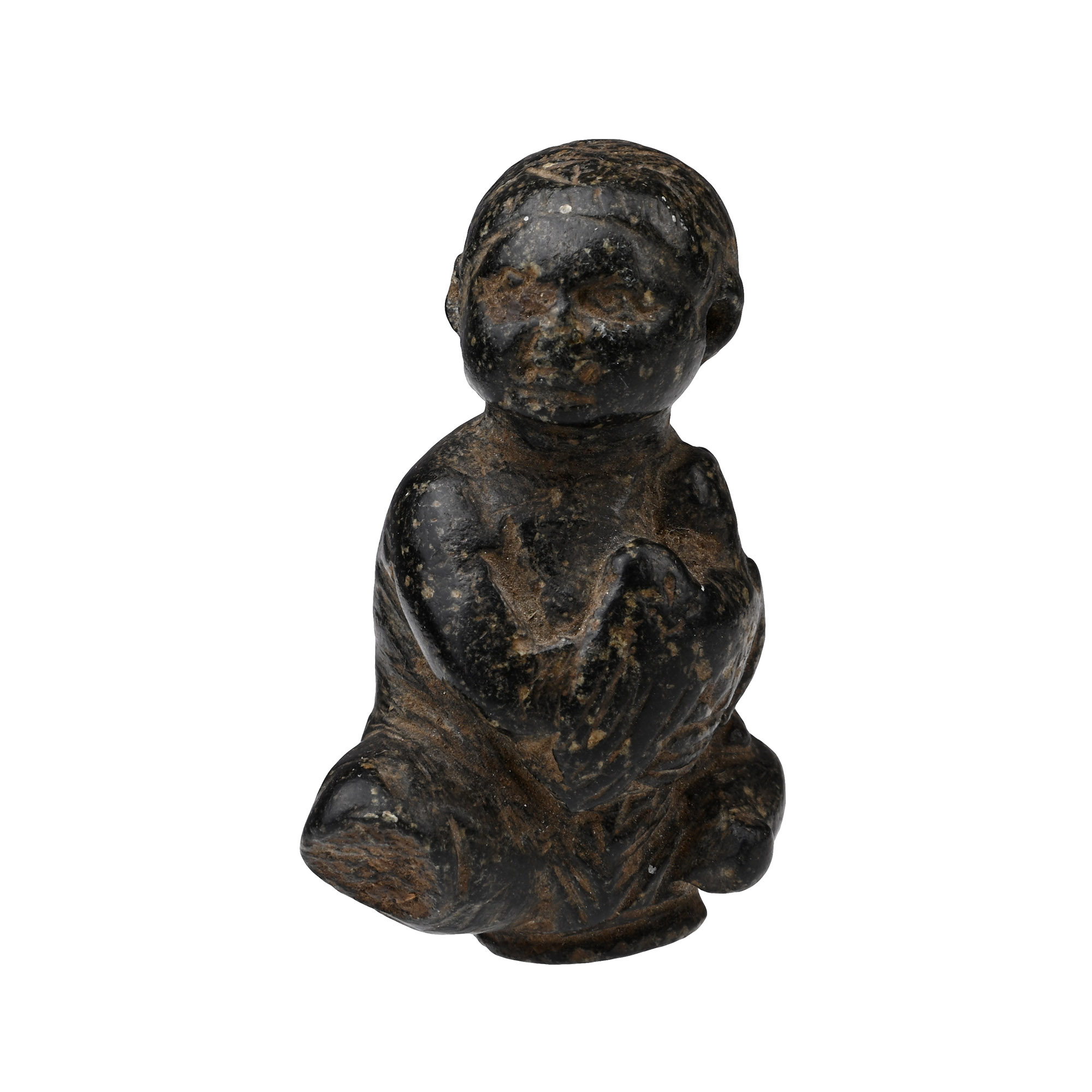
Egyptian Steatite Statuette of a Boy
ALEXANDRIA, 3RD CENTURY B.C.
2 in. (4 in.) (67.4 grams total, 5 cm, 10 cm high including stand).
Modelled in the round figure of a child crouching holding a bird close to his chest; socket to each ear; mounted on a custom-made stand.
ProvenanceEx Herbert A.Cahn, Basle, 1960s.
CONDITIONTimeLine Auctions follows a vetting process to ensure the authenticity and legality of all items, reinforcing our commitment to integrity and responsible trading. Each antiquity, antique, and coin lot undergoes thorough examination by a vetting committee of at least ten external specialists, professional trade association members, scientists, and archaeologists: Our Vetting Process
AUCTIONS:
TimeLine is a leading auction house specialising in antiquities, ancient art, collectables, natural history, coins, medals, and books. Our auctions offer museums, collectors, historians, and enthusiasts the opportunity to acquire unique and historically significant pieces.
LOT 0668
Egyptian Steatite Statuette of a Boy
Estimate £250 - 350€290 - 410 (for guidance only)$340 - 470 (for guidance only)
Opening Bid
£135 (EUR 157; USD 182) ‡+BP*
-
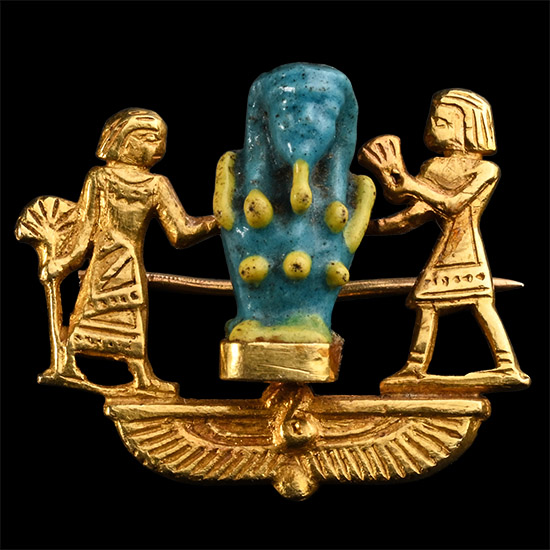
Egyptian Polychrome Faience Amulet in Revival Gold Brooch
Late Period-Ptolemaic Period, 664-30 B.C. and laterEstimate: £1,000 - 1,400 (+bp*)
Opening Bid: £500
The central blue-and-yellow polychrome faience mummiform figure, set in a nineteenth-century gold brooch, is flanked by two Egyptianising attendants, with a winged sun-disc motif below and a pin fitting on the reverse. 4.24 grams, 24 mm
Acquired on the European art market. UK, private collection. -
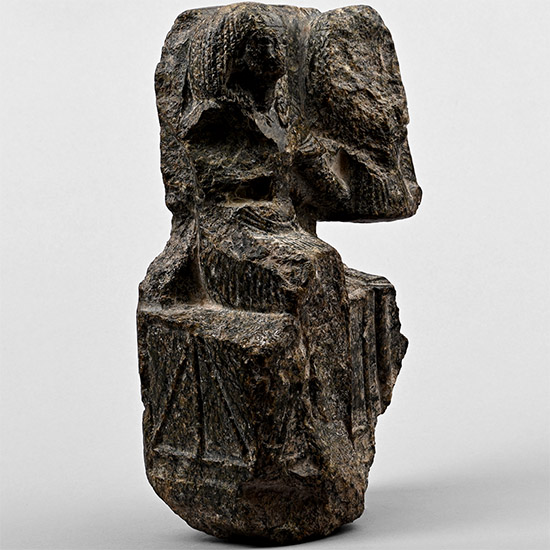
Egyptian Serpentine Statuette of a Seated Couple
New Kingdom, 19th Dynasty, 1290-1279 B.C.Estimate: £15,000 - 20,000 (‡+bp*)
Opening Bid: £8,200
Depicting a husband and wife seated side-by-side on chairs, each with an arm around the spouse's waist as a sign of intimacy; both wearing richly pleated robes, the man sporting a duplex wig and earrings, the woman with a longer wig with tassel ends, both composed of long rows of tight curls; the back slab with low-relief depictions of a standing man and woman facing each other, with traces of a hieroglyphic inscription; the surface slightly worn and abraded in places; reassembled from two parts. 3.89 kg, 24.5 cm
From the estate of the artist Margo Veillon (1907-2003), Lausanne, Switzerland.
The statuette is delicately sculpted and of high quality. The fine facial features of the official, the individual strands of the wigs and the pleats of the robes exhibit exquisite craftsmanship. Remarkably, the reverse of the sculpture is decorated with a fragmentarily preserved scene, most likely of the couple, with traces of inscription. -
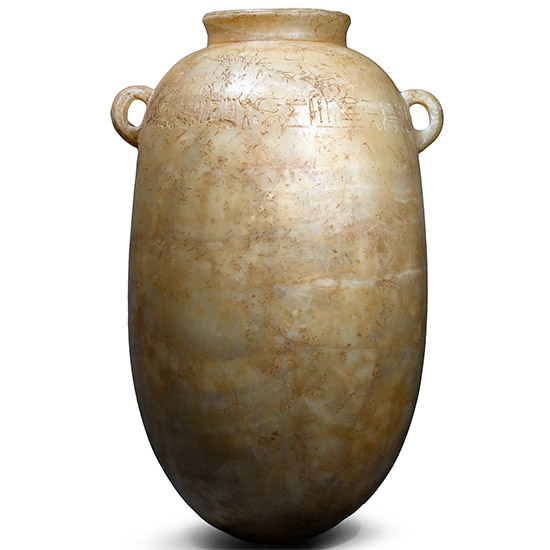
Very Large Egypto-Phoenician Alabaster Alabastron with Hieroglyphic Inscription
Third Intermediate Period-Late Period, circa 1077-525 B.C.Estimate: £12,000 - 17,000 (‡+bp*)
Opening Bid: £6,000
Barrel-shaped in profile, with a rounded base, broad shoulder and flared mouth, and two integral lateral loop handles; a single line of incised hieroglyphic text around the shoulder. 420 grams, 37 cm
Formerly in a private collection, Beirut, Lebanon, 1990s. Swiss private collection, acquired from Mr H., Geneva, 2010. Accompanied by a copy of an Art Loss Register certificate, no.S00059830 This lot has been checked against the Interpol Database of stolen works of art and is accompanied by search certificate number no.13221-249178.
In the Phoenician necropolises of Andalusia, the deceased's ashes were enclosed in luxurious alabaster urns of Egyptian manufacture. At Almuñécar, for example, some urns in the Phoenician necropolis preserved inscriptions and emblems of various Egyptian pharaohs, who ruled the Nile region between the 16th and 8th centuries B.C. Alabaster vessels of this type, originally containing fine wines, have been discovered, albeit in smaller numbers, in the royal palaces of Assur and Samaria in the East, as part of war booty or gifts exchanged between royal houses.
