
Loading, please wait...
LOT 0020
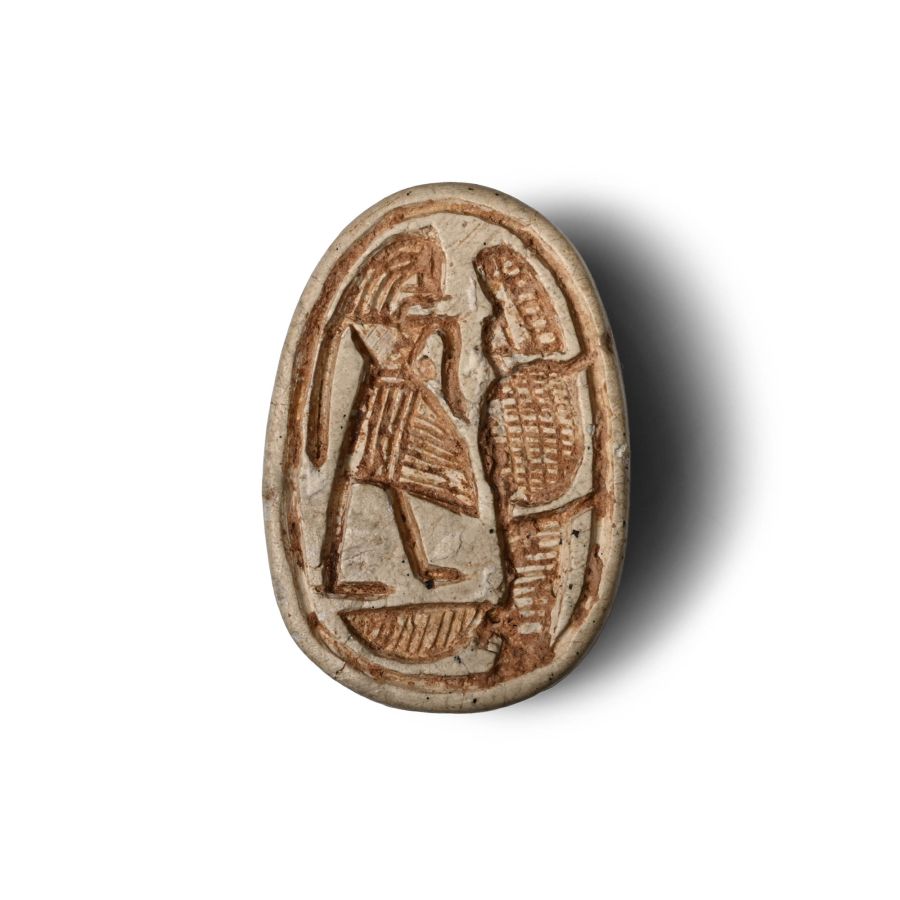
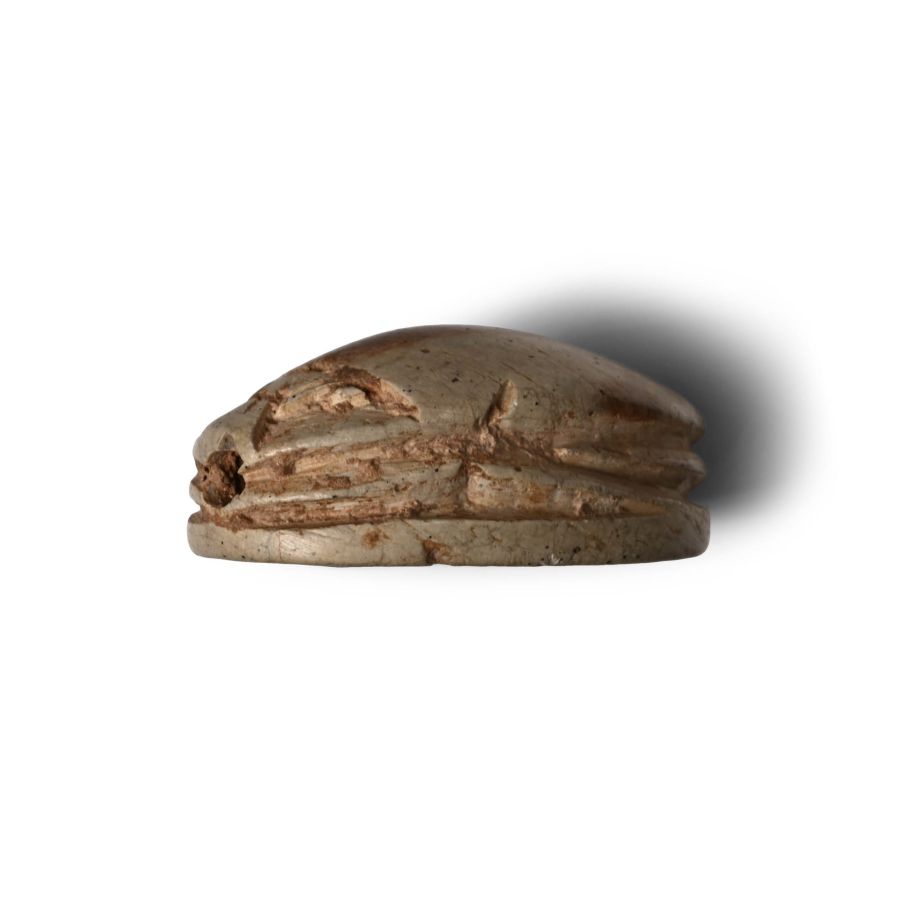
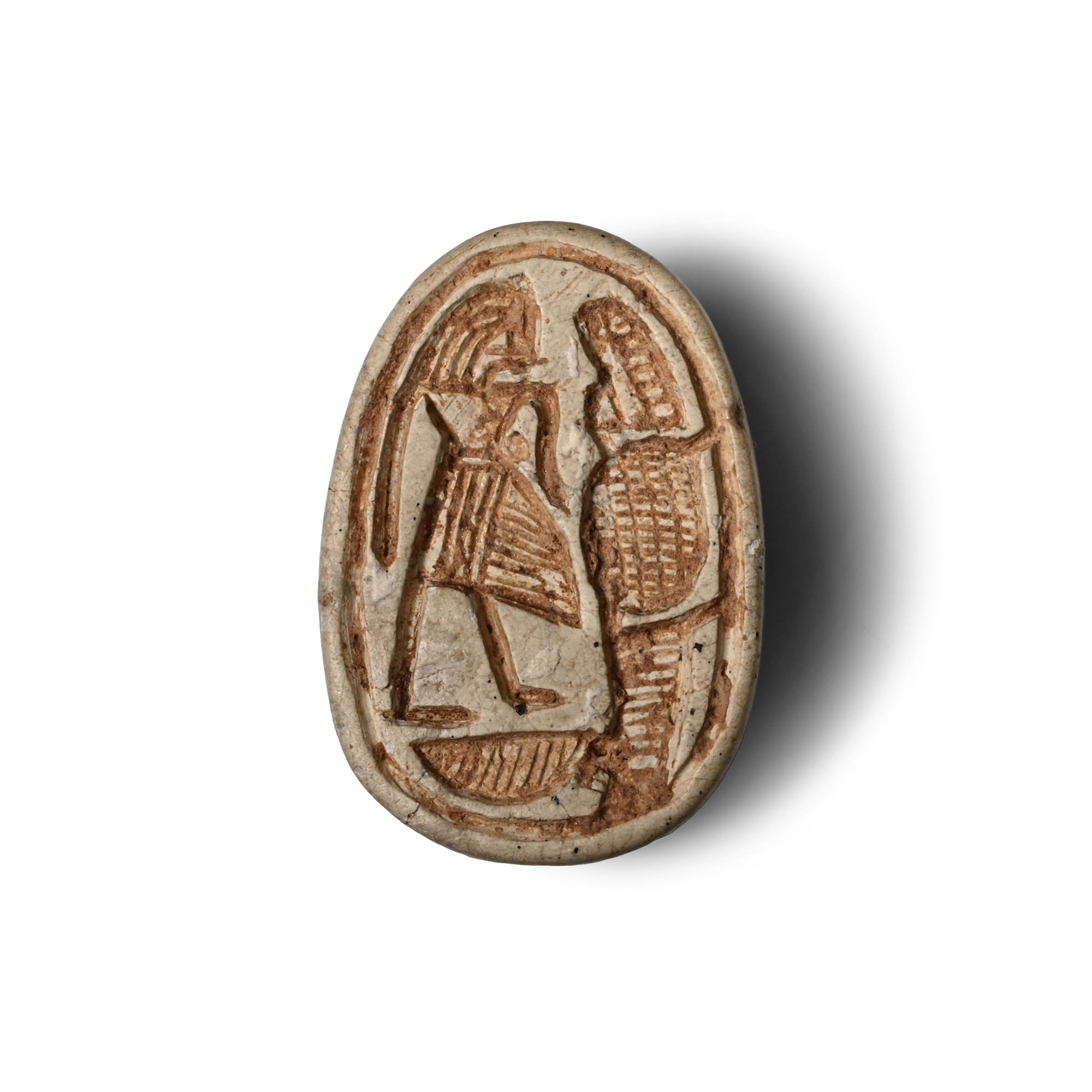
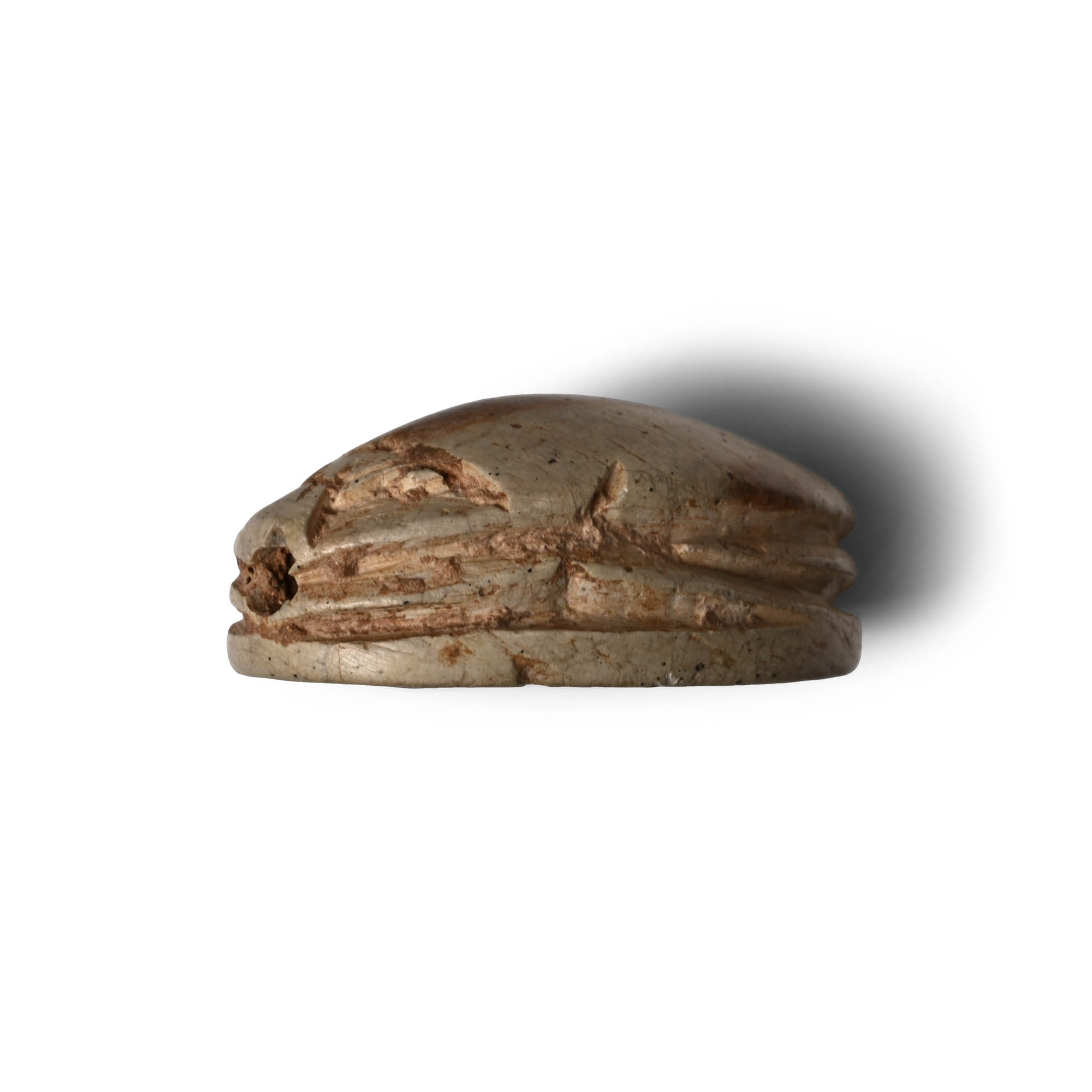
Egyptian Steatite Scarab
SECOND INTERMEDIATE PERIOD, 17TH-16TH CENTURY B.C.
3/4 in. (4.06 grams, 21 mm).
Finely carved scarab with naturalistically detailed legs and head, the underside decorated with a standing figure atop a neb hieroglyph facing a stylised crocodile.
Provenancewith Archeological Centre, 2015.
Private collection, Europe.
Cf. Ben-Tor, D., Scarabs, Chronology, and Interconnections: Egypt and Palestine in the Second Intermediate Period, Zurich, 2007, p.176, for discussion of this scarab type, and pl.99, no.9, for an example.
FootnotesScarabs with this design have been discovered in the northern Delta of Egypt and Palestine. The influence of the crocodile god Sobek on the production of late middle Bronze Age settlers at Avaris in the Egyptian Delta likely contributed to the popularity of Egyptian-themed scarabs with crocodiles and standing figures found in Palestinian sites.
CONDITIONTimeLine Auctions follows a vetting process to ensure the authenticity and legality of all items, reinforcing our commitment to integrity and responsible trading. Each antiquity, antique, and coin lot undergoes thorough examination by a vetting committee of at least ten external specialists, professional trade association members, scientists, and archaeologists: Our Vetting Process
AUCTIONS:
TimeLine is a leading auction house specialising in antiquities, ancient art, collectables, natural history, coins, medals, and books. Our auctions offer museums, collectors, historians, and enthusiasts the opportunity to acquire unique and historically significant pieces.
-
Egyptian Black Stone Scarab
Late Period, 664-332 A.D.Estimate: £400 - 600 (+bp*)
Opening Bid: £200
A finely detailed scarab body on an oval plate, the underside featuring deeply incised hieroglyphs. 15.5 grams, 31 mm
From the collection of a gentleman, acquired on the London art market in the 1990s. -
Egyptian Hardstone and Faience Necklace
Late Period, 664-332 B.C.Estimate: £450 - 650 (+bp*)
Opening Bid: £250
Comprising groups of three oval carnelian beads with interstitial biconvex and annular beads, a turquoise faience ribbed tubular bead and an irregular polyhedral carnelian centrepiece. 35 grams, 70 cm
From the private collection of the late Mrs Belinda Ellison, long time member of the Egyptian Exploration Society, c.1940-2020. -
.jpg)
Phoenician Painted Terracotta Wine Jug
Circa 900-800 B.C.Sold for (Inc. bp): £176
With globular body and carinated tubular neck, flared rim to the mouth; loop handle to the shoulder and low basal ring; painted radiating strokes to the shoulder, segmented band to the equator with hatching and other decoration. 720 grams, 20.6 cm
Property of a British collector, acquired in the 1980s. From a family collection of a North American gentleman living in the UK.
