
Loading, please wait...
LOT 0587
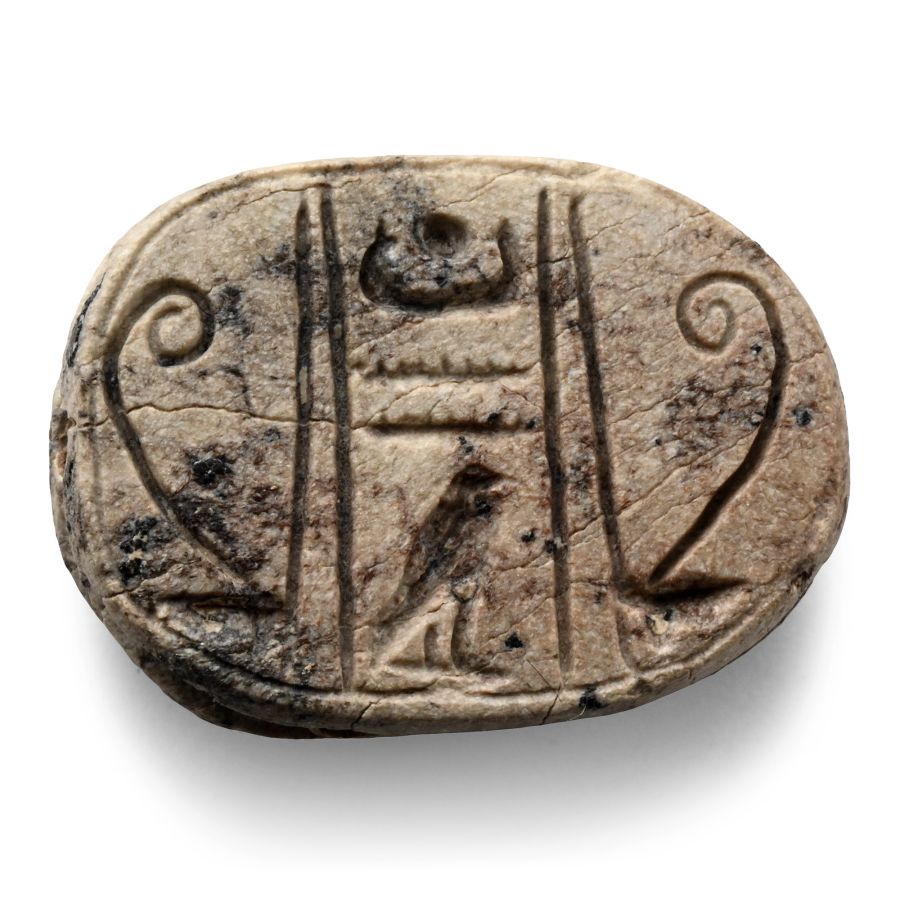
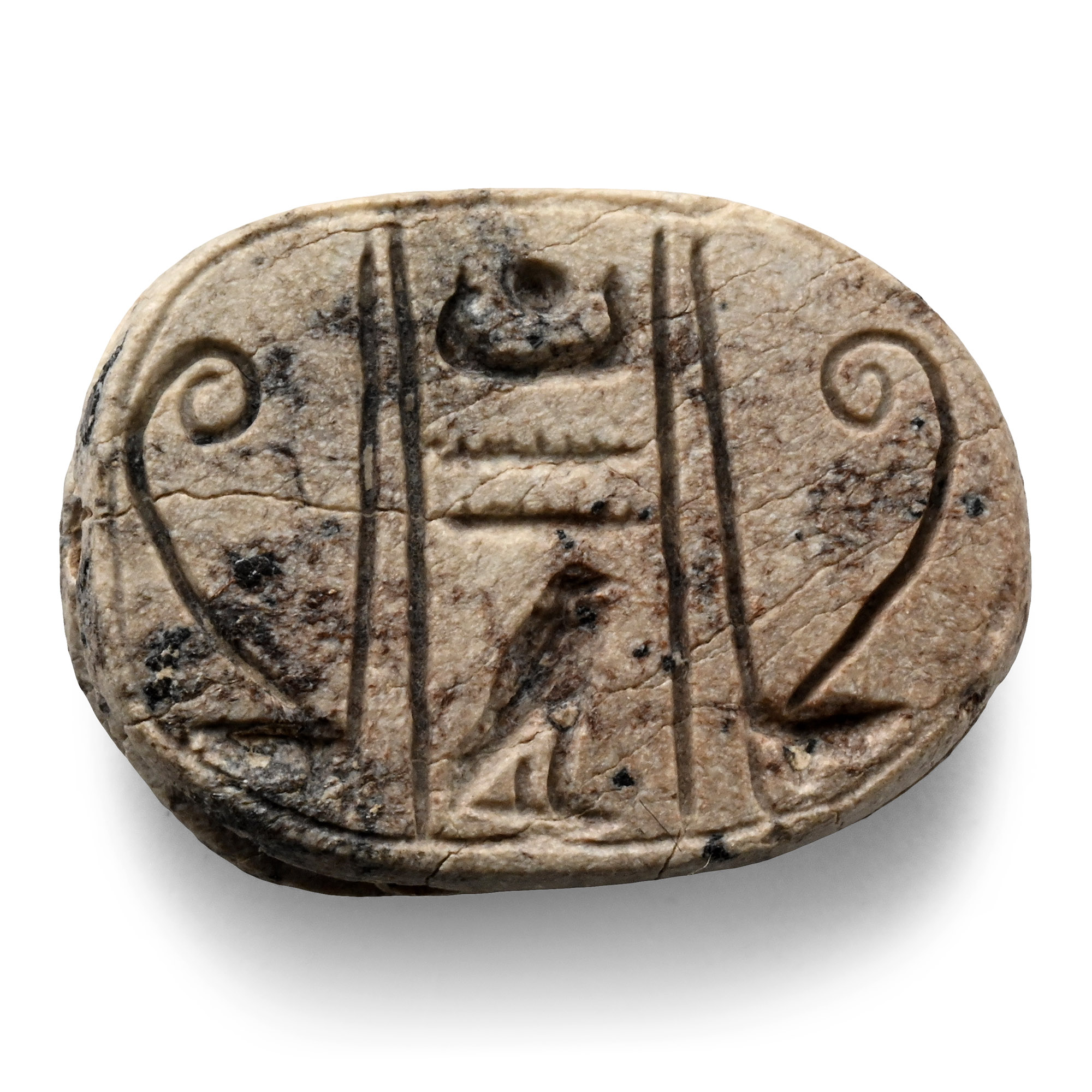
Egyptian Steatite Scarab with Hieroglyphs
NEW KINGDOM, CIRCA 1400-1292 B.C.
7/8 in. (4.48 grams, 21 mm).
With incised anatomical detailing on the body, underside inscribed with a scene of a falcon and a sacred bark, flanked by stylised Red Crown (deshret) motifs; pierced longitudinally. [No Reserve]
ProvenanceLondon, UK, art market, 1980s.
Private collection, London, UK.
TimeLine Auctions follows a vetting process to ensure the authenticity and legality of all items, reinforcing our commitment to integrity and responsible trading. Each antiquity, antique, and coin lot undergoes thorough examination by a vetting committee of at least ten external specialists, professional trade association members, scientists, and archaeologists: Our Vetting Process
AUCTIONS:
TimeLine is a leading auction house specialising in antiquities, ancient art, collectables, natural history, coins, medals, and books. Our auctions offer museums, collectors, historians, and enthusiasts the opportunity to acquire unique and historically significant pieces.
LOT 0587
Egyptian Steatite Scarab with Hieroglyphs
Estimate £80 - 100€93 - 116 (for guidance only)$108 - 135 (for guidance only)
-
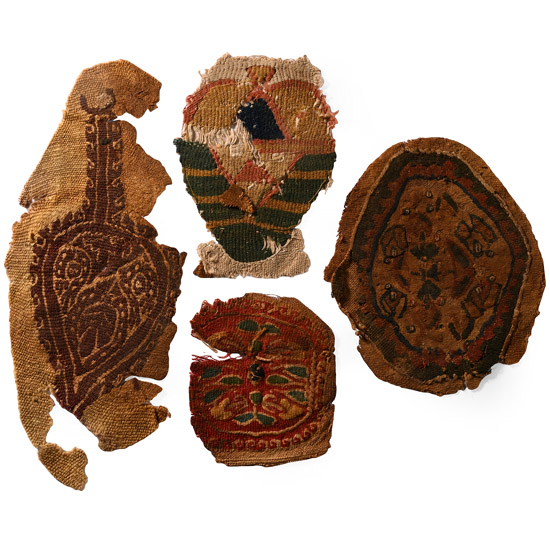
Egyptian Coptic Tunic Textile Fragments of Orbiculi with Vegetation, Fish and Geometric Ornament
Circa 6th-7th century A.D.Estimate: £80 - 100 (+bp*)
Opening Bid: £5
Comprising three lanceolate-shaped medallions in yellow, green, and red wool, decorated with birds and geometric and vegetal elements (left-facing); and a red wool orbiculus on white linen, featuring a floral design and a meander border. 17.7 grams total, 8.2-19.5 cm
Acquired 1970s-1996. Property of a North American collector. London collection, 2016.
The fragments are decorative parts of tunics. These are fabrics of great decorative finesse, with some elements displaying an unusual and extremely well-preserved colour palette. -
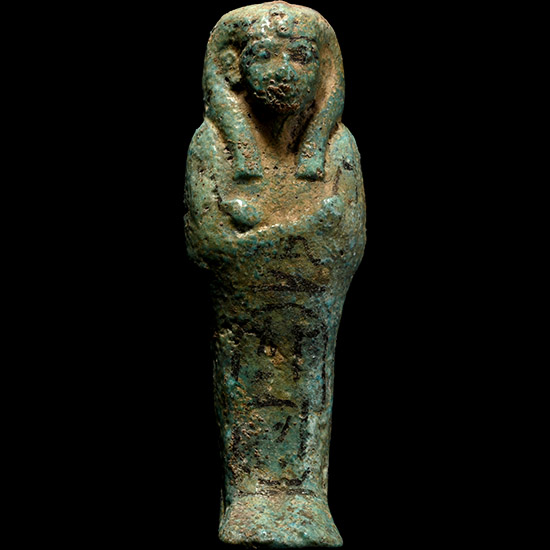
Egyptian Turquoise Blue Glazed Faience Shabti with Cartouche of Kedmerut
Third Intermediate Period, 22nd Dynasty, circa 825-777 B.C.Estimate: £500 - 700 (+bp*)
Bids: 15 | Current Bid: £210
Mummiform shabti wearing a lappet wig, bearing a faintly modelled royal uraeus on the brow, with arms crossed and hands holding black-painted hoes, a black-painted seed belt across the back, black detailing on the face, and hieroglyphic text on the lower body giving the introduction 'The Osiris' followed by Kedmerut's name within a cartouche. 60.8 grams, 99 mm
From the private collection of Peter Clayton, FCILIP, Dip, Arch, FSA, FRNS, Hemel Hempstead, Hertfordshire, UK; formed since the late 1950s.
Kedmerut was the 23rd Divine Adoratrice of Amun, a title originally bestowed on the daughters of Amun’s chief priests during Hatshepsut’s reign (1473–1458 BC). By the Third Intermediate Period, these priestly women also held the title ‘God’s Wife of Amun’ and wielded considerable power, effectively ruling Upper Egypt as sovereigns. Indeed, Kedmerut’s shabti bears a uraeus on its forehead, symbolising kingship. -
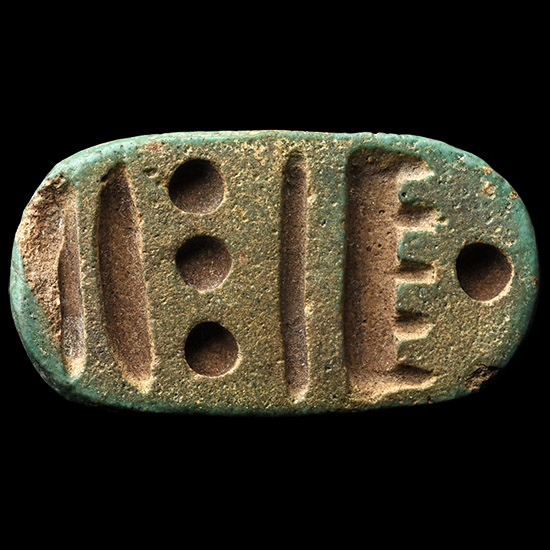
Large Egyptian Amuletic Cartouche-shaped Stamp Naming Amun-Re
Third Intermediate Period-Late Period, circa 1069-332 B.C.Estimate: £300 - 400 (+bp*)
Opening Bid: £150
Large oval stamp with plano-convex profile, plumed motif to the top, pierced for suspension; underside with hieroglyphic legend, possibly a garbled version of (A)mun-Re, lord of the thrones (of the two lands). 13.2 grams, 49 mm
Excavated from Egypt in 1914. From the private collection of Mr David Sams and his wife Elizabeth Kate Sams, gentry and amateur archaeologists who travelled to Egypt in 1914 with their daughter Ethel. Mr Sams and his wife led digging expeditions from which these items come from the family estate of Mr and Mrs Sams, by direct descent to their granddaughter.
