
Loading, please wait...


LOT 0577
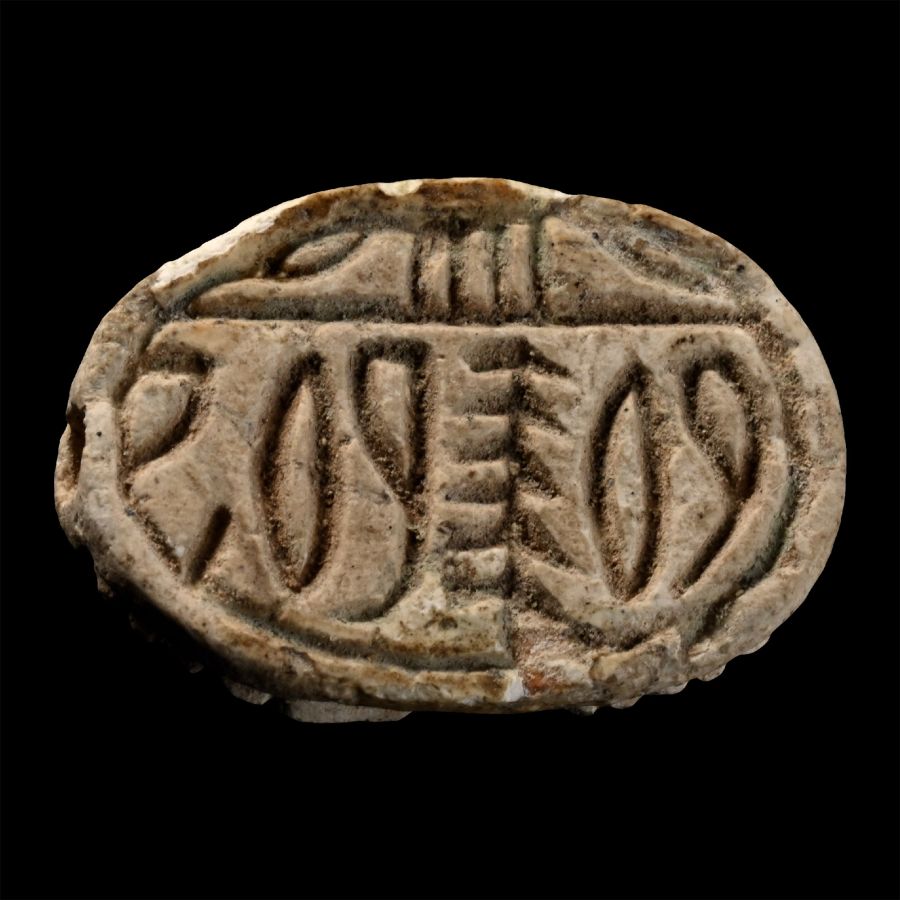
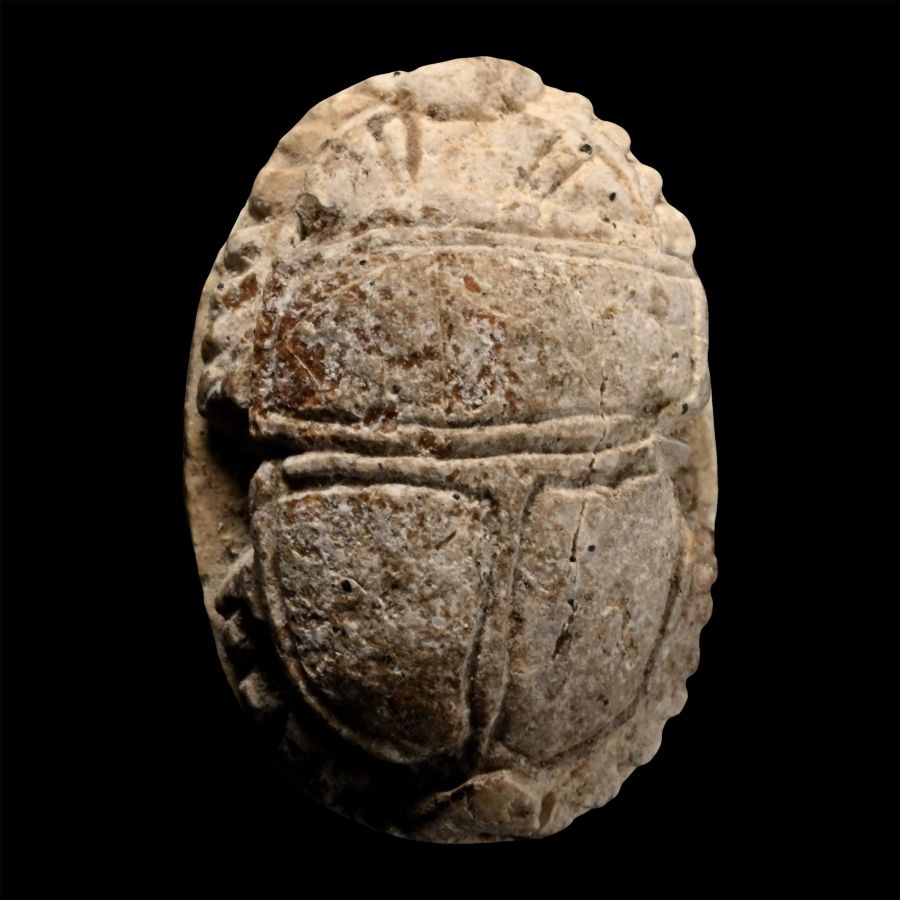
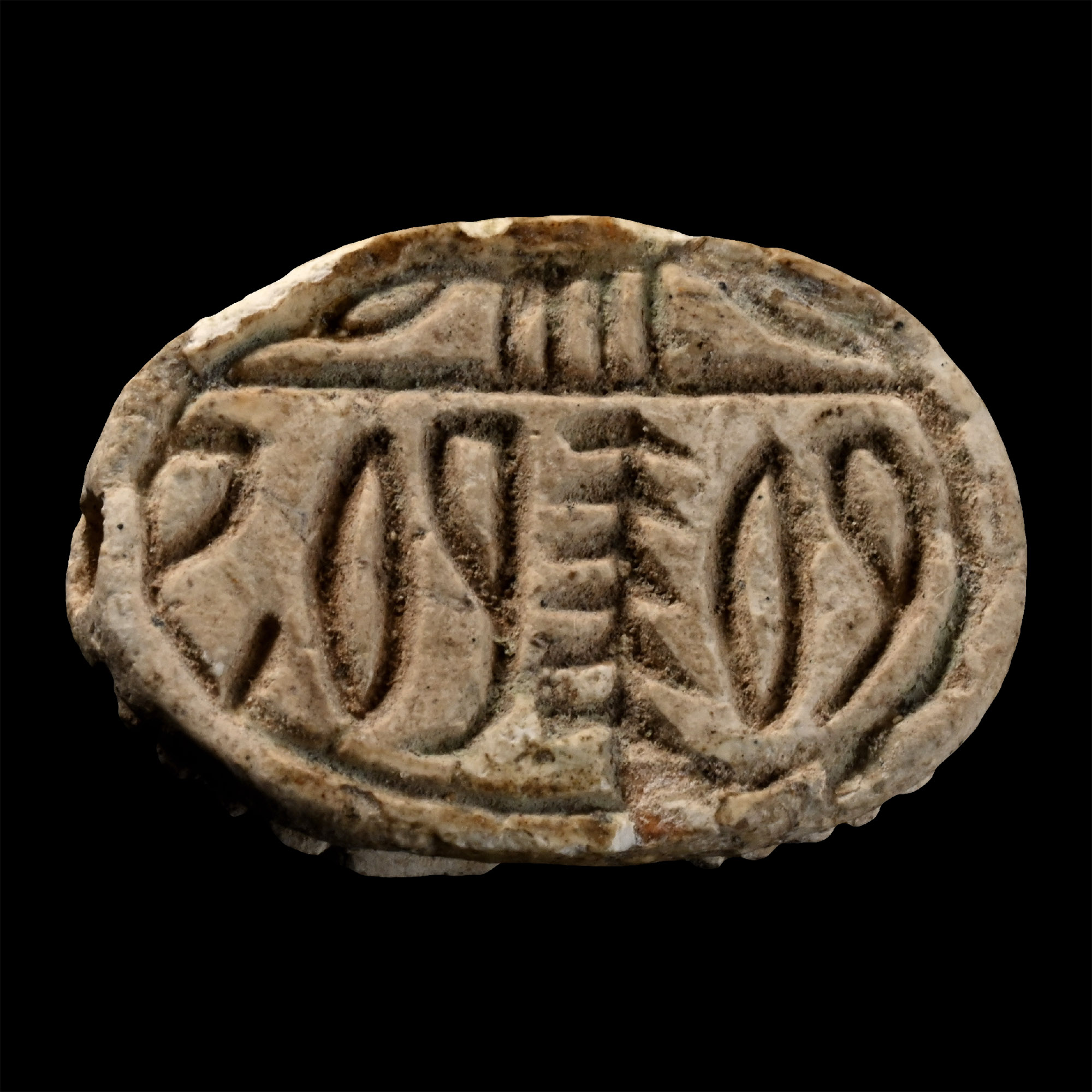
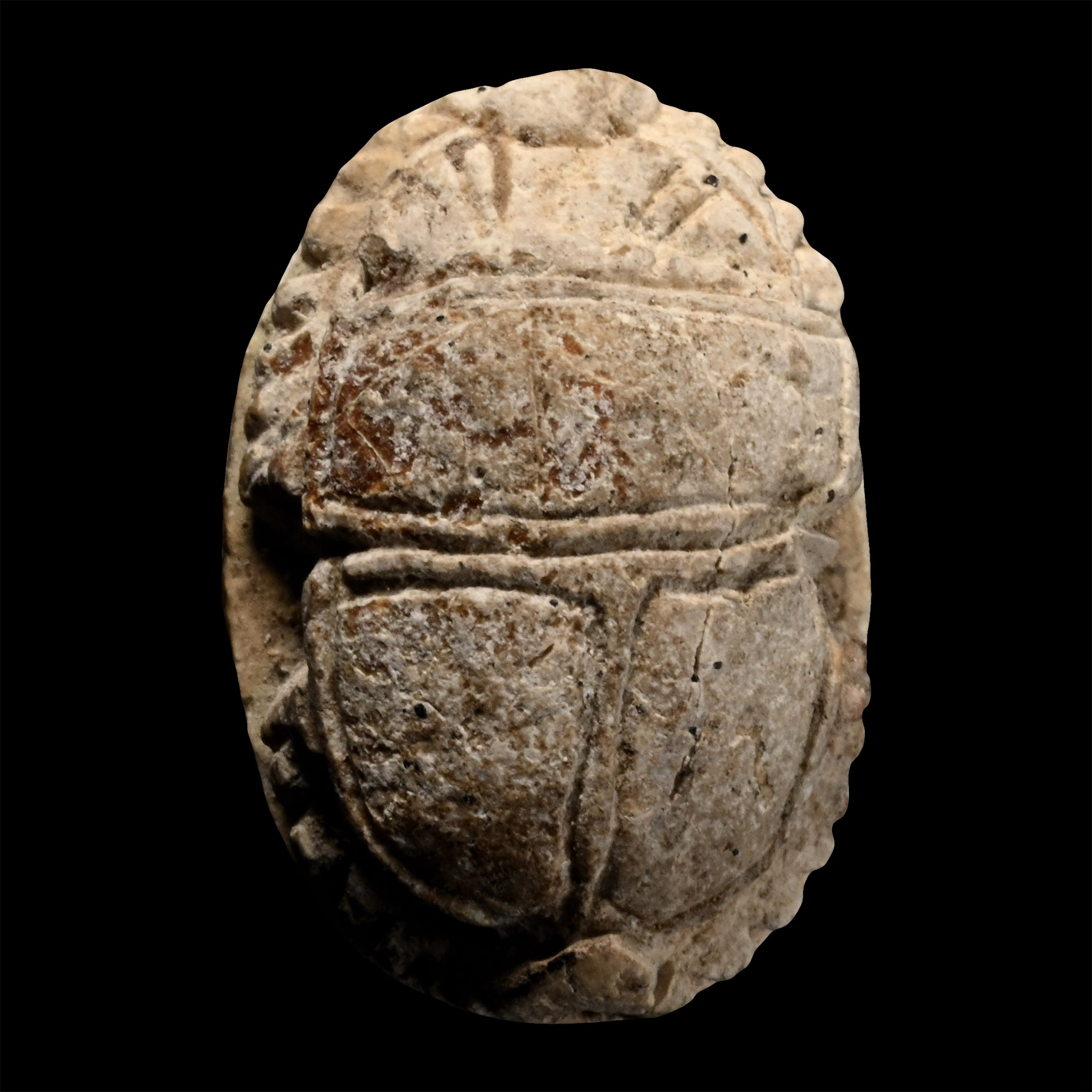
Egyptian Steatite Scarab with Hieroglyphs
SECOND INTERMEDIATE PERIOD, CIRCA 1782-1550 B.C.
5/8 in. (2.04 grams, 17 mm).
With incised anatomical detailing on the body, the underside bears the hieroglyphs rꜤ-n-rꜤ. [No Reserve]
ProvenanceAcquired from various London-based, UK, antiquity dealers.
From a Derbyshire gentleman's private museum formed from the late 1970s-early 1980s.
TimeLine Auctions follows a vetting process to ensure the authenticity and legality of all items, reinforcing our commitment to integrity and responsible trading. Each antiquity, antique, and coin lot undergoes thorough examination by a vetting committee of at least ten external specialists, professional trade association members, scientists, and archaeologists: Our Vetting Process
AUCTIONS:
TimeLine is a leading auction house specialising in antiquities, ancient art, collectables, natural history, coins, medals, and books. Our auctions offer museums, collectors, historians, and enthusiasts the opportunity to acquire unique and historically significant pieces.
LOT 0577
Egyptian Steatite Scarab with Hieroglyphs
Estimate £40 - 60€46 - 70 (for guidance only)$54 - 81 (for guidance only)
Opening Bid
£5 (EUR 6; USD 7) +BP*
-
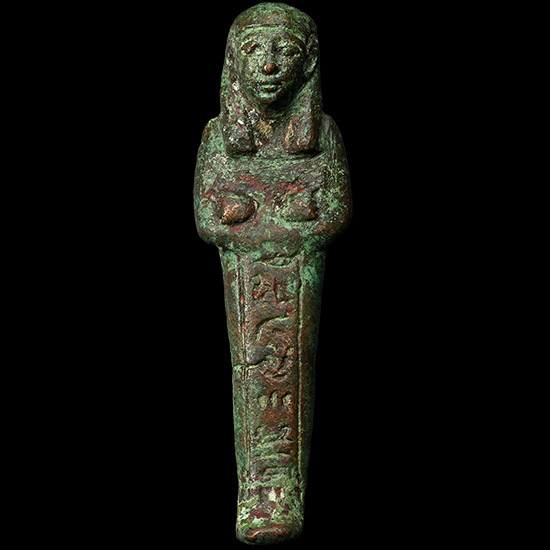
Egyptian Bronze Shabti for General Wendjebauendjed
Third Intermediate Period, 21st Dynasty, circa 1047-1001 B.C.Estimate: £500 - 700 (+bp*)
Opening Bid: £5
Mummiform figure wearing a plain tripartite wig, with crossed arms and prominently modelled hands, and a vertical panel of hieroglyphs on the front reading: 'The Osiris, the General Wendjebauendjed, true of voice'. 68.9 grams, 78 mm
From the private collection of Peter Clayton, FCILIP, Dip, Arch, FSA, FRNS, Hemel Hempstead, Hertfordshire, UK; formed since the late 1950s.
Shabtis made of bronze are uncommon. Ramesses II and Ramesses III were the first pharaohs to use bronze shabtis, a practice Pharaoh Psusennes I reestablished in the 21st Dynasty. In addition to Psusennes I, bronze shabtis were produced for Queen Mutnedjemet, his sister and wife, and for General Wendjebauendjed, who was buried in the same royal hypogeum at Tanis. The exact number of shabtis provided for the general remains unknown, though he had at least twenty mummiform and one overseer shabti in bronze, and many more in faience. -
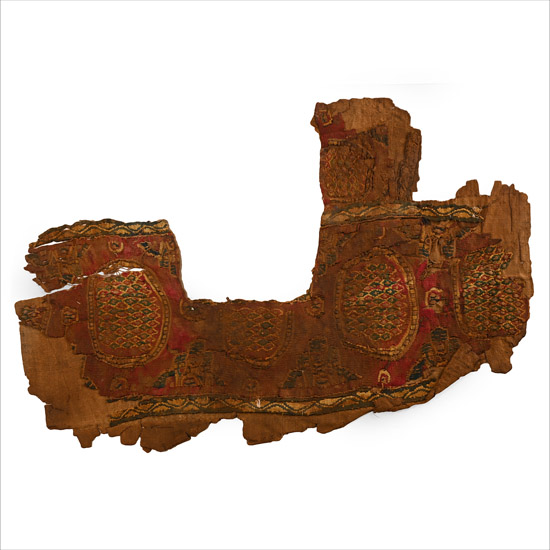
Large Egyptian Coptic Textile Fragment of a Tunic Collar Embroidered with Geometric Patterns
Circa 5th century A.D.Estimate: £80 - 100 (+bp*)
Opening Bid: £5
The complete collar section (maniakion) ornamented with decorative circular bands, filled with geometric patterns of floral elements, bordered with stripes of interlaced vegetal motifs in yellow-orange, green, red, yellow and purple wool warp on linen; a part of the right clavus still preserved, decorated in the same manner. 142 grams total including paper folder, 49 cm
Acquired 1970s-1996. Property of a North American collector. London collection, 2016.
In Late Roman Egypt, this type of tunic, with wide decorative collars around the neck, was worn by rich aristocratic women and was part of the decoration of rich garments like the tunica talaris. -
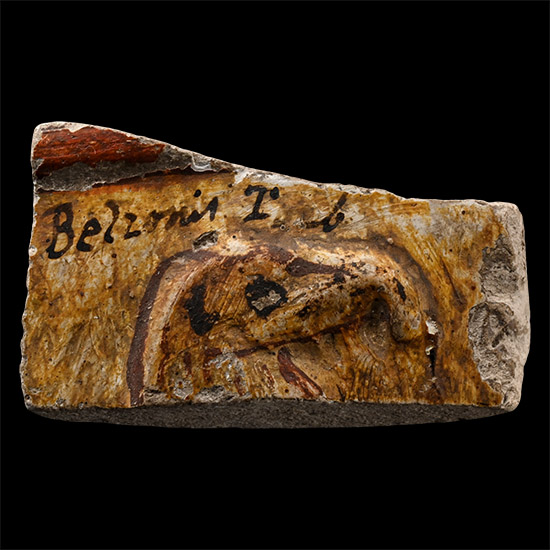
Egyptian Painted Limestone Fragment from the Tomb of Pharaoh Seti I
New Kingdom, 19th Dynasty, 1290-1279 B.C.Estimate: £100 - 140 (+bp*)
Opening Bid: £5
Colourful, almost rectangular section of a wall fragment, with a slightly dished face, low-relief moulding with pigment, and 'Belzonis T[om]b' written at the top; accompanied by an old collector's label suggesting the likely findspot and other details. 15.3 grams, 44 mm
With a late 19th-early 20th century handwritten ticket attached. From the private collection of Peter Clayton, FCILIP, Dip, Arch, FSA, FRNS, Hemel Hempstead, Hertfordshire, UK; formed since the late 1950s.
The Italian explorer and antiquarian Giovanni Battista Belzoni uncovered the tomb of Seti I (KV 17) on October 16, 1817. This monumental tomb, with beautifully decorated walls, extended almost 140 metres underground through a series of descending corridors and chambers. In 1821, Belzoni opened a groundbreaking exhibition at the Egyptian Hall in Piccadilly, London, presenting a full-scale replica of the tomb. The paid public exhibition sparked massive 19th-century "Egyptomania" and introduced European audiences to ancient Egyptian art. Such was the renown of his discovery that it was often referred to as 'Belzoni's Tomb'.
