
Loading, please wait...
LOT 0526
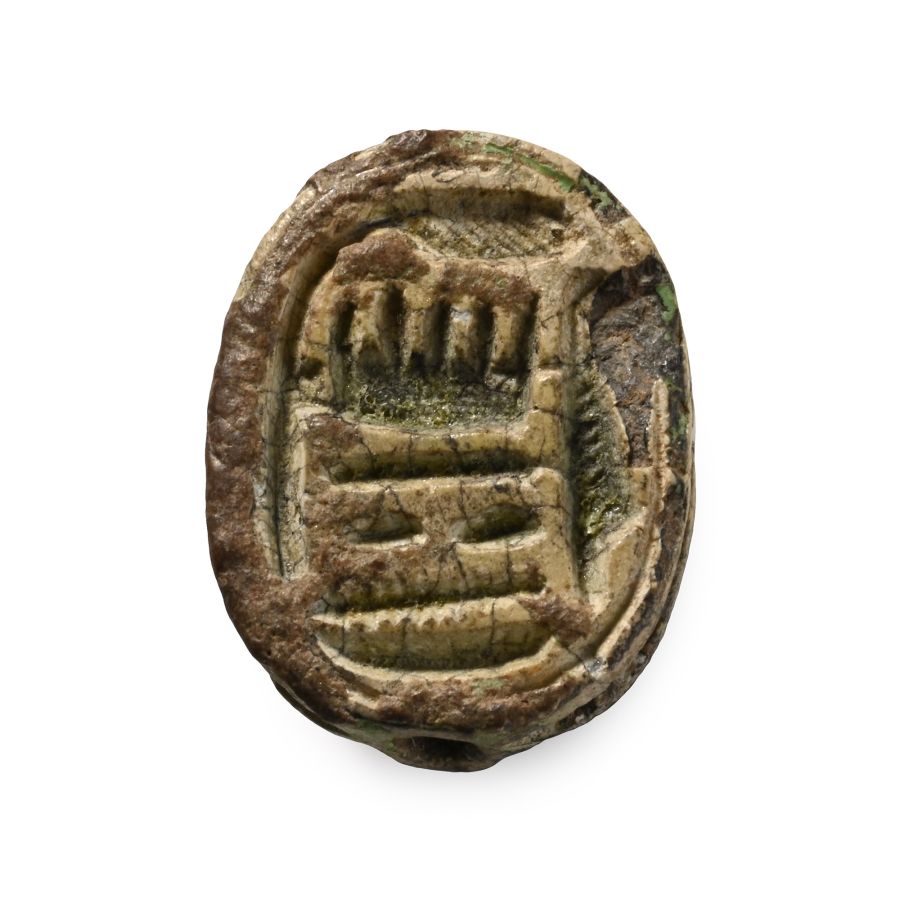
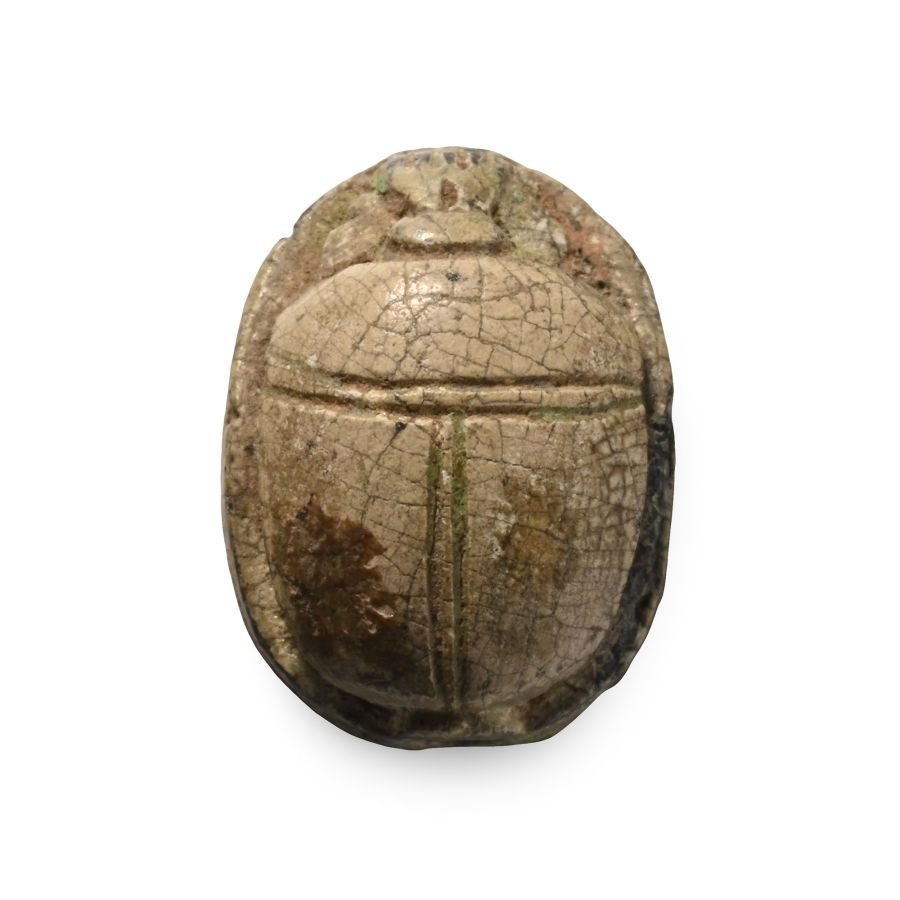
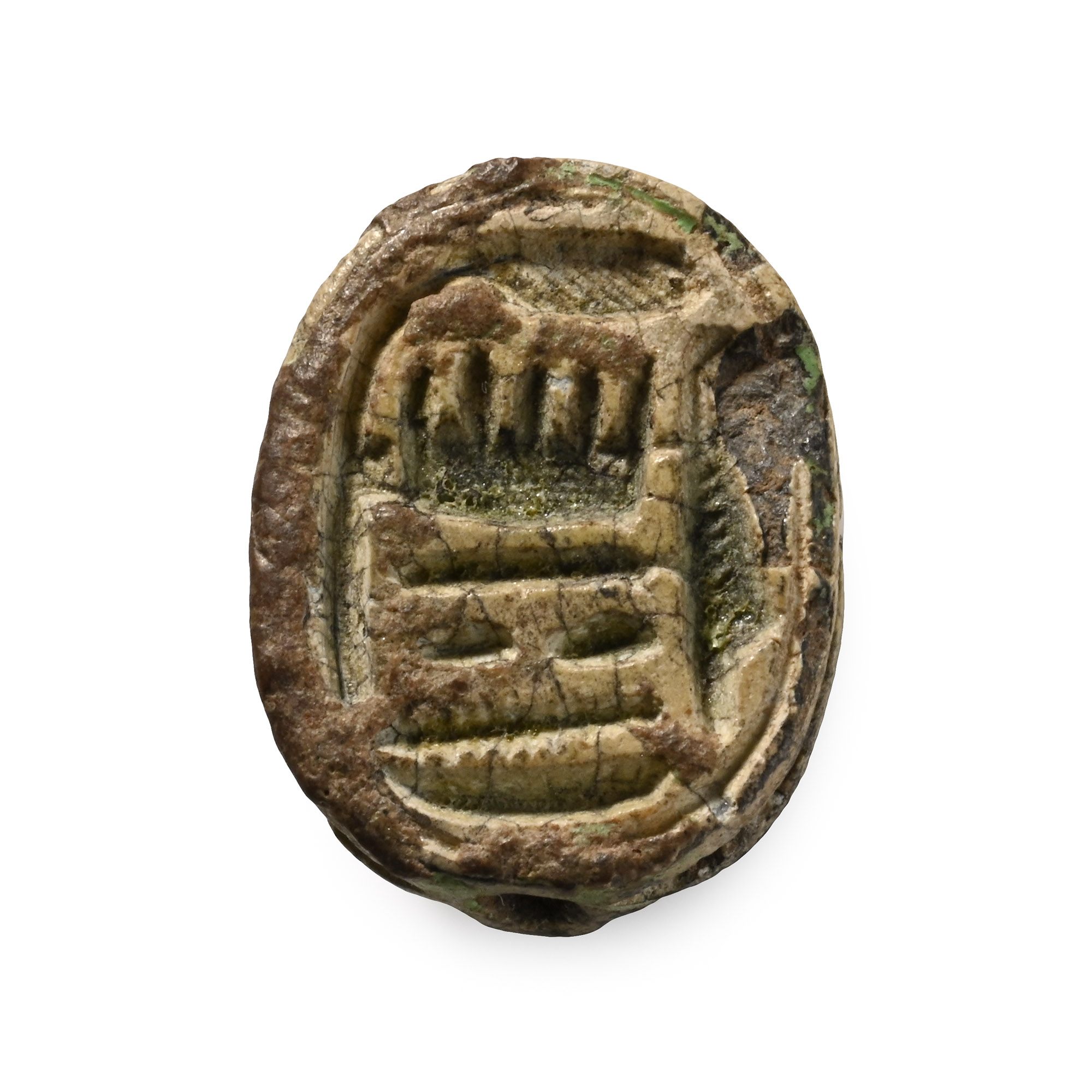
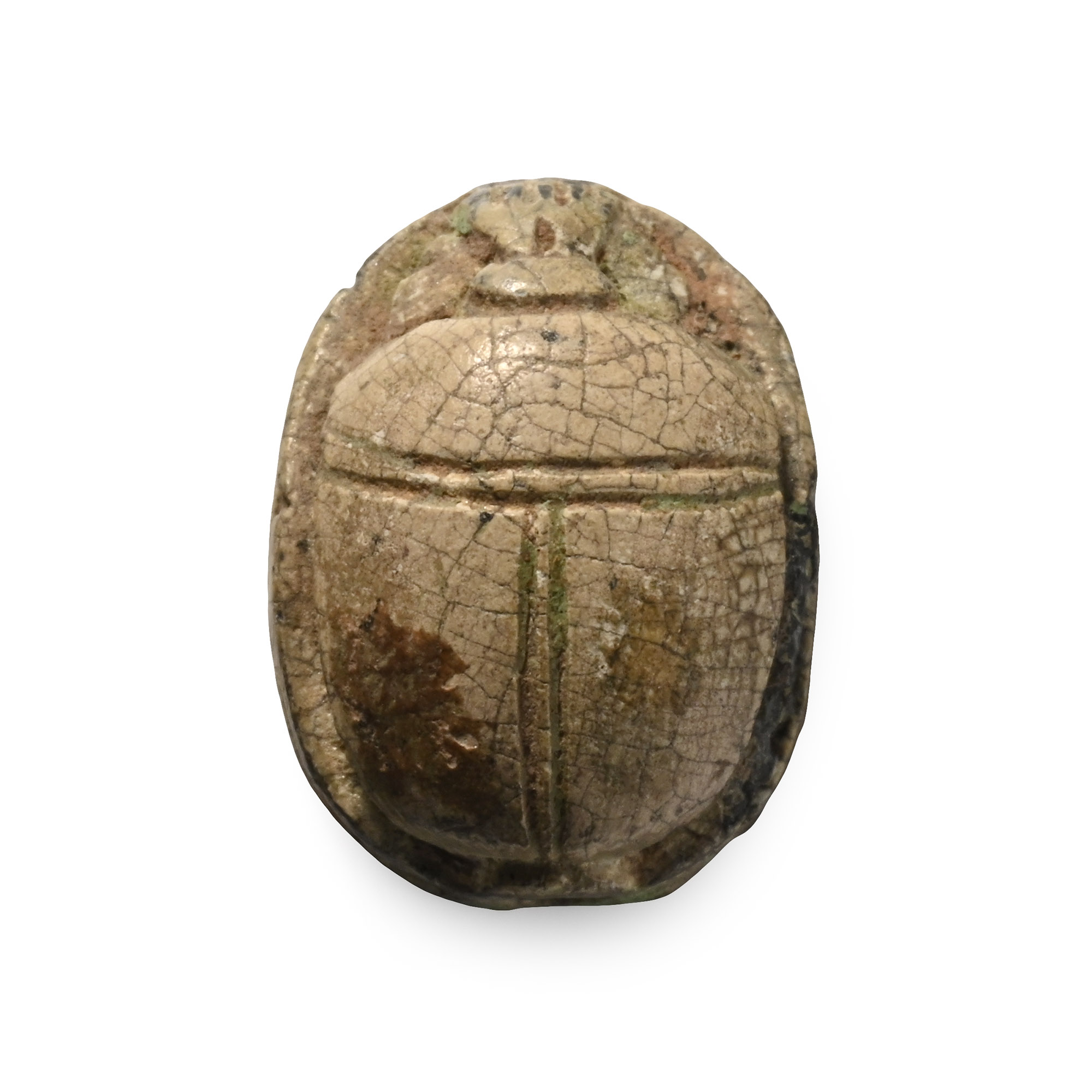
Egyptian Steatite Scarab with Hieroglyphs
NEW KINGDOM, CIRCA 1300 B.C.
5/8 in. (2.09 grams, 15 mm).
A scarab with detailing to the upper face; the underside inscribed with hieroglyphs writing the name of Amun-Re, accompanied by a wab sign on the left and neb sign below; pierced longitudinally. [No Reserve]
ProvenanceEx Constable collection, 1990s.
Ex P. Morris collection.
Cf. Newberry, P.E., Catalogue général des antiquités égyptiennes du Musée du Caire N° 36001-37521, Scarab-shaped Seals, Cairo, 1907, p. 347 (CG37384), pl. XII, for a scarab with the same base design.
CONDITIONTimeLine Auctions follows a vetting process to ensure the authenticity and legality of all items, reinforcing our commitment to integrity and responsible trading. Each antiquity, antique, and coin lot undergoes thorough examination by a vetting committee of at least ten external specialists, professional trade association members, scientists, and archaeologists: Our Vetting Process
AUCTIONS:
TimeLine is a leading auction house specialising in antiquities, ancient art, collectables, natural history, coins, medals, and books. Our auctions offer museums, collectors, historians, and enthusiasts the opportunity to acquire unique and historically significant pieces.
-
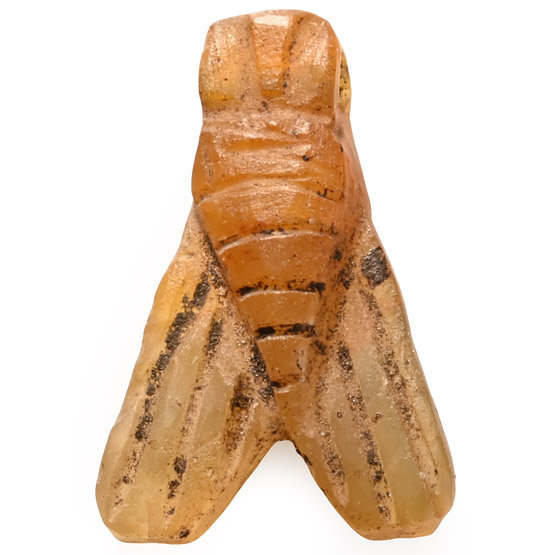
Egyptian Carnelian Fly Amulet
Late Period, 664-332 B.C.Sold for (Inc. bp): £130
With detailing to wings and body, loop for suspension above the head. 0.33 grams, 12 mm
Ex H Norri collection, Milton Keynes, Bedfordshire, UK, 1980s-1990s.
Although flies might seem like mere nuisances, the ancient Egyptians admired them for their speed, agility, and persistence. Fly-shaped amulets, first appearing in Naqada II burials around 3200 B.C., became particularly popular during the New Kingdom and afterwards. Made from materials such as gold, silver, faience, lapis lazuli, and bone, they served apotropaic functions, protecting against bites and warding off pests. Some may have also symbolised fertility. Gold fly pendants were even awarded by pharaohs to honour soldiers’ bravery and tenacity. -
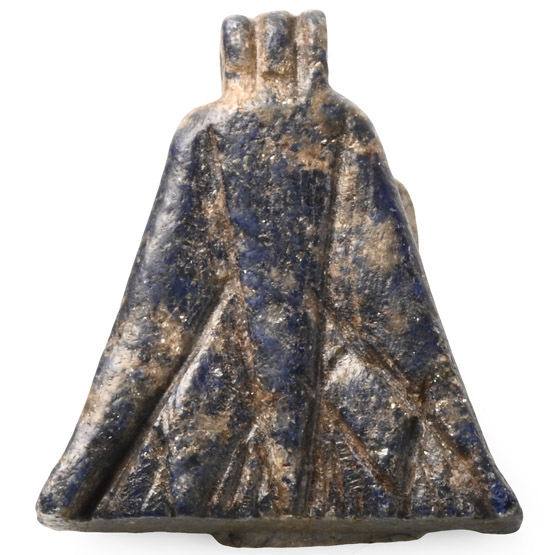
Egyptian Lapis Lazuli Lotus Amulet
Late Period, 664-332 B.C.Sold for (Inc. bp): £117
With ribbed suspension loop bell-shaped plaque; collector's sticker to reverse. 1.77 grams, 17 mm
Ex UK collection, 1970s.
The lotus served as a symbol of both divine beauty and the sun's rejuvenating power. -
.jpg)
Historic Collection of 591 Slides of Egyptian Archaeological and Other Subjects
1960s-1980s A.D.Sold for (Inc. bp): £910
Housed in five linen-covered boxes, covering ancient Egypt, Aswan, Karnak, Philae, Medinet, Step Pyramids, Nile birds and animals, boats, irrigation, Palestine, Damascus, Greece, Pompeii, Baalbek, Byblos, personal slides etc. 4.32 kg total, 26.5 x 16.5 x 6.5 cm each box
Property of archaeologist Stephanie Gee, N.W. London, UK, 1960s-1980s.
Stephanie Gee was a prominent archaeologist who took part in several expeditions in Egypt. She was a trusted assistant to the British-Australian archaeologist Veronica Seton-Williams, who excavated in Egypt, Britain, and the Near East. Stephanie also took part in the Tell El-Farâ'în expeditions of 1965-1968, and assisted Seton-Williams with preparing the 1966 expedition report. Their collaboration continued and Stephanie helped with the manuscript of Seton-Williams’ book ‘The Road to El-Aguzein’, a narrative account of her life that was first published in 1988.
