
Loading, please wait...


LOT 0413
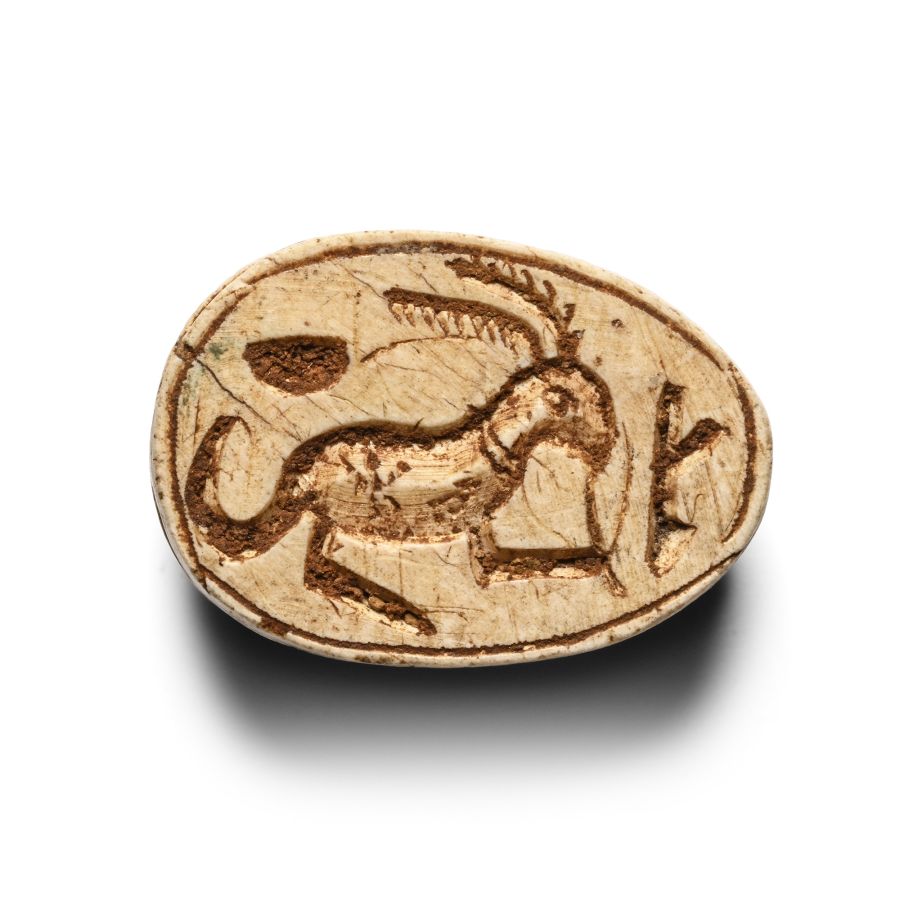
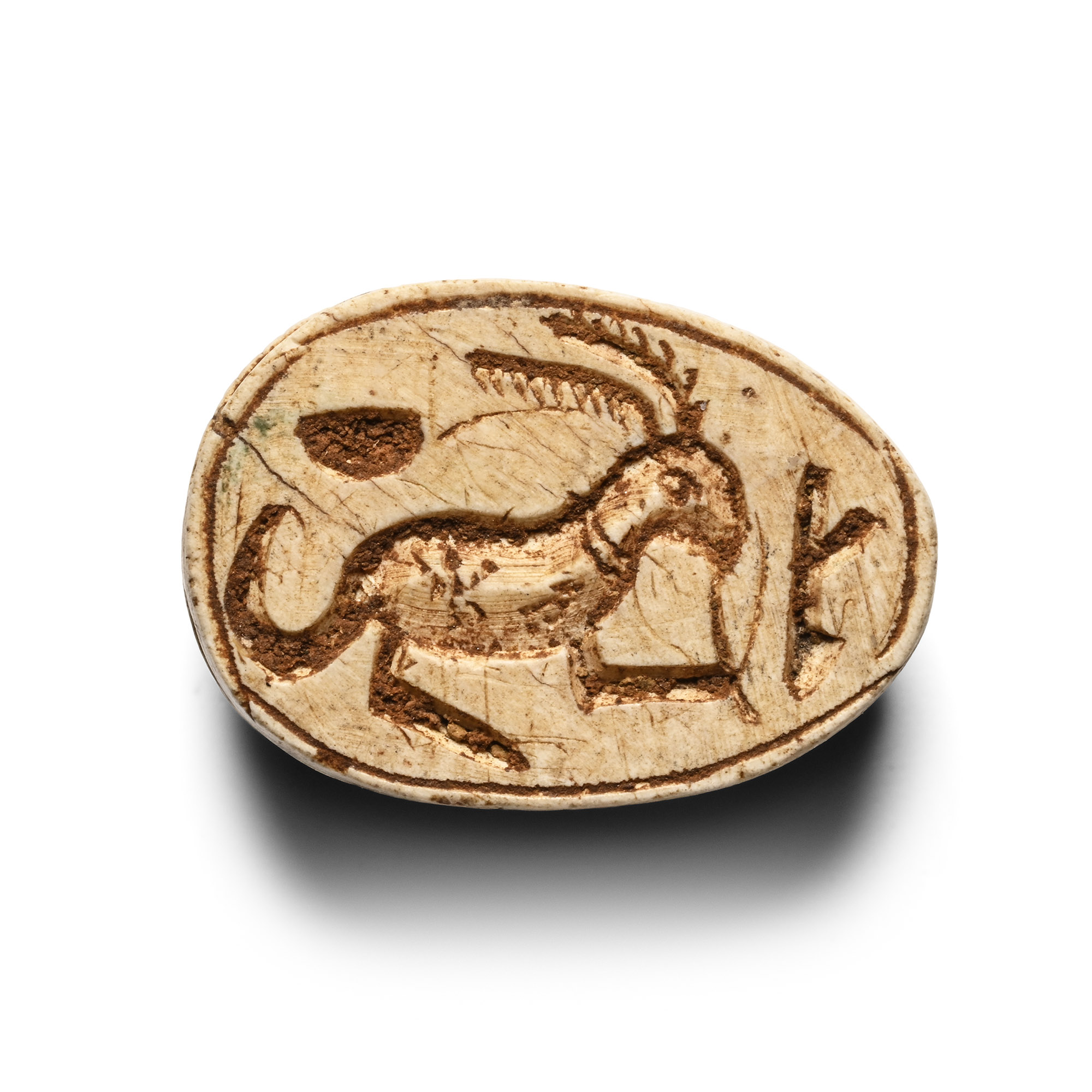
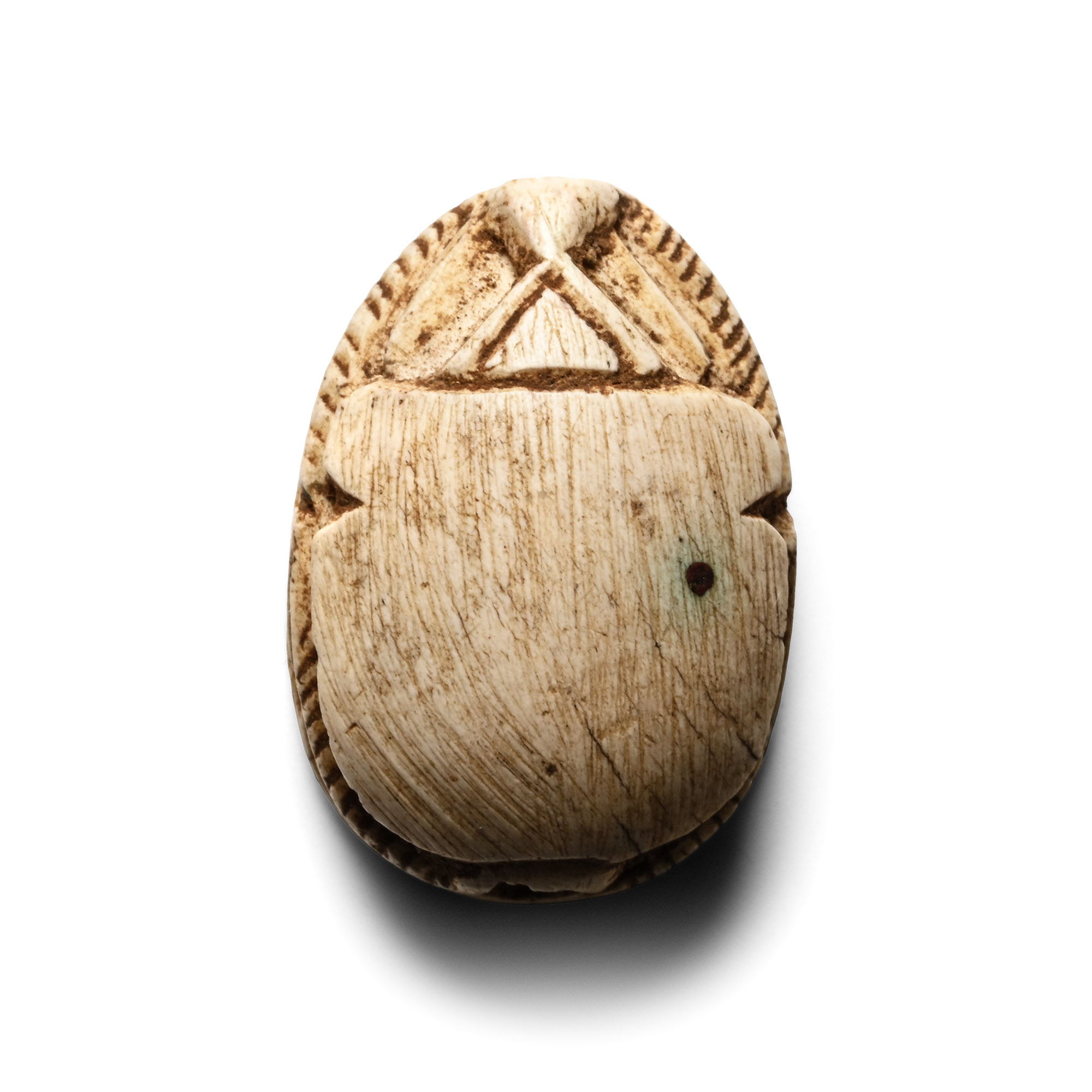
Egyptian Steatite Scarab with Hare
LATE PERIOD-PTOLEMAIC PERIOD, 664-30 B.C.
3/4 in. (3.07 grams, 19 mm).
Anatomical detailing on the carapace and pierced longitudinally; underside with a reclining hare and two hieroglyphs. [No Reserve]
ProvenanceFrom the private collection of a European gentleman (1942-2024), formed since the 1970s.
LiteratureFor a similar scarab cf. Ward, J., The Sacred Beetle, a Popular treatise on Egyptian Scarabs in Art and History, London, 1902, no.281.
FootnotesThe Egyptian hare, Cape Hare, was associated with the goddess Wenut, whose name means the 'swift one'.
CONDITIONTimeLine Auctions follows a vetting process to ensure the authenticity and legality of all items, reinforcing our commitment to integrity and responsible trading. Each antiquity, antique, and coin lot undergoes thorough examination by a vetting committee of at least ten external specialists, professional trade association members, scientists, and archaeologists: Our Vetting Process
AUCTIONS:
TimeLine is a leading auction house specialising in antiquities, ancient art, collectables, natural history, coins, medals, and books. Our auctions offer museums, collectors, historians, and enthusiasts the opportunity to acquire unique and historically significant pieces.
-
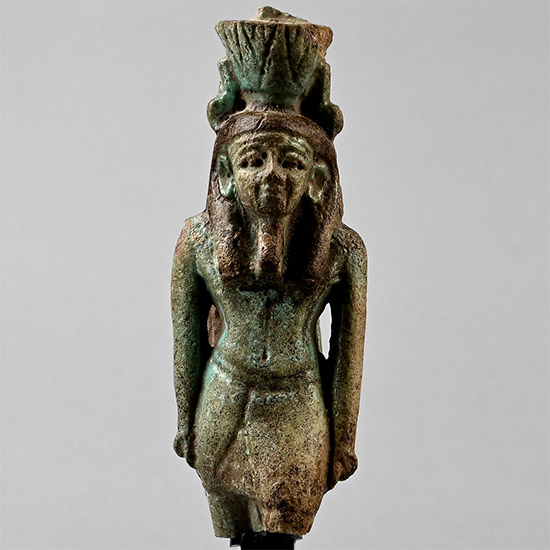
Large Egyptian Green Faience Figure of Nefertum with Figure of Sekhmet to the Reverse
Ptolemaic Period, circa 332-30 B.C.Estimate: £2,000 - 3,000 (+bp*)
Opening Bid: £1,000
Modelled standing with arms held vertically at his sides, wearing a tripartite wig surmounted by a lotus flower flanked by scrolled leaves; dorsal pillar with low-relief image of Sekhmet in lioness-headed form and solar disc above; mounted on a custom-made stand. 480 grams total, 19.5 cm high including stand
with Art Ancient, London, UK. Private collection, London, UK. This lot has been checked against the Interpol Database of stolen works of art and is accompanied by search certificate number no.13352-257009.
Nefertum is often depicted with a prominent lotus blossom above his head, symbolising both his divine beauty and his connection to the sun's rejuvenating power. He is sometimes portrayed with a lion's head or a lioness’s mane, or, as here, accompanied by an image of his lioness mother, Sekhmet, on his back, emphasising his link to her fierce and healing powers. -
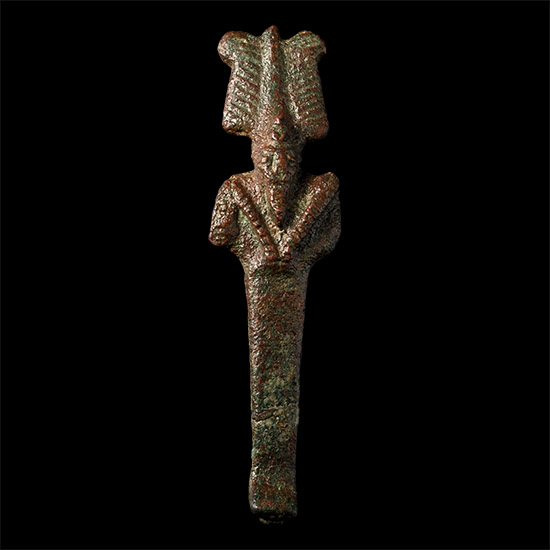
Egyptian Bronze Osiris Figure
Late-Ptolemaic Period, circa 664-30 B.C.Sold for (Inc. bp): £156
Standing pose wearing the atef crown with flanking ostrich plumes and frontal uraeus; holding the crook (heka) and flail (nekhakha) regalia in his crossed hands; peg to underside of feet; repaired. 16.17 grams, 68 mm
From the private collection of a Canadian gentleman living in Essex, UK, formed since the 1920s-circa 1990. Property of an Essex lady until the late 1990s; thence by descent. From the private collection of an Essex gentleman since the late 1990s. -
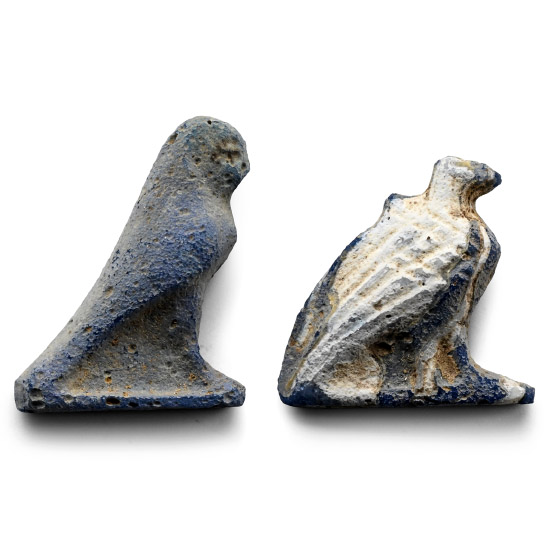
Egyptian Glass Pair of Bird Inlays
Late Period, 664-332 B.C.Sold for (Inc. bp): £234
Comprising: a standing hawk in cobalt blue glass, a standing vulture in white and blue glass with feather detailing on the wings. 4.76 grams total, 20-22 mm
From a 20th century UK collection.
