
Loading, please wait...
LOT 0438
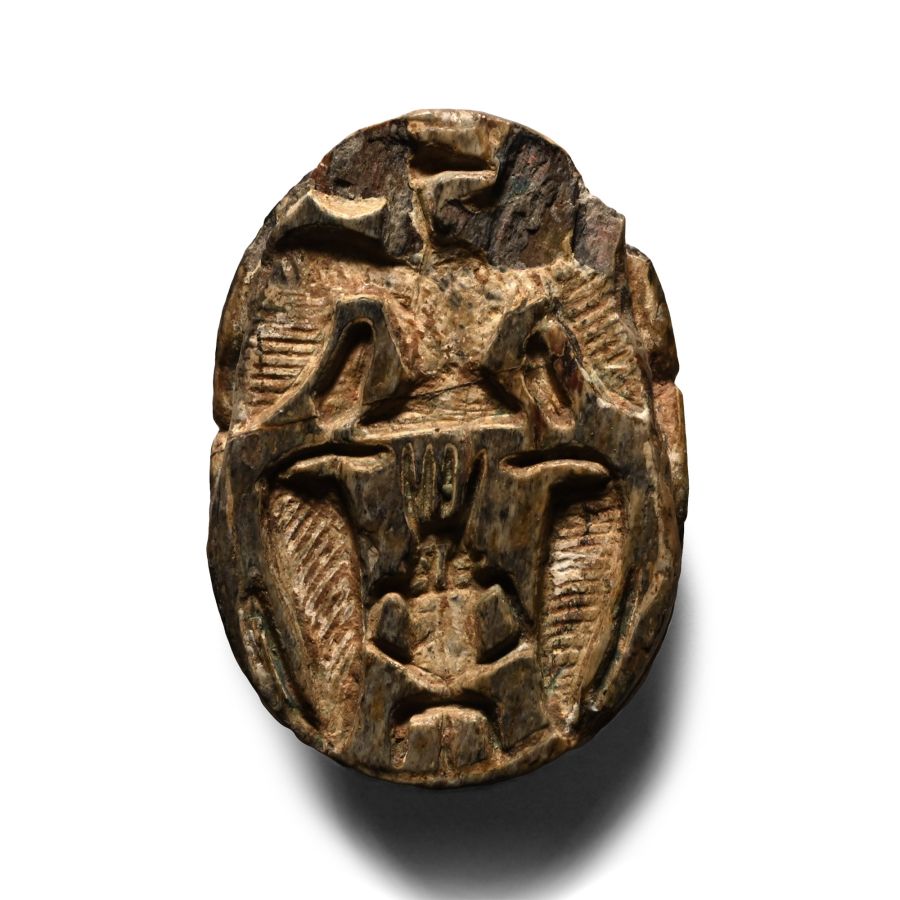
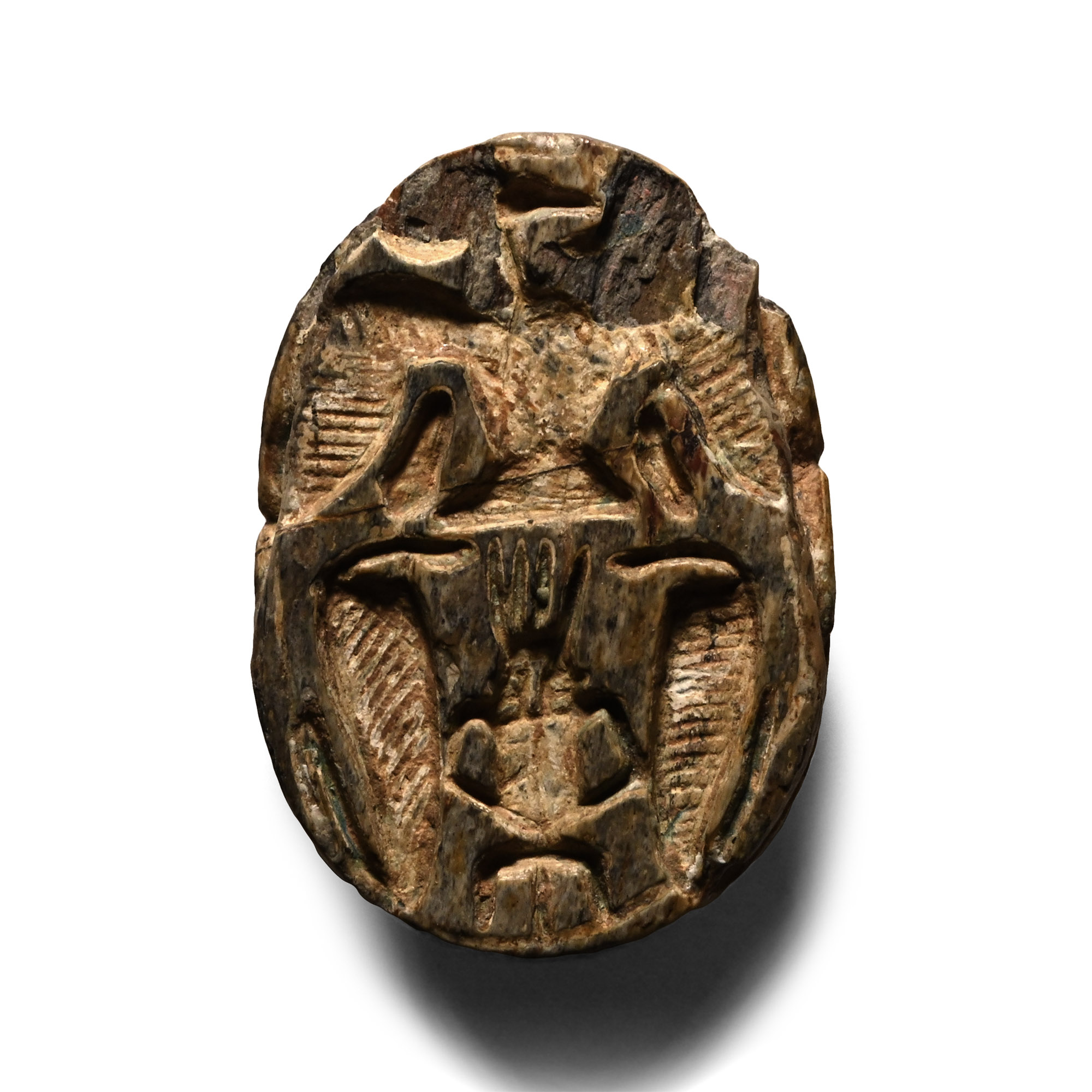
Egyptian Steatite Scarab with Bes, Vulture and Cobras
NEW KINGDOM, 1550-1070 B.C.
1 1/4 in. (9.35 grams, 33 mm).
Naturalistically carved scarab upper; underside carved with vulture atop a figure of Bes flanked by rearing cobras. [No Reserve]
ProvenanceUK private collection before 2000.
Acquired on the UK art market.
Property of a London gentleman.
This lot is accompanied by an illustrated lot declaration signed by the Head of the Antiquities Department, Dr Raffaele D’Amato.
Cf. Matouk, F.S., Corpus du scarabée égyptien. Vol. 2: Analyse thématique, Beirut, 1976, p. 374, nos. 56-59, for examples of scarabs with variant versions of this decorative arrangement featuring Bes.
CONDITIONTimeLine Auctions follows a vetting process to ensure the authenticity and legality of all items, reinforcing our commitment to integrity and responsible trading. Each antiquity, antique, and coin lot undergoes thorough examination by a vetting committee of at least ten external specialists, professional trade association members, scientists, and archaeologists: Our Vetting Process
AUCTIONS:
TimeLine is a leading auction house specialising in antiquities, ancient art, collectables, natural history, coins, medals, and books. Our auctions offer museums, collectors, historians, and enthusiasts the opportunity to acquire unique and historically significant pieces.
-
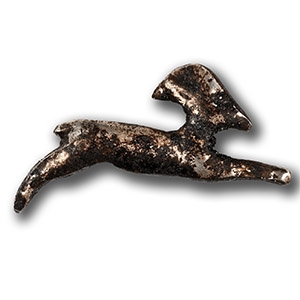
Egyptian Silver Gazelle Amulet
Late-Ptolemaic Period, 664-30 B.C. or earlierSold for (Inc. bp): £221
Figure of a leaping gazelle modelled in the half-round, two attachment loops to the reverse. 1 grams, 21 mm
From an early 20th century collection. This lot is accompanied by an illustrated lot declaration signed by the Head of the Antiquities Department, Dr Raffaele D’Amato.
The ‘flying gallop’ pose of animal figures, including the ibex, in ancient Egyptian jewellery elements is considered to be of Aegean influence. -
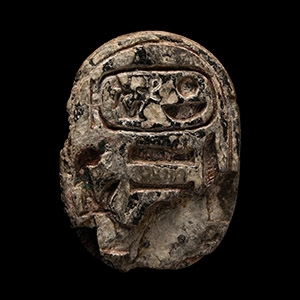
Large Egyptian Stone Hieroglyphic Scarab with Cartouche of Amenhotep III
New Kingdom, 1386-1349 B.C.Estimate: £700 - 900 (‡+bp*)
Opening Bid: £350
Naturalistically modelled with detailing to the upper body and legs; damaged base with the throne name 'neb-maat-re' of Amenhotep III in cartouche and the god's name Amun-Re below; pierced for suspension. 41 grams, 44 mm
Ex R. Liechti (1934-2010) Geneva, Switzerland, collection between 1950-1990s. This lot is accompanied by an illustrated lot declaration signed by the Head of the Antiquities Department, Dr Raffaele D’Amato. -
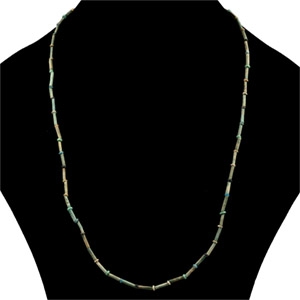
Egyptian Faience Bead Necklace String
Late Period, 664-332 B.C.Sold for (Inc. bp): £52
Comprising tubular beads with interstitial annular beads connecting. 5.11 grams, 70 cm
From an old English collection. Acquired from Helios Gallery, 2011. Ian Wilkinson collection, Nottinghamshire, UK, formed since 1985. This lot is accompanied by an illustrated lot declaration signed by the Head of the Antiquities Department, Dr Raffaele D’Amato.
