
Loading, please wait...
LOT 0465
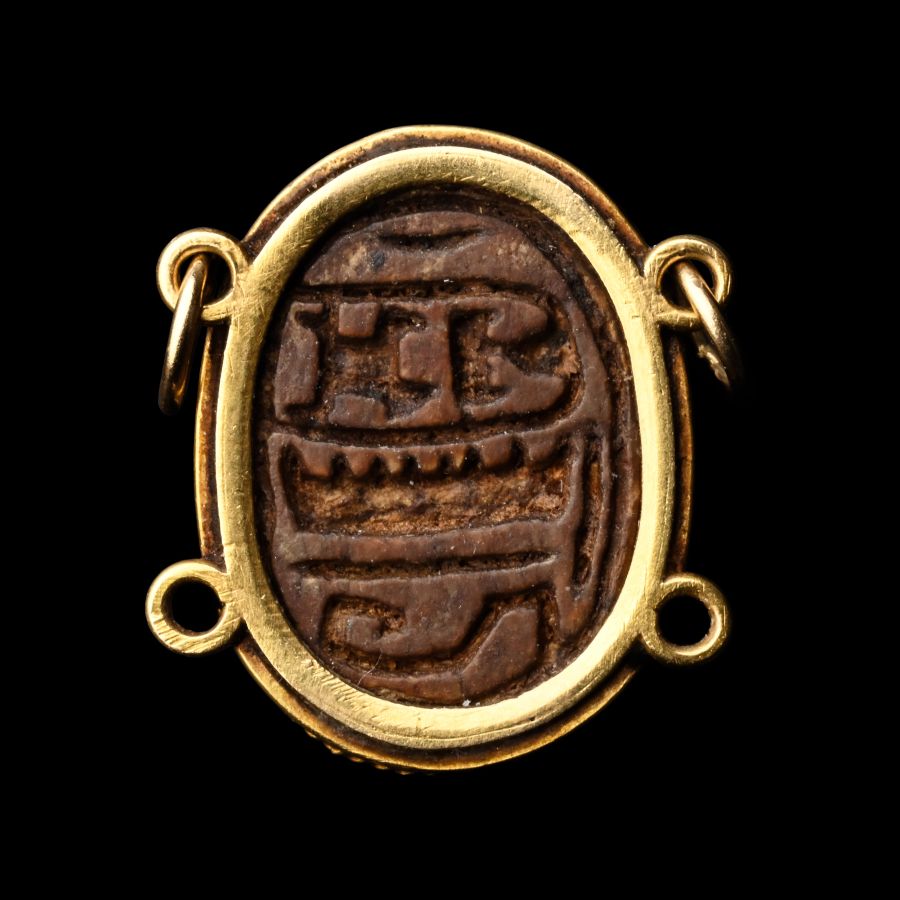
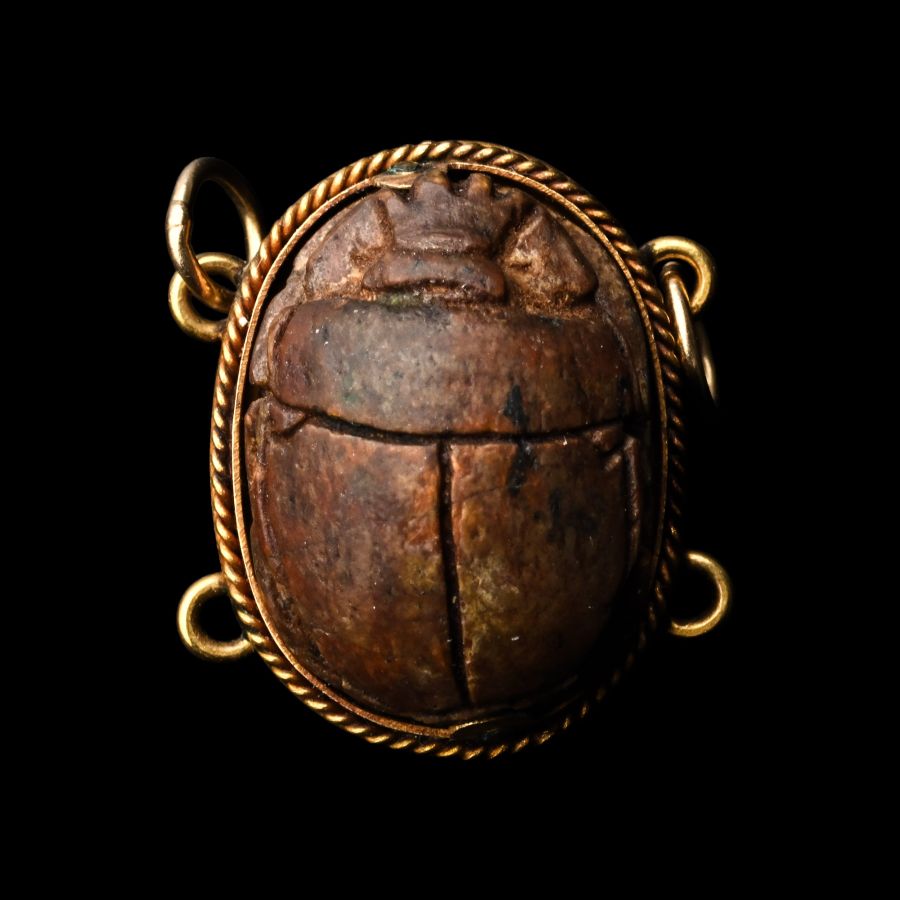
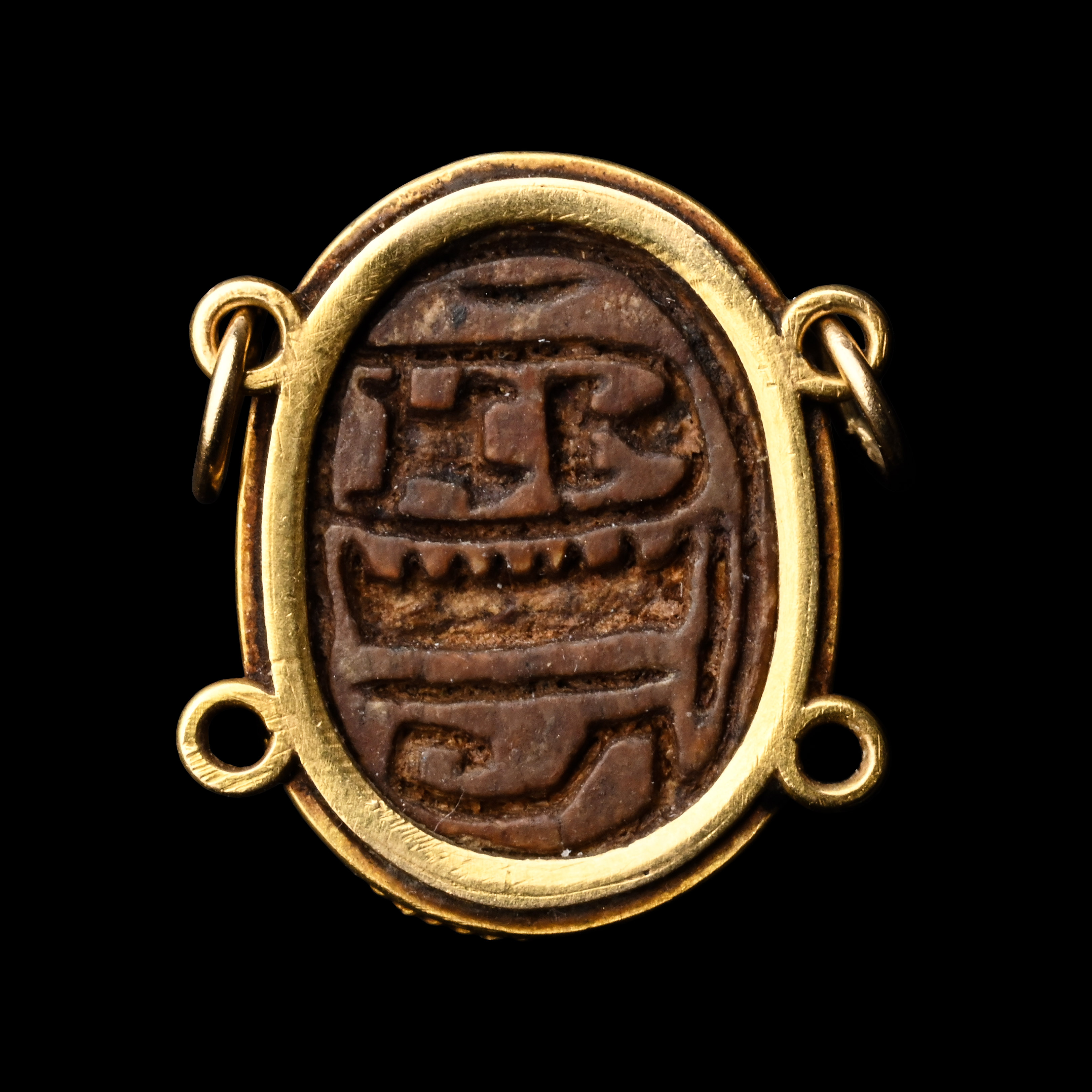
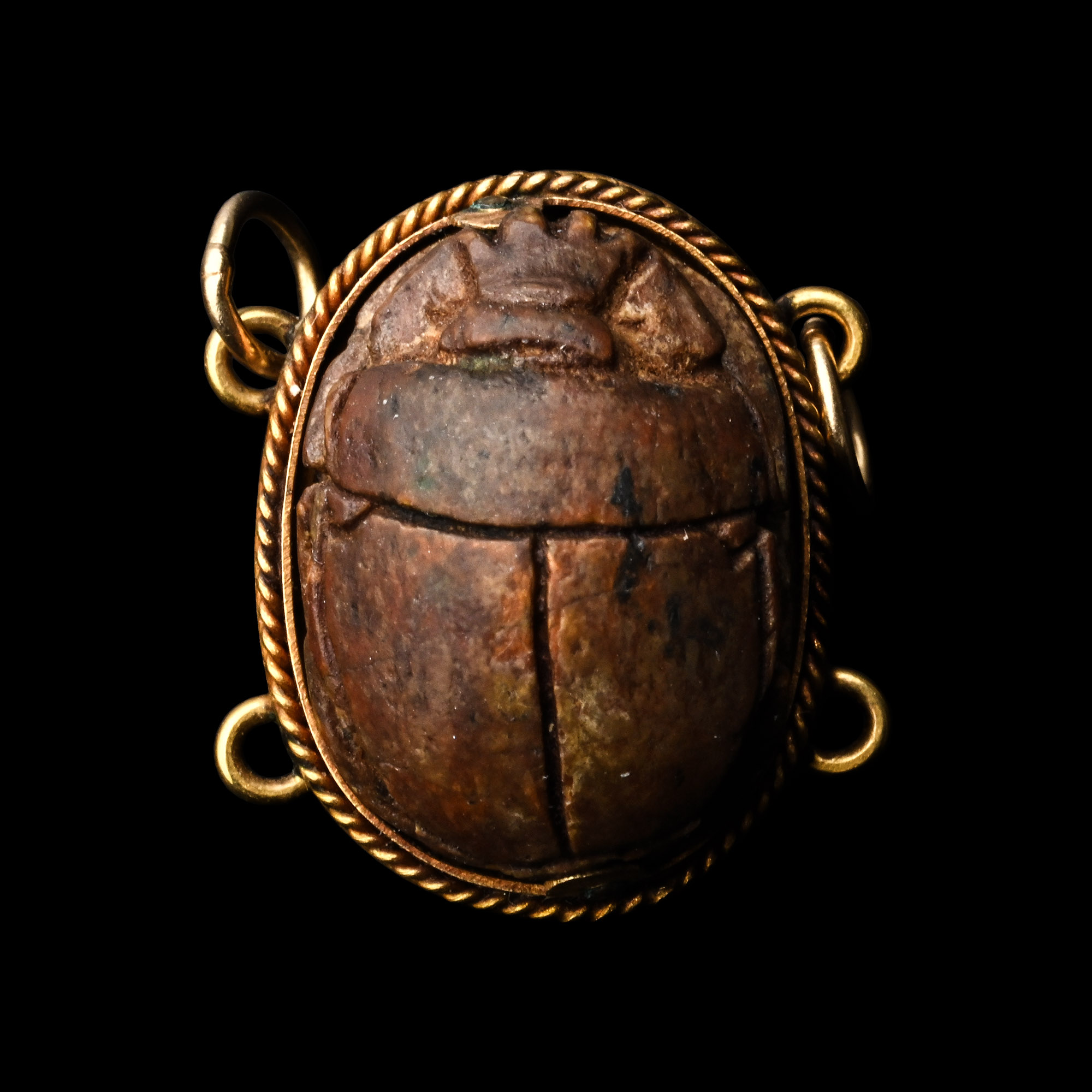
Egyptian Steatite Scarab in Antique Pendant Mount
LATE PERIOD, 664-332 B.C. AND LATER
3/4 in. (3.68 grams, 18.3 mm).
The scarab with anatomical detailing on the body, underside with a cartouche for Tuthmoses III and other hieroglyphs; set in a gold filigree mount with four lateral loops. [No Reserve]
ProvenanceFrom the private collection of a European gentleman (1942-2024), formed since the 1970s.
CONDITIONTimeLine Auctions follows a vetting process to ensure the authenticity and legality of all items, reinforcing our commitment to integrity and responsible trading. Each antiquity, antique, and coin lot undergoes thorough examination by a vetting committee of at least ten external specialists, professional trade association members, scientists, and archaeologists: Our Vetting Process
AUCTIONS:
TimeLine is a leading auction house specialising in antiquities, ancient art, collectables, natural history, coins, medals, and books. Our auctions offer museums, collectors, historians, and enthusiasts the opportunity to acquire unique and historically significant pieces.
-
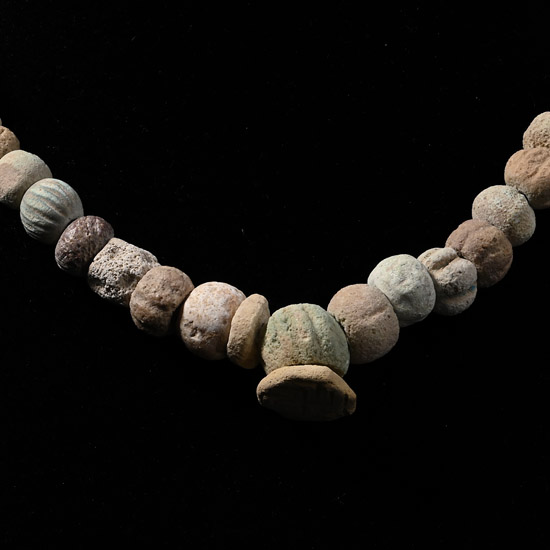
Phoenician Faience Melon Bead Necklace
1st millennium B.C.Sold for (Inc. bp): £98
Composed of graduated melon and other beads, the central feature a discoid pendant with a hooked cross symbol; restrung with a modern clasp. 47.4 grams, 42 cm
Ex London, UK, gallery, 1990s. Accompanied by a previous typed catalogue information card. -
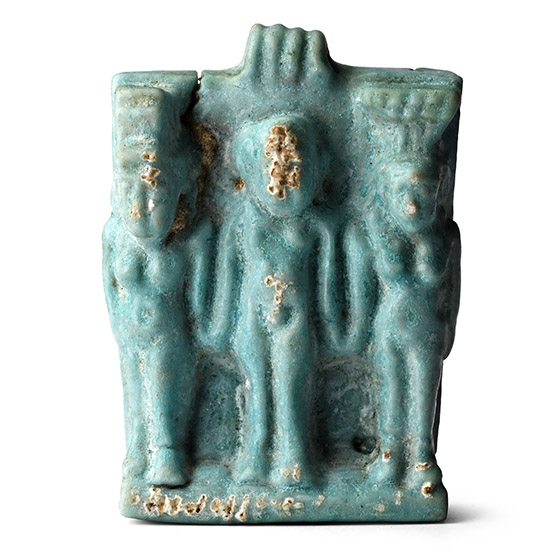
Egyptian Faience Triad Amulet
Late Period, 664-332 B.C.Estimate: £400 - 600 (+bp*)
Opening Bid: £200
Depicting in high-relief the Osirian triad (Isis, Horus, Nephthys) standing side by side on an integral plinth against a dorsal pillar; Nephthys (right) and Isis (left) are shown frontally, wearing headdresses with their specific attributes, each holding the hands of the central Horus figure, shown naked and with the side-lock of youth; a ribbed loop at the top for suspension. 8.56 grams, 33 mm
From the collection of a Swedish noble family, 1920s.
Isis and Nephthys operate as complementary sister deities who guard both Osiris and the deceased through mourning, magical protection, and ritual lamentation, while Horus, the child of Isis, signifies renewal and legitimate kingship. On amulets, the triad translates into a compact visual statement of protection: the deceased is imagined as being held within the sisters’ magical and ritual care, while Horus embodies the successful outcome of that protection in the form of rebirth and continuity. -
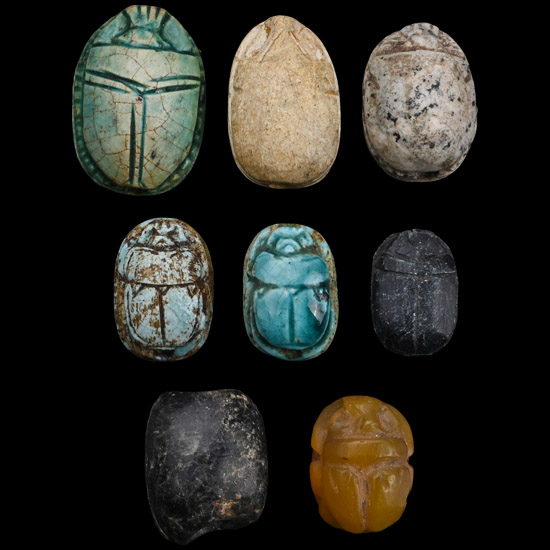
Egyptian Steatite and Other Scarab Collection
New Kingdom-Late Period, 1550-332 B.C.Sold for (Inc. bp): £585
Including carnelian, faience and other materials, some with hieroglyphs to underside. 17.1 grams total, 13-19 mm
From the collection of a gentleman, acquired on the London art market in the 1990s.
