
Loading, please wait...
LOT 0420
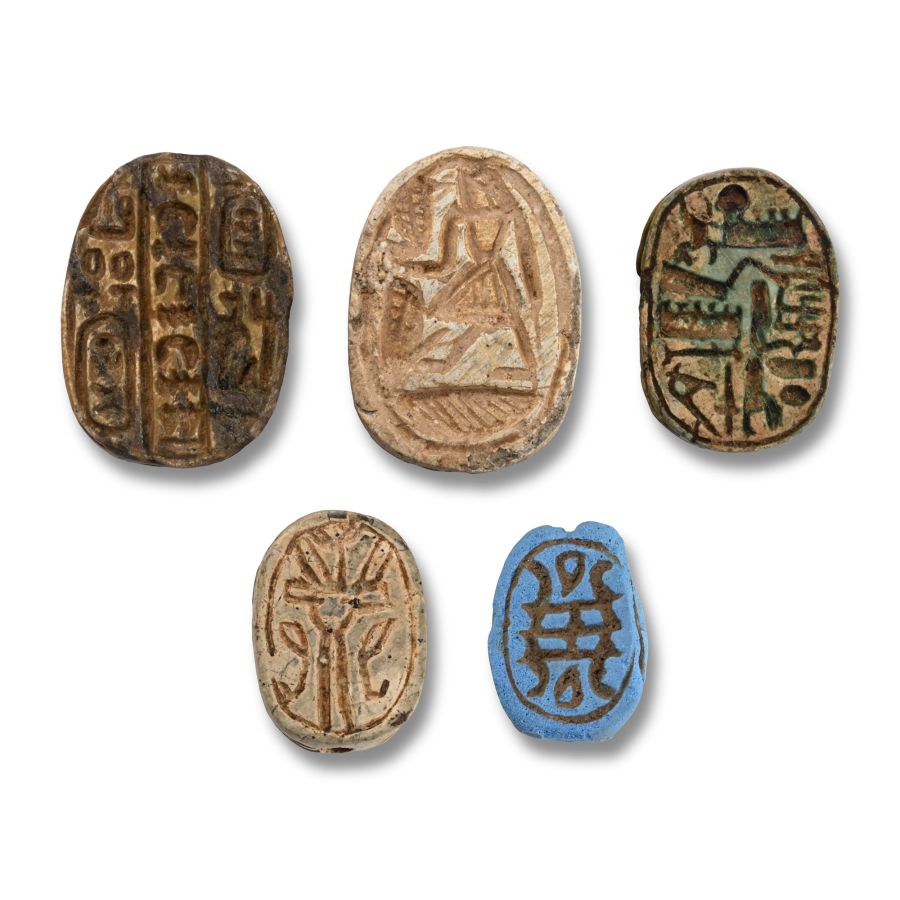
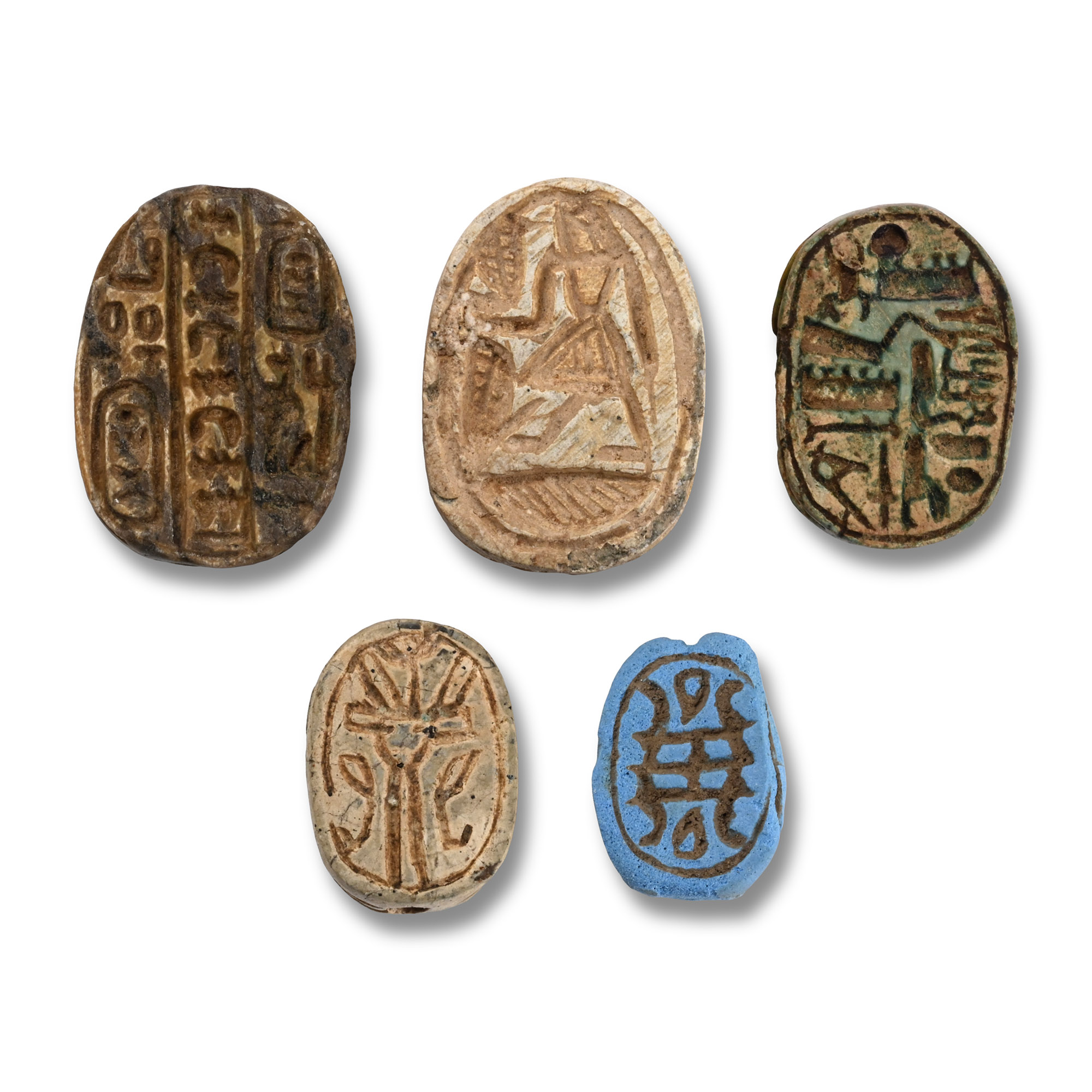
Egyptian Steatite Scarab Group
MAINLY SECOND INTERMEDIATE PERIOD–NEW KINGDOM, CIRCA 1660-1069 B.C.
1/2 - 3/4 in. (10.6 grams total, 13-19 mm).
Designs include: a tripartite design with ankh, water, nwb, and men signs, with indistinct cartouches possibly of Thutmose III, and signs spelling the phrase 'powerful is the justice of Re' (user-Maat-Re); a line border enclosing the stylised depiction of a striding figure grasping a crocodile, with a neb sign below; a line border enclosing a multitude of signs, including Thutmose III’s throne name (men-kheper-Re), and that of Amun; A line border enclosing central Hathoric sistrum; a line border enclosing a symmetrical motif in contrasting black glaze. [5]
ProvenanceAcquired on the European art market in the early 2000s.
with Galerie Rhéa, Zurich, Switzerland.
This lot is accompanied by an illustrated lot declaration signed by the Head of the Antiquities Department, Dr Raffaele D'Amato.
TimeLine Auctions follows a vetting process to ensure the authenticity and legality of all items, reinforcing our commitment to integrity and responsible trading. Each antiquity, antique, and coin lot undergoes thorough examination by a vetting committee of at least ten external specialists, professional trade association members, scientists, and archaeologists: Our Vetting Process
AUCTIONS:
TimeLine is a leading auction house specialising in antiquities, ancient art, collectables, natural history, coins, medals, and books. Our auctions offer museums, collectors, historians, and enthusiasts the opportunity to acquire unique and historically significant pieces.
-
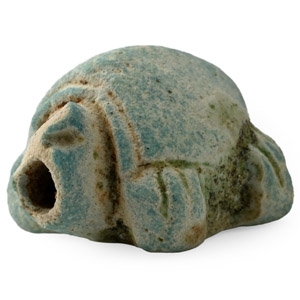
Egyptian Faience Turtle Amulet
Late Period, 664-332 B.C.Sold for (Inc. bp): £143
Blue glazed turtle amulet or bead with flat base and incised lines to each leg, pierced for suspension. 0.76 grams, 11 mm
From an early 20th century collection. This lot is accompanied by an illustrated lot declaration signed by the Head of the Antiquities Department, Dr Raffaele D'Amato.
Turtle amulets have a rich history in ancient Egypt. The turtle was considered to possess a dual character. On one hand, it lived in the dark depths, embodying cosmic danger and was ritually annihilated. On the other hand, its power could be harnessed to ward off evil and work to the advantage of people, making turtle amulets a potent symbol of protection. -
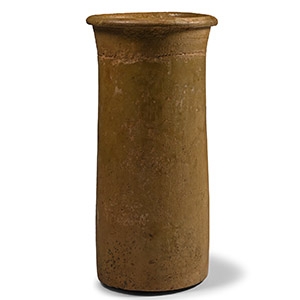
Egyptian Terracotta Cylindrical Jar
Early Dynastic Period, Naqada IIIC, circa 3100 B.C.Sold for (Inc. bp): £520
Band of imitation rope-twist decoration encircling the top of the jar, the mouth slightly flaring with a slightly damaged rolled lip. 950 grams, 22 cm
with Bonhams, London, 1 May 2008, no.432 [Part]. Accompanied by a copy of an Art Loss Register certificate no.S00035996. Accompanied by a copy of relevant Bonhams catalogue pages. This lot is accompanied by an illustrated lot declaration signed by the Head of the Antiquities Department, Dr Raffaele D’Amato. This lot is accompanied by an illustrated lot declaration signed by the Head of the Antiquities Department, Dr Raffaele D'Amato.
These vessels often exhibit different surface treatments; the rim and area above the rope twist show marks where the vessel was rotated to produce the rim, and below, the rest of the jar has a scrape-smoothed surface. -
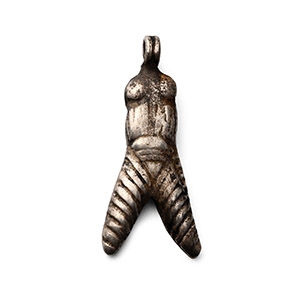
Egyptian Silver Fly Amulet
Late-Ptolemaic Period, 664-30 B.C.Sold for (Inc. bp): £124
With linear detailing to wings, raised eyes, pierced for suspension. 1.02 grams, 21 mm
Ex London, UK, art market, 1990s. This lot is accompanied by an illustrated lot declaration signed by the Head of the Antiquities Department, Dr Raffaele D'Amato.
