
Loading, please wait...
LOT 0546
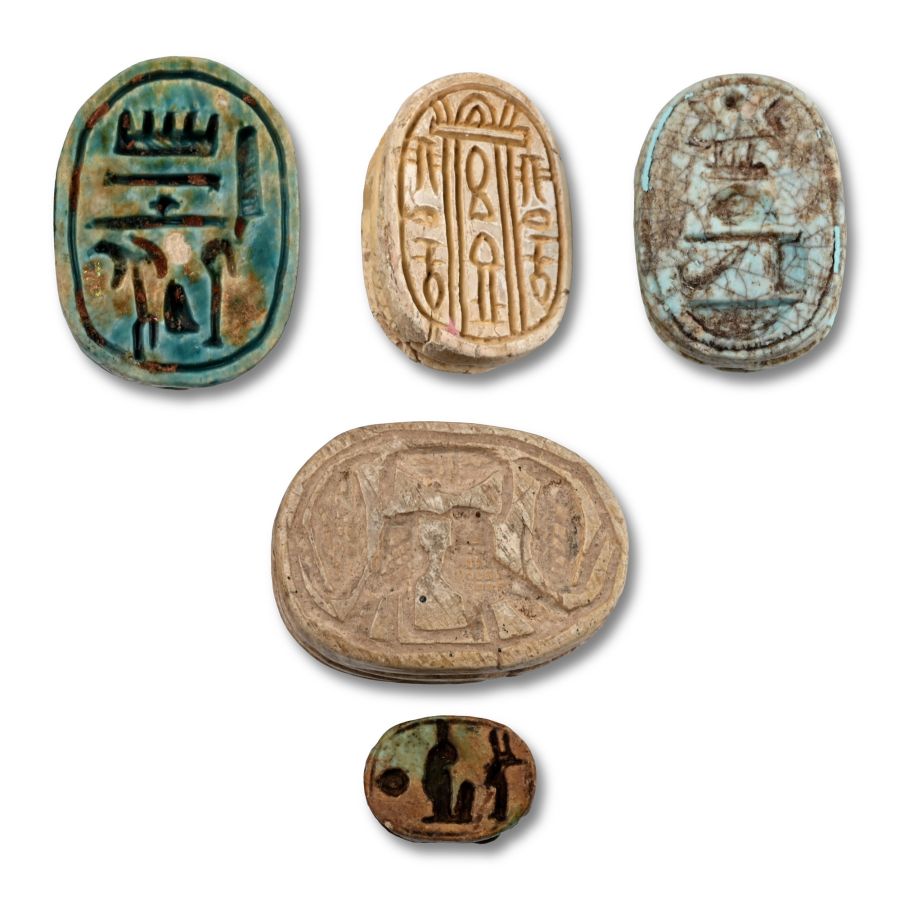
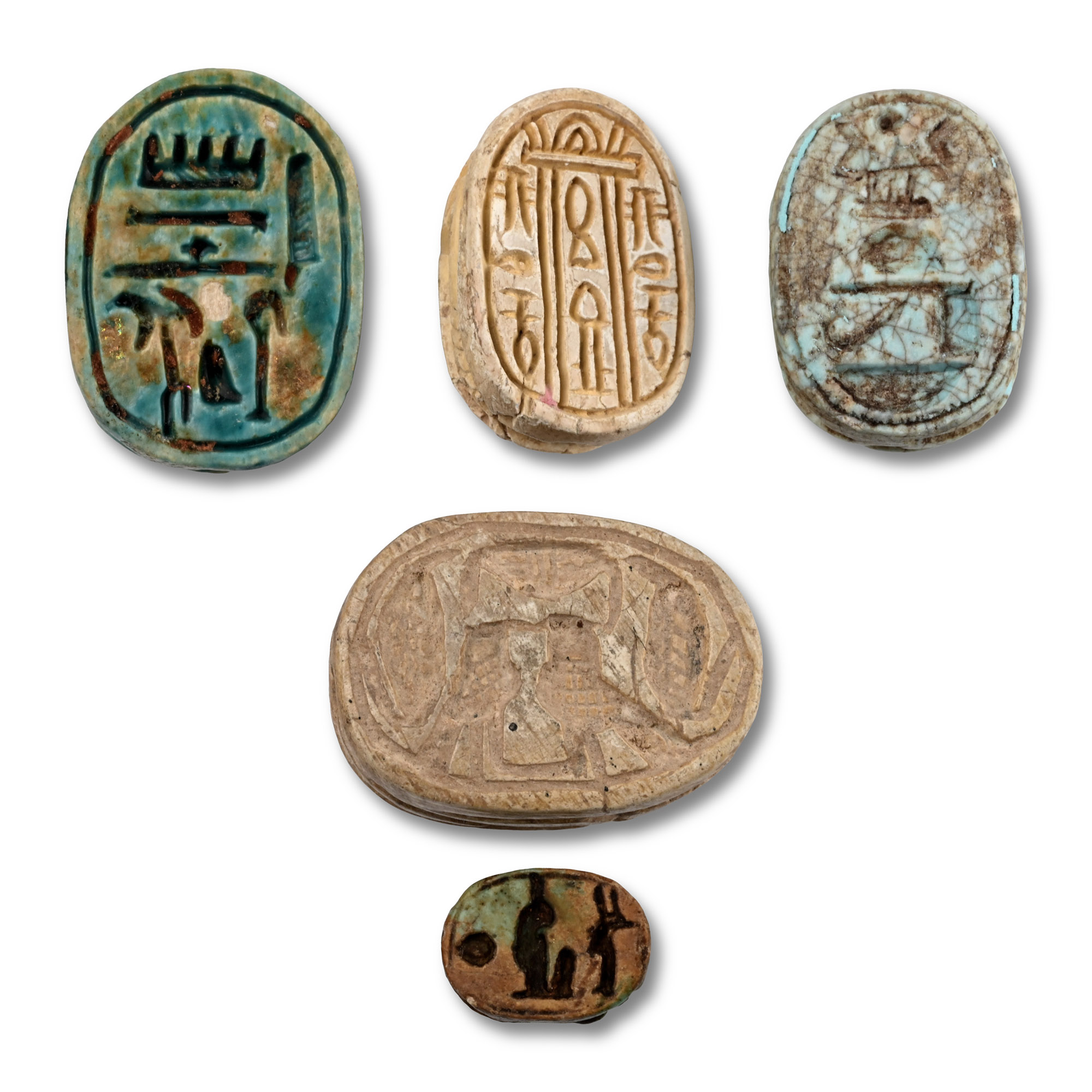
Egyptian Steatite Scarab Group
MAINLY SECOND INTERMEDIATE PERIOD-NEW KINGDOM, CIRCA 1600-1069 B.C.
3/8 - 3/4 in. (11.2 grams total, 9-19 mm).
Designs include: a line border enclosing the name of Amenhotep III and the epithet ‘Ruler of Thebes’; a line border enclosing a central shrine-like motif containing a sa and nefer sign, flanked by mirrored djed, ro, and nefer signs; a line border enclosing a bark, sun disc, wedjat, and neb signs; a Line border enclosing two facing falcons flanked by rearing cobras and a nwb (gold) sign above; a line border enclosing the phrase ‘powerful is the justice of Re’ (user-Maat-Re), which formed part of the throne name of several Ramesside pharaohs. [5]
ProvenanceAcquired on the European art market in the early 2000s.
with Galerie Rhéa, Zurich, Switzerland.
This lot is accompanied by an illustrated lot declaration signed by the Head of the Antiquities Department, Dr Raffaele D'Amato.
TimeLine Auctions follows a vetting process to ensure the authenticity and legality of all items, reinforcing our commitment to integrity and responsible trading. Each antiquity, antique, and coin lot undergoes thorough examination by a vetting committee of at least ten external specialists, professional trade association members, scientists, and archaeologists: Our Vetting Process
AUCTIONS:
TimeLine is a leading auction house specialising in antiquities, ancient art, collectables, natural history, coins, medals, and books. Our auctions offer museums, collectors, historians, and enthusiasts the opportunity to acquire unique and historically significant pieces.
-
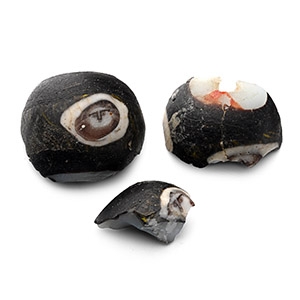
Phoenician Glass Eye Bead Fragments
1st century B.C.-1st century A.D.Sold for (Inc. bp): £124
Glass fragments from spherical beads with eyes within a white panel on black field. 6.9 grams, 15-18 mm
From the collection of a gentleman, acquired on the London art market in the 1990s. This lot is accompanied by an illustrated lot declaration signed by the Head of the Antiquities Department, Dr Raffaele D'Amato. -
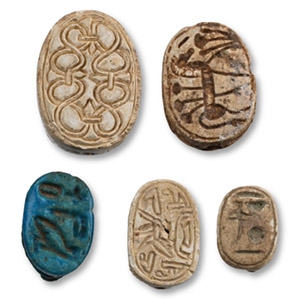
Egyptian Steatite and Other Scarab Group
Mainly Second Intermediate Period, circa 1660-1500 B.C.Sold for (Inc. bp): £364
Designs include: a line border enclosing a decorative symmetrical scroll-work pattern; a line border enclosing a horse with papyrus clumps above and in front; deeply impressed bird and other signs behind; a line border enclosing a nwb (gold) sign flanked by Red Crowns, with a bee above flanked by coiled cobras; a line border enclosing a djed, neb, and sun disc, with narrow neb(?) signs above and below. 8.76 grams total, 12-21 mm
Acquired on the European art market in the early 2000s. with Galerie Rhéa, Zurich, Switzerland. This lot is accompanied by an illustrated lot declaration signed by the Head of the Antiquities Department, Dr Raffaele D'Amato. -
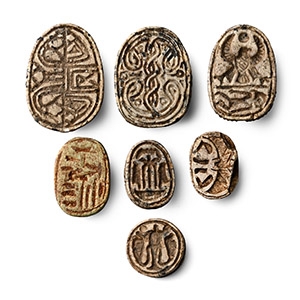
Egyptian Steatite Scarab Collection
Mostly Late Middle Kingdom, Second Intermediate Period, 1780-1500 B.C.Sold for (Inc. bp): £780
Mixed group of design scarabs and scaraboids, including: stylised foliate motif with a sa sign; central entwined cords with curled tops and tails, and nefer signs; a falcon with outspread wings and sun disc above, surmounting a fallen enemy; a group of hieroglyphs: a central mes flanked by reed leaves, with a water sign n above, and a neb sign below; a falcon with outspread wings, with two maat feathers and stylised cobras above; a central hes vase flanked by rearing cobras. 32.6 grams total, 15-28 mm
From the collection of a gentleman, acquired on the London art market in the 1990s. This lot is accompanied by an illustrated lot declaration signed by the Head of the Antiquities Department, Dr Raffaele D'Amato.
