
Loading, please wait...
LOT 0505
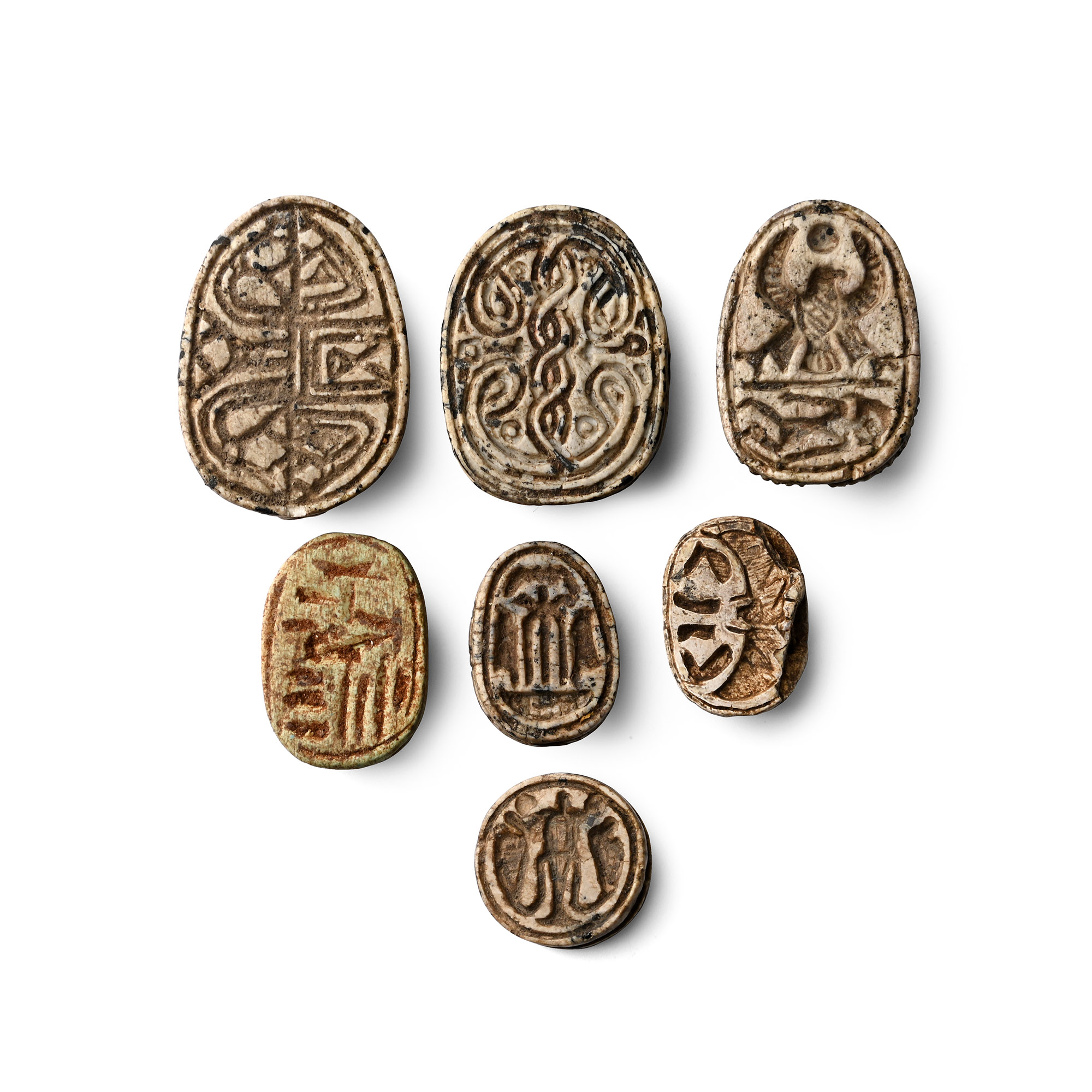
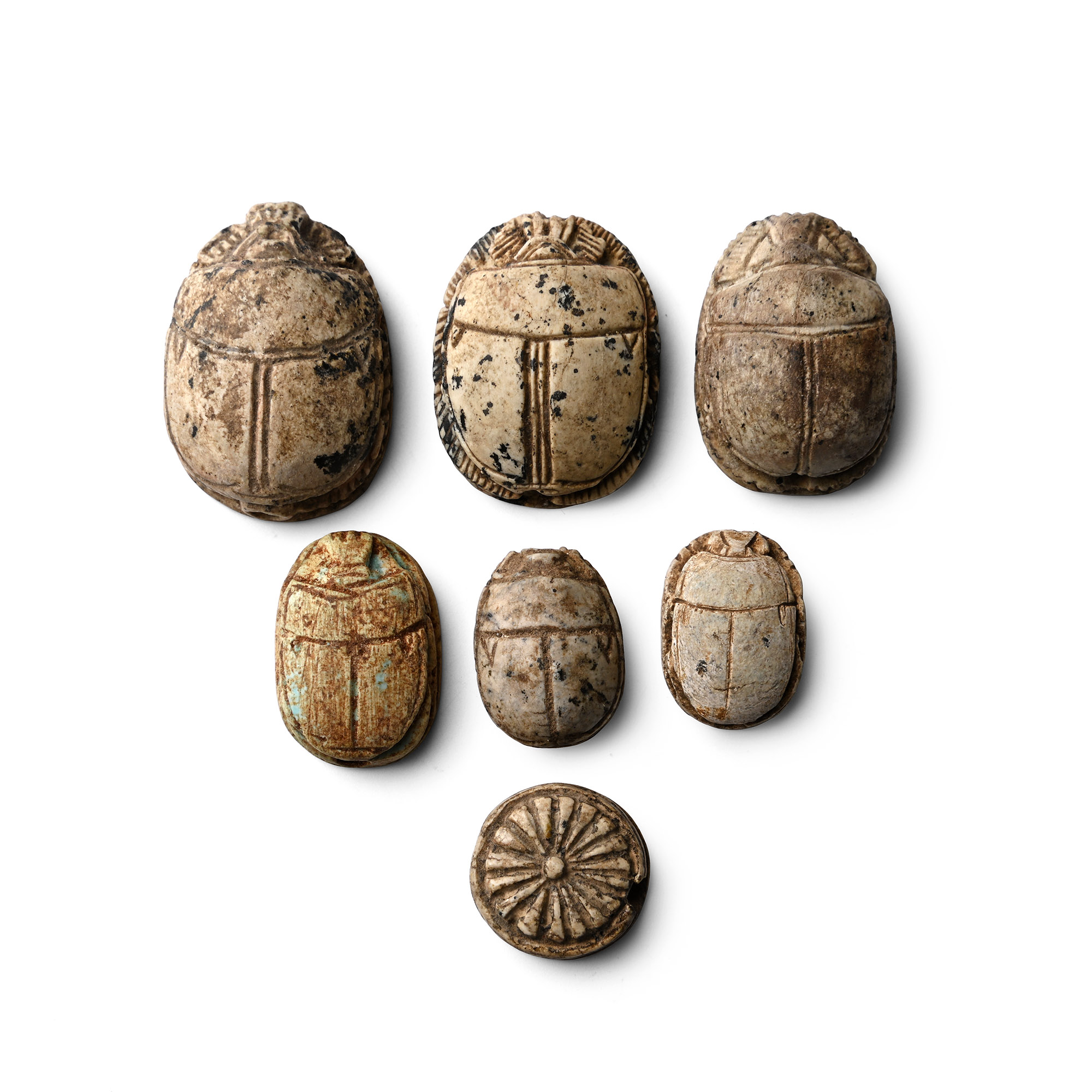
Egyptian Steatite Scarab Collection
MOSTLY LATE MIDDLE KINGDOM, SECOND INTERMEDIATE PERIOD, 1780-1500 B.C.
1/2 - 1 1/8 in. (32.6 grams total, 15-28 mm).
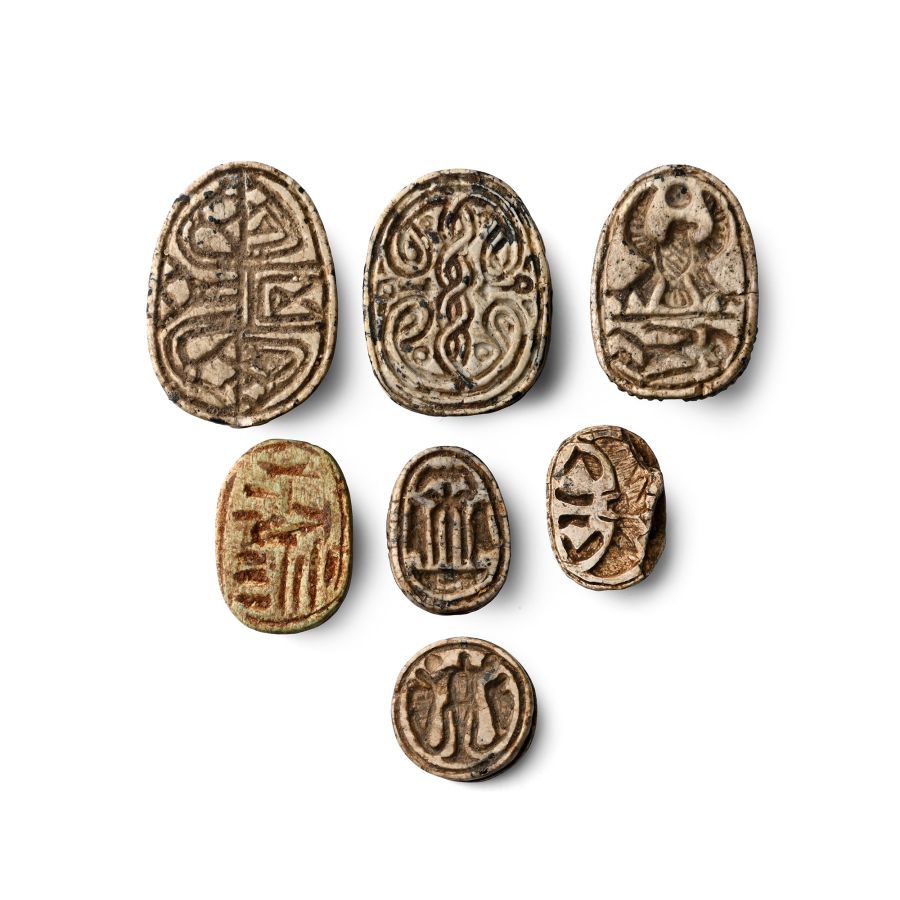
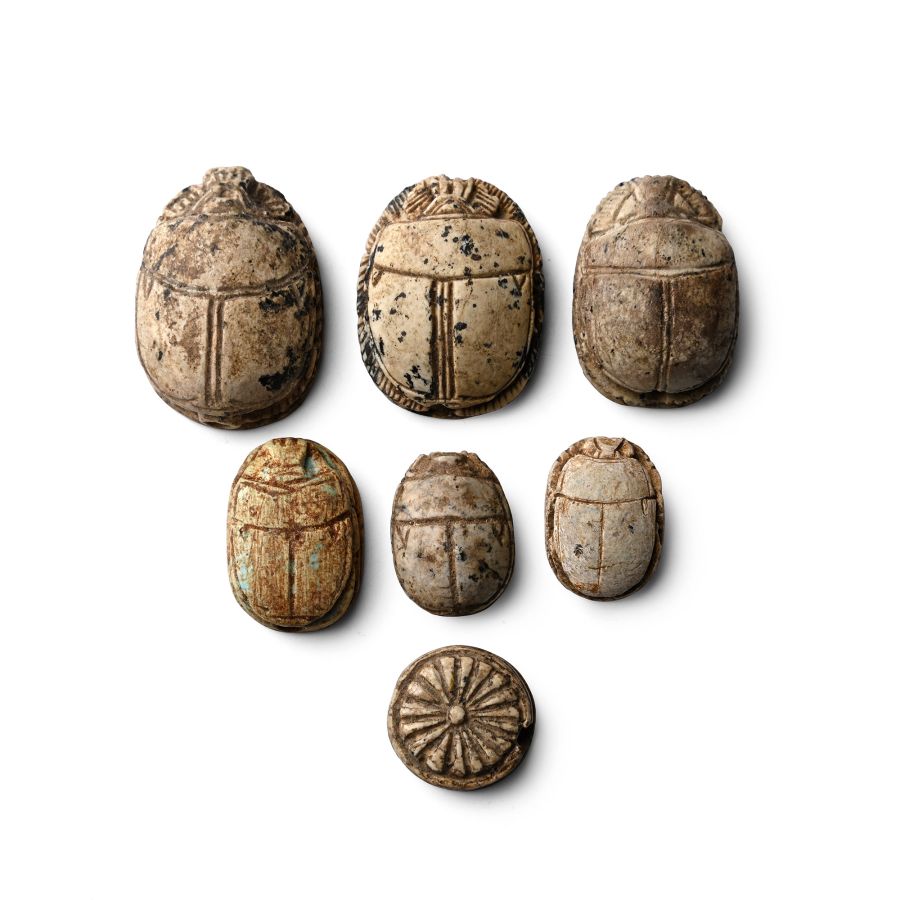
Mixed group of design scarabs and scaraboids, including: stylised foliate motif with a sa sign; central entwined cords with curled tops and tails, and nefer signs; a falcon with outspread wings and sun disc above, surmounting a fallen enemy; a group of hieroglyphs: a central mes flanked by reed leaves, with a water sign n above, and a neb sign below; a falcon with outspread wings, with two maat feathers and stylised cobras above; a central hes vase flanked by rearing cobras. [7]
ProvenanceFrom the collection of a gentleman, acquired on the London art market in the 1990s.
This lot is accompanied by an illustrated lot declaration signed by the Head of the Antiquities Department, Dr Raffaele D'Amato.
TimeLine Auctions follows a vetting process to ensure the authenticity and legality of all items, reinforcing our commitment to integrity and responsible trading. Each antiquity, antique, and coin lot undergoes thorough examination by a vetting committee of at least ten external specialists, professional trade association members, scientists, and archaeologists: Our Vetting Process
AUCTIONS:
TimeLine is a leading auction house specialising in antiquities, ancient art, collectables, natural history, coins, medals, and books. Our auctions offer museums, collectors, historians, and enthusiasts the opportunity to acquire unique and historically significant pieces.
-
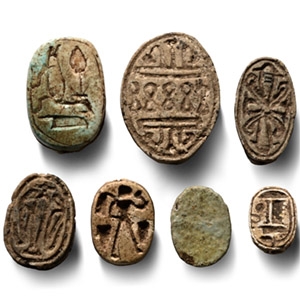
Egyptian Mixed Scarab and Scaraboid Collection
2nd-1st millennium B.C.Sold for (Inc. bp): £468
Comprising (from left to right, top to bottom): 1) a scarab with an oval border containing a goose, nefer(?), and a reed leaf; 2) a scarab with an oval border featuring a triple lotus flower motif at the top and bottom, with a middle row of floral bundles; 3) a scaraboid with a long oval border containing a cross pattern incorporating scrolls, coiled cords, and floral elements; 4) a scarab with an oval border featuring a hes-jar flanked by two cobras; 5) a scarab with a standing male figure holding a sceptre/mace and a flail, flanked by two highly stylised rearing cobras; 6) a plain scarab; 7) and a scarab with an oval border containing the name Amun-Re, a neb symbol, and a lotus flower. 13 grams total, 11-23 mm
From the collection of a gentleman, acquired on the London art market in the 1990s. This lot is accompanied by an illustrated lot declaration signed by the Head of the Antiquities Department, Dr Raffaele D'Amato. -
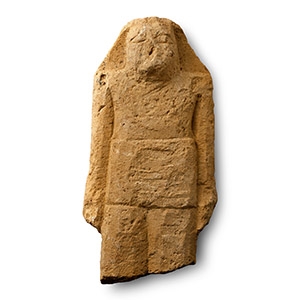
Egyptian Limestone Grave Figure
Old Kingdom, 4th Dynasty, circa 2613-2498 B.C.Sold for (Inc. bp): £416
Carved in the half-round with suggestion of facial features and kilt; remains of an inscription on the right arm; perhaps unfinished. 969 grams, 17.5 cm
From a Swiss private collection. Acquired in Zurich in 1999. From the collection of G.M.R.H., London, UK. This lot is accompanied by an illustrated lot declaration signed by the Head of the Antiquities Department, Dr Raffaele D'Amato. -
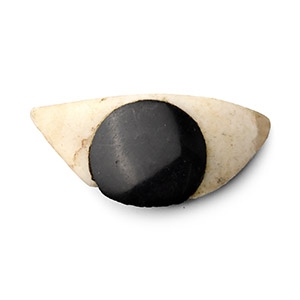
Egyptian Stone Mummy Eye
Late Period, 664-332 B.C.Sold for (Inc. bp): £117
Carved insert for a mask, white with large inset black pupil. 9.94 grams, 39 mm
From the collection of a gentleman, acquired on the London art market in the 1990s. This lot is accompanied by an illustrated lot declaration signed by the Head of the Antiquities Department, Dr Raffaele D'Amato.
