
Loading, please wait...

LOT 0739
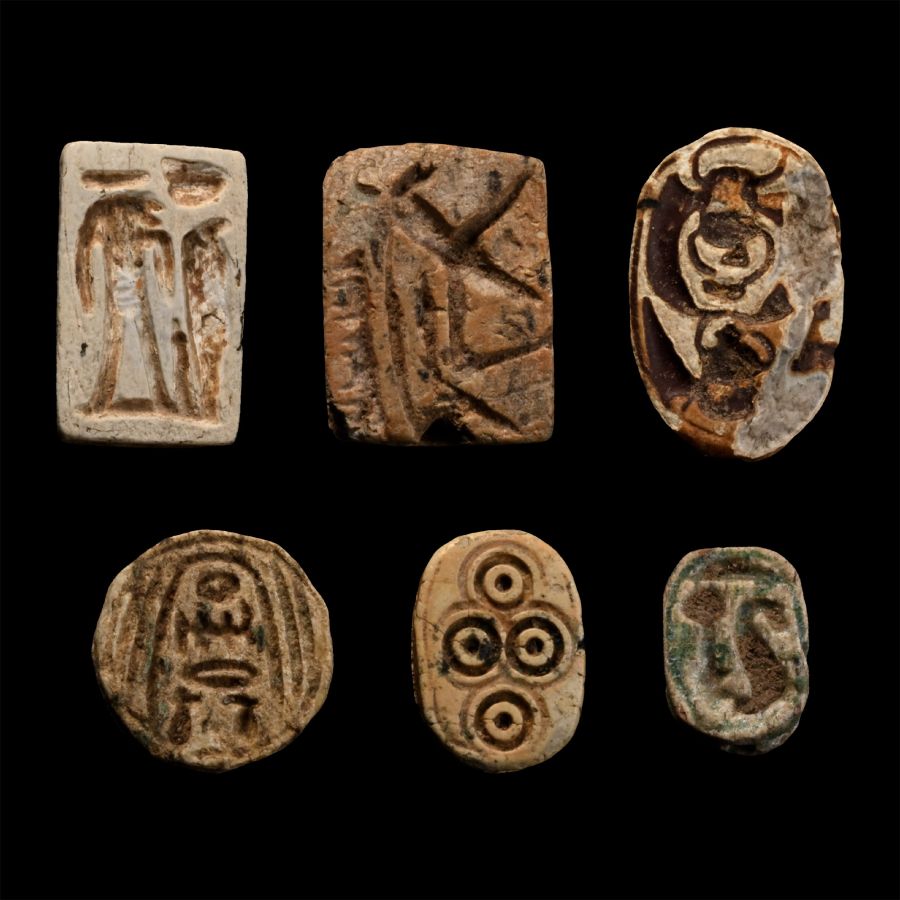
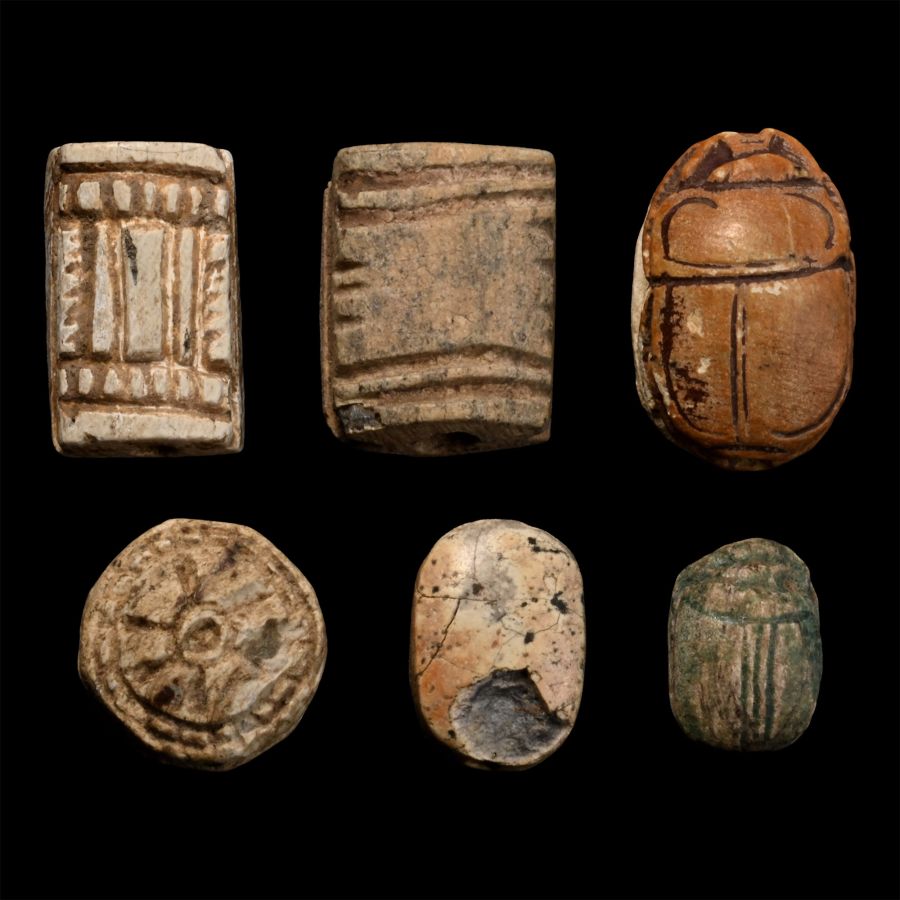
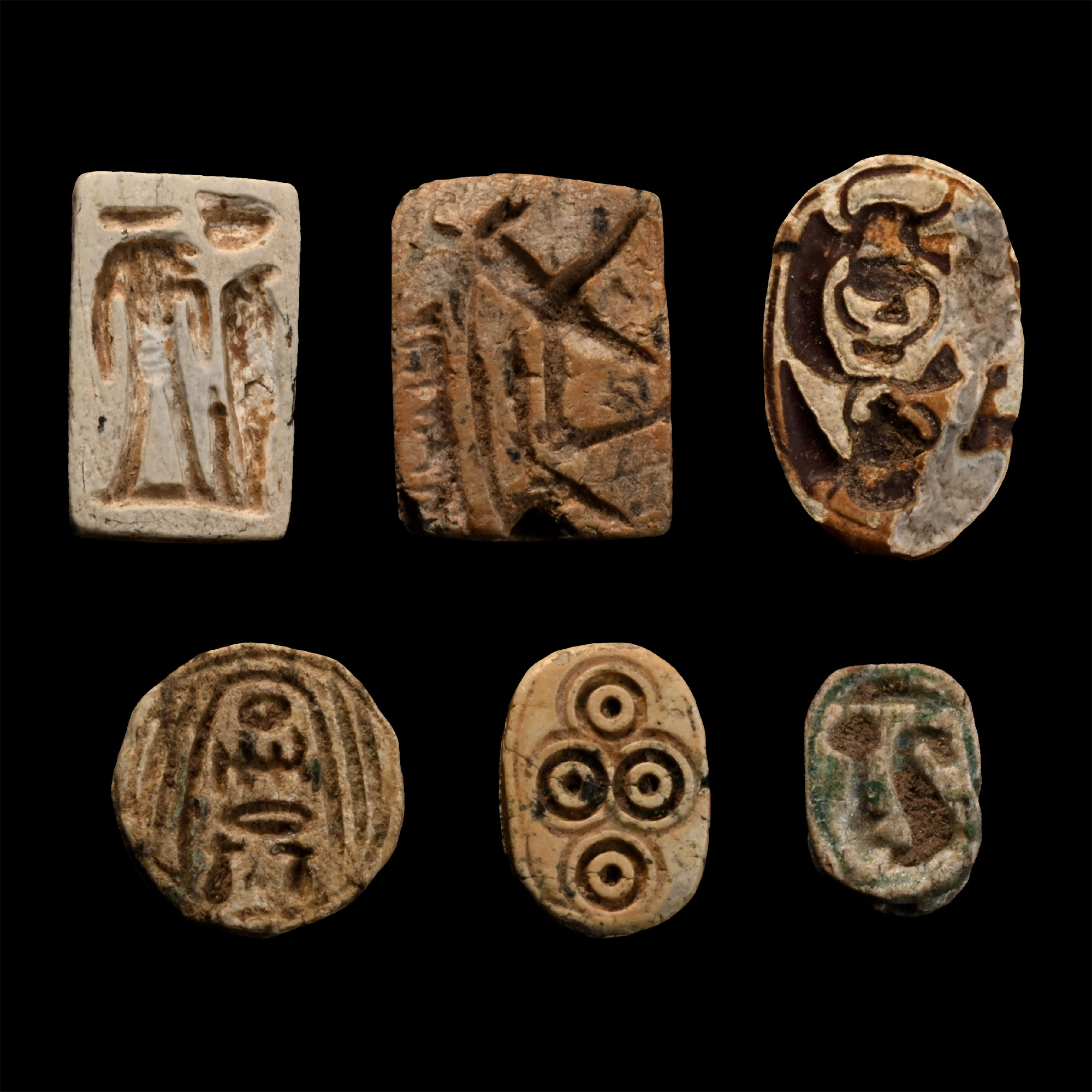
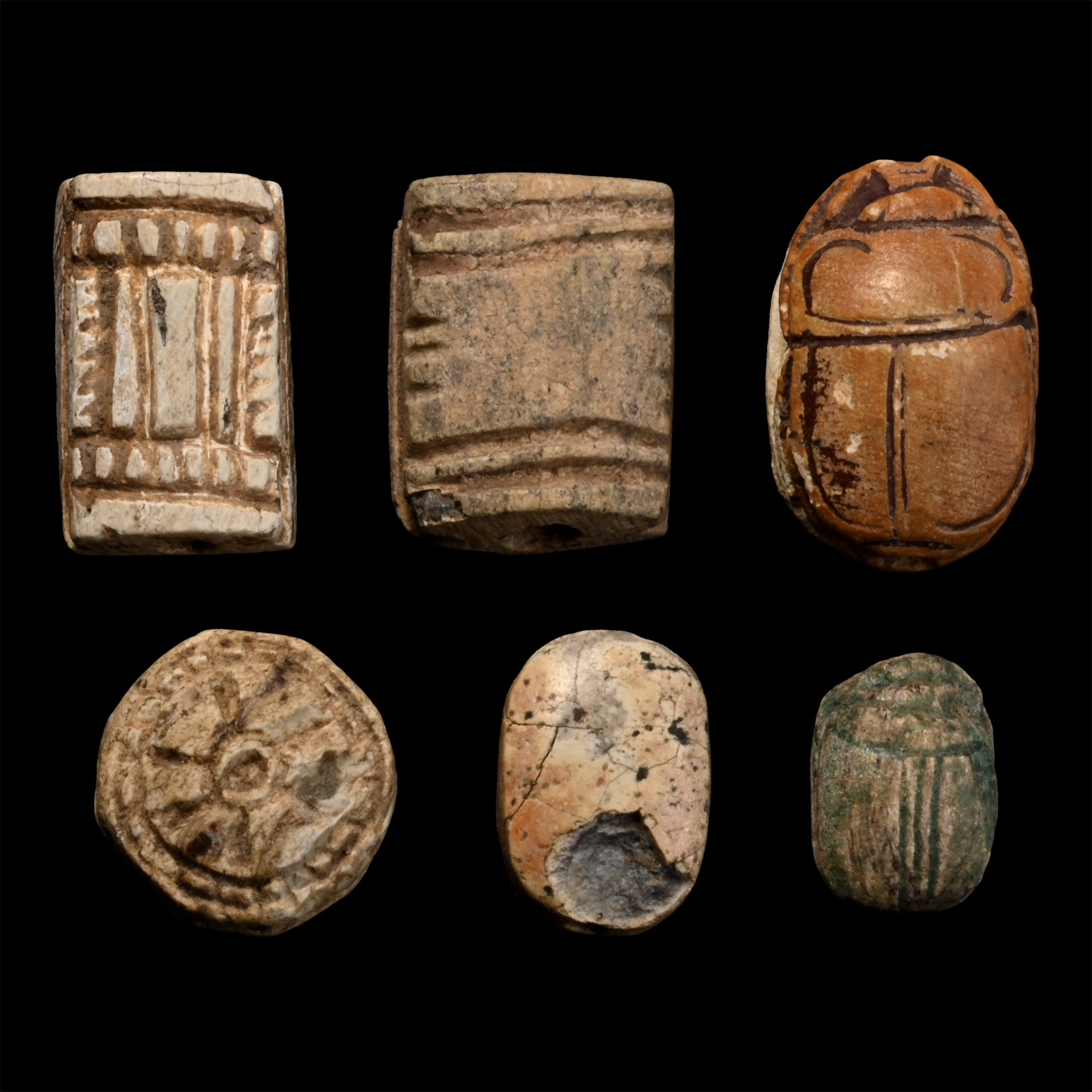
Egyptian Steatite Scarab and Plaque Group
LATE PERIOD-PTOLEMAIC PERIOD, CIRCA 664-30 B.C.
3/8 - 1/2 in. (6.3 grams total, 9-14 mm).
Including scarab, scaraboid and other types with incised hieroglyphs and other symbols. [6]
ProvenanceEx 1990s collection.
CONDITIONTimeLine Auctions follows a vetting process to ensure the authenticity and legality of all items, reinforcing our commitment to integrity and responsible trading. Each antiquity, antique, and coin lot undergoes thorough examination by a vetting committee of at least ten external specialists, professional trade association members, scientists, and archaeologists: Our Vetting Process
AUCTIONS:
TimeLine is a leading auction house specialising in antiquities, ancient art, collectables, natural history, coins, medals, and books. Our auctions offer museums, collectors, historians, and enthusiasts the opportunity to acquire unique and historically significant pieces.
LOT 0739
Egyptian Steatite Scarab and Plaque Group
Estimate £200 - 300€230 - 350 (for guidance only)$270 - 410 (for guidance only)
Opening Bid
£100 (EUR 116; USD 135) +BP*
-
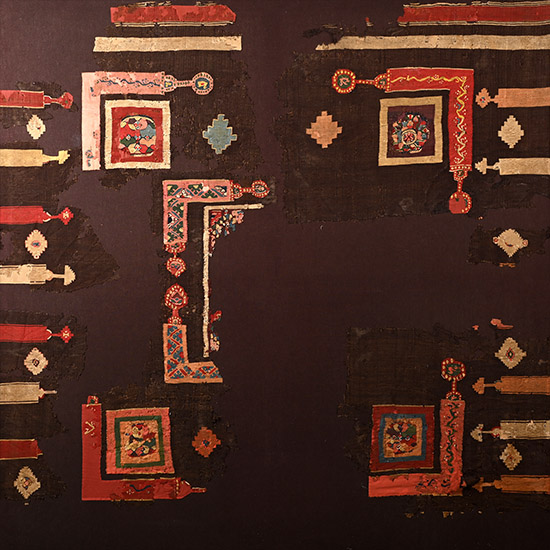
Very Large Egyptian Coptic Composition of Textile Tunic Fragments
Circa 560-700 A.D.Estimate: £4,000 - 6,000 (+bp*)
Opening Bid: £2,000
A composition of Roman-era Coptic textiles, assembled from various tunic and tapestry elements: 12 clavi, paired segmenta, and 4 tablia decorated with vegetal and floral motifs, framed by L-shaped elements composed of two clavi with orbiculi; geometric patterns wind along the clavi, while the orbiculi feature vegetal motifs and fish surrounded by small spheres; rhomboidal appliqués punctuate the surface; red, yellow, green, brown, pink, and indigo-blue wool, S-twist; mounted on a canvas with a wooden frame. 5.15 kg, 1.45 x 1.52 m
From the private antiquities collection of a Kensington collector. With a scientific report by RCD RadioCarbon dating from a sample taken in 2008. Property of a Huddersfield, UK, gentleman. This lot has been checked against the Interpol Database of stolen works of art and is accompanied by search certificate number no.13444-263431
The fragments are decorative parts of tunics or wall tapestries. These are fabrics of great decorative finesse, with some elements displaying an unusual and extremely well-preserved colour palette. The plant and animal designs are related to the so-called Nilotic decorative pattern, with Pagan elements persisting in the Christian Empire. Parts of this composition could also belong to a female shawl, like the famous Sabina's shawl found by Gayet in Antinoe. -
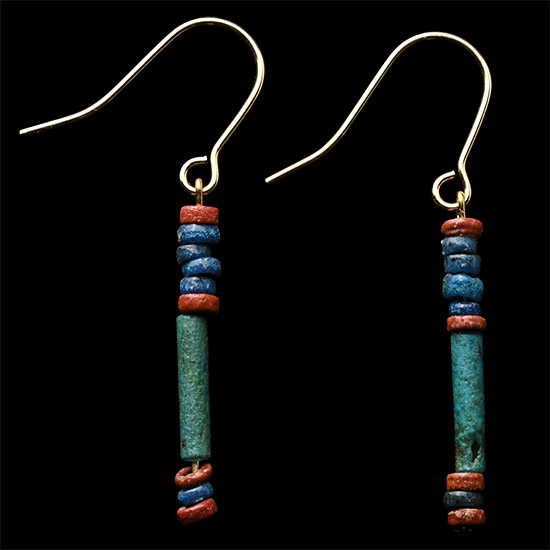
Egyptian Faience Earrings on Modern Mounts
Late-Ptolemaic Period, circa 664-30 B.C.Estimate: £50 - 70 (+bp*)
Opening Bid: £5
Each composed of two groups of faience disc beads separated by a longer tubular bead with a modern gold wire fitting. 0.85 grams total, 43 mm each
Ex Ancient Art shop, Windsor, UK, 1990s. -
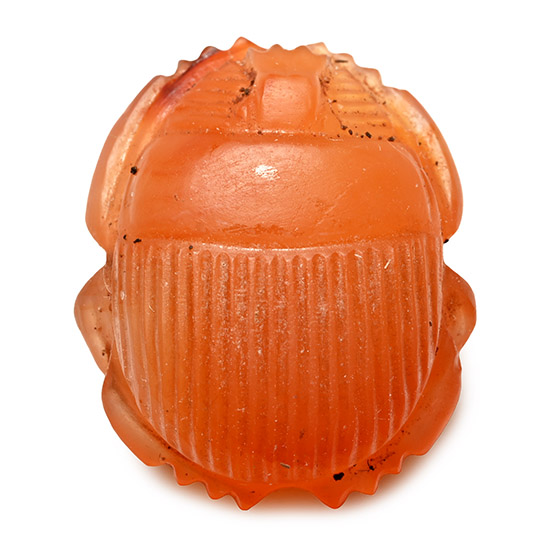
Egyptian Carnelian Heart Scarab
Late Period, 664-332 B.C.Estimate: £800 - 1,000 (+bp*)
Opening Bid: £400
With fine anatomical detailing on the body and striated wingcase, legs folded beneath the body and flanked by a ribbed suspension loop. 2.55 grams, 17 mm
From a mid 20th century collection.
The scarab amulet was one of ancient Egypt’s most widespread symbols, signifying rebirth, transformation, and protection. Modelled on the dung beetle associated with the sun god Khepri—believed to roll the sun across the sky—it embodied the cycle of life and renewal. Widely used from the early Middle Kingdom onwards, scarabs served as funerary amulets, personal charms, and seals, often inscribed with prayers or names. They reflect both spiritual beliefs and daily life in ancient Egypt. Naturalistic scarabs made of semi-precious stones, such as this example, are a characteristic feature of Late Period burials.
