
Loading, please wait...
_900x900.jpg "Egyptian Steatite Heart Scarab")
_200x200.jpg "Egyptian Steatite Heart Scarab")
.jpg "Egyptian Steatite Heart Scarab")
LOT 0406
Egyptian Steatite Heart Scarab
LATE PERIOD, 664-332 B.C.
7/8 in. (2.89 grams, 22 mm).
With ribbed carapace and suspension loop to underside.
ProvenanceAcquired on the European art market in the early 2000s.
with Galerie Rhéa, Zurich, Switzerland.
Cf. Ben-Tor, D., The Scarab: A Reflection of Ancient Egypt, Tel Aviv, 1993, p.77, no. 8, for a similar type.
CONDITIONTimeLine Auctions follows a vetting process to ensure the authenticity and legality of all items, reinforcing our commitment to integrity and responsible trading. Each antiquity, antique, and coin lot undergoes thorough examination by a vetting committee of at least ten external specialists, professional trade association members, scientists, and archaeologists: Our Vetting Process
AUCTIONS:
TimeLine is a leading auction house specialising in antiquities, ancient art, collectables, natural history, coins, medals, and books. Our auctions offer museums, collectors, historians, and enthusiasts the opportunity to acquire unique and historically significant pieces.
-
.jpg)
Egyptian Blue Glazed Faience Pectoral
Late Period, 664-332 B.C.Sold for (Inc. bp): £364
Large rectangular shrine-shaped pectoral with subtle cavetto cornice top; obverse with black-painted Anubis reclining on a low pedestal, the reverse with two stylised tyet flanking a djed pillar; four piercings through the rear edge. 20 grams, 45 mm
From a 20th century UK collection. -
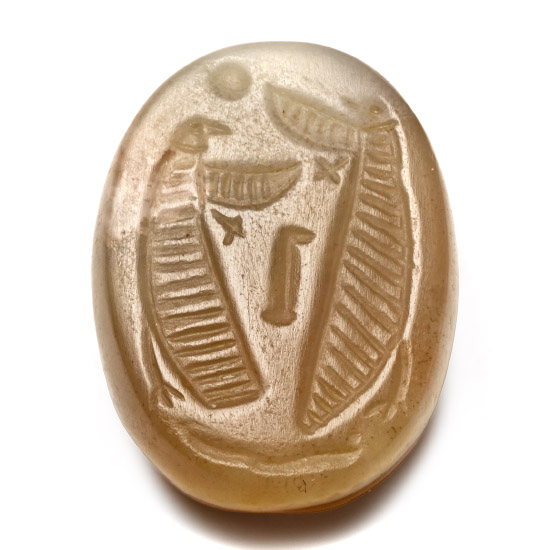
Egypto-Phoenician Agate Scarab
8th-6th century B.C.Sold for (Inc. bp): £156
Plano-convex in section with incised segmentation to the carapace, underside with two hatched avian figures; supplied with a museum-quality impression. 5.65 grams, 20 mm
From the private collection of a European gentleman (1942-2024), formed since the 1970s. -
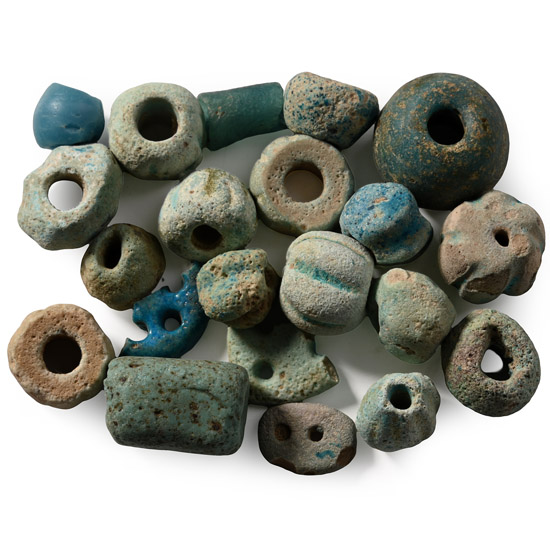
Romano-Egyptian Melon and Other Faience Beads
Roman Period, 30 B.C.-323 A.D.Sold for (Inc. bp): £52
Comprising blue and green glazed beads, mainly melon types. 39 grams total, 10-19 mm
Ex London, UK, art market, 1990s.
