
Loading, please wait...
LOT 0494
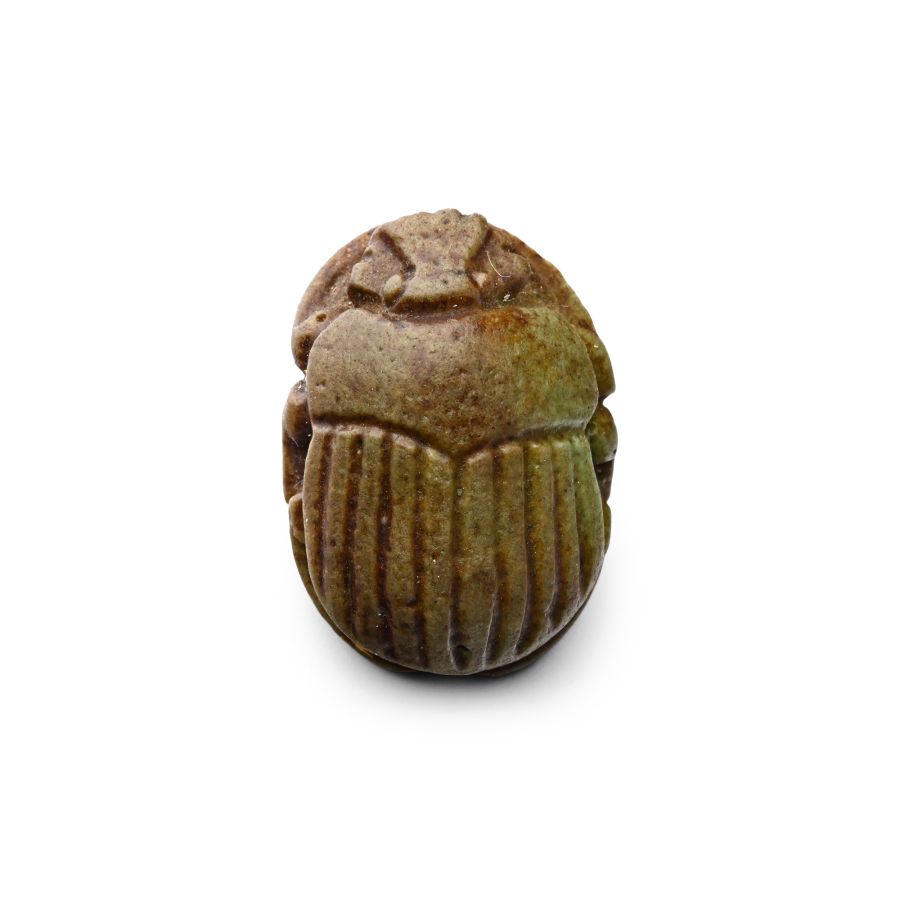
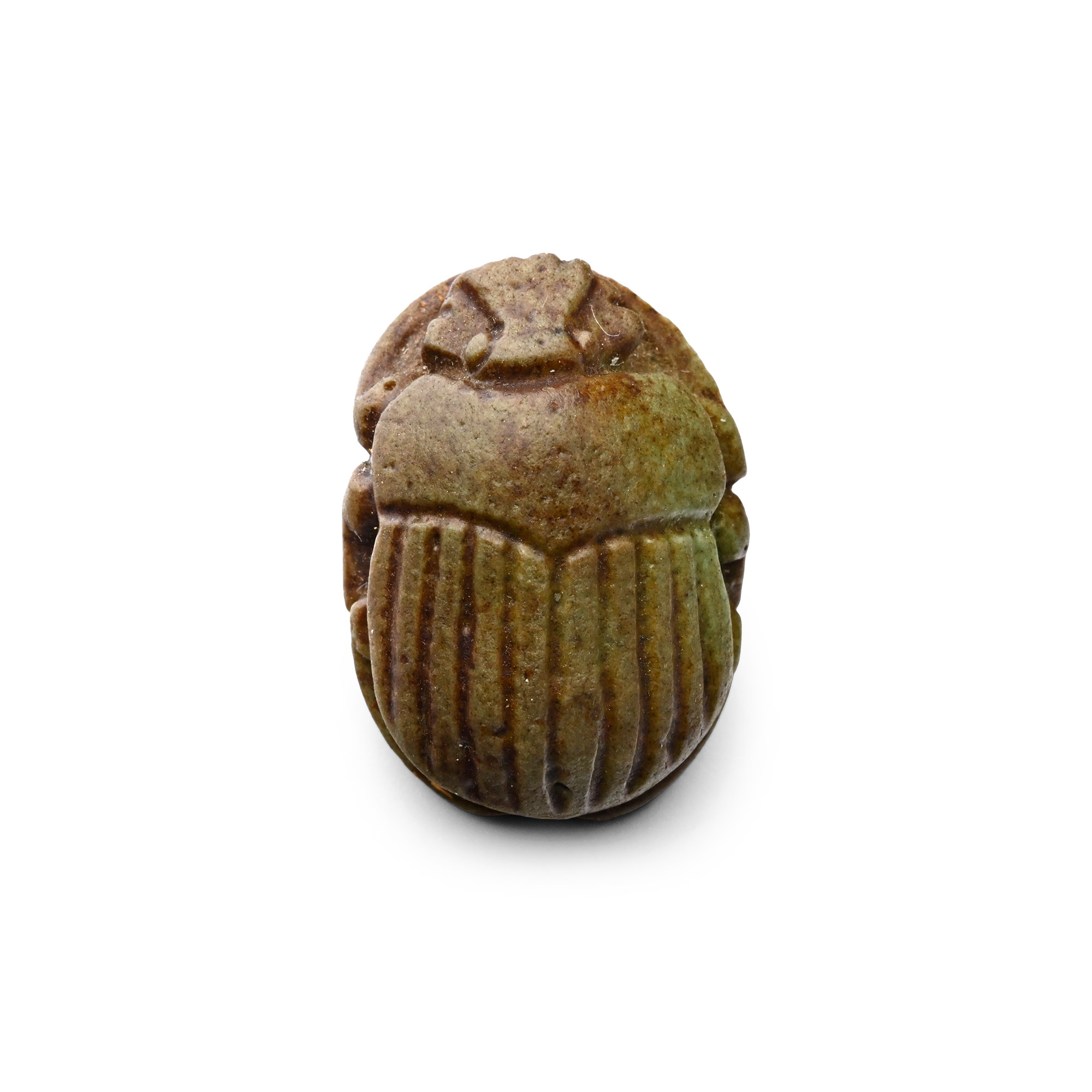
Egyptian Steatite Heart Scarab
LATE PERIOD, 664-332 B.C.
7/8 in. (2.89 grams, 22 mm).
With ribbed carapace and suspension loop to underside.
ProvenanceAcquired on the European art market in the early 2000s.
with Galerie Rhéa, Zurich, Switzerland.
This lot is accompanied by an illustrated lot declaration signed by the Head of the Antiquities Department, Dr Raffaele D'Amato.
TimeLine Auctions follows a vetting process to ensure the authenticity and legality of all items, reinforcing our commitment to integrity and responsible trading. Each antiquity, antique, and coin lot undergoes thorough examination by a vetting committee of at least ten external specialists, professional trade association members, scientists, and archaeologists: Our Vetting Process
AUCTIONS:
TimeLine is a leading auction house specialising in antiquities, ancient art, collectables, natural history, coins, medals, and books. Our auctions offer museums, collectors, historians, and enthusiasts the opportunity to acquire unique and historically significant pieces.
LOT 0494
Egyptian Steatite Heart Scarab
Estimate £150 - 200€170 - 230 (for guidance only)$200 - 270 (for guidance only)
-
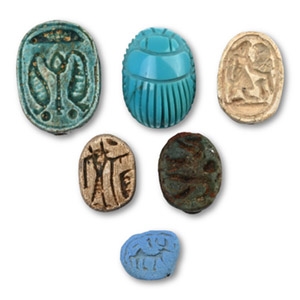
Egyptian Steatite Scarab Group
Mainly Late Period, 664-332 B.C.Sold for (Inc. bp): £247
The designs include: a line border enclosing a central nefer sign, flanked by two rearing cobras with sun discs above, and a neb sign below; a turquoise scarab with deeply incised body detailing; a line border enclosing a striding figure before a cobra(?) and a nefer sign, with a neb sign below; a standing figure with a long staff and a sun disc above, facing an indeterminate object; indeterminate symbols with a sun disc above; and a quadruped with a long tail and erect ears or horns (possibly a jackal or an ibex). 11.7 grams total, 10-20 mm
Acquired on the European art market in the early 2000s. with Galerie Rhéa, Zurich, Switzerland. This lot is accompanied by an illustrated lot declaration signed by the Head of the Antiquities Department, Dr Raffaele D'Amato. -
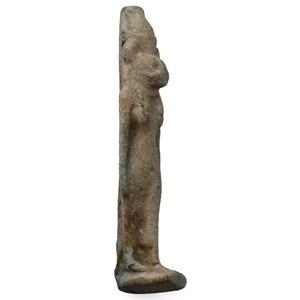
Egyptian Faience Standing Lioness Amulet
Ptolemaic Period, 332-30 B.C.Sold for (Inc. bp): £85
Standing figure of lioness-headed goddess in a striding pose with arms at the sides, sporting a black coloured tripartite wig surmounted by the double-crown; dorsal pillar. 3.96 grams, 56 mm
Acquired on the UK art market during the late 20th century. From the private collection of David King (1940-2024), Hoddesdon, Hertfordshire, UK. This lot is accompanied by an illustrated lot declaration signed by the Head of the Antiquities Department, Dr Raffaele D'Amato.
Throughout ancient Egyptian mythology, lion-headed goddesses played a significant role in the religious beliefs of the people. These goddesses, including Sekhmet, Wadjet, and Bastet, were revered as powerful and fierce protectors. Their presence was believed to ward off evil and safeguard the people from harm. -
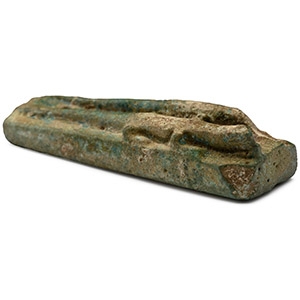
Egyptian Faience Double Lizard Amulet
Late Period, 664-332 B.C.Sold for (Inc. bp): £169
Gentle trapezoidal plinth with modelled depictions of two long-tailed lizards on the top; four evenly spaced holes pierce the plinth for attachment. 12 grams, 54 mm
From a UK dealer since the 1970s. From an old London, UK, collection since circa 1985. This lot is accompanied by an illustrated lot declaration signed by the Head of the Antiquities Department, Dr Raffaele D'Amato.
The lizard was the animal manifestation of the creator god Atum. His sun-god aspect is embodied in the lizard's need to bask in sunshine.
