
Loading, please wait...
_900x900.jpg "Egyptian Steatite Fragmentary Pectoral with Central Scarab Element")
_200x200.jpg "Egyptian Steatite Fragmentary Pectoral with Central Scarab Element")
_900x900.jpg "Egyptian Steatite Fragmentary Pectoral with Central Scarab Element")
_200x200.jpg "Egyptian Steatite Fragmentary Pectoral with Central Scarab Element")


.jpg "Egyptian Steatite Fragmentary Pectoral with Central Scarab Element")
.jpg "Egyptian Steatite Fragmentary Pectoral with Central Scarab Element")
LOT 0008
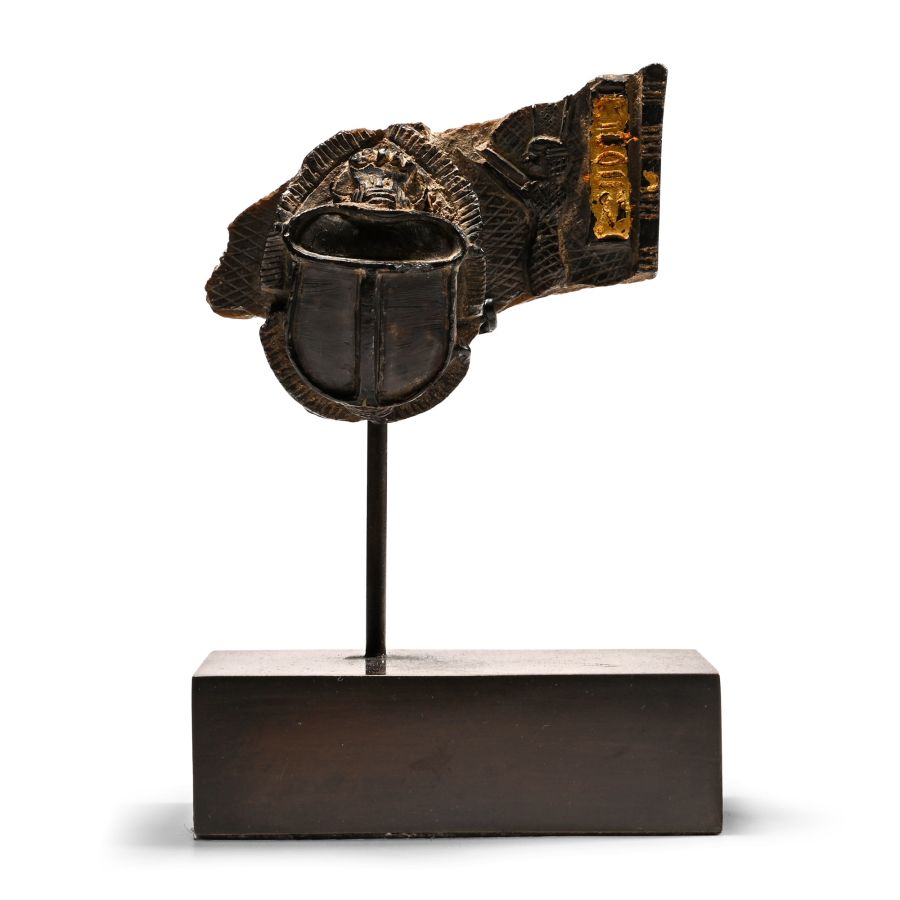
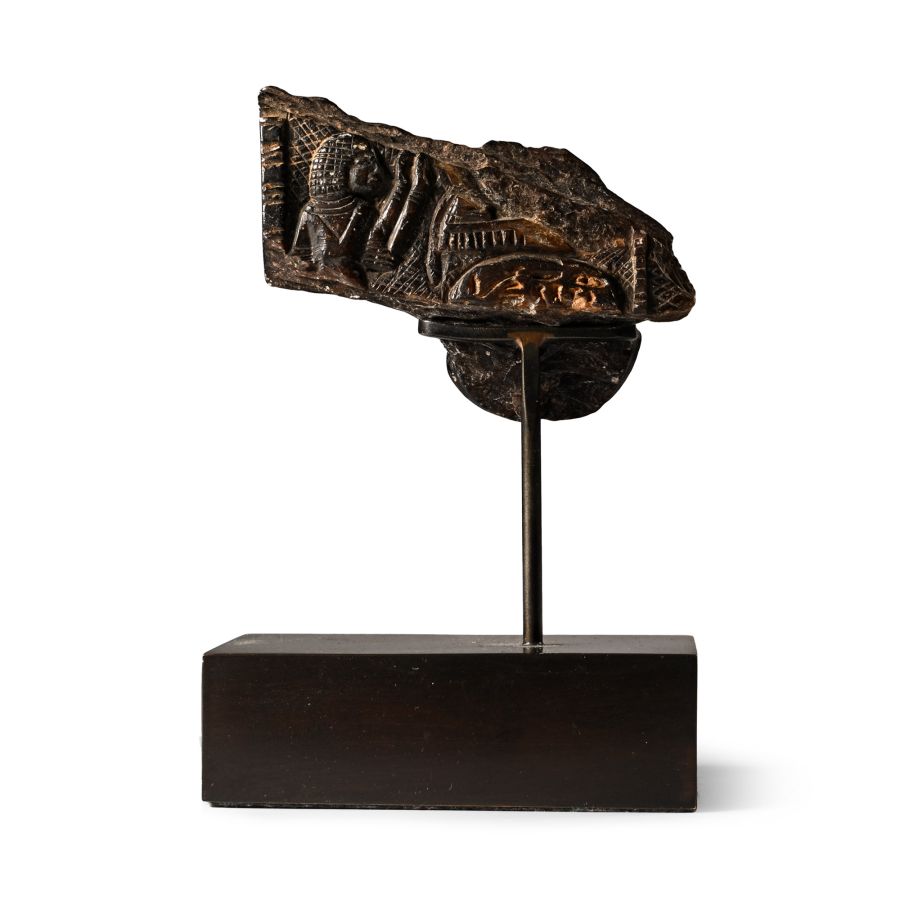
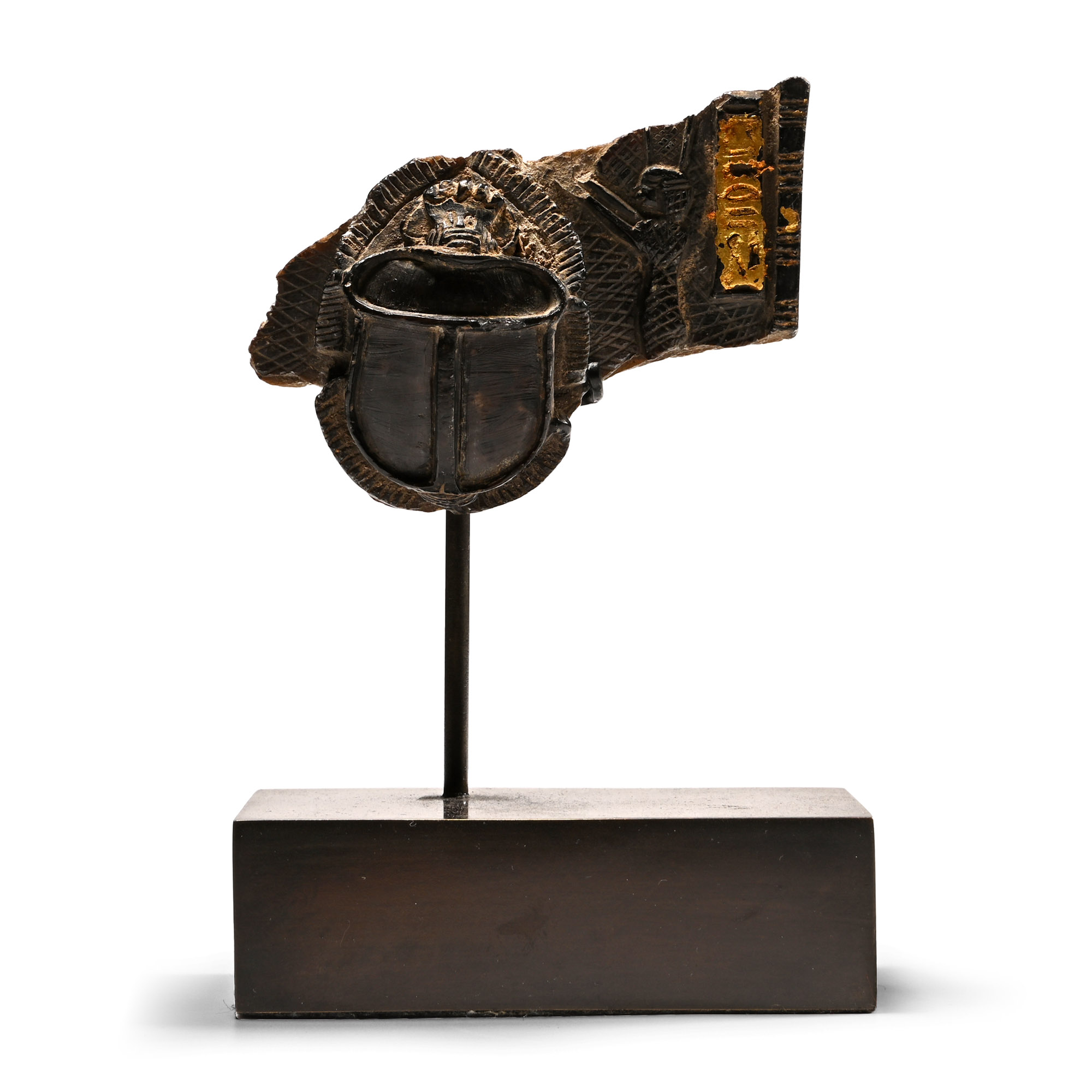
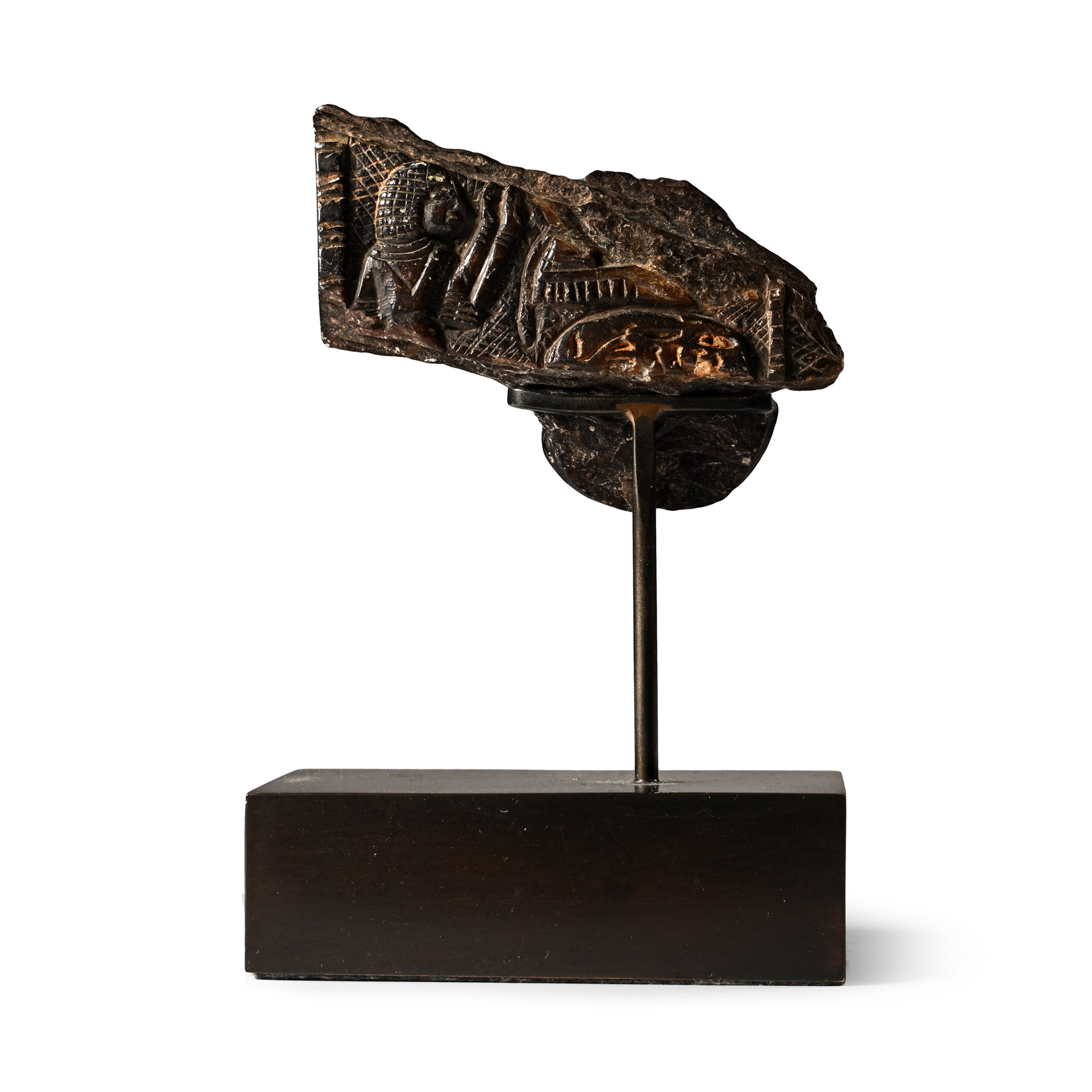
Egyptian Steatite Fragmentary Pectoral with Central Scarab Element
NEW KINGDOM, 20TH DYNASTY, CIRCA 1186-1069 B.C.
2 3/4 in. (4 1/2 in.) (53 grams, 69 mm (157 grams total, 11.5 cm including stand)).
Obverse with scarab carved in high-relief and wing-case recessed to accept inlays (now absent), flanked by a small female goddess wearing a tall headdress, almost certainly Nephthys, with her arms raised in supplication; column with text to her rear, covered in gold foil and perhaps to be read as 'May my name be victorious: protection..'; reverse with the upper body of a male figure facing right with both arms raised towards the remains of a recumbent Anubis on a plinth above the top of a fragmentary shield-shaped plaque with incised text beginning 'Osiris Lord of Eternity forever..'; mounted on a custom-made stand.
ProvenanceEric Pascoe (d. 2019), Calenick House, Truro, Cornwall.
Lodge & Thomas, Truro, Antiques & Fine Art Two Day Auction-Including the Ron Clifford Collection of Dinky & Britain's Toys, 26-27 September 2019, no.684.
Acquired by the present owner at the above sale.
with Bonhams, London, 8 December 2022, no.265.
This lot is accompanied by an illustrated lot declaration signed by the Head of the Antiquities Department, Dr Raffaele D’Amato.
This fragment from an elaborate pectoral may exemplify an innovative design characteristic of the Ramesside Period, during which iconographic and textual elements began to diverge from the more conventional styles of earlier pectorals. For a discussion of some of these novel pectorals, refer to Whelan, P., 'An Epithet-Laden Pectoral,' Egitto e Vicino Oriente, 46 (2023), pp.7-28.
CONDITIONTimeLine Auctions follows a vetting process to ensure the authenticity and legality of all items, reinforcing our commitment to integrity and responsible trading. Each antiquity, antique, and coin lot undergoes thorough examination by a vetting committee of at least ten external specialists, professional trade association members, scientists, and archaeologists: Our Vetting Process
AUCTIONS:
TimeLine is a leading auction house specialising in antiquities, ancient art, collectables, natural history, coins, medals, and books. Our auctions offer museums, collectors, historians, and enthusiasts the opportunity to acquire unique and historically significant pieces.
LOT 0008
Egyptian Steatite Fragmentary Pectoral with Central Scarab Element
Sold for (Inc. bp): £1,430
-
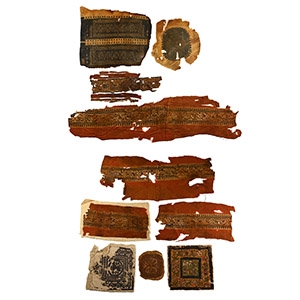
Coptic Textile Fragment Collection
4th-6th century A.D.Sold for (Inc. bp): £494
Mixed group, mainly decorative elements (clavi, orbiculi, tabulae) from various tunics made in late Antiquity; decoration partly figural (animals and mythical hybrid creatures, mostly in a separate tondo or panel) and partly ornamental (interlace patterns, lozenges, pomegranate borders, chevrons, heart-shaped leaves). 450 grams total, 12.5-65.5 cm
with Christie's London, 27 April 1976, no.91 & 92. Accompanied by a copy of an Art Loss Register certificate no.S00136676. This lot is accompanied by an illustrated lot declaration signed by the Head of the Antiquities Department, Dr Raffaele D’Amato. -
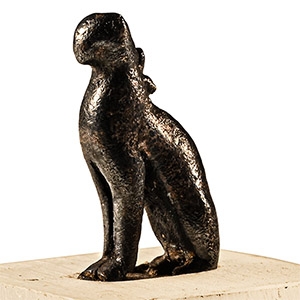
Egyptian Silver Goddess Bastet Amulet
Late Period, 664-332 B.C.Estimate: £700 - 900 (‡+bp*)
Opening Bid: £350
Modelled as a cat seated on an oblong base; accompanied by a custom-made display base. 1.27 grams, 13 mm high (6.02 grams total, 33 mm including stand)
Ex Mrs Zimmermann Koutoulakis, December 1977. Ex R. Liechti (1934-2010) Geneva, Switzerland, collection between 1950-1990s. This lot is accompanied by an illustrated lot declaration signed by the Head of the Antiquities Department, Dr Raffaele D’Amato.
Bastet was primarily a goddess of fertility, but she also represented festivities and intoxication, which formed part of the temple celebrations of her cult. -
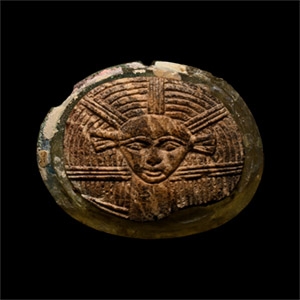
Egyptian Glass Ring with Hathor Cameo
Ptolemaic Period, circa 3rd century B.C.Sold for (Inc. bp): £3,900
Pale green transparent glass hoop with ellipsoid bezel, bevelled edge inlaid with a darker glass low-relief facing mask of the goddess Hathor with cow's ears and banded hairstyle. 17.65 grams, 39.43 mm overall, 20.51 mm internal diameter (approximate size British J, USA 4 3/4, Europe 8.69, Japan 8)
Acquired between 1965-2020. Private collection, London. This lot has been checked against the Interpol Database of stolen works of art and is accompanied by search certificate no.12484-229828. This lot has been cleared against the Art Loss Register database, and is accompanied by an illustrated lot declaration signed by the Head of the Antiquities Department, Dr Raffaele D’Amato.
Images of Hathor with a human face and cow ears combine her human and bovine aspects. She is shown with a serene human face, symbolising her nurturing nature, while the cow ears emphasise her roles in fertility and motherhood. Hathor was one of the most important deities in ancient Egypt, revered as the goddess of love, beauty, music, dance, fertility, and motherhood. She was also associated with joy, childbirth, and women’s health. Hathor was believed to protect and nurture, often depicted as a maternal figure. As such, she was closely linked with Isis. She was closely linked to the sun god Ra, acting as a cosmic force facilitating life. In funerary contexts, Hathor was also seen as a guide for the dead, helping them transition to the afterlife. Her multifaceted role made her one of Egypt's most widely worshipped goddesses.
