
Loading, please wait...
LOT 0537
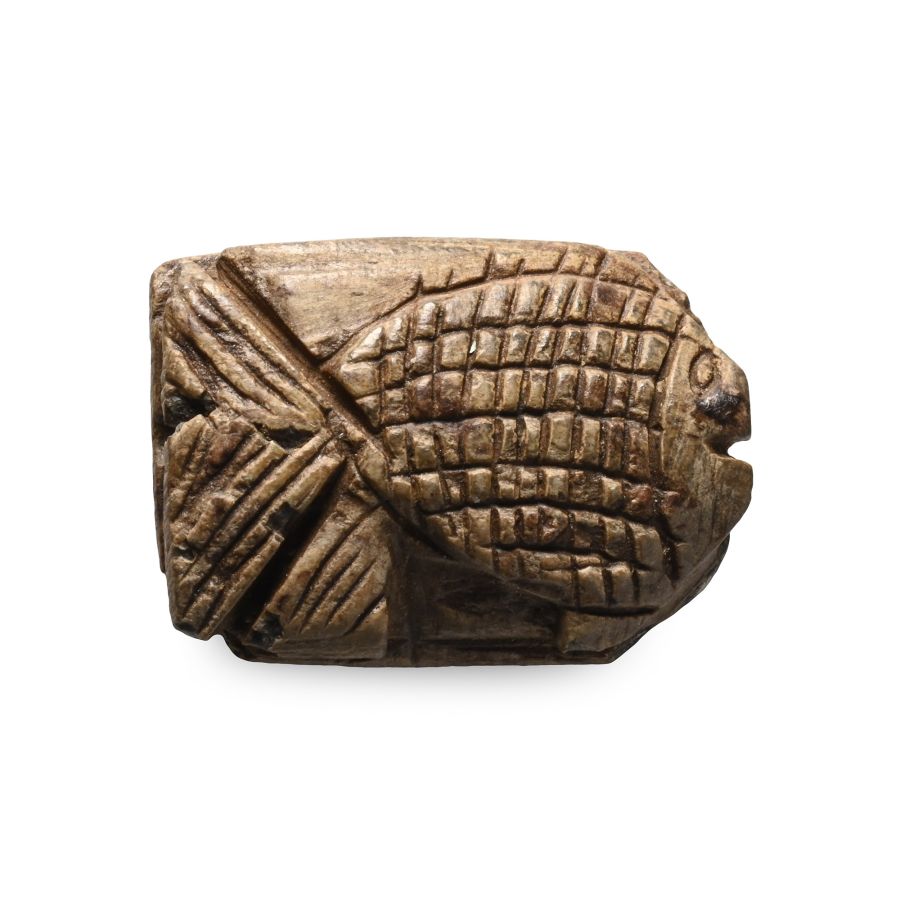
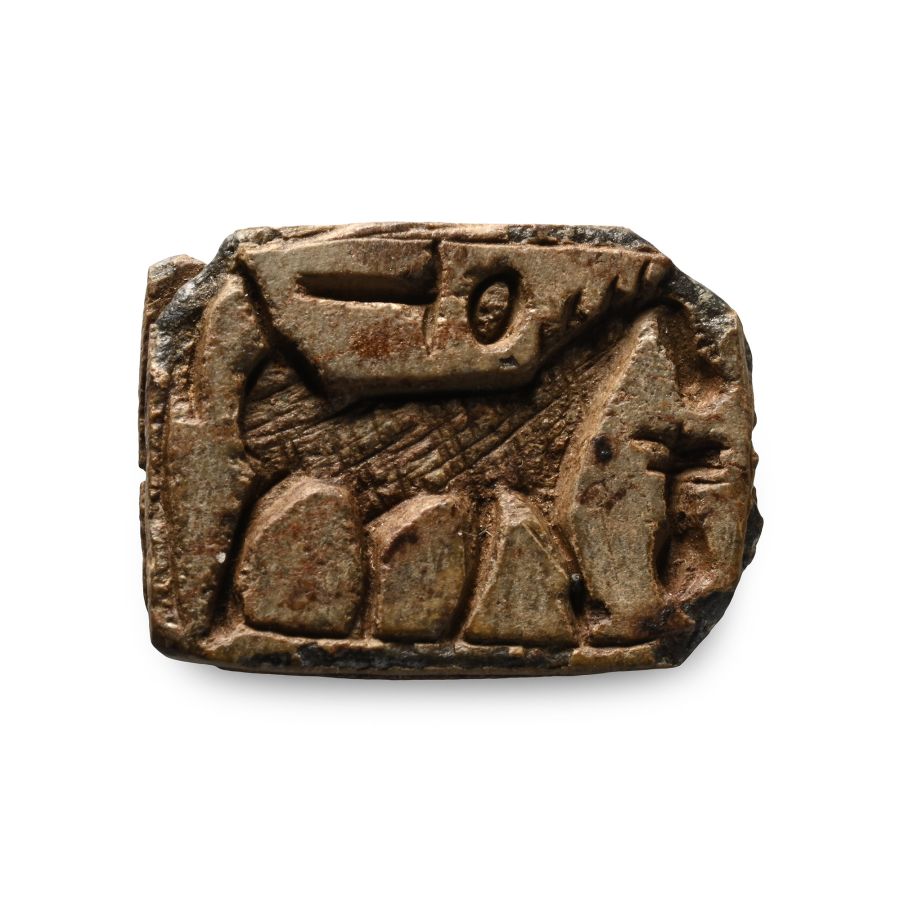
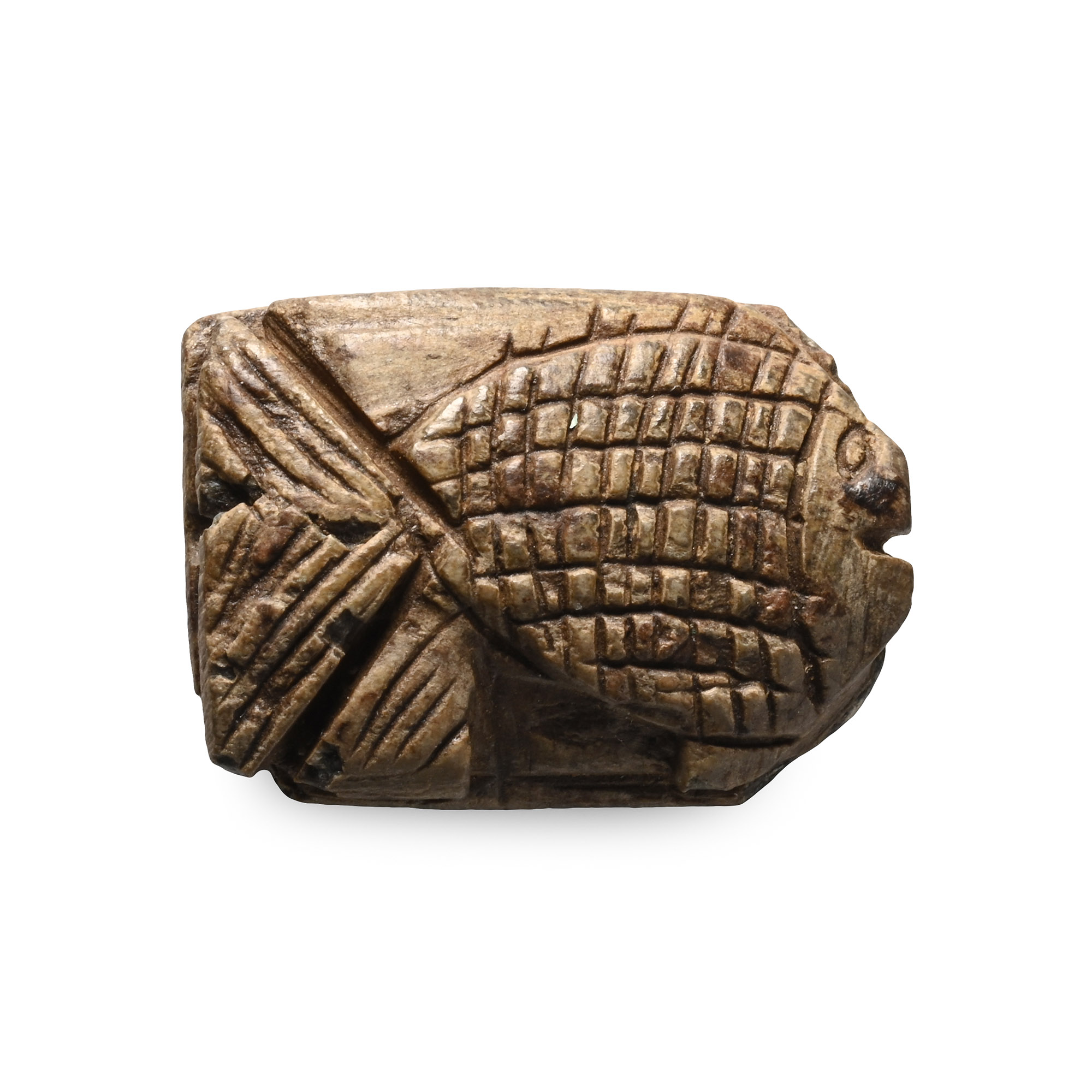
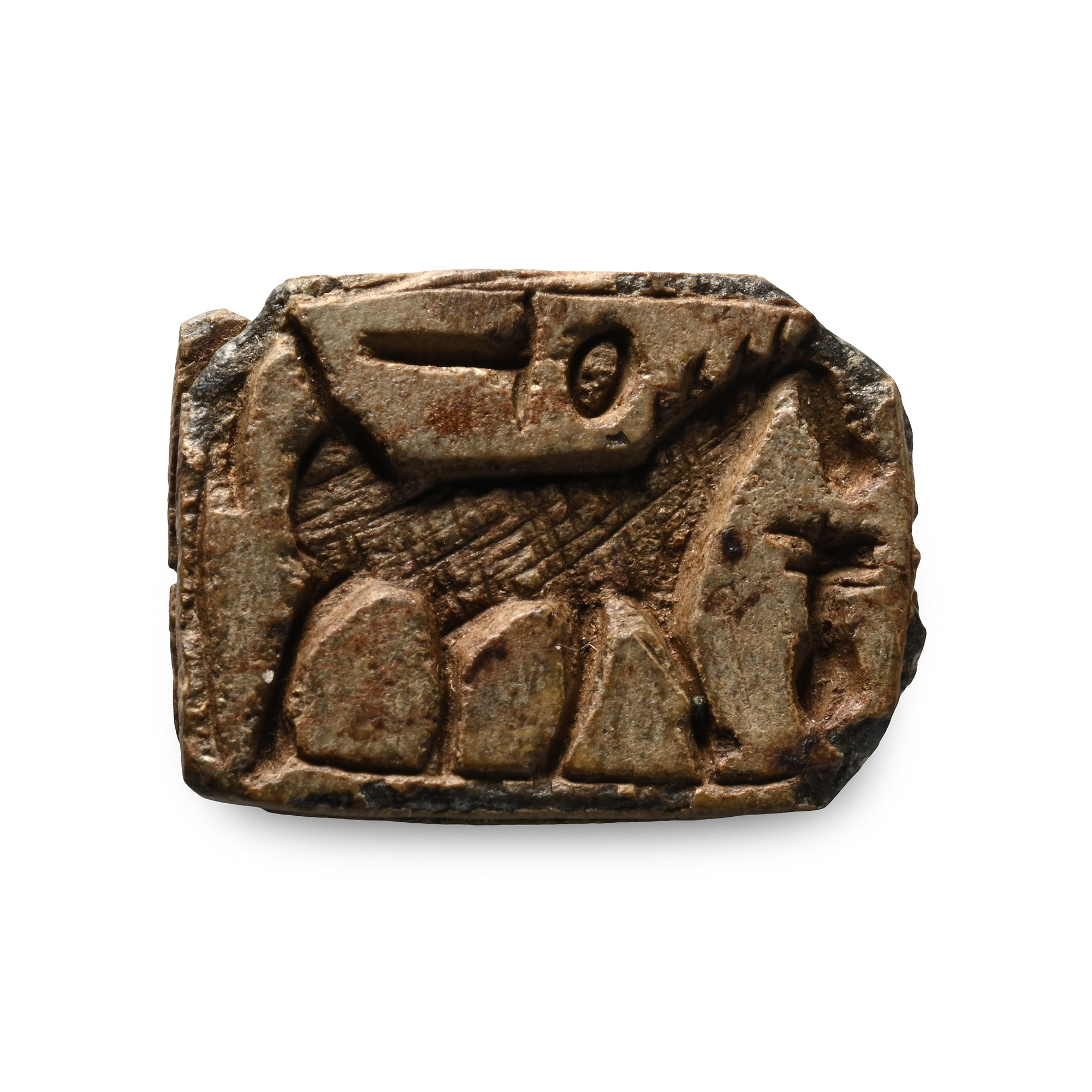
Egyptian Steatite Fish Amulet with Horse
NEW KINGDOM, 1550-1070 B.C.
3/4 in. (3.04 grams, 20 mm).
A bifacial rectangular amulet with incised fish in profile to the obverse, a standing horse to the reverse; drilled for suspension. [No Reserve]
ProvenanceEx Constable collection, 1990s.
Ex P. Morris collection.
Accompanied by an old photograph dated 'London 1997'.
Cf. Andrews, C., Amulets of Ancient Egypt, London, 1994, p. 53 fig. 54h, for a similar fish amulet, but with a monkey depicted on the reverse.
FootnotesThis amulet depicts a ‘Tilapia nilotica’ or ‘bolti’, a prevalent fish species found in the Nile. Not only was it esteemed for its delicious taste, but it was also regarded as a symbol of rebirth and resurrection due to its unique ability to carry its eggs in its mouth, symbolising self-creation.
CONDITIONTimeLine Auctions follows a vetting process to ensure the authenticity and legality of all items, reinforcing our commitment to integrity and responsible trading. Each antiquity, antique, and coin lot undergoes thorough examination by a vetting committee of at least ten external specialists, professional trade association members, scientists, and archaeologists: Our Vetting Process
AUCTIONS:
TimeLine is a leading auction house specialising in antiquities, ancient art, collectables, natural history, coins, medals, and books. Our auctions offer museums, collectors, historians, and enthusiasts the opportunity to acquire unique and historically significant pieces.
-
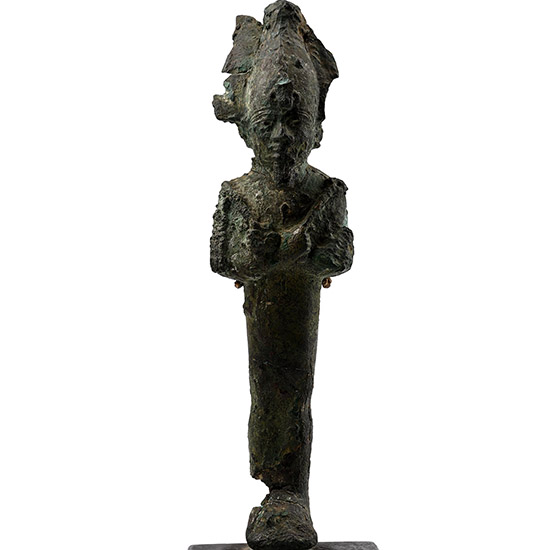
Egyptian Bronze Osiris Statue
Late Period, 664-332 B.C.Sold for (Inc. bp): £910
A sizeable, slender standing mummiform figure of Osiris, wearing his iconic tall conical Atef crown with flanking ostrich plumes and a central uraeus, holding the crook (heka) and flail (nekhakha) regalia; mounted on a display stand. 821 grams total, 26 cm high including stand
From the estate of Alexander Dobkin (1908-1975), New York, USA, acquired prior to 1975. Thence by descent to his daughter, Katherine Dobkin, New York, USA..
Osiris was associated with death and fertility and was widely recognised as the supreme god of renewal and rebirth. Although he was once a mortal ruler, as a deity, his domain was the Underworld. Abydos served as the main site of Osiris’ worship, where a renowned annual celebration in his honour took place. -
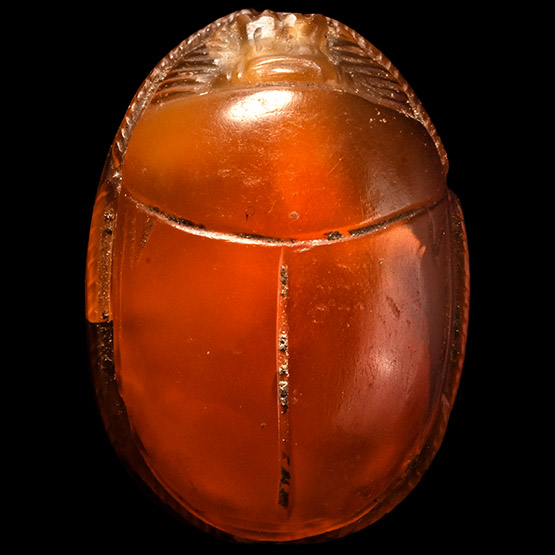
Large Egyptian Carnelian Scarab
Ptolemaic-Roman Period, circa 332 B.C.-300 A.D.Estimate: £1,000 - 1,400 (+bp*)
Opening Bid: £500
Carved in the round with segmented carapace, pierced longitudinally for suspension. 4.75 grams, 22 mm
UK private collection before 2000. Acquired on the UK art market. Private collection, London, UK. -
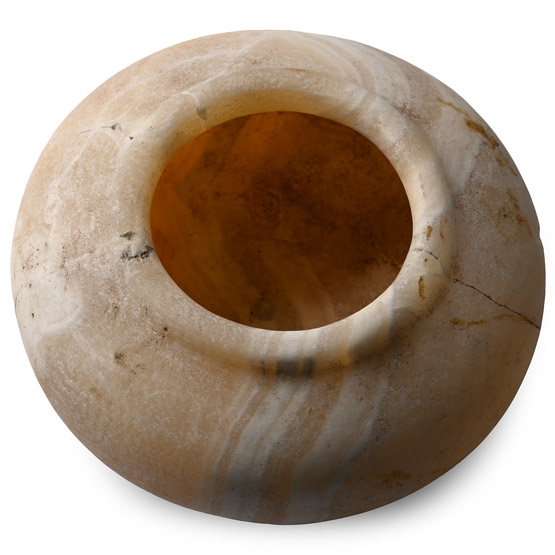
Egyptian Alabaster Jar
2nd-1st millennium B.C.Sold for (Inc. bp): £286
Of squat profile with flattened base, flat shoulder and rounded rim. 574 grams, 11.5 cm wide
From a West Country, UK, collection, 1980-2020s.
