
Loading, please wait...


LOT 0451
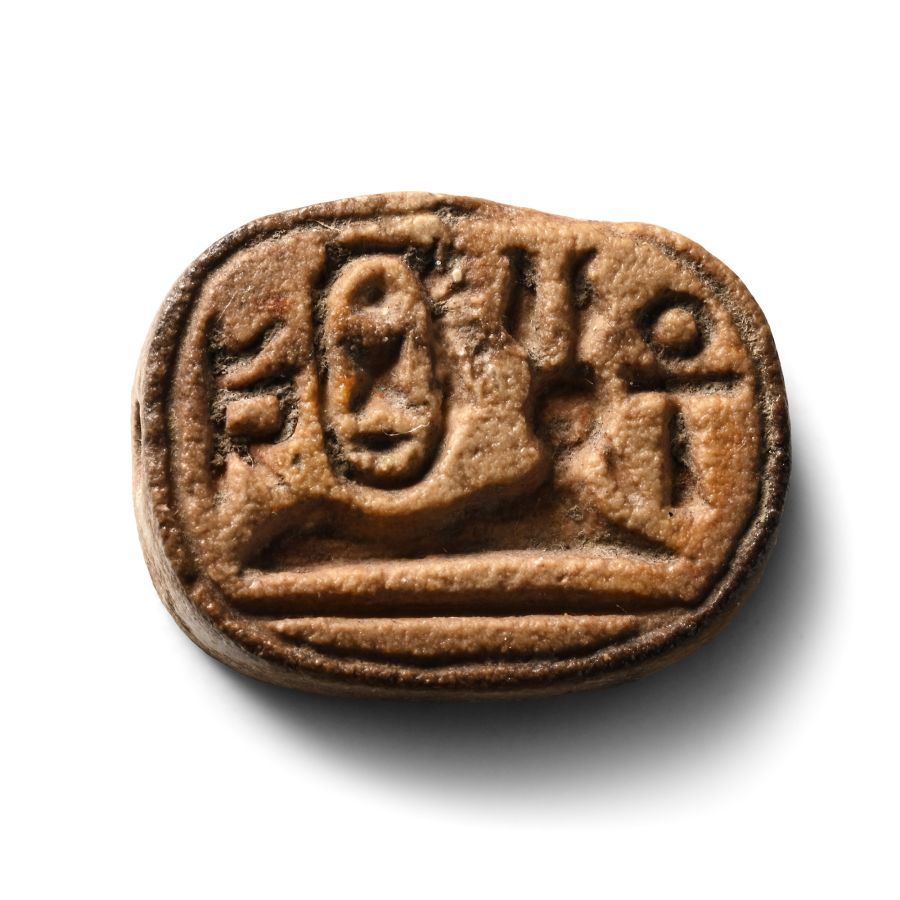
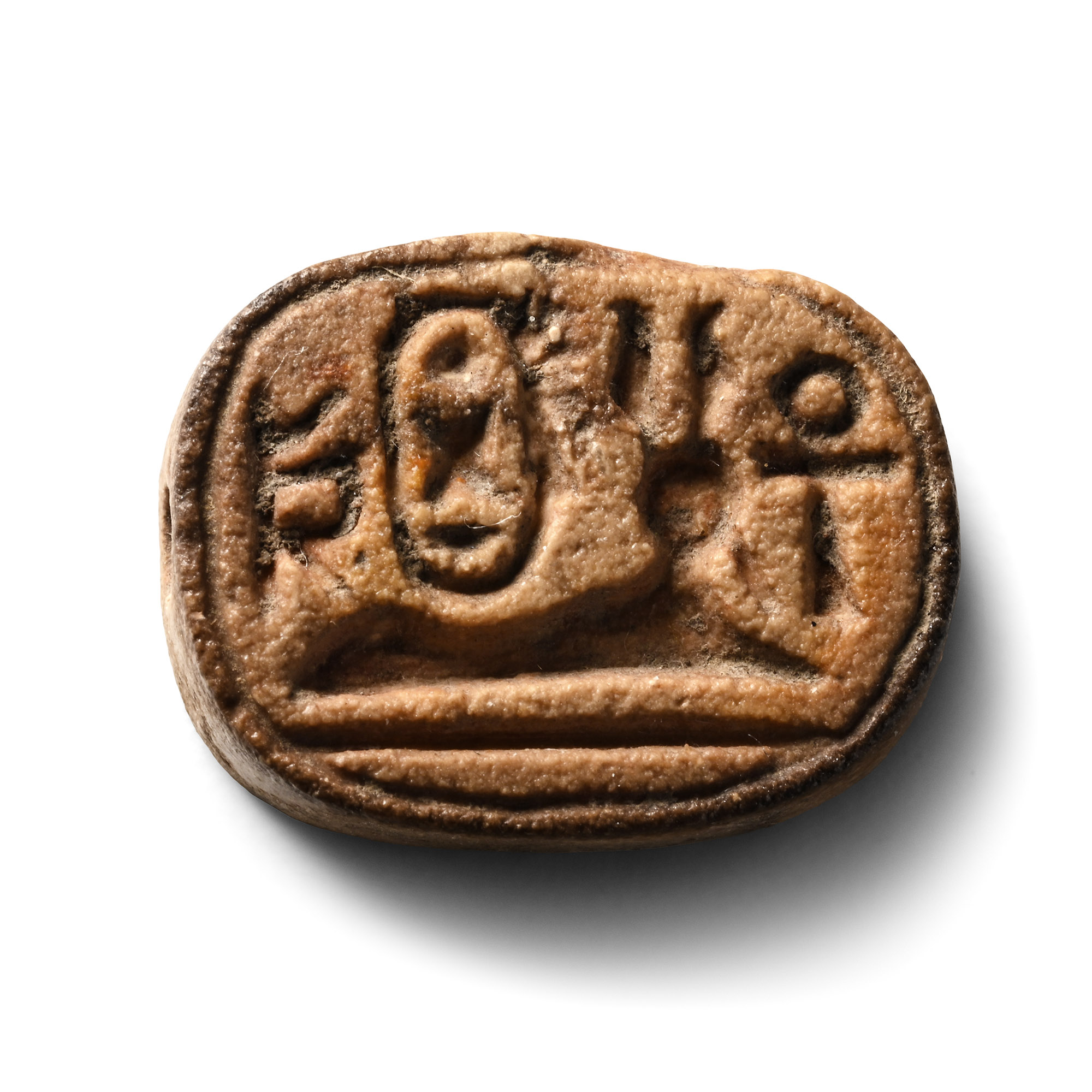
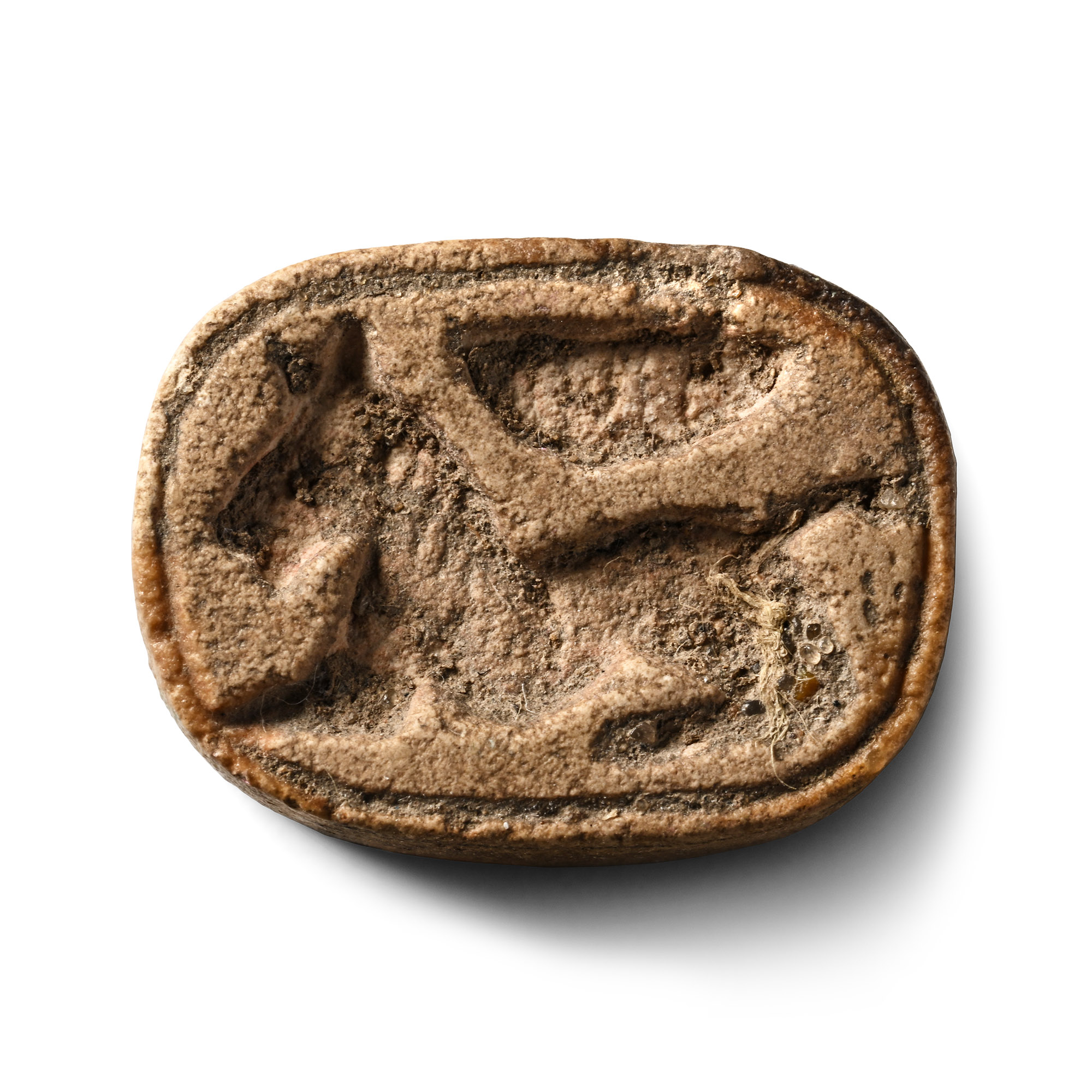
Egyptian Steatite Bifacial Scaraboid Seal
LATE PERIOD, 664-332 B.C.
3/4 in. (1.92 grams, 18 mm).
An oval plaque pierced longitudinally, one side with a reclining lion, the other with hieroglyphs. [No Reserve]
ProvenanceFrom the private collection of a European gentleman (1942-2024), formed since the 1970s.
LiteratureCf. Hall, H.R., Catalogue of Egyptian Scarabs, Etc., in the British Museum I, Royal Scarabs, London, 1913, p. 98, nos. 1004-1005, for scarabs with similar sphinx and cartouche arrangements.
CONDITIONTimeLine Auctions follows a vetting process to ensure the authenticity and legality of all items, reinforcing our commitment to integrity and responsible trading. Each antiquity, antique, and coin lot undergoes thorough examination by a vetting committee of at least ten external specialists, professional trade association members, scientists, and archaeologists: Our Vetting Process
AUCTIONS:
TimeLine is a leading auction house specialising in antiquities, ancient art, collectables, natural history, coins, medals, and books. Our auctions offer museums, collectors, historians, and enthusiasts the opportunity to acquire unique and historically significant pieces.
-
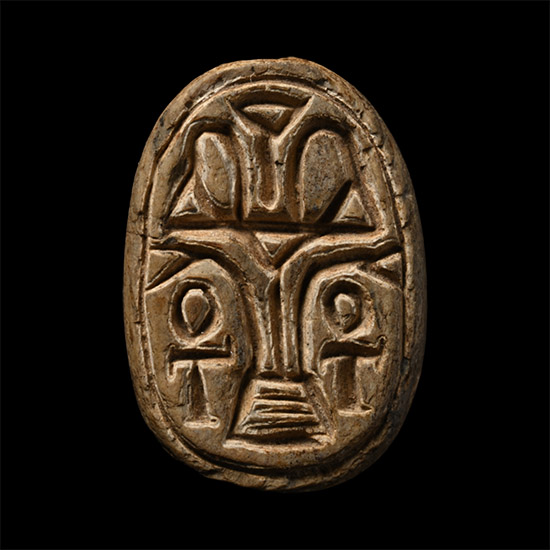
Egyptian Steatite Scarab
Middle Kingdom-Second Intermediate Period, circa 1900-1560 B.C.Sold for (Inc. bp): £182
Plano-convex in section with segmented carapace and mouth parts; to the underside, the 'Sema-Tawy' central motif and two flanking ankh glyphs. 5.2 grams, 22 mm
From the collection of David Donlan (1947-2025), a dedicated and lifelong collector with a passion for the ancient world and the natural sciences, forming his collection from the 1960s onwards, using many reputable dealers across the United Kingdom, including the well-regarded Coincraft and The Parthenon Gallery.
The 'sema- tawy' is a powerful symbol representing the unification of Upper and Lower Egypt. It traditionally consists of a windpipe entwined with lotus and papyrus plants. The ankh signs are the Egyptian hieroglyphs for 'life'. -
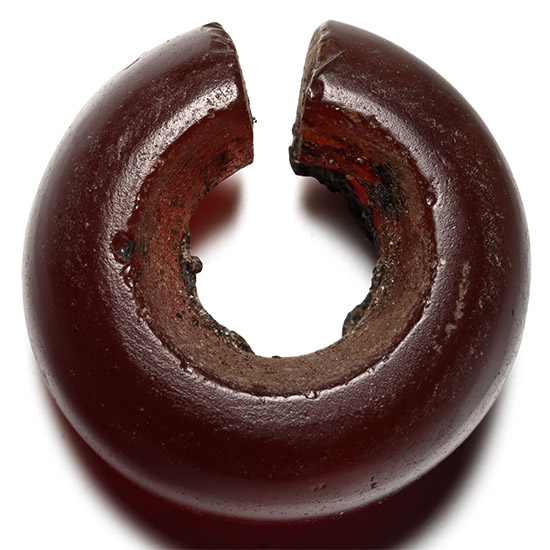
Egyptian Hardstone Hair Ring
New Kingdom, 1550-1070 B.C.Sold for (Inc. bp): £117
Circular with a semi-circular profile and an opening on one side. 3.57 grams, 17 mm
From a 20th century UK collection. Accompanied by a previously illustrated catalogue card with provenance. -
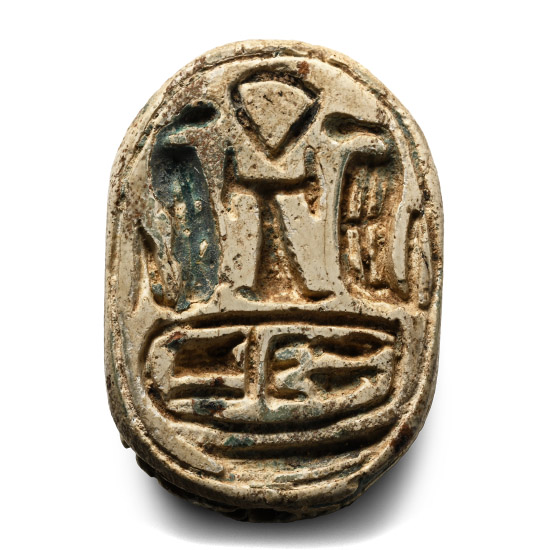
Egyptian Steatite Scarab with Cartouche
Late Period, 664-332 B.C.Sold for (Inc. bp): £117
With detailing to the carapace, mouth and legs, underside with cartouche, ankh and other symbols. 2.98 grams, 18 mm
From the private collection of a European gentleman (1942-2024), formed since the 1970s.
