
Loading, please wait...
LOT 0454
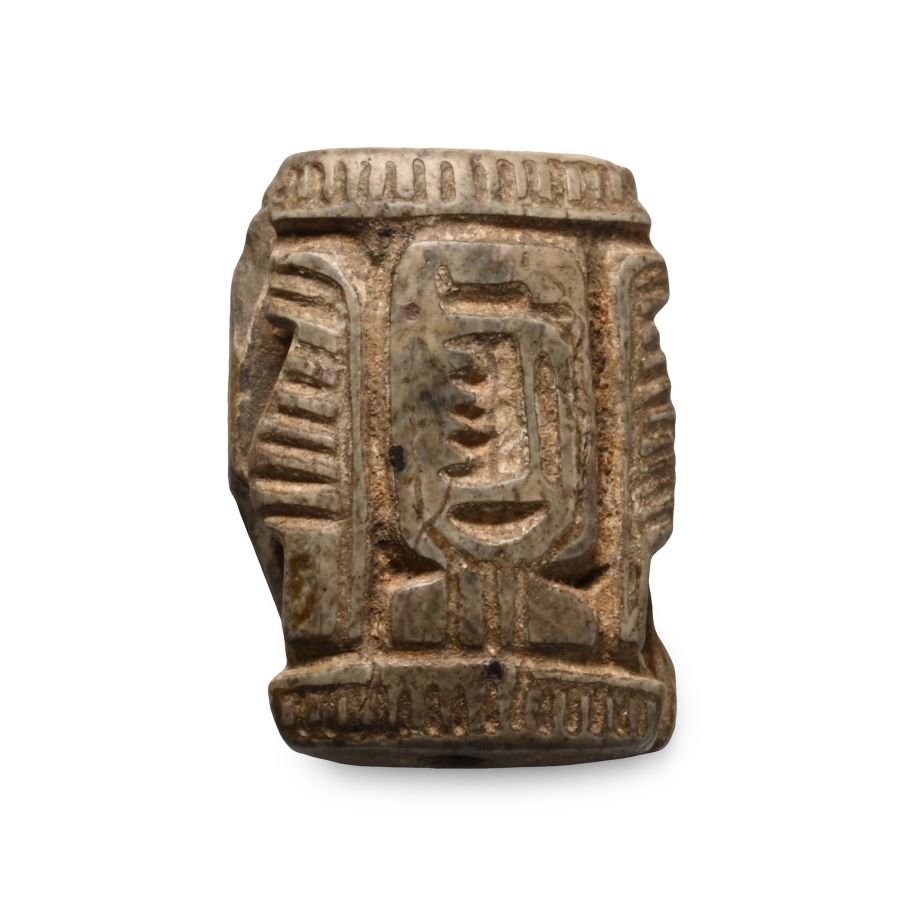
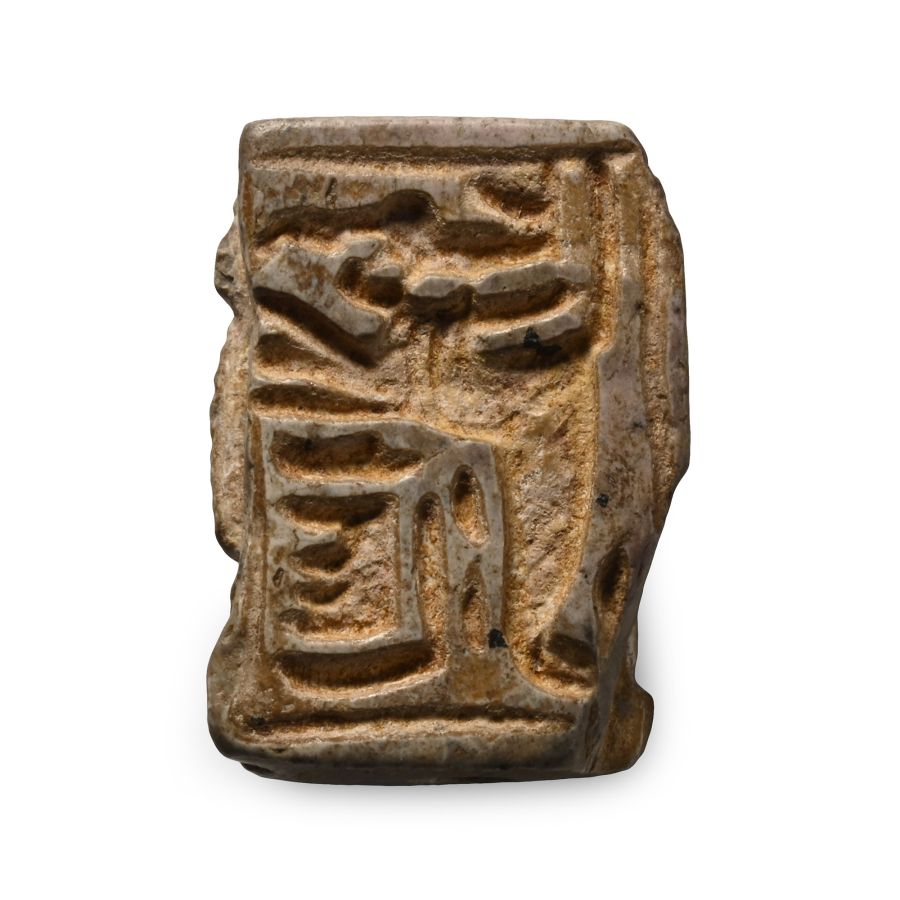
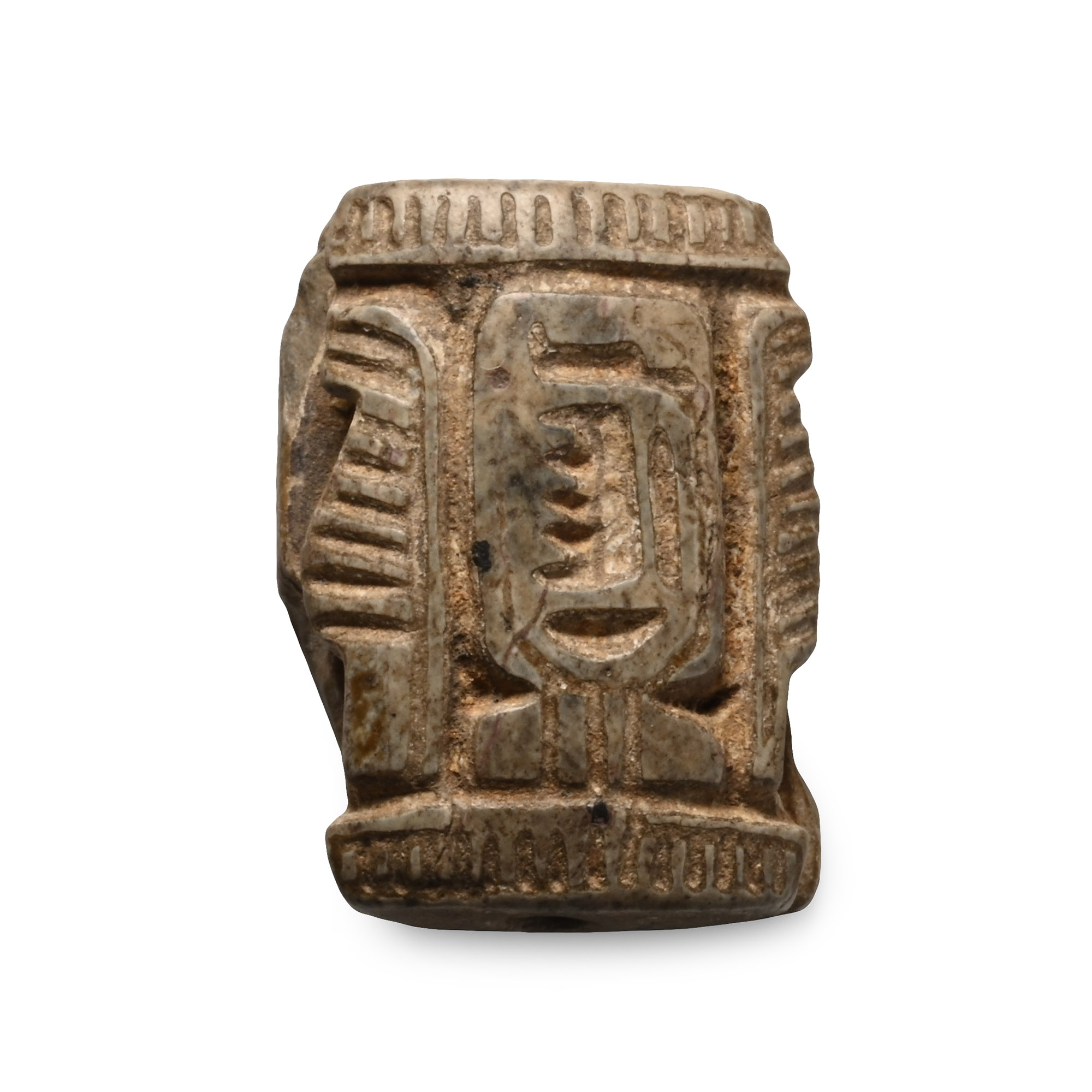
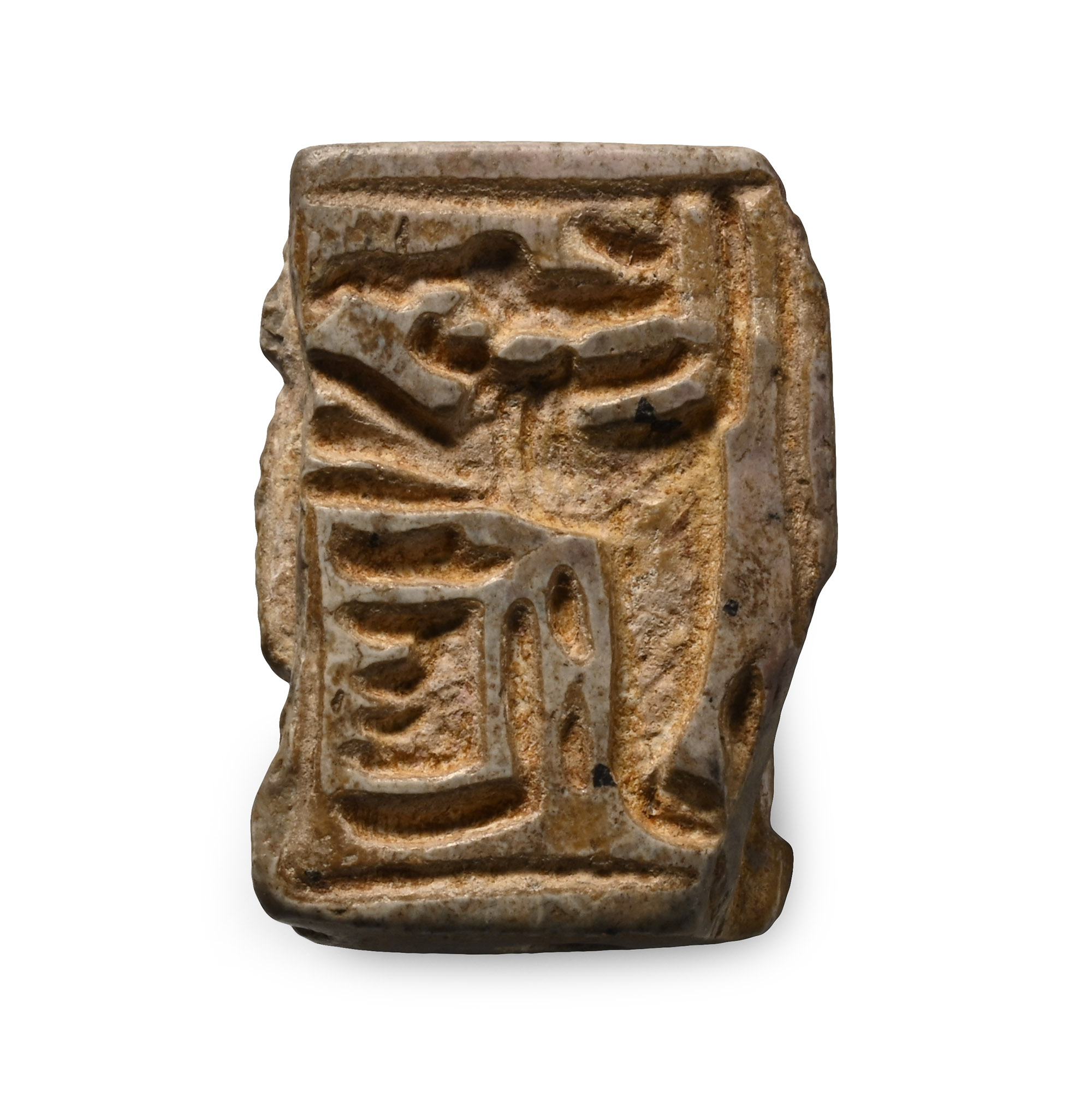
Egyptian Steatite Bifacial Amulet
LATE PERIOD, 664-332 B.C.
3/4 in. (2.26 grams, 18 mm).
A double-sided rectangular amulet; one side features a central cartouche with the hieroglyphic name of the god “Amun” and a neb sign, flanked by two Maat feathers, all framed by a hatched border at the top and bottom; the other side depicts the reclining ram of Amun-Re with the seated figure of Maat in front, and the word "Amun" in hieroglyphs above the ram; drilled for suspension. [No Reserve]
ProvenanceEx Constable collection, 1990s.
Ex P. Morris collection.
Cf. Matouk, F.S., Corpus du scarabée égyptien. Vol. 2: Analyse thématique, Beirut, 1976, p. 341, no. 432, for a scarab motif depicting a standing Amun-Re ram fronted by a seated Maat figure.
FootnotesAn amulet with a similar overall design was discovered in a Ramesside-period tomb at Tell el-Retaba, an important production centre involved in trade with Syria-Palestine and protected by a fortress (Petrie, W.M.F., Duncan, J.G., Hyksos and Israelite Cities, London, 1906, pl. XXXIV, Tomb 8).
CONDITIONTimeLine Auctions follows a vetting process to ensure the authenticity and legality of all items, reinforcing our commitment to integrity and responsible trading. Each antiquity, antique, and coin lot undergoes thorough examination by a vetting committee of at least ten external specialists, professional trade association members, scientists, and archaeologists: Our Vetting Process
AUCTIONS:
TimeLine is a leading auction house specialising in antiquities, ancient art, collectables, natural history, coins, medals, and books. Our auctions offer museums, collectors, historians, and enthusiasts the opportunity to acquire unique and historically significant pieces.
-
.jpg)
Egyptian Faience Nephthys Amulet
Late Period, 664-332 B.C.Sold for (Inc. bp): £208
Standing figure of the goddess, wearing a striated lappet wig topped by her characteristic headdress, with her arms at her sides; supported by a dorsal pillar pierced once for suspension. 1.68 grams, 34 mm
Ex early 20th century collection, London, UK.
This amulet represents Nephthys (Egyptian: Nebet-Hut), a protective goddess closely associated with mourning, magic, and the afterlife. Often depicted as a woman with her name in hieroglyphs atop her head, Nephthys is Isis’s sister and, together with Isis, plays a central role in the funerary rites of Osiris. Amulets of Nephthys were often worn or placed among the deceased’s wrappings to invoke her protective role during the journey to the afterlife. As a divine mourner, Nephthys was believed to guard the dead and assist in their rebirth, making her amulet a symbol of divine protection, sacred lamentation, and renewal. -
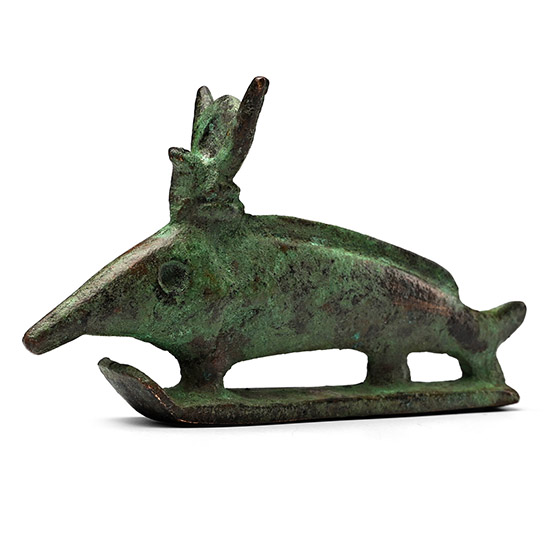
Egyptian Bronze Oxyrhynchus Fish
Late Period, 664-332 B.C. or laterSold for (Inc. bp): £1,235
Modelled in the round on a sledge attached by ventral and pectoral fins; with forked tail, a dorsal ridge, and a tapering nose, featuring recessed circular eyes to accept an insert, a horned sun disc headdress fronted by a uraeus, and a suspension loop behind. 203 grams, 11.5 cm
From the collection of a gentleman, acquired on the London art market in the 1990s. -
.jpg)
Egyptian Bronze Figure of Horus Standing on an Oryx
Late Period-Ptolemaic Period, 664-30 B.C.Estimate: £20,000 - 30,000 (+bp*)
Opening Bid: £10,000
Standing falcon-headed deity with eyes inlaid in gold, wearing the traditional shendyt kilt, a tripartite wig topped by the double crown (pa-sekhemty) fronted by a uraeus, as worn by Egyptian pharaohs, and a wesekh collar; the figure depicted striding forward, with the position of the left arm and drilled hand indicating that it originally held the shaft of a sceptre or a weapon; the right hand also drilled to hold an attribute; the rectangular base featuring a low-relief depiction of an oryx beneath the god’s feet, the four sides of the base bear a line of hieroglyphic invocation giving the name of the deity represented by the statuette and those of the dedicator and his family; two tenons on underside for attachment; mounted on a custom-made display stand. 1.1 kg total, 23 cm high including stand
with Sakae Art Gallery, Nagoya, Japan, 1981. Accompanied by an academic report by Dr Alberto Pollastrini. This lot has been checked against the Interpol Database of stolen works of art and is accompanied by a search certificate number no.13161-248074.
The hieroglyphic inscription surrounding the base is worn and difficult to interpret. Based on the formulas preserved on similar statuettes, a tentative interpretation of its meaning can be proposed. The text begins with the customary formula ḏd mdw, meaning “words to be spoken,” followed by the hieroglyph of a falcon, indicating that the deity addressed is Horus. The following signs are unclear, making it hard to identify which specific form of Horus is meant, possibly Horus of Hebenu or Horus the Elder. The formula continues with a plea for the god to grant the dedicator life, prosperity, health, longevity, and a good old age. The inscription ends with the name of the offerer: “Pa-iu, son of Pa-di-Aset; his mother Ta-heret; and his wife Aset, justified.”
