
Loading, please wait...
LOT 0544
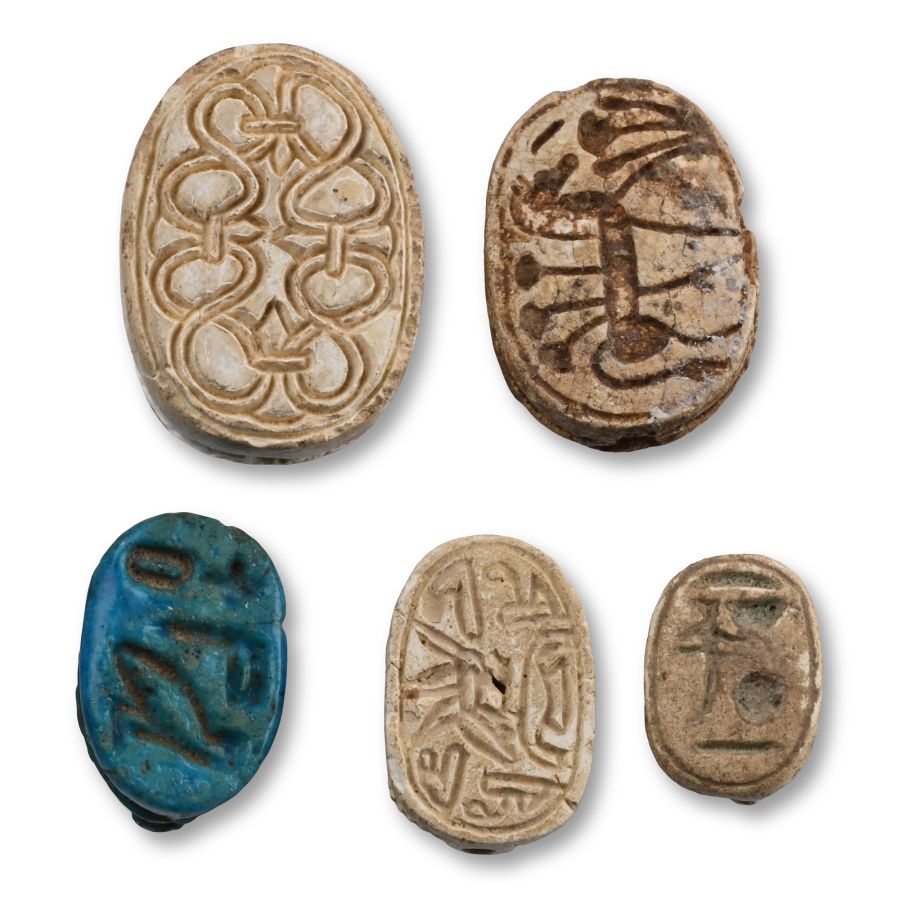
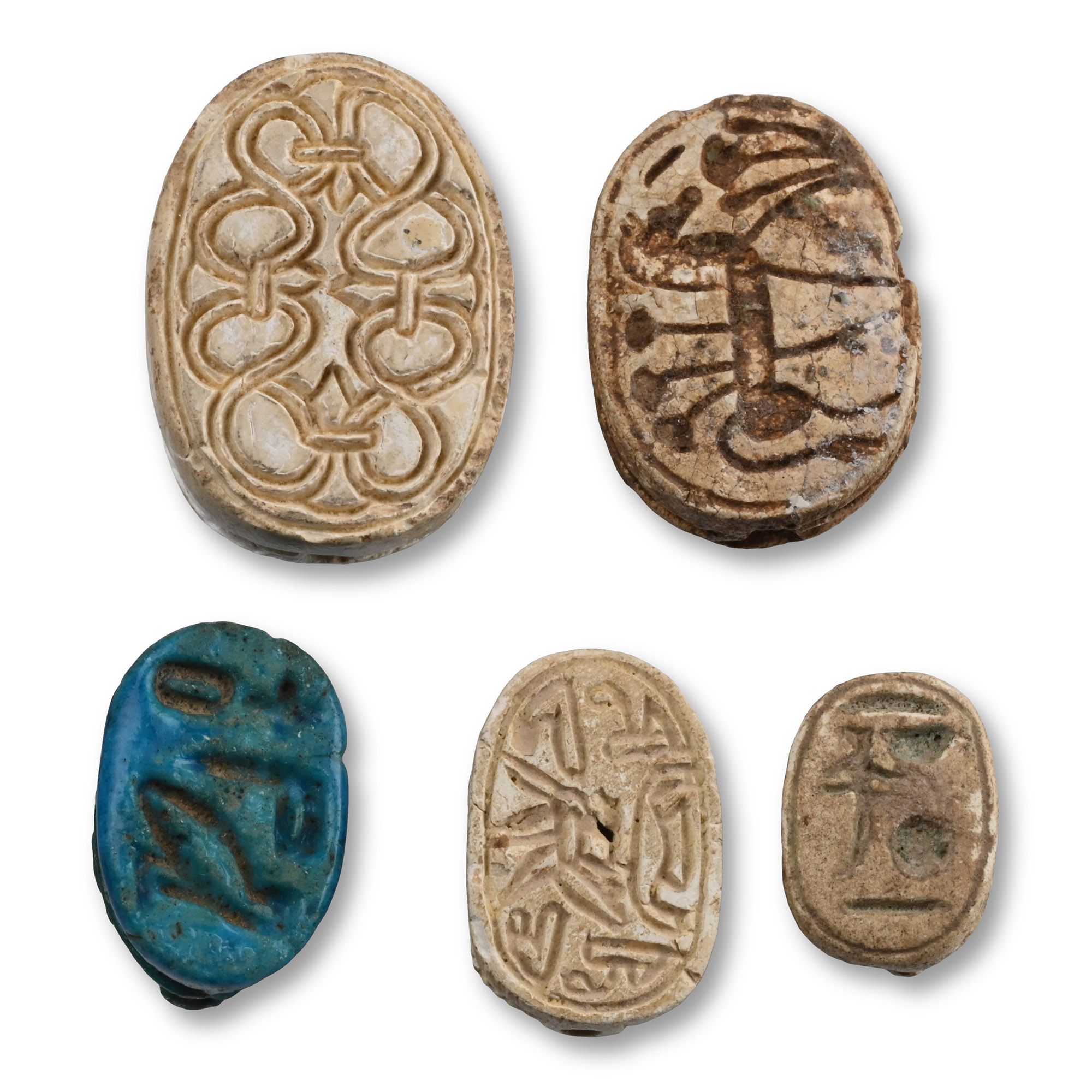
Egyptian Steatite and Other Scarab Group
MAINLY SECOND INTERMEDIATE PERIOD, CIRCA 1660-1500 B.C.
1/2 - 3/4 in. (8.76 grams total, 12-21 mm).
Designs include: a line border enclosing a decorative symmetrical scroll-work pattern; a line border enclosing a horse with papyrus clumps above and in front; deeply impressed bird and other signs behind; a line border enclosing a nwb (gold) sign flanked by Red Crowns, with a bee above flanked by coiled cobras; a line border enclosing a djed, neb, and sun disc, with narrow neb(?) signs above and below. [5]
ProvenanceAcquired on the European art market in the early 2000s.
with Galerie Rhéa, Zurich, Switzerland.
This lot is accompanied by an illustrated lot declaration signed by the Head of the Antiquities Department, Dr Raffaele D'Amato.
TimeLine Auctions follows a vetting process to ensure the authenticity and legality of all items, reinforcing our commitment to integrity and responsible trading. Each antiquity, antique, and coin lot undergoes thorough examination by a vetting committee of at least ten external specialists, professional trade association members, scientists, and archaeologists: Our Vetting Process
AUCTIONS:
TimeLine is a leading auction house specialising in antiquities, ancient art, collectables, natural history, coins, medals, and books. Our auctions offer museums, collectors, historians, and enthusiasts the opportunity to acquire unique and historically significant pieces.
-
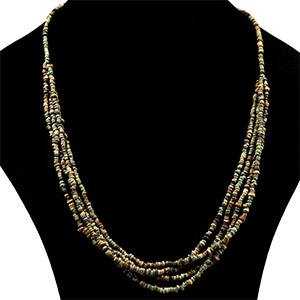
Egyptian Multi-Stranded Mummy Bead Necklace
Late Period, 664-332 B.C.Sold for (Inc. bp): £312
Multi-stranded designer necklace composed of polychrome beads of mainly annular types. 26 grams, 72 cm
Acquired before 1979. From the private collection of Mr F.A., South Kensington, London, UK; thence by descent 2014. This lot is accompanied by an illustrated lot declaration signed by the Head of the Antiquities Department, Dr Raffaele D'Amato.
For thousands of years, artisans in Egypt created vibrant ceramics to echo the beauty of rare jewels. These ornaments were created with almost every material, colour, and texture imaginable and they come from across Egypt and beyond: vibrant blue lapis lazuli from Afghanistan, glossy black obsidian from Turkey, and aqua-green turquoise from the Sinai. They were worn in life and, after death, they served as precious ornamentation for mummies. -
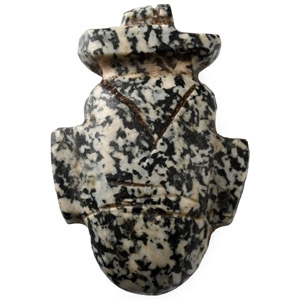
Egyptian Diorite Heart Amulet
Late Period, 664-332 B.C.Sold for (Inc. bp): £338
A large heart, ib, amulet of classic egg-form with shallow lugs on either side, with flared top and incised lines to one side. 10.7 grams, 31 mm
From an early 20th century collection. Ex London, UK, gallery. From a private UK collection This lot is accompanied by an illustrated lot declaration signed by the Head of the Antiquities Department, Dr Raffaele D'Amato.
According to ancient Egyptian beliefs, the heart (ib) was considered the centre of intelligence, emotions, and behaviour. It was also believed to store an individual's memories. During the Weighing of the Heart ceremony in the afterlife, the heart could speak on behalf of the deceased and account for their lifetime of actions before Osiris. For this reason, heart amulets were placed on the mummy to safeguard the organ and ensure a favourable outcome during judgment. -
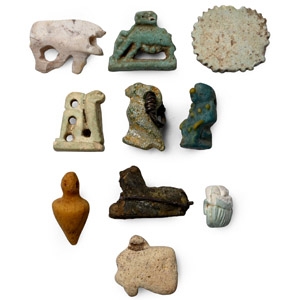
Egyptian Faience and Hardstone Amulet Group
Late-Ptolemaic Period, 664-30 B.C.Sold for (Inc. bp): £221
Including two wedjat eyes, a seated baboon, plumb bob, uraeus, scarab, falcon, recumbent lion, suckling sow (representing Nut), and a fringe-edged disc bead. 8.08 grams total, 9-18 mm
From an early 20th century collection. This lot is accompanied by an illustrated lot declaration signed by the Head of the Antiquities Department, Dr Raffaele D'Amato.
