
Loading, please wait...
LOT 0048
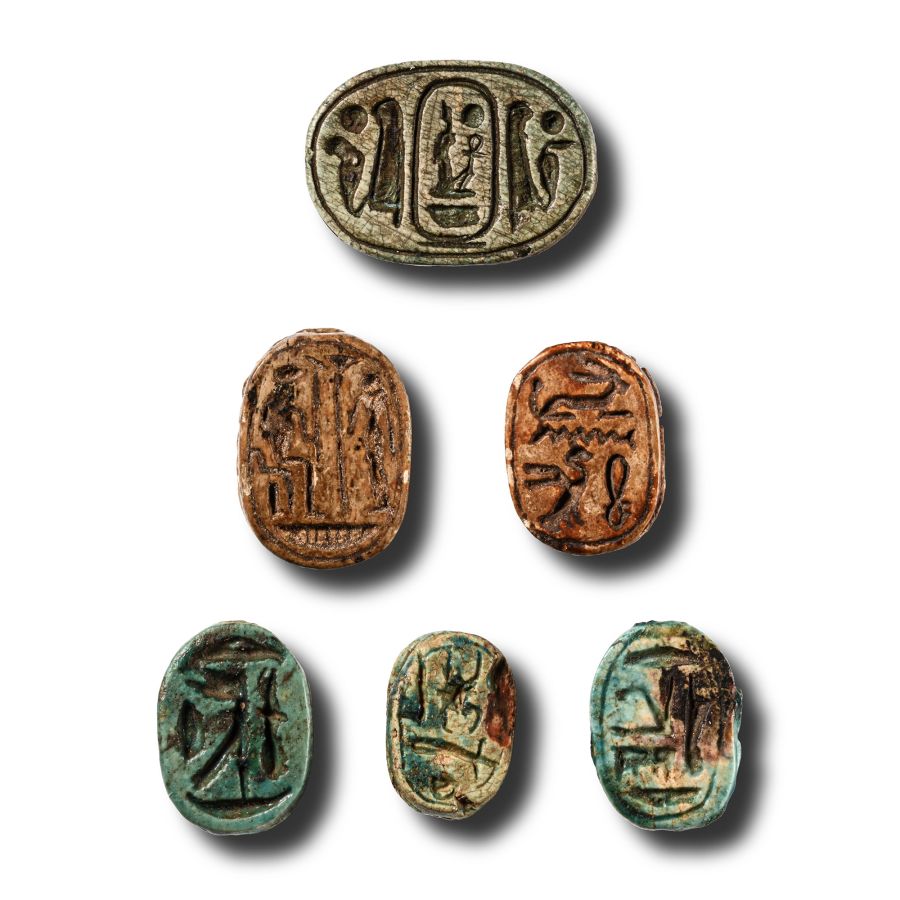
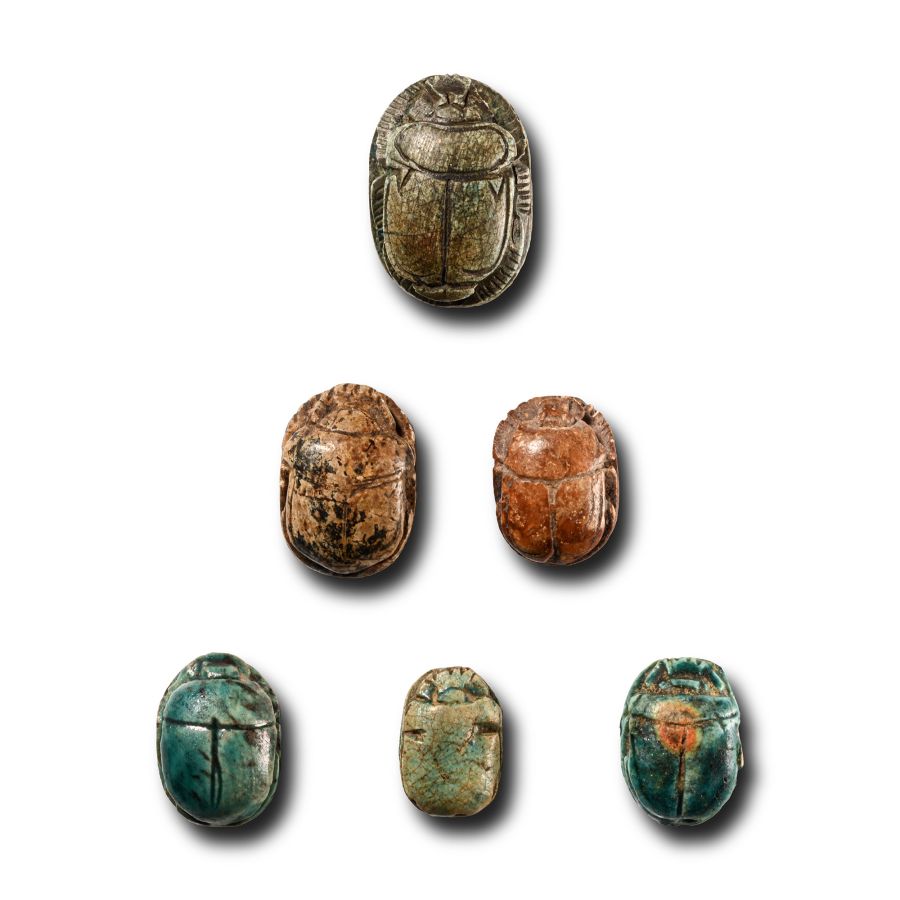
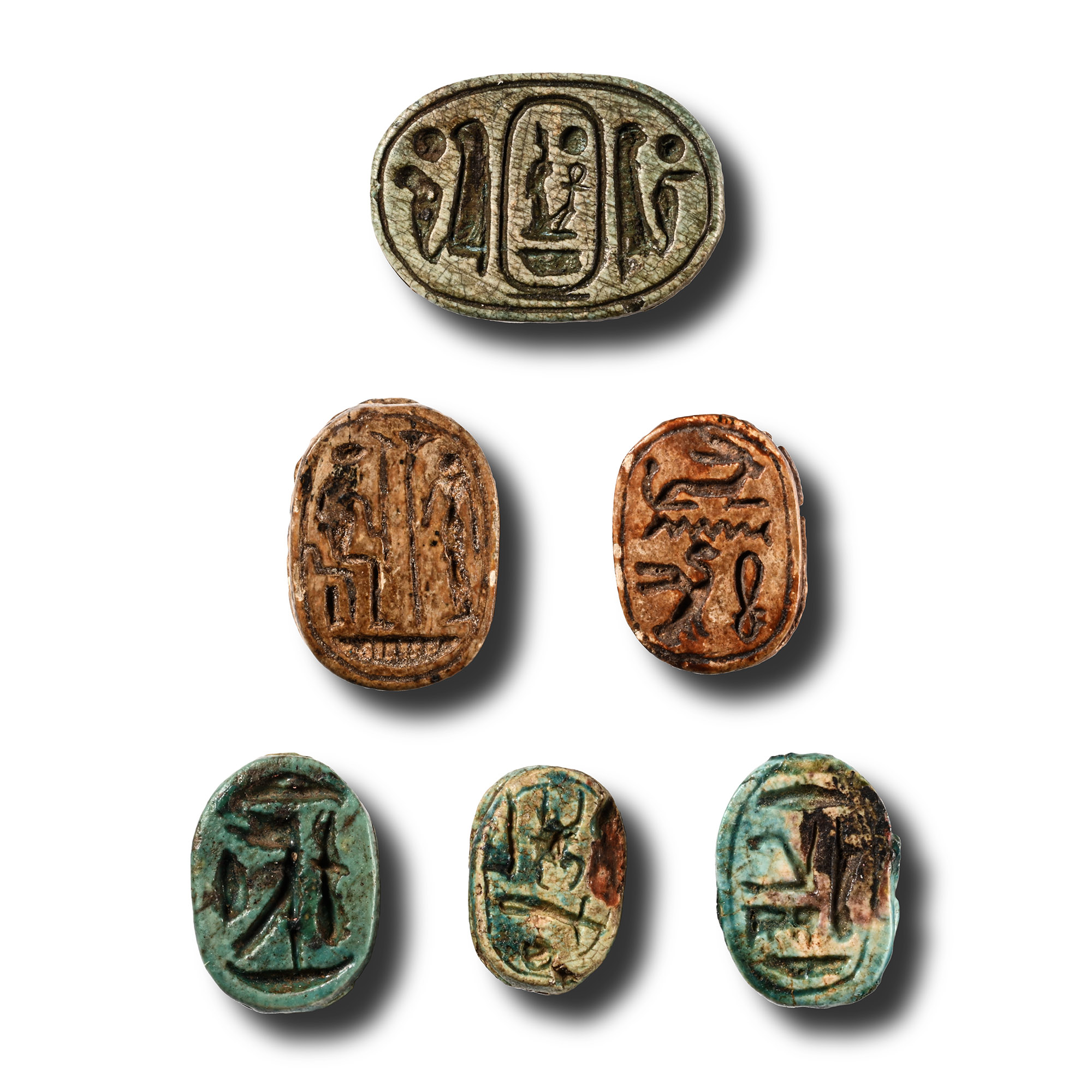
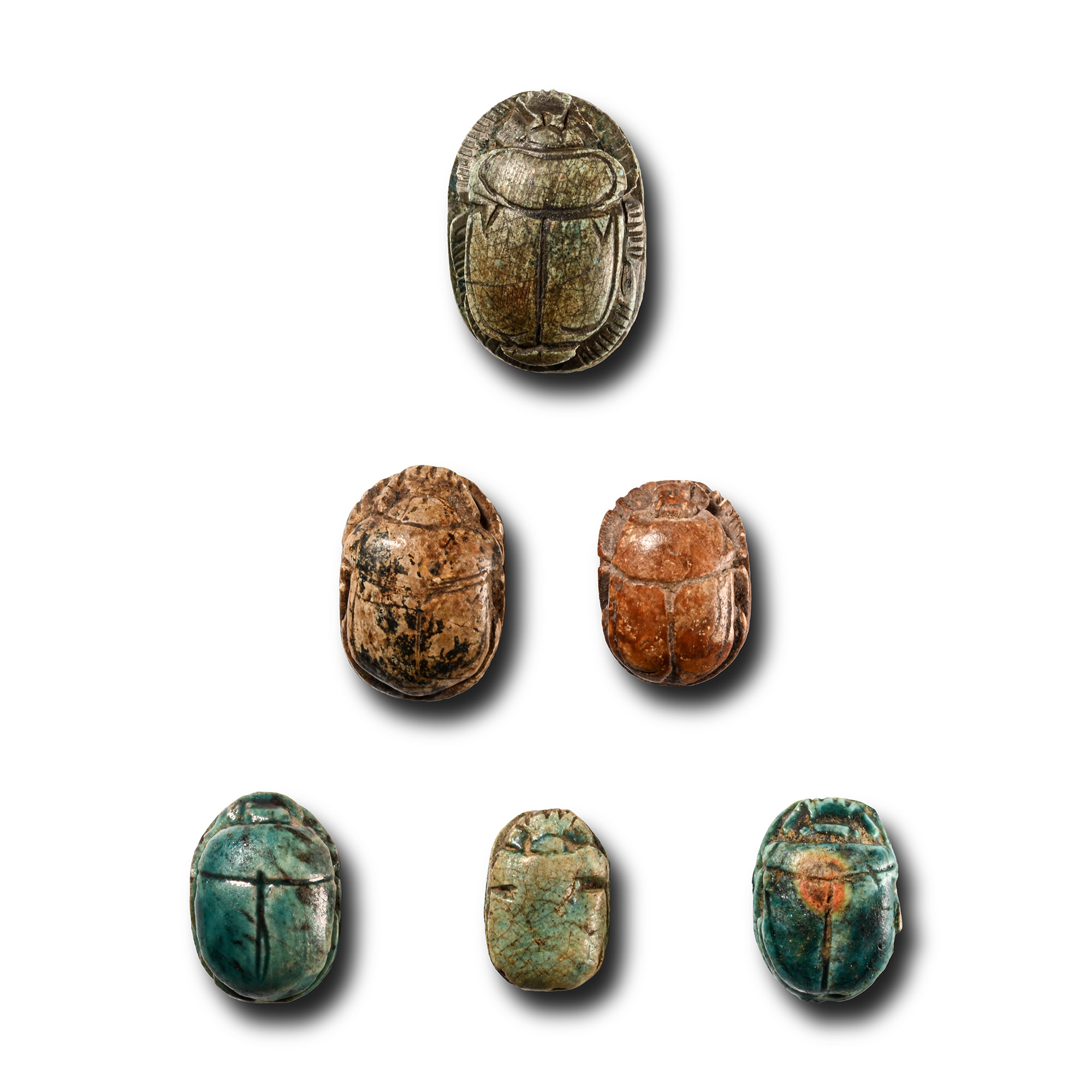
Egyptian Steatite and Other Scarab Collection
LATE PERIOD, 664-332 B.C.
1/2 - 3/4 in. (10.1 grams total, 13-18 mm).
Group of steatite and glazed composition scarabs each with hieroglyphs to the underside, the largest with a cartouche of Amenophis III. [6, No Reserve]
ProvenanceEx North London, UK, gentleman, 1990s.
CONDITIONTimeLine Auctions follows a vetting process to ensure the authenticity and legality of all items, reinforcing our commitment to integrity and responsible trading. Each antiquity, antique, and coin lot undergoes thorough examination by a vetting committee of at least ten external specialists, professional trade association members, scientists, and archaeologists: Our Vetting Process
AUCTIONS:
TimeLine is a leading auction house specialising in antiquities, ancient art, collectables, natural history, coins, medals, and books. Our auctions offer museums, collectors, historians, and enthusiasts the opportunity to acquire unique and historically significant pieces.
-
Phoenician Glass Bead Collection
Circa 6th-4th century B.C. and laterSold for (Inc. bp): £260
Comprising mainly black glass beads with dragged trails in contrasting colours; a pale blue bead with eye motifs; a hemispherical green glass bead or weight; and a triangular pendant with red, yellow, blue and white banding. 58 grams total, 9-32 mm
UK private collection formed 1970s-1990s. Property of an East Sussex, UK, gentleman. -
Egyptian Limestone Ibis Body
Late Period-Ptolemaic Period, 664-30 B.C.Sold for (Inc. bp): £124
Carved limestone body of an ibis with hole above the shoulders for the bronze neck and head casting, and two angled holes beneath for the legs. 55 grams, 58 mm
Private collection formed in the 1990s. Acquired from a central London gallery. Property of an Essex gentleman. -
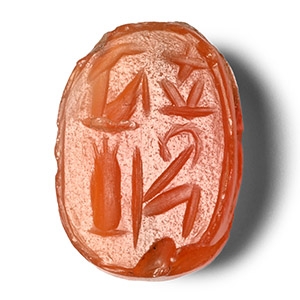
Egyptian Carnelian Scarab
New Kingdom, 1550-1070 B.C.Sold for (Inc. bp): £520
With incised carapace and leg detailing, hieroglyphs to the underside. 2.23 grams, 16 mm
Ex North London, UK, gentleman, 1990s.
