
Loading, please wait...


LOT 0447
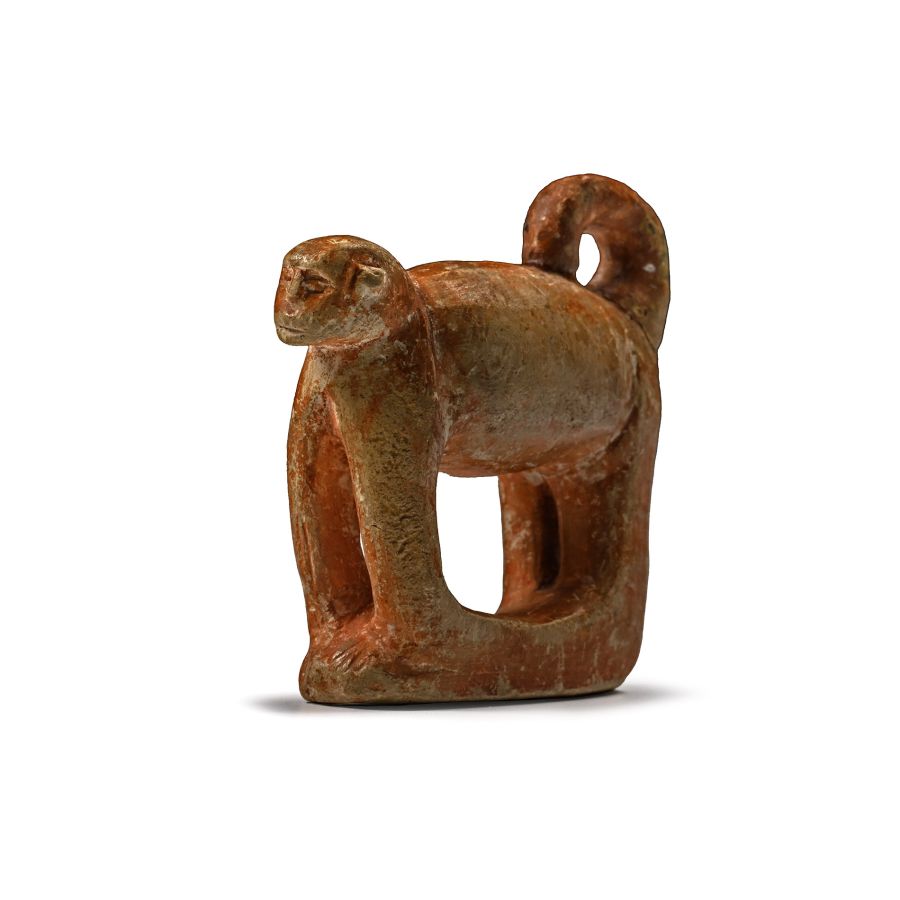
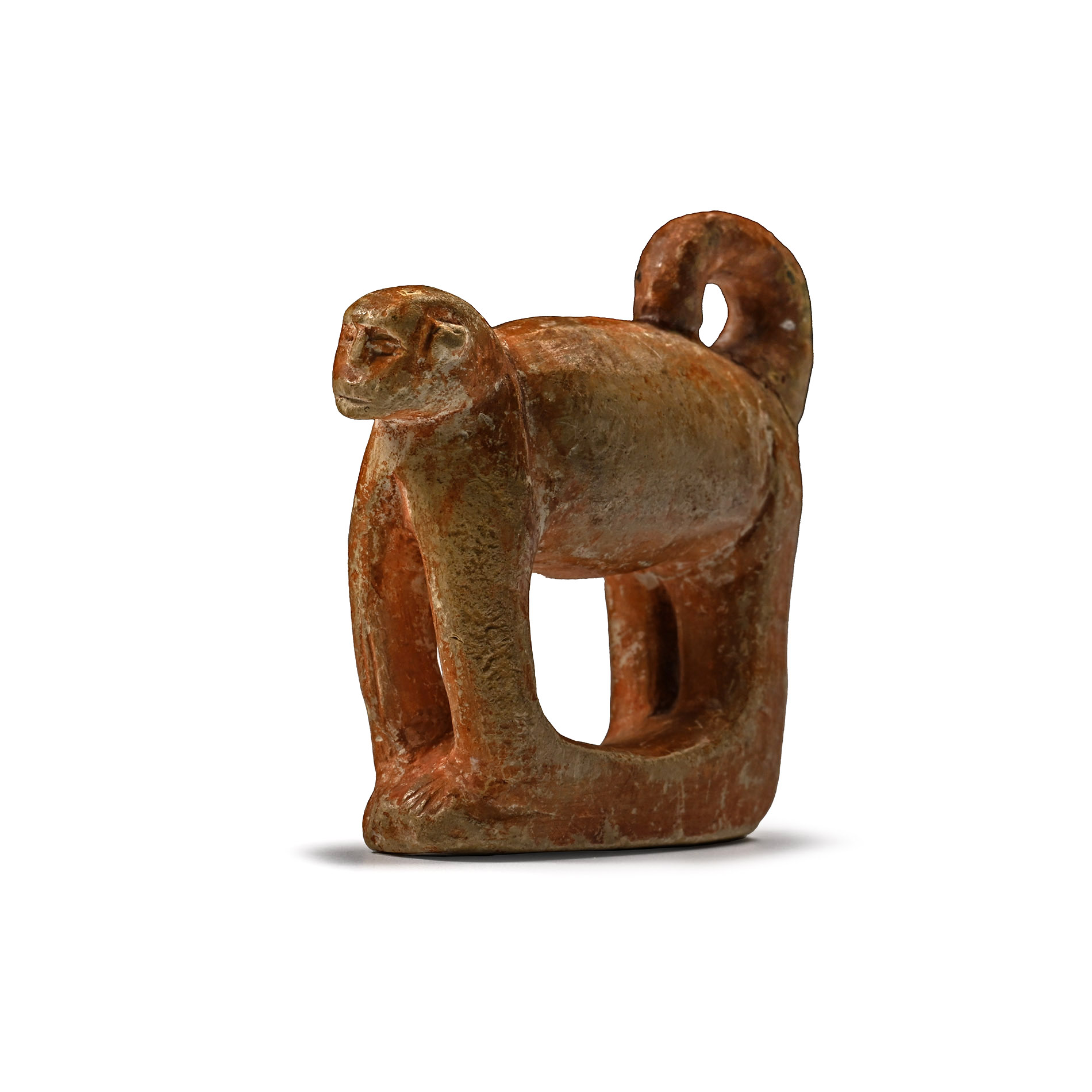
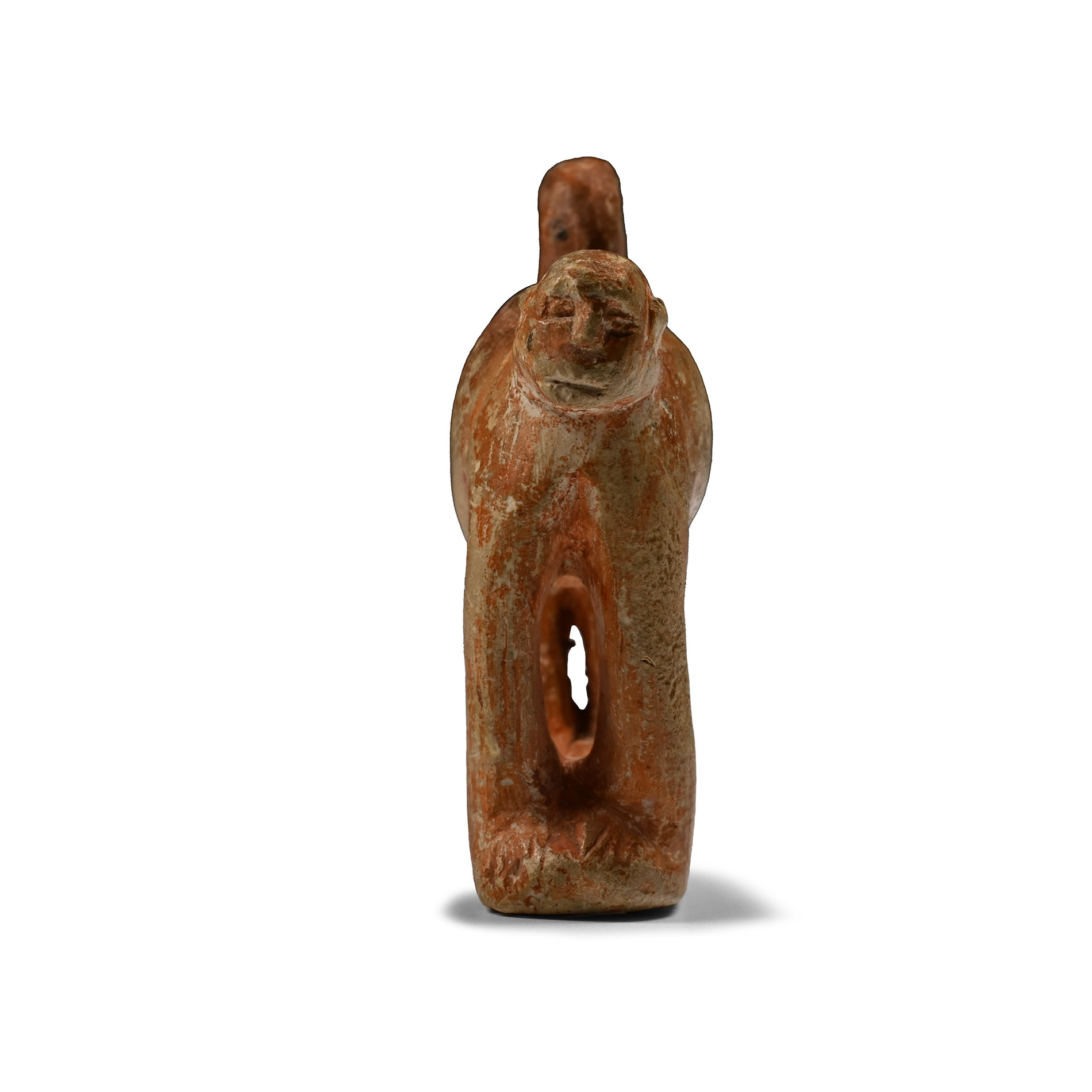
Egyptian Statuette of a Monkey
PTOLEMAIC PERIOD, 4TH-1ST CENTURY B.C.
2 3/8 in. (42.8 grams, 60 mm).
Standing on a rectangular plinth with head raised and tail curled above the hindquarters, barrel-shaped body with incised detailing at the shoulders and hips, traces of a white and reddish brown coating; partially restored; old collector's labels to underside '51' and 'N13234'.
ProvenanceEx Baden-Württemberg, Germany, formed since ca.1930.
Private collection, Saarland, Germany.
Thereafter, Michael Schrôder, Germany.
Consigned to DAWO Auktion, 18 February 2017, no.824.
Accompanied by a copy of an Art Loss Register certificate no.S00123279.
Cf. statuette of a monkey of the Ptolemaic period in the Metropolitan Museum inv. no.58.76.3.
FootnotesThe ancient Egyptians kept pet monkeys (baboons as well as the more slender guenons) for amusement and as status symbols. These animals played around the house and accompanied the master on outings.
CONDITIONTimeLine Auctions follows a vetting process to ensure the authenticity and legality of all items, reinforcing our commitment to integrity and responsible trading. Each antiquity, antique, and coin lot undergoes thorough examination by a vetting committee of at least ten external specialists, professional trade association members, scientists, and archaeologists: Our Vetting Process
AUCTIONS:
TimeLine is a leading auction house specialising in antiquities, ancient art, collectables, natural history, coins, medals, and books. Our auctions offer museums, collectors, historians, and enthusiasts the opportunity to acquire unique and historically significant pieces.
LOT 0447
Egyptian Statuette of a Monkey
Estimate £600 - 800€700 - 930 (for guidance only)$810 - 1,080 (for guidance only)
-
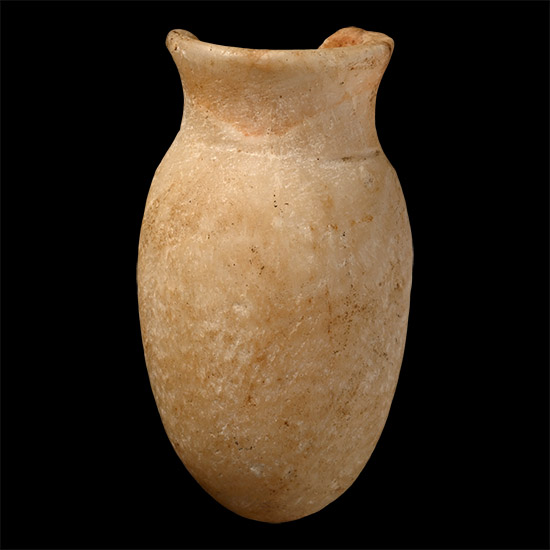
Egyptian Miniature Alabaster Jar
New Kingdom, 1550-1295 B.C.Sold for (Inc. bp): £104
Miniature alabsatron with ovoid body and flared rim to the mouth; collector's inked number '1' inside mouth; rim chipped. 22 grams, 41 mm
From the collection of David Donlan (1947–2025), a dedicated and lifelong collector with a passion for the ancient world and the natural sciences, forming his collection from 1960s onwards, using many reputable dealers across the United Kingdom, including the well-regarded Coincraft and The Parthenon Gallery. -
.jpg)
Egyptian Faience Lotus Flower Amulet
18th Dynasty, Amarna Period, 1353-1336 B.C.Sold for (Inc. bp): £104
A blue glazed composition pendant in the form of a lotus, with some repair to the suspension loop. 0.26 grams, 14 mm
Ex early 20th century London collection. -
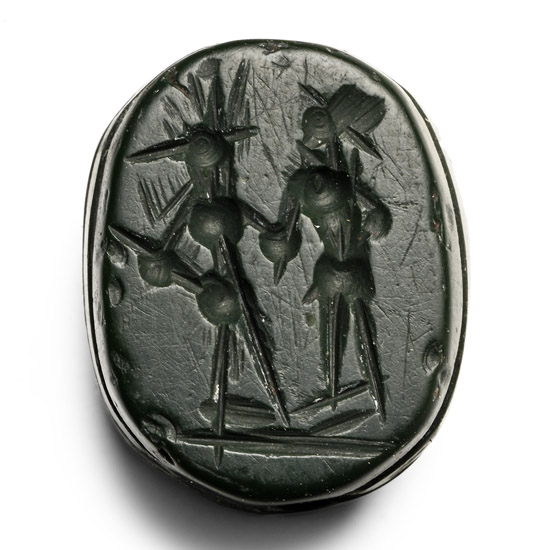
Egyptian Black Stone Scarab
Late Period, 664-332 B.C.Sold for (Inc. bp): £111
With linear detailing to the carapace, the underside with a drilled image of two figures holding hands on a baseline; supplied with a museum-quality impression. 2 grams, 13 mm
From the private collection of a European gentleman (1942-2024), formed since the 1970s.
