
Loading, please wait...
LOT 0726
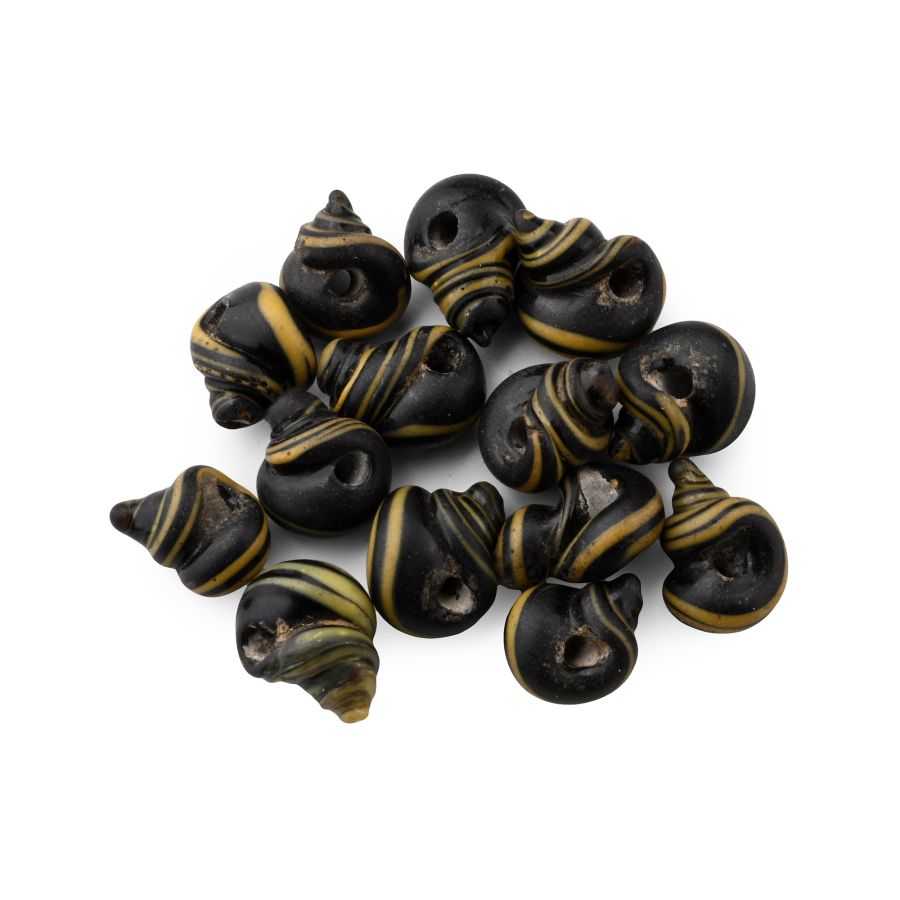
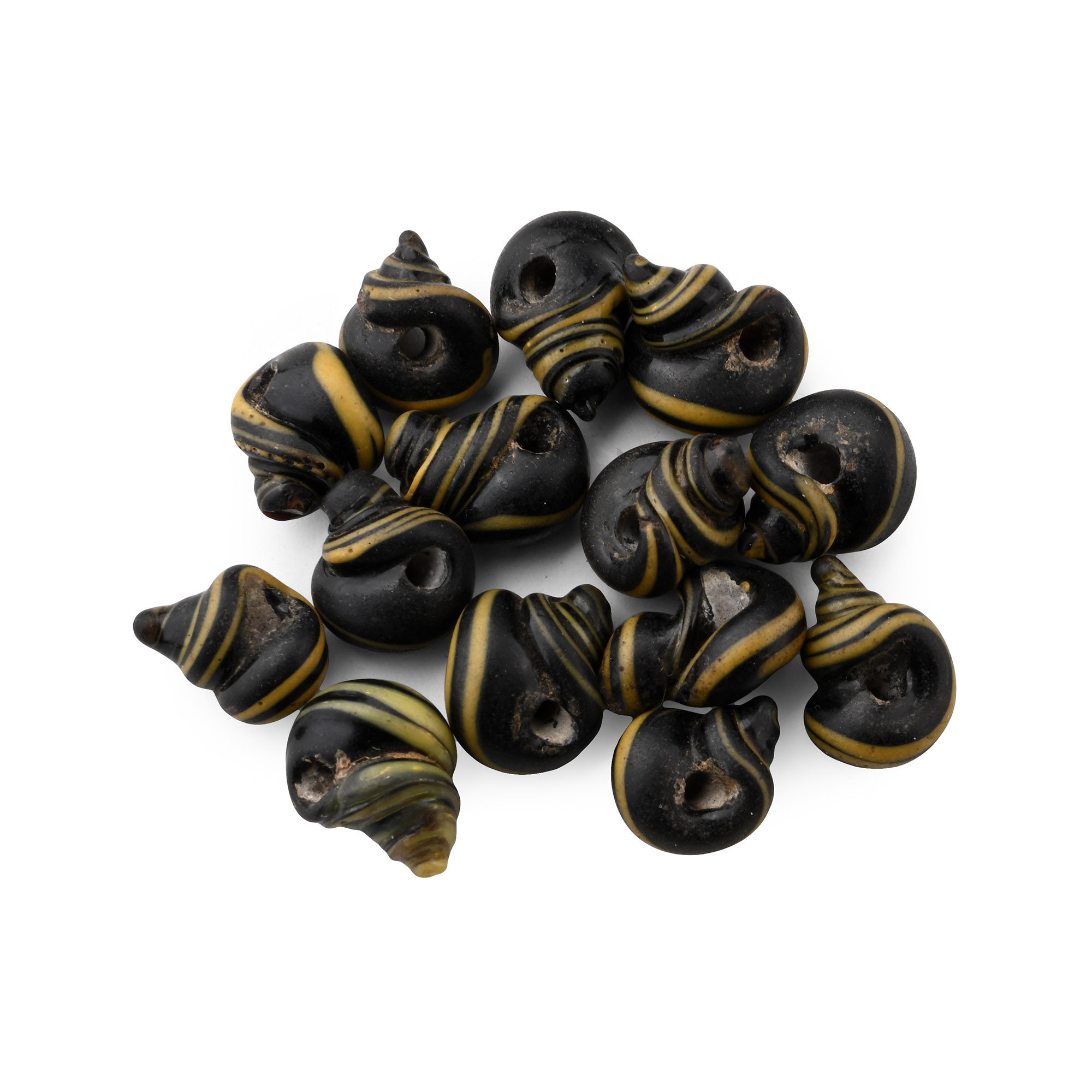
Egyptian Snail-Shaped Ribbon Mosaic Glass Bead Group
ROMAN PERIOD, 30 B.C.-323 A.D.
3/8 in. (10.4 grams total, 10-11 mm).
Comprising black-and-yellow mosaic glass beads shaped like snails. [14, No Reserve]
ProvenanceExcavated from Egypt in 1914.
From the private collection of Mr David Sams and his wife Elizabeth Kate Sams, gentry and amateur archaeologists who travelled to Egypt in 1914 with their daughter Ethel. Mr Sams and his wife led digging expeditions from which these items come from the family estate of Mr and Mrs Sams, by direct descent to their granddaughter.
TimeLine Auctions follows a vetting process to ensure the authenticity and legality of all items, reinforcing our commitment to integrity and responsible trading. Each antiquity, antique, and coin lot undergoes thorough examination by a vetting committee of at least ten external specialists, professional trade association members, scientists, and archaeologists: Our Vetting Process
AUCTIONS:
TimeLine is a leading auction house specialising in antiquities, ancient art, collectables, natural history, coins, medals, and books. Our auctions offer museums, collectors, historians, and enthusiasts the opportunity to acquire unique and historically significant pieces.
LOT 0726
Egyptian Snail-Shaped Ribbon Mosaic Glass Bead Group
Estimate £100 - 140€120 - 160 (for guidance only)$140 - 190 (for guidance only)
-
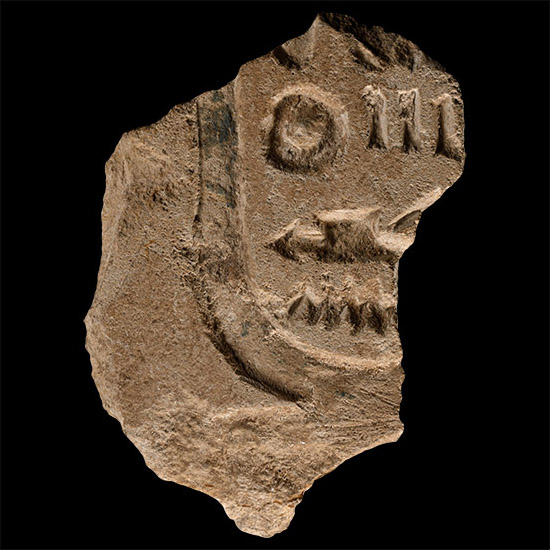
Egyptian Limestone Fragment with Cartouche of Pharaoh Akhenaten
New Kingdom, 18th Dynasty, Amarna Period, 1353-1332 B.C.Estimate: £800 - 1,000 (+bp*)
Bids: 3 | Current Bid: £65
Irregular fragment with a partial cartouche in sunk relief, containing the final part of Akhenaten's throne name, Nefer-kheperu-Re (meaning 'Beautiful are the Manifestations of Re'), with traces of blue and white pigment. 157 grams, 10.5 cm
Acquired in March 1977. From the private collection of Peter Clayton, FCILIP, Dip, Arch, FSA, FRNS, Hemel Hempstead, Hertfordshire, UK; formed since the late 1950s. Accompanied by an old handwritten information card by Peter Clayton, collection no.128.
Due to the destruction of Akhenaten's royal city, Akhetaten, most monuments and statuary were recovered in fragmentary condition (for example, Peet, T.E., Woolley, C.L., The City of Akhenaten, Part I, Excavations of 1921 and 1922 at el-'Amarneh, London, 1923, pls. XXXII-XXXIV, for several fragmentary architectural elements bearing Akhenaten's cartouches). -
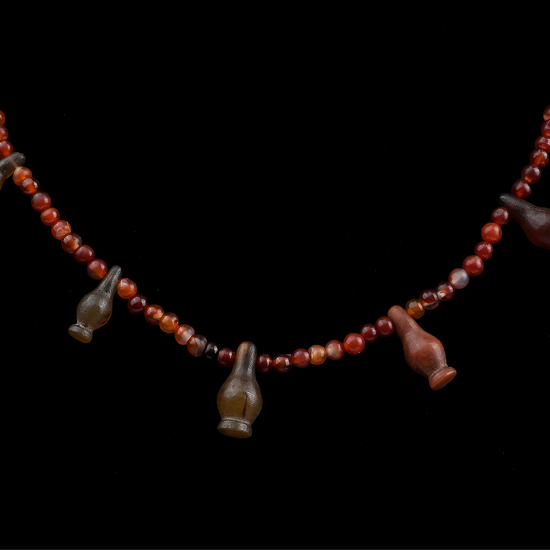
Egyptian Carnelian Bead and Poppy Amulet Necklace
Late Period, 664-332 B.C. and laterEstimate: £200 - 300 (+bp*)
Opening Bid: £100
Poppy-head amulet necklace restrung with later spherical beads. 21.9 grams, 45 cm long
From the collection of a gentleman, acquired on the London art market in the 1990s. -
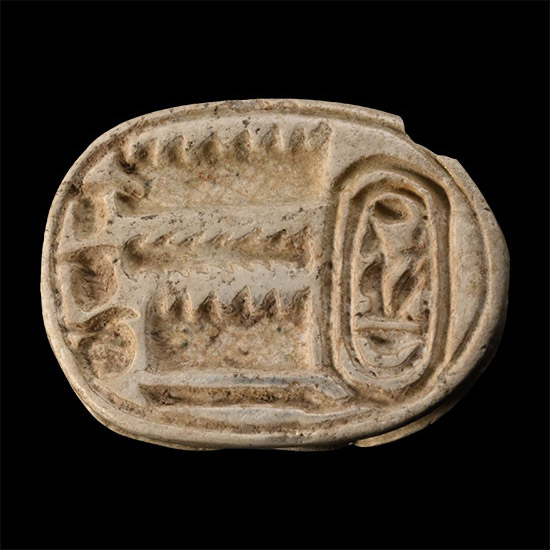
Egyptian Steatite Scarab for Pharaoh Amenhotep III
New Kingdom, 18th Dynasty, circa 1386-1349 B.C.Estimate: £300 - 400 (+bp*)
Bids: 1 | Current Bid: £5
Ellipsoid in plan with carapace and leg detailing; on the underside, a cartouche of Amenhotep III and possible epithet to the side, nb-mꜢꜤt-RꜤ (s)mn mnw ('Neb-maat-Re, establisher of monuments'). 2.54 grams, 17 mm
with a privately curated collection, 1980s-early 2000s. From the private collection and estate of Christine Simons (1943-2025), West Midlands, UK. Accompanied by a copy of a two page archival record and provenance report.
