
Loading, please wait...
LOT 0478
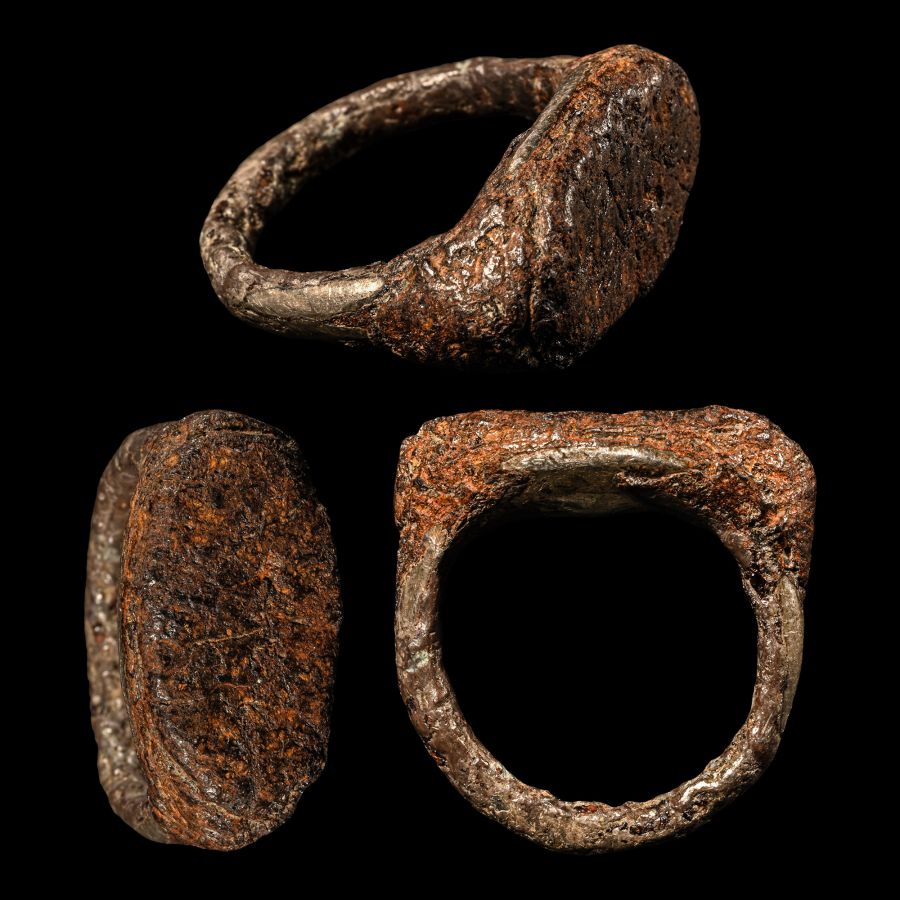
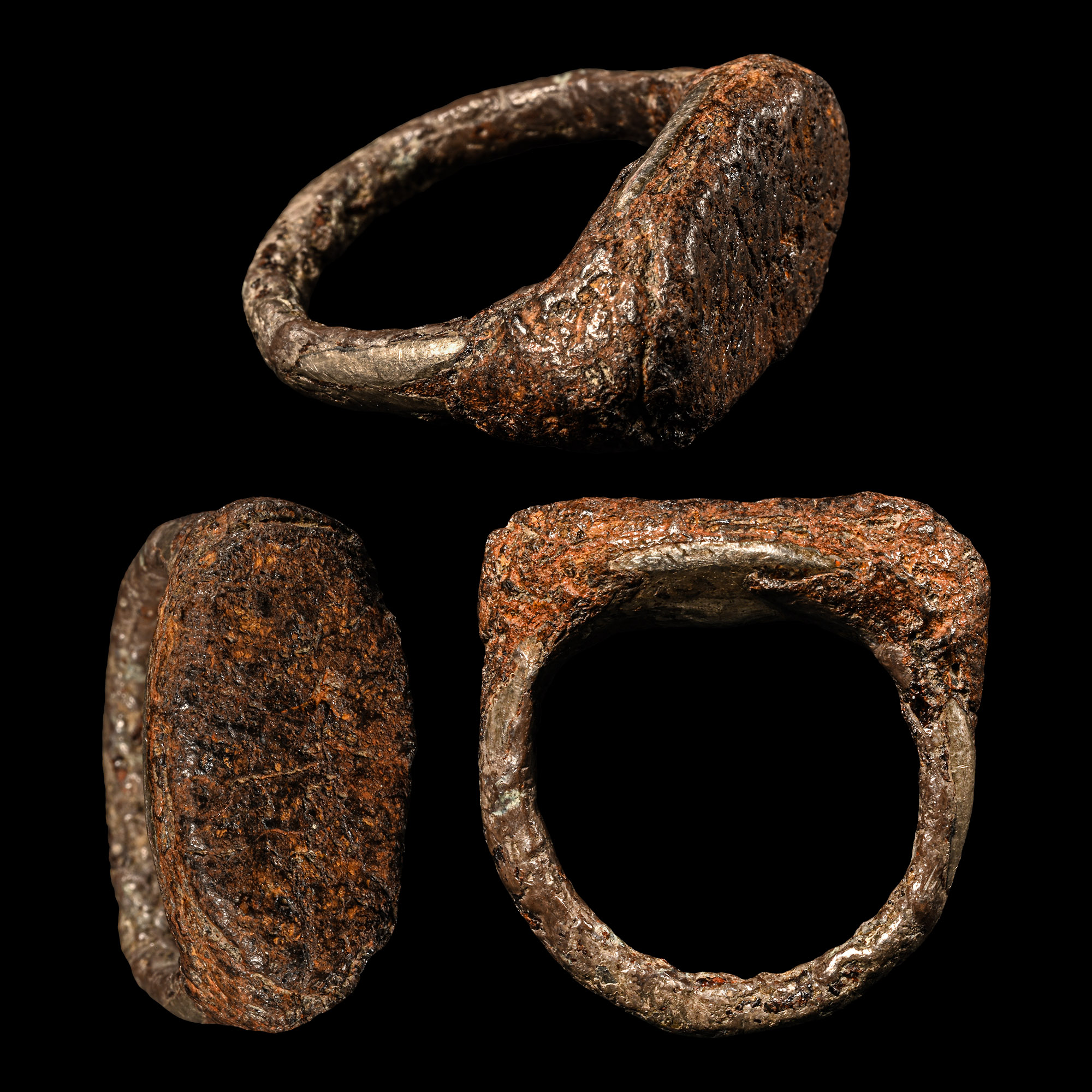
Egyptian Silver Signet Ring
LATE PERIOD, 664-332 B.C.
1 in. (7.11 grams, 26.03 mm overall, 18.22 mm internal diameter (approximate size British O 1/2, USA 7 1/4, Europe 15.61, Japan 15)).
With a round-section hoop, the wide bezel encrusted but with decoration beneath. [No Reserve]
ProvenanceCollected from 1969-1999.
From the collection of the late Mr S.M., London, UK.
TimeLine Auctions follows a vetting process to ensure the authenticity and legality of all items, reinforcing our commitment to integrity and responsible trading. Each antiquity, antique, and coin lot undergoes thorough examination by a vetting committee of at least ten external specialists, professional trade association members, scientists, and archaeologists: Our Vetting Process
AUCTIONS:
TimeLine is a leading auction house specialising in antiquities, ancient art, collectables, natural history, coins, medals, and books. Our auctions offer museums, collectors, historians, and enthusiasts the opportunity to acquire unique and historically significant pieces.
-
.jpg)
Egyptian Limestone Miniature Obelisk with Hieroglyphs
Late Period, 664-332 B.C.Sold for (Inc. bp): £5,460
With tapering sides and pointed top, incised vertical column of hieroglyphic text to one face: ẖry-ḥbt ḳbḥ ḥtp mr-mšꜥ imn, ''lector-priest' (give) purified offering (to the) general of the army (of) Amun'; mounted on a custom-made stand. 444 grams total, 21 cm high
Acquired in Egypt in the early 20th century. Private collection of Mr T.H., Norfolk, UK.
In ancient Egypt, it was common for small obelisks like this one to be placed on either side of the entrance to private tombs. Typically inscribed on one side only, these obelisks held great solar religious significance and were closely associated with the cult of the sun-god Re. They symbolised the ancient Egyptians' belief in the rebirth of the deceased, with the moment of revivification being characterised by the individual's face being illuminated by the rays of the rising sun. It was said that, at that moment, the deceased was able to "open their sight to see the sun-god," as one religious text explains. -
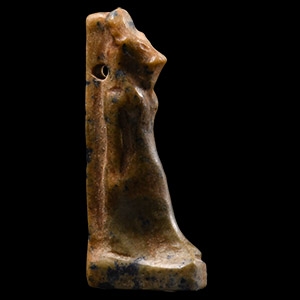
Egyptian Hardstone Sekhmet Amulet
Late Period, 664-332 B.C.Sold for (Inc. bp): £91
With dorsal pillar pierced for suspension; on a rectangular base. 1.99 grams, 25 mm
British collection formed before the 1960s. Property of L.G. Private collection of Mr T.H., Norfolk, UK. Accompanied by a previous dealer's certificate of authenticity. -
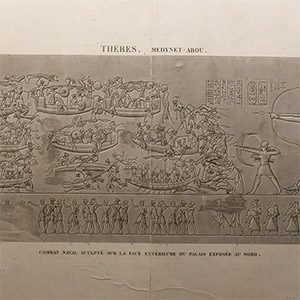
Large Egyptian Expedition Lithograph Print of Thebes
1820 A.D.Sold for (Inc. bp): £117
Phillipeaux - Thèbes - Medynet-Abou. Combat Naval sculpté sur la face extérieure du palais exposée au nord - Proof etching on laid paper of plate 10 from La Description de l’Égypte: Antiquités, Volume II: Commission des sciences et arts d’Égypte with later backing sheet. 375 grams, 130.5 x 67 cm
From the collection of a North American priest. Acquired between 1981-1996. Property of a North American collector.
Produced between February 1802 and 1830 on the orders of Napoleon Bonaparte; published between 1809 and 1828. Just 1,000 copies were distributed to various institutions, printed on on laid paper with an 'Égypte ancienne et moderne' watermark. The book is subtitled Recueil des observations et des recherches qui ont été faites en Égypte pendant l’expédition de l’Armée française, publié par les ordres de Sa Majesté l’Empereur Napoléon le Grand (Gathering of observations and discoveries which were made in Egypt during the expedition of the French army, published on the orders of His Majesty the Emperor Napoleon the Great). It was the world's first encyclopaedia devoted exclusively to the remains of ancient Egypt. The plates of this book are the first to present the archaeological sites of Thebes (Luxor). The frieze is from the palace wall of Meninet - Abou.
