
Loading, please wait...


LOT 0476
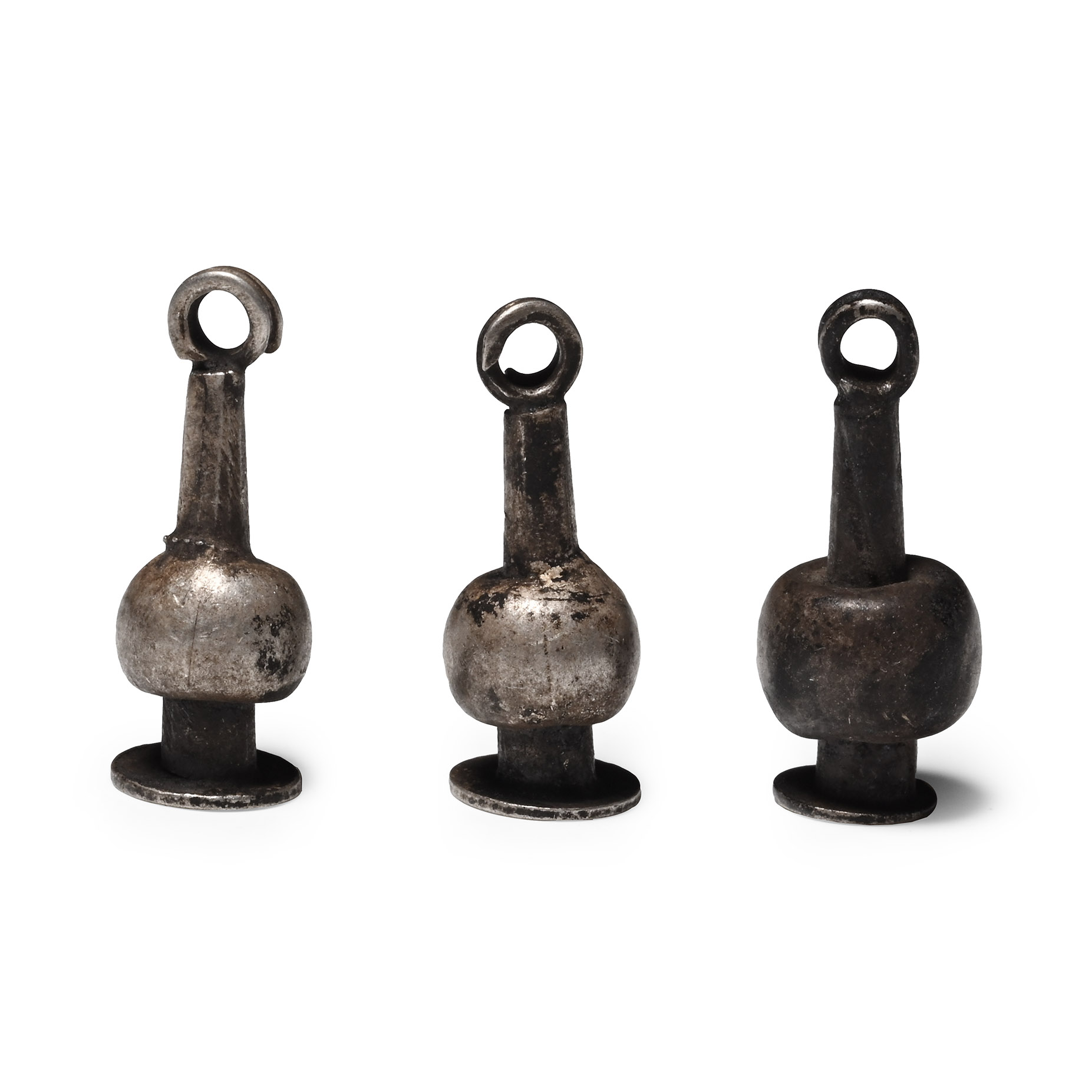
Egyptian Silver Poppy Beads
LATE PERIOD, 664-332 B.C.
5/8 in. (3.29 grams total, 16-17 mm).
Modelled in the shape of a poppy seed with a flat foot leading to a globular body with a tapering neck attached to a small loop at the top for suspension. [3]
ProvenanceFrom an early 20th century collection.
FootnotesAmulets in the form of poppies were used to heal and alleviate pain and to ward off death. These types of amulets were also linked to Osiris, the Egyptian deity of agriculture, death, and the afterlife.
CONDITIONTimeLine Auctions follows a vetting process to ensure the authenticity and legality of all items, reinforcing our commitment to integrity and responsible trading. Each antiquity, antique, and coin lot undergoes thorough examination by a vetting committee of at least ten external specialists, professional trade association members, scientists, and archaeologists: Our Vetting Process
AUCTIONS:
TimeLine is a leading auction house specialising in antiquities, ancient art, collectables, natural history, coins, medals, and books. Our auctions offer museums, collectors, historians, and enthusiasts the opportunity to acquire unique and historically significant pieces.
-
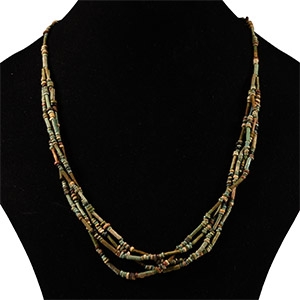
Egyptian Multi-Stranded Faience Mummy Bead Necklace
Late Period, 664-332 B.C.Sold for (Inc. bp): £234
Multi-stranded designer necklace composed of beads of mainly annular and tubular types. 21 grams, 72 cm long
Acquired before 1979. From the private collection of Mr F.A., South Kensington, London, UK; thence by descent 2014.
For thousands of years, artisans in Egypt created vibrant ceramics to echo the beauty of rare jewels. These ornaments were created with almost every material, colour, and texture imaginable and they come from across Egypt and beyond: vibrant blue lapis lazuli from Afghanistan, glossy black obsidian from Turkey, and aqua-green turquoise from the Sinai. They were worn in life and, after death, they served as precious ornamentation for mummies. -
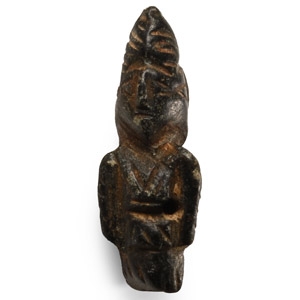
Phoenician Steatite Multi-Bodied Astarte Amulet
Circa 6th century B.C.Estimate: £100 - 140 (+bp*)
Opening Bid: £50
Carved as three radiating figures with conical headdress; the hair, limbs and other features shared by the three separate personae; pierced for suspension. 1.70 grams, 23 mm
From the collection of Mr S.M., London, UK, formed from 1969-1999. -
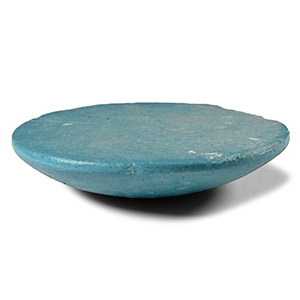
Egyptian Blue Faience Funerary Dish for Modelled Food
Middle Kingdom, 12th Dynasty, 1991–1802 B.C.Sold for (Inc. bp): £1,170
Shaped as a shallow circular dish. 252 grams, 11.1 cm
Acquired on the German art market, 1989-1995. with The Museum Gallery, 19 Bury Place, London, WC1, UK, 1998-2003. Property of a London based academic, 2003-present.
Faience food and dish simulacra replaced the wooden food preparation models of the earlier Middle Kingdom.
