
Loading, please wait...
LOT 0448
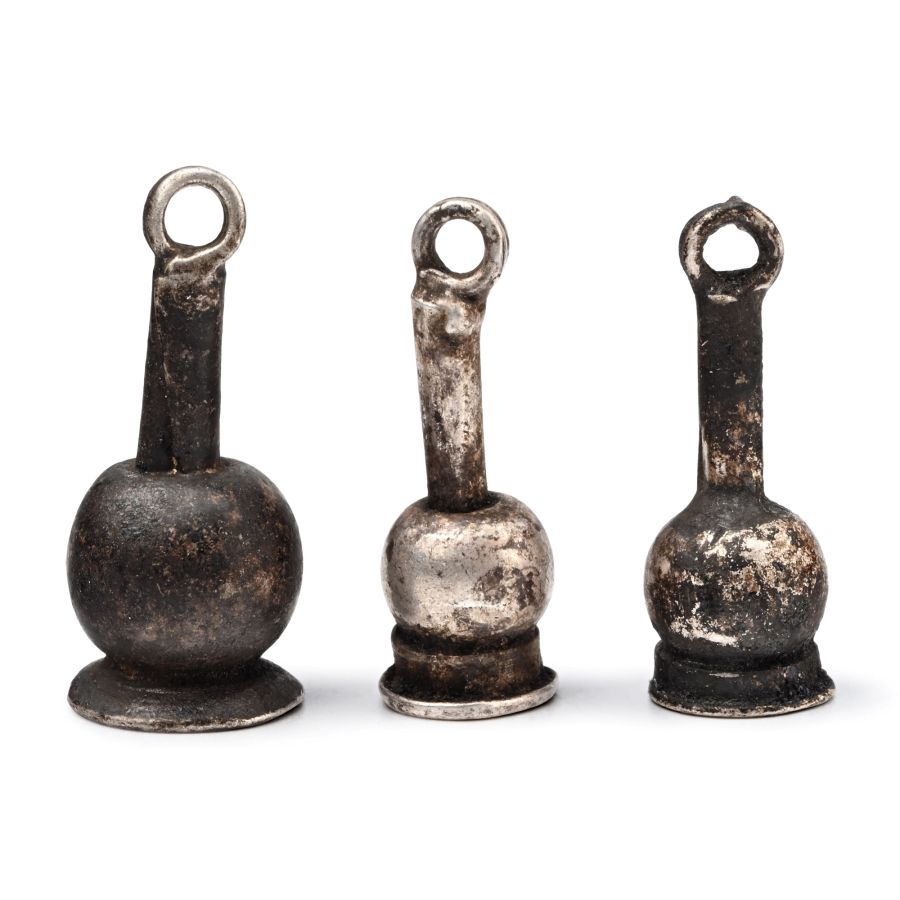
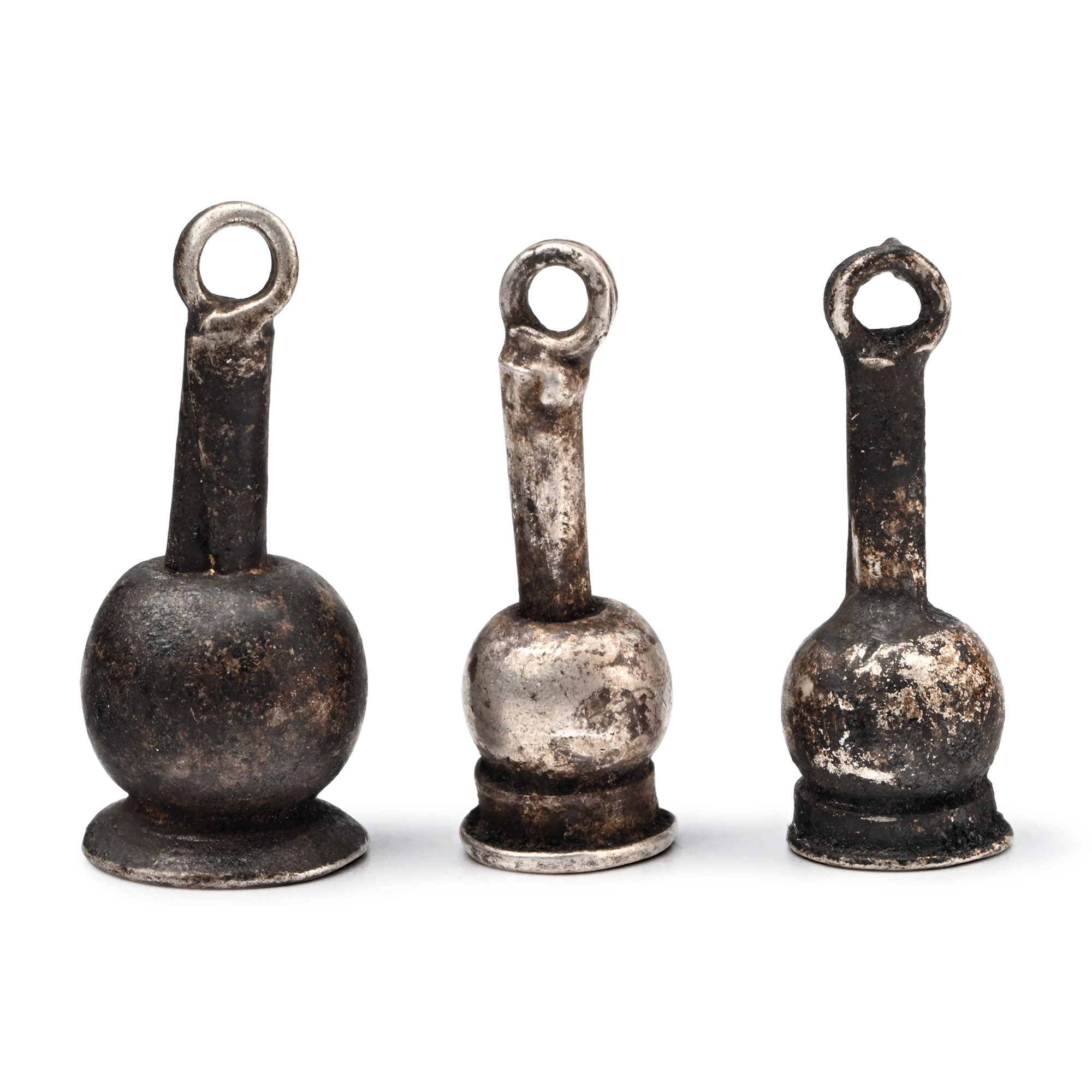
Egyptian Silver Poppy Amulet Group
LATE-PTOLEMAIC PERIOD, 664-30 B.C.
5/8 - 3/4 in. (3.68 grams total, 17-19 mm).
Three pendants each with poppy-head and loop at the apex. [3, No Reserve]
ProvenanceEx London, UK, gentleman 1980-1990s.
This lot is accompanied by an illustrated lot declaration signed by the Head of the Antiquities Department, Dr Raffaele D'Amato.
Cf. Andrews, C., Amulets of Ancient Egypt, London, 1994, pl.65 (n).
FootnotesAmulets in the form of poppies were used to heal and alleviate pain and to ward off death. These types of amulets were also linked to Osiris, the Egyptian deity of agriculture, death, and the afterlife.
CONDITIONTimeLine Auctions follows a vetting process to ensure the authenticity and legality of all items, reinforcing our commitment to integrity and responsible trading. Each antiquity, antique, and coin lot undergoes thorough examination by a vetting committee of at least ten external specialists, professional trade association members, scientists, and archaeologists: Our Vetting Process
AUCTIONS:
TimeLine is a leading auction house specialising in antiquities, ancient art, collectables, natural history, coins, medals, and books. Our auctions offer museums, collectors, historians, and enthusiasts the opportunity to acquire unique and historically significant pieces.
-
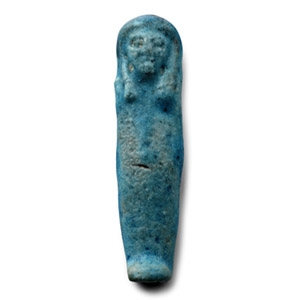
Egyptian Bright Blue Faience Shabti
Ptolemaic Period, 332-30 B.C.Sold for (Inc. bp): £130
Mummiform figure with facial detailing and wearing a lappet wig. 7.05 grams, 54 mm
Ex London, UK, collection, 1990s. This lot is accompanied by an illustrated lot declaration signed by the Head of the Antiquities Department, Dr Raffaele D'Amato. -
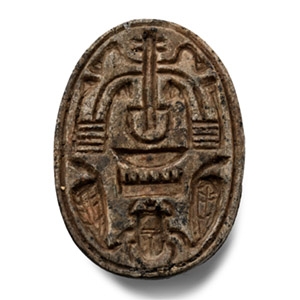
Large Egyptian Steatite Scarab
Late Period, 664-332 B.C.Sold for (Inc. bp): £572
With a detailed carapace, mouth, and legs; the underside decorated with a line border enclosing a large central sma motif in the upper half, followed by a neb, men, and Khepri beetle hieroglyphs, flanked by rearing cobras. 33.76 grams, 46 mm
From the collection of a gentleman, acquired on the London art market in the 1990s. This lot is accompanied by an illustrated lot declaration signed by the Head of the Antiquities Department, Dr Raffaele D'Amato. -
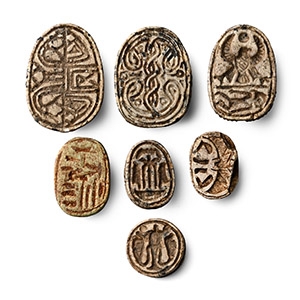
Egyptian Steatite Scarab Collection
Mostly Late Middle Kingdom, Second Intermediate Period, 1780-1500 B.C.Sold for (Inc. bp): £780
Mixed group of design scarabs and scaraboids, including: stylised foliate motif with a sa sign; central entwined cords with curled tops and tails, and nefer signs; a falcon with outspread wings and sun disc above, surmounting a fallen enemy; a group of hieroglyphs: a central mes flanked by reed leaves, with a water sign n above, and a neb sign below; a falcon with outspread wings, with two maat feathers and stylised cobras above; a central hes vase flanked by rearing cobras. 32.6 grams total, 15-28 mm
From the collection of a gentleman, acquired on the London art market in the 1990s. This lot is accompanied by an illustrated lot declaration signed by the Head of the Antiquities Department, Dr Raffaele D'Amato.
