
Loading, please wait...
LOT 0475
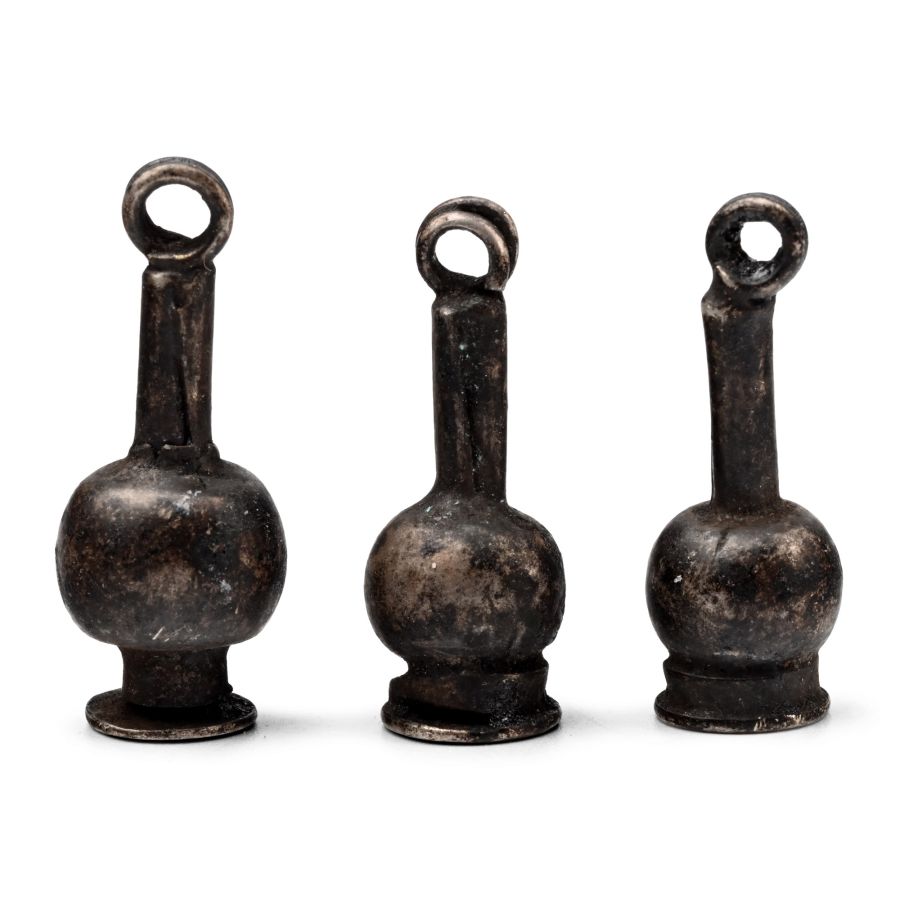
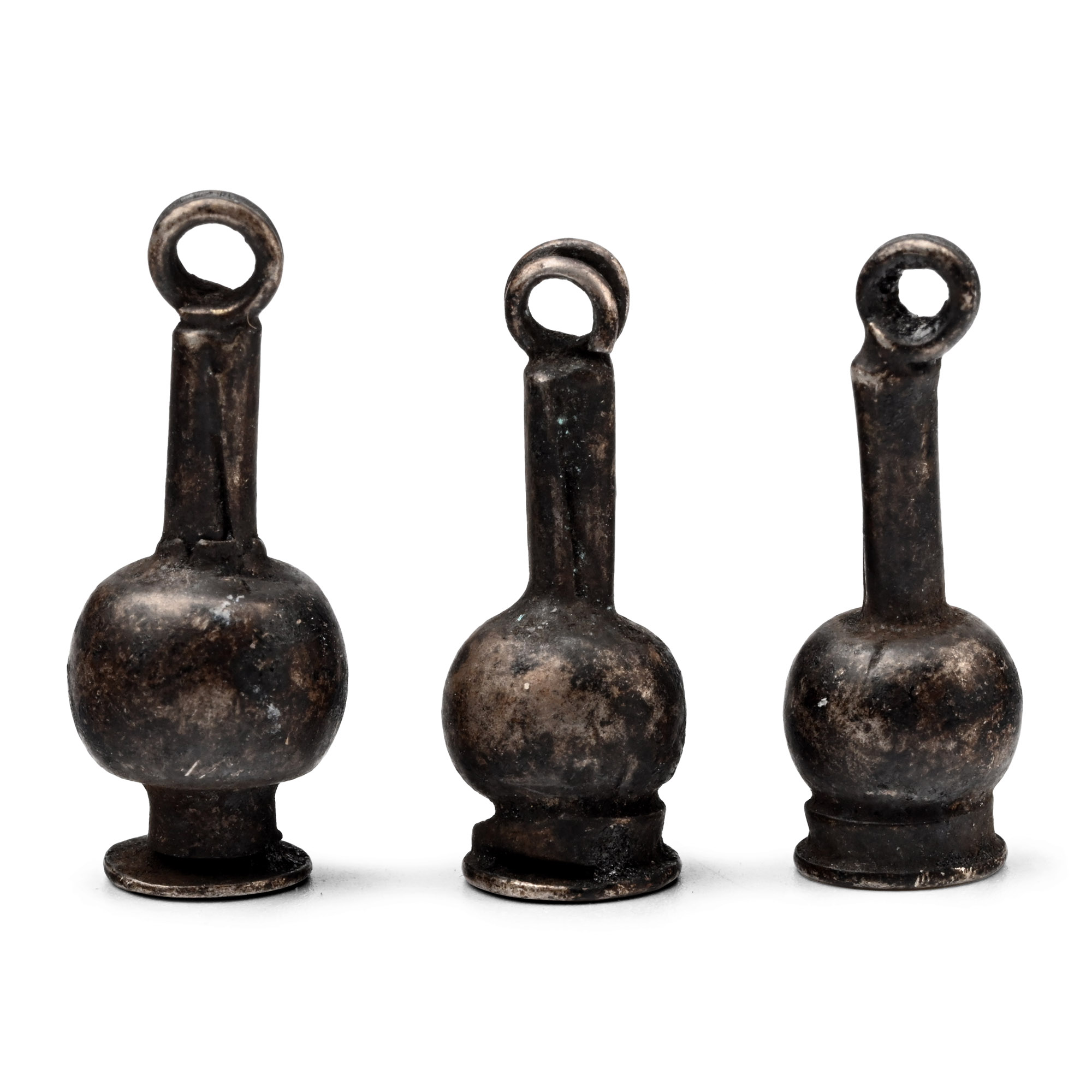
Egyptian Silver Poppy Amulet Group
LATE-PTOLEMAIC PERIOD, 664-30 B.C.
5/8 in. (3.22 grams total, 16-18 mm).
Three pendants each with poppy-head and loop at the apex. [3, No Reserve]
ProvenanceEx London, UK, art market, 1990s.
This lot is accompanied by an illustrated lot declaration signed by the Head of the Antiquities Department, Dr Raffaele D'Amato.
Cf. Andrews, C., Amulets of Ancient Egypt, London, 1994, pl.65 (n).
FootnotesAmulets in the form of poppies were used to heal and alleviate pain and to ward off death. These types of amulets were also linked to Osiris, the Egyptian deity of agriculture, death, and the afterlife.
CONDITIONTimeLine Auctions follows a vetting process to ensure the authenticity and legality of all items, reinforcing our commitment to integrity and responsible trading. Each antiquity, antique, and coin lot undergoes thorough examination by a vetting committee of at least ten external specialists, professional trade association members, scientists, and archaeologists: Our Vetting Process
AUCTIONS:
TimeLine is a leading auction house specialising in antiquities, ancient art, collectables, natural history, coins, medals, and books. Our auctions offer museums, collectors, historians, and enthusiasts the opportunity to acquire unique and historically significant pieces.
-
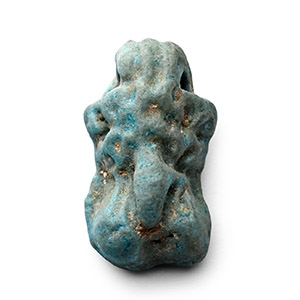
Phoenician-Egyptian Faience Phallic Amulet
Late-Ptolemaic Period, 664-30 B.C.Sold for (Inc. bp): £130
Amuletic pendant of male genitals with loop above. 1.24 grams, 17 mm
Ex early 20th century Home Counties, UK, collection. This lot is accompanied by an illustrated lot declaration signed by the Head of the Antiquities Department, Dr Raffaele D'Amato. -
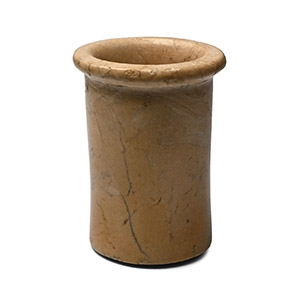
Egyptian Cylindrical Breccia Vase
Early Dynastic Period-Old Kingdom, 3050-2181 B.C.Sold for (Inc. bp): £338
Columnar in form with thick everted rim, slightly domed underside. 534 grams, 10.7 cm
From the private collection of a Canadian gentleman living in Essex, UK, formed since the 1920s-circa 1990. Property of an Essex lady until the late 1990s; thence by descent. From the private collection of an Essex gentleman since the late 1990s. This lot is accompanied by an illustrated lot declaration signed by the Head of the Antiquities Department, Dr Raffaele D'Amato. -
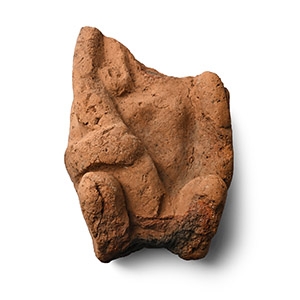
Egyptian Terracotta Fragment of Man Holding Elongated Phallus
Ptolemaic Period, 323-30 B.C.Sold for (Inc. bp): £59
Plano-convex in section with lateral folded legs, lower end of the sidelock at the shoulder, phallus extended across the body. 383 grams, 13 cm
Acquired in London, UK, 1980. From the collection of G.M.R.H., London, UK. This lot is accompanied by an illustrated lot declaration signed by the Head of the Antiquities Department, Dr Raffaele D'Amato.
