
Loading, please wait...
LOT 0486
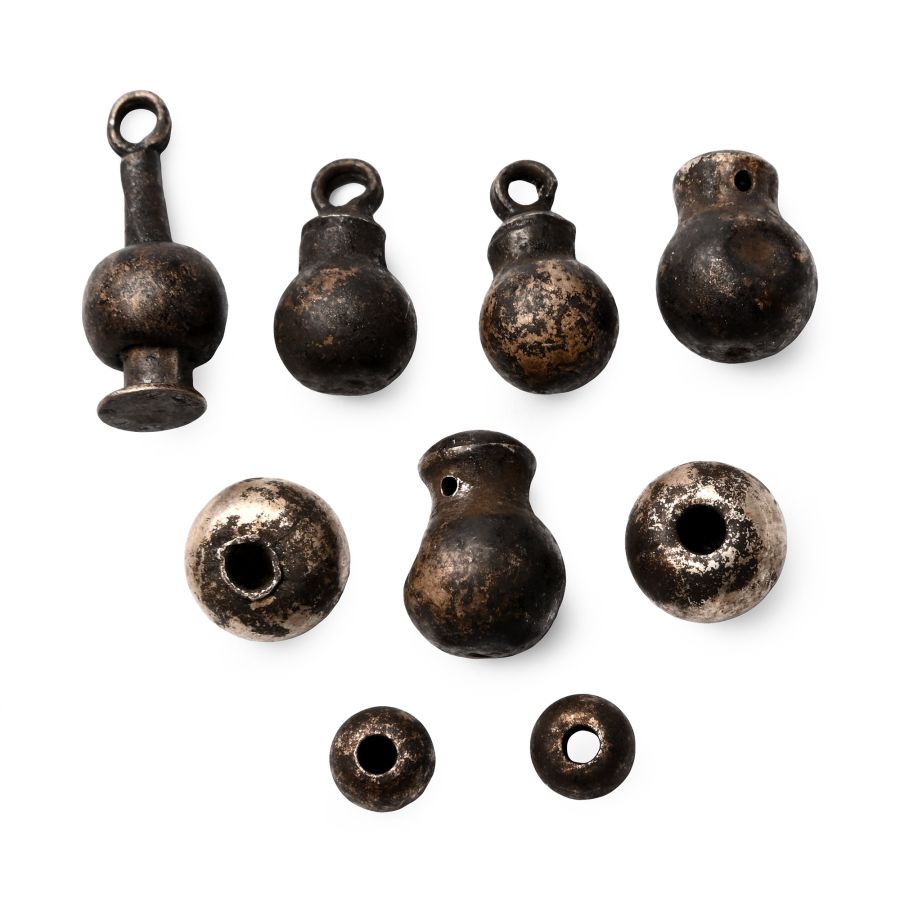
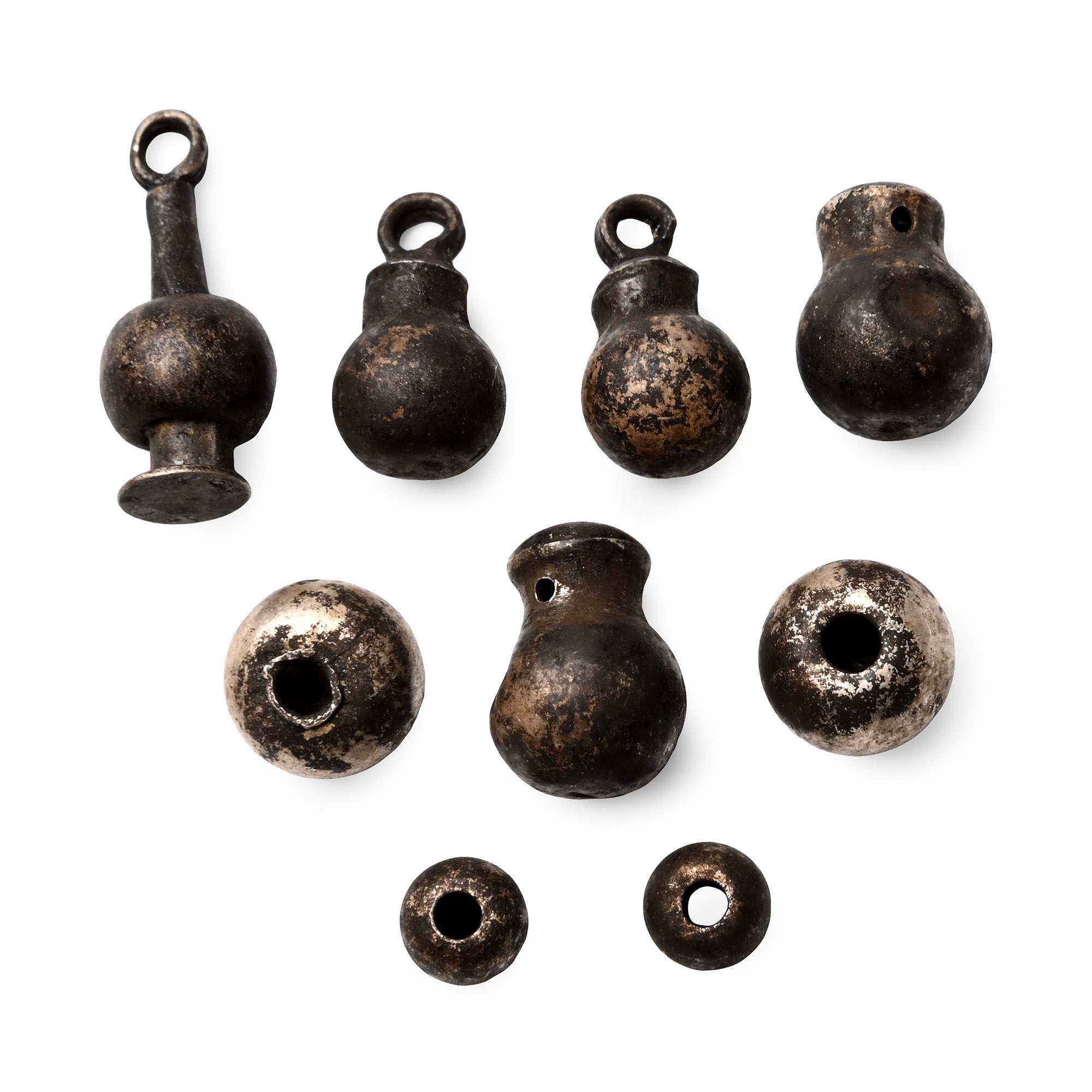
Egyptian Silver Poppy Amulet Collection
LATE-PTOLEMAIC PERIOD, 664-30 B.C.
1/4 - 3/4 in. (7.21 grams total, 5-18 mm).
Group of poppy-head amulets, some with suspension loop, others pierced. [9, No Reserve]
ProvenanceEx London, UK, gentleman 1980-1990s.
This lot is accompanied by an illustrated lot declaration signed by the Head of the Antiquities Department, Dr Raffaele D'Amato.
Amulets in the form of poppies were used to heal and alleviate pain and to ward off death. These types of amulets were also linked to Osiris, the Egyptian deity of agriculture, death, and the afterlife.
CONDITIONTimeLine Auctions follows a vetting process to ensure the authenticity and legality of all items, reinforcing our commitment to integrity and responsible trading. Each antiquity, antique, and coin lot undergoes thorough examination by a vetting committee of at least ten external specialists, professional trade association members, scientists, and archaeologists: Our Vetting Process
AUCTIONS:
TimeLine is a leading auction house specialising in antiquities, ancient art, collectables, natural history, coins, medals, and books. Our auctions offer museums, collectors, historians, and enthusiasts the opportunity to acquire unique and historically significant pieces.
-
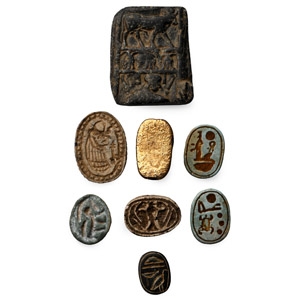
Egyptian Mixed Scarab Collection
2nd-1st millennium B.C. and laterEstimate: £600 - 800 (+bp*)
Opening Bid: £300
Stone plaque with raised relief depictions of the Apis bull and a falcon deity beneath; a mixed group of scarabs and scaraboids, most bearing text or motifs on the underside, including: a rope border enclosing the head of a lion wearing a sun disc and uraeus; a plain gold scaraboid; a line border enclosing the throne name of Amenhotep III (neb-maat-Re); an indeterminate standing figure; a central hes- vase flanked by rearing cobras; a group of hieroglyphs, perhaps a slightly incorrect spelling of the throne name of Amenhotep II (akheperu-Re); and a group of four hieroglyphs. 36.9 grams total, 14-35 mm
From the collection of a gentleman, acquired on the London art market in the 1990s. This lot is accompanied by an illustrated lot declaration signed by the Head of the Antiquities Department, Dr Raffaele D'Amato. -
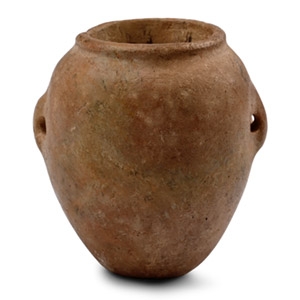
Egyptian Stone Two-Handled Cosmetic Jar
Late Predynastic-early Dynastic Period, 3100-2850 B.C.Sold for (Inc. bp): £572
Barrel-shaped in profile with low rim and two lateral pierced lug handles. 103 grams, 53 mm
From the private collection of a Canadian gentleman living in Essex, UK, formed since the 1920s-circa 1990. Property of an Essex lady until the late 1990s; thence by descent. From the private collection of an Essex gentleman since the late 1990s. This lot is accompanied by an illustrated lot declaration signed by the Head of the Antiquities Department, Dr Raffaele D'Amato. -
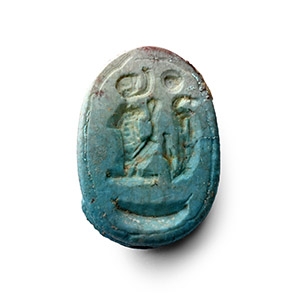
Egyptian Faience Frog Scaraboid with Hieroglyphs
Ptolemaic Period, circa 300 B.C.Sold for (Inc. bp): £195
Ellipsoid in plan with crouching frog to the upper face, incuse legend to the underside. 3.92 grams, 20 mm
Acquired on the European art market in the early 2000s. with Galerie Rhéa, Zurich, Switzerland. This lot is accompanied by an illustrated lot declaration signed by the Head of the Antiquities Department, Dr Raffaele D'Amato.
