
Loading, please wait...

LOT 0513
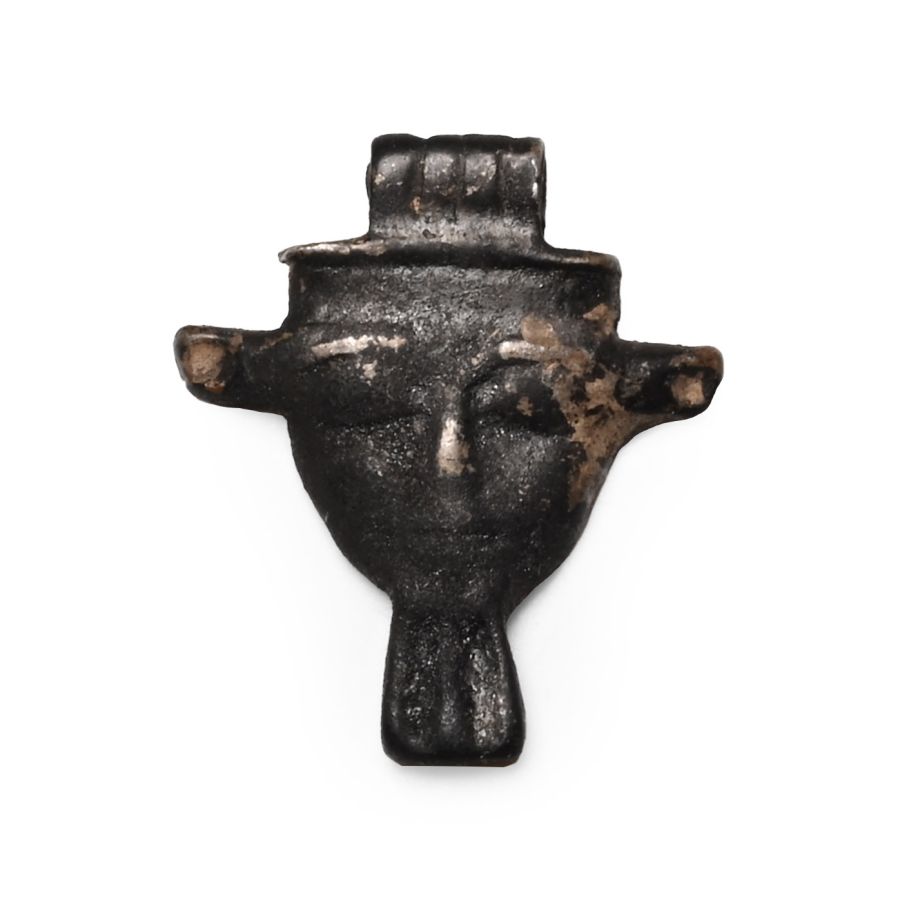
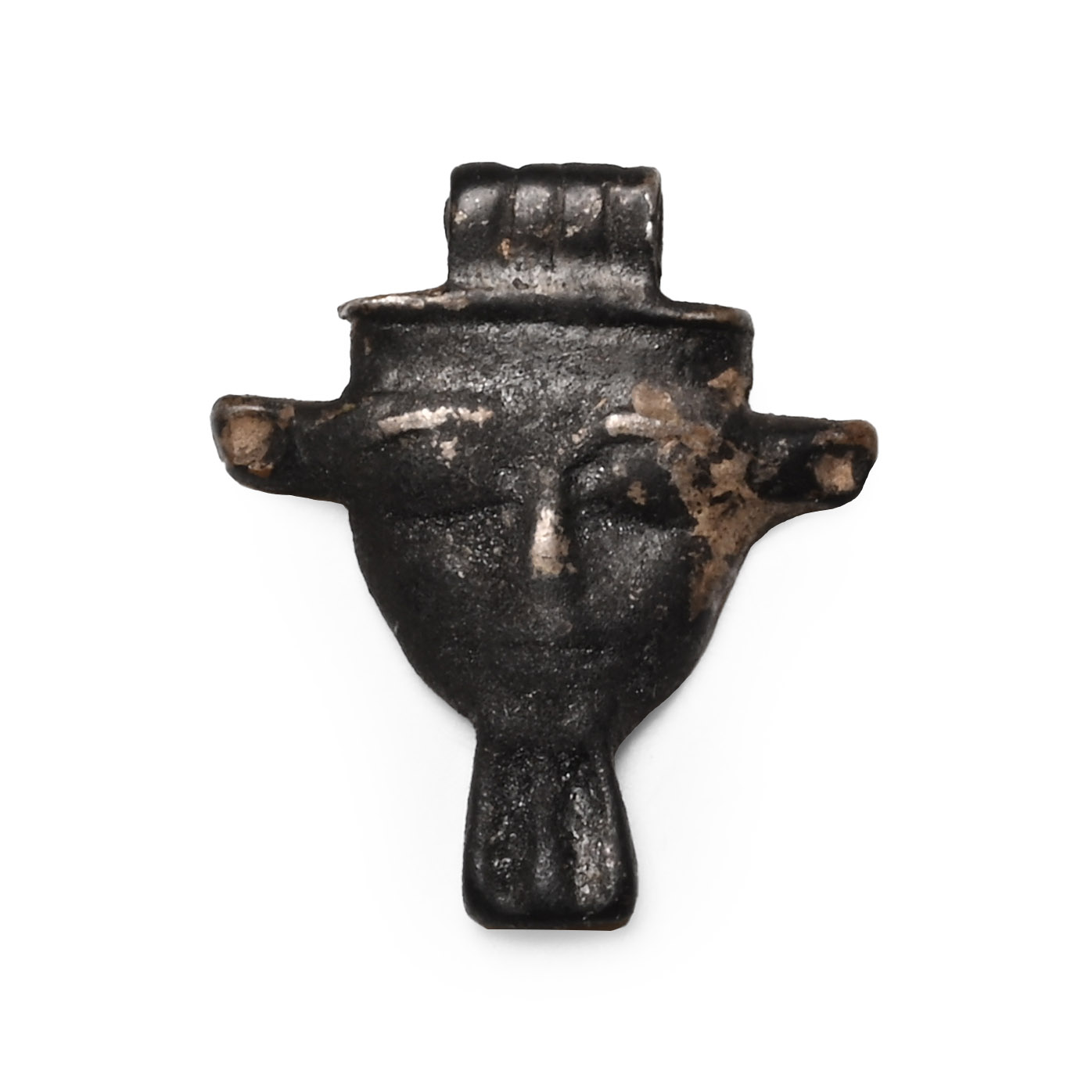
Egyptian Silver Hathor Head Amulet
LATE PERIOD, 664-332 B.C.
1/2 in. (0.68 grams, 11 mm).
A finely detailed head of the goddess Hathor with a human face, divine beard, and cow ears, with a ribbed suspension loop on top.
ProvenanceFrom an early 20th century collection.
CONDITIONTimeLine Auctions follows a vetting process to ensure the authenticity and legality of all items, reinforcing our commitment to integrity and responsible trading. Each antiquity, antique, and coin lot undergoes thorough examination by a vetting committee of at least ten external specialists, professional trade association members, scientists, and archaeologists: Our Vetting Process
AUCTIONS:
TimeLine is a leading auction house specialising in antiquities, ancient art, collectables, natural history, coins, medals, and books. Our auctions offer museums, collectors, historians, and enthusiasts the opportunity to acquire unique and historically significant pieces.
-
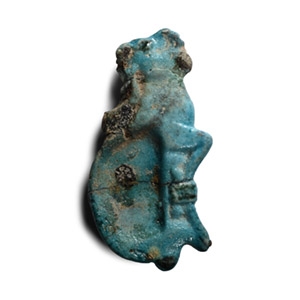
Egyptian Amulet of Trussed Ibex
Late Period, 664-332 B.C.Sold for (Inc. bp): £286
Turquoise glazed faience figure of a trussed ibex, with the remains of its large curled horn, tail, facial details, and rope tie picked out in black; damaged and repaired. 11.6 grams, 63 mm
From the private collection of the late Mrs Belinda Ellison, a long time member of the Egyptian Exploration Society, c.1940-2020.
Figurines of trussed ibexes in faience were occasionally included in foundation deposits, possibly to represent animals that were sacrificed. However, the shallow depression in the body of this animal is similar to the style of cosmetic dishes, indicating that this particular example may be a funerary object symbolising a more valuable toiletry item. -
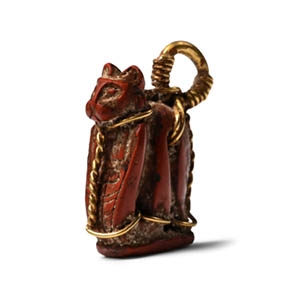
Egyptian Jasper Lion-Headed Cobra Amulet in Gold Frame
6th century B.C.Estimate: £2,000 - 3,000 (‡+bp*)
Opening Bid: £1,000
The S-curved body resting on a tongue-shaped based, detailed hood, and delicate details to the head of a lioness; wrapped in a gold frame with suspension loop. 2 grams, 18 mm
Private collection of Mr K.A. Private collection, Europe, 26 June 2009.
This amulet likely represents a goddess, either Sekhmet or Wadjet. Sekhmet is typically depicted as a lioness or lion-headed woman, while Wadjet appears in the form of a cobra. The lion-headed cobra form can be an allusion to the uraeus, worn on the crowns of royalty and deities for protection. -
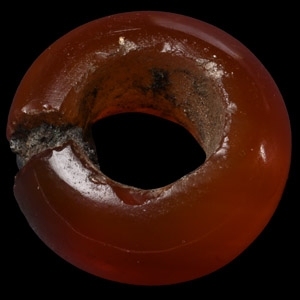
Large Egyptian Carnelian Hair Ring
New Kingdom, circa 1550-1070 B.C.Sold for (Inc. bp): £130
Circular with a semi-circular profile and an opening on one side. 3.2 grams, 17 mm
From an early 20th century collection.
