
Loading, please wait...

LOT 0450
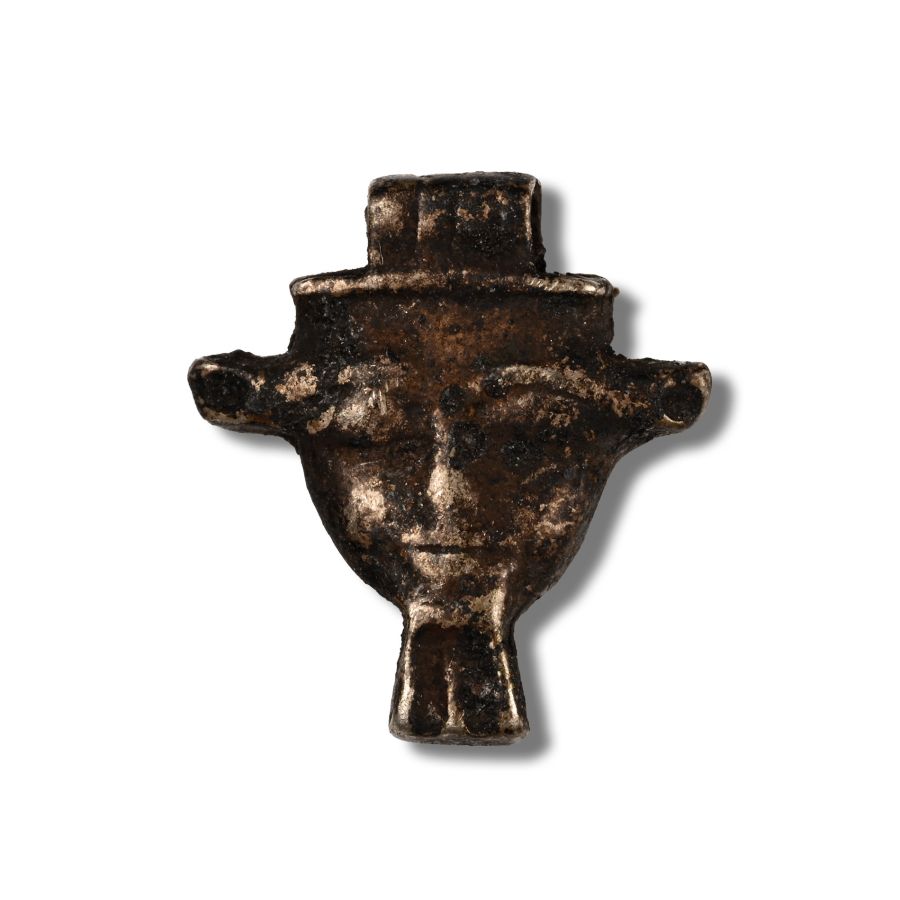
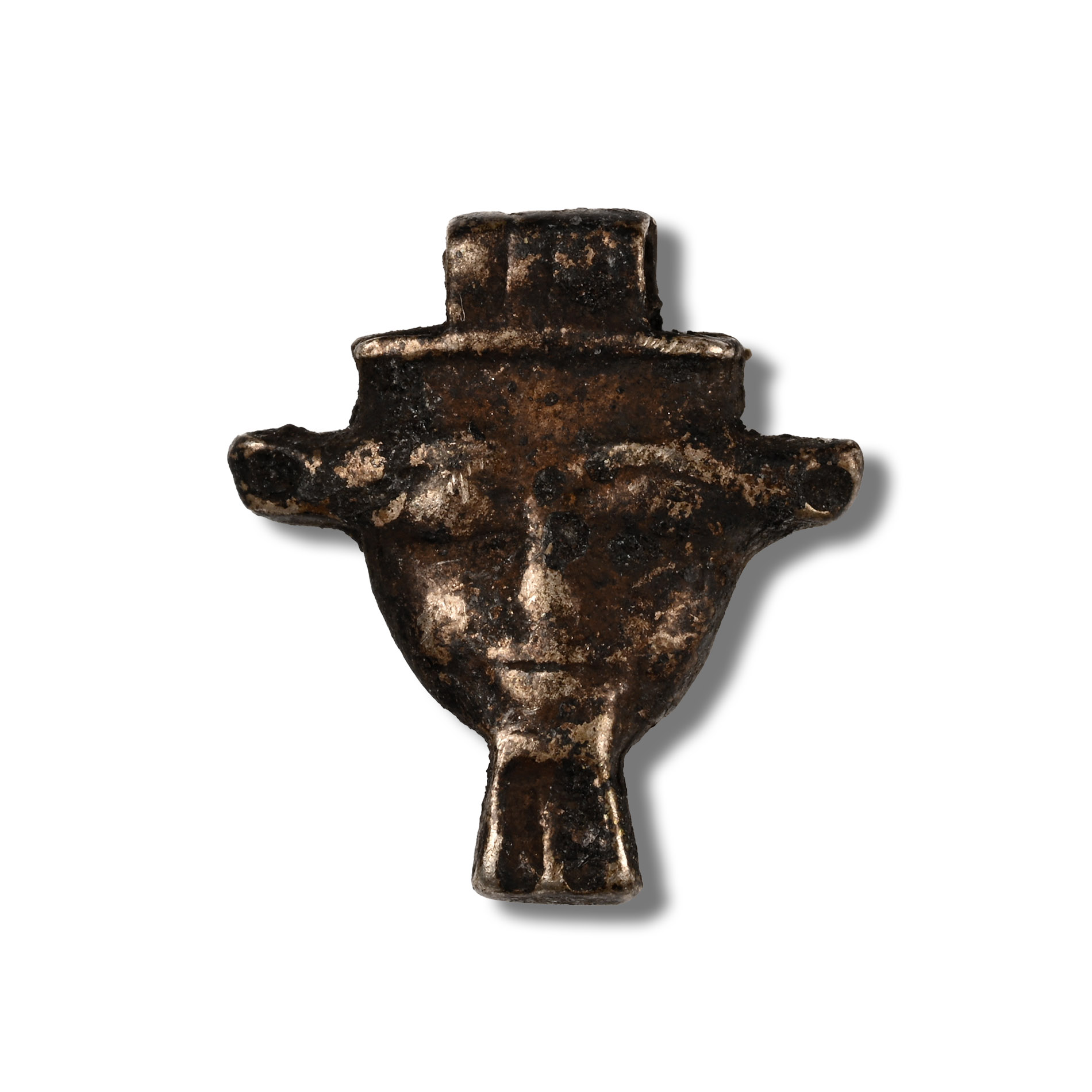
Egyptian Silver Hathor Amulet
LATE-PTOLEMAIC PERIOD, 664-30 B.C.
3/8 in. (0.66 grams, 10 mm).
D-shaped mask representing the human-headed Hathor with cow ears and a short beard, with a ribbed suspension loop above. [No Reserve]
ProvenanceFrom an early 20th century collection.
This lot is accompanied by an illustrated lot declaration signed by the Head of the Antiquities Department, Dr Raffaele D’Amato.
Cf. Andrews, C., and van Dijk, J., Objects for Eternity: Egyptian Antiquities from the W. Arnold Meijer Collection, Mainz am Rhein, 2006, p.217, no.3.27, for type.
CONDITIONTimeLine Auctions follows a vetting process to ensure the authenticity and legality of all items, reinforcing our commitment to integrity and responsible trading. Each antiquity, antique, and coin lot undergoes thorough examination by a vetting committee of at least ten external specialists, professional trade association members, scientists, and archaeologists: Our Vetting Process
AUCTIONS:
TimeLine is a leading auction house specialising in antiquities, ancient art, collectables, natural history, coins, medals, and books. Our auctions offer museums, collectors, historians, and enthusiasts the opportunity to acquire unique and historically significant pieces.
-
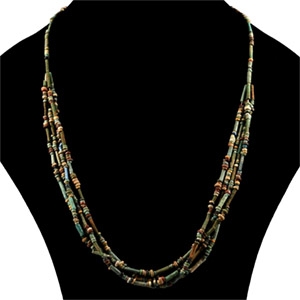
Egyptian Multi-Stranded Mummy Bead Necklace
Late Period, 664-332 B.C.Sold for (Inc. bp): £117
Multi-stranded designer necklace composed of beads of mainly annular and cylindrical types; restrung. 26 grams, 72 cm
Acquired before 1979. From the private collection of Mr F. A., South Kensington, London, UK; thence by descent 2014. This lot is accompanied by an illustrated lot declaration signed by the Head of the Antiquities Department, Dr Raffaele D’Amato.
For thousands of years, artisans in Egypt created vibrant ceramics to echo the beauty of rare jewels. These ornaments were created with almost every material, colour, and texture imaginable and they come from across Egypt and beyond: vibrant blue lapis lazuli from Afghanistan, glossy black obsidian from Turkey, and aqua-green turquoise from the Sinai. They were worn in life and, after death, they served as precious ornamentation for mummies. -
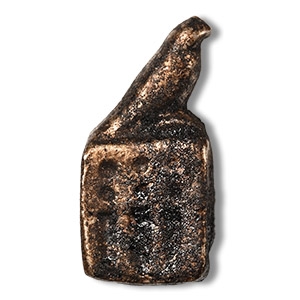
Egyptian Silver Horus Serekh Amulet
Late-Ptolemaic Period, 664-30 B.C.Sold for (Inc. bp): £65
An element from a necklace in the form of Horus in falcon form sitting atop the palace façade motif (serekh). 0.71 grams, 10 mm
From an early 20th century collection. This lot is accompanied by an illustrated lot declaration signed by the Head of the Antiquities Department, Dr Raffaele D’Amato.
Examples of this distinctive motif can be traced back to the very beginning of Egyptian history. It represents the recessed niches of royal and religious architecture, and served as a device to contain the Horus name of the king. The most notable example of jewellery incorporating this motif is the elaborate bracelet found in the tomb of King Djer at Abydos, which is composed of alternating turquoise and gold falcon-topped serekhs. Similar examples of this element occur as late as the Ptolemaic Period. -
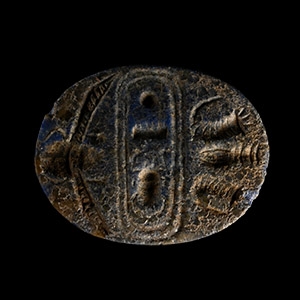
Egypto-Phoenician Lapis Lazuli Scarab with Cartouche for Thutmose III
Late 1st millennium B.C.Estimate: £2,500 - 3,500 (‡+bp*)
Opening Bid: £1,250
With carapace detailing to obverse, plaque with intaglio cartouche for the throne name of Thutmose III men-kheper-Re, winged scarab at one end and a central floral motif flanked by cornucopia at the other end. 7.4 grams, 25 mm
Private collection of Mr S.A., Switzerland, 1990s, thence by descent. This lot has been checked against the Interpol Database of stolen works of art and is accompanied by search certificate no.12127-211877. This lot has been cleared against the Art Loss Register database, and is accompanied by an illustrated lot declaration signed by the Head of the Antiquities Department, Dr Raffaele D’Amato.
