
Loading, please wait...


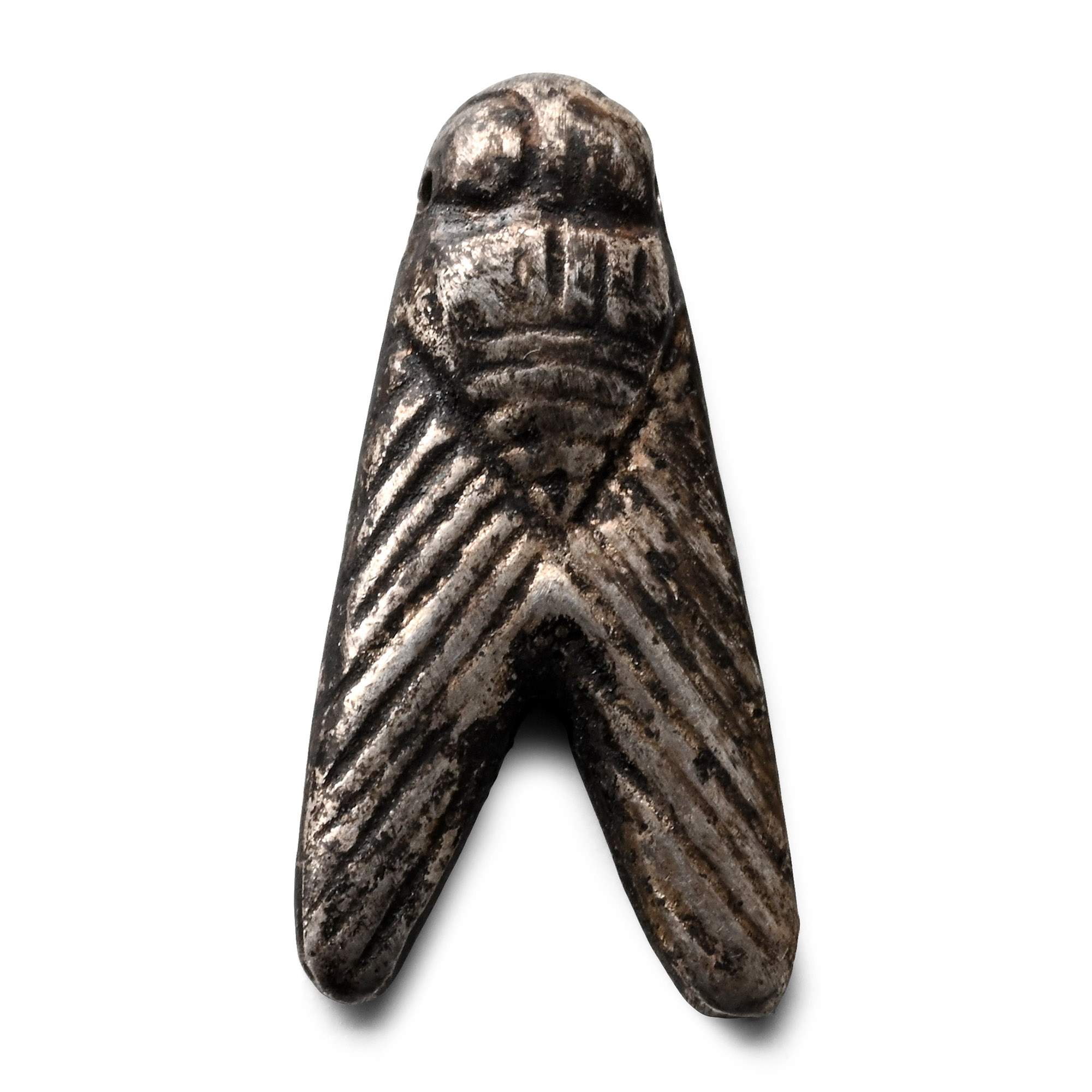
LOT 0749
Egyptian Silver Fly Amulet
LATE PERIOD, 664-332 B.C.
5/8 in. (1.09 grams, 17 mm).
With detailing to the body and head, ribbed suspension loop above the head. [No Reserve]
ProvenanceLondon, UK, gentleman, 1990s.
LiteratureCf. Andrews, C., Amulets of Ancient Egypt, London, 1994, pp.62-3.
FootnotesFly amulets were believed to protect against insect bites and to ward off troublesome flying creatures through apotropaic magic. Some believe they may have even symbolised the fly’s fecundity. Additionally, pharaohs bestowed gold fly-shaped pendants as military awards to honour soldiers' bravery and persistence in battle.
CONDITIONTimeLine Auctions follows a vetting process to ensure the authenticity and legality of all items, reinforcing our commitment to integrity and responsible trading. Each antiquity, antique, and coin lot undergoes thorough examination by a vetting committee of at least ten external specialists, professional trade association members, scientists, and archaeologists: Our Vetting Process
AUCTIONS:
TimeLine is a leading auction house specialising in antiquities, ancient art, collectables, natural history, coins, medals, and books. Our auctions offer museums, collectors, historians, and enthusiasts the opportunity to acquire unique and historically significant pieces.
LOT 0749
Egyptian Silver Fly Amulet
Estimate £80 - 100€93 - 116 (for guidance only)$108 - 135 (for guidance only)
-
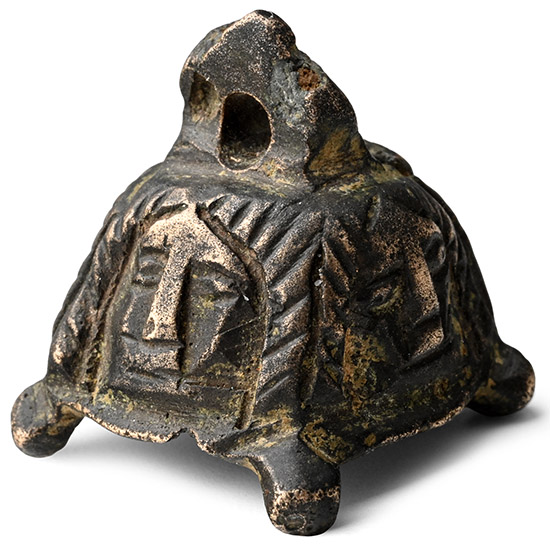
Egyptian Bronze Bell with Faces
Late-Ptolemaic Period, 664-30 B.C.Estimate: £100 - 140 (+bp*)
Opening Bid: £50
Hollow-formed miniature bell with integral loop handle, four radiating female faces to the sidewall - possibly depicting the goddess Hathor. 14 grams, 20 mm
London gentleman's collection, 1970-1990s, by descent.
The bell may have been part of a musical instrument. Many musical rituals centred on Hathor, often accompanied by musicians playing sistrums. -
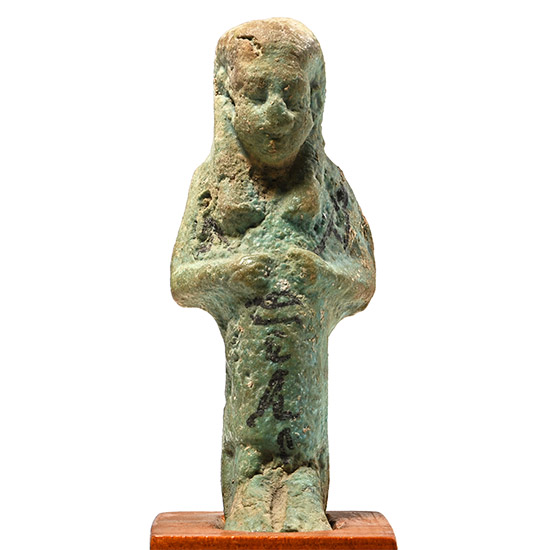
Egyptian Green Glazed Faience Shabti of the Osiris Hori
Third Intermediate Period, 1069-860 B.C.Estimate: £400 - 600 (+bp*)
Bids: 6 | Current Bid: £45
Mummiform figure wearing a lappet wig, hands placed knuckle-to-knuckle at the chest, holding black-painted hoes and a rudimentary seed bag on the back; a column of hieroglyphic inscription on the lower body: 'The Osiris. Hori(?)'; feet modelled in detail; mounted on a custom-made stand. 102 grams total, 12 cm including stand
Acquired from the Egyptian Exploration Society, 30th June 1965, for 2 shillings and sixpence. From the private collection of Peter Clayton, FCILIP, Dip, Arch, FSA, FRNS, Hemel Hempstead, Hertfordshire, UK; formed since the late 1950s. Accompanied by an old handwritten information card by Peter Clayton, collection no.117. -
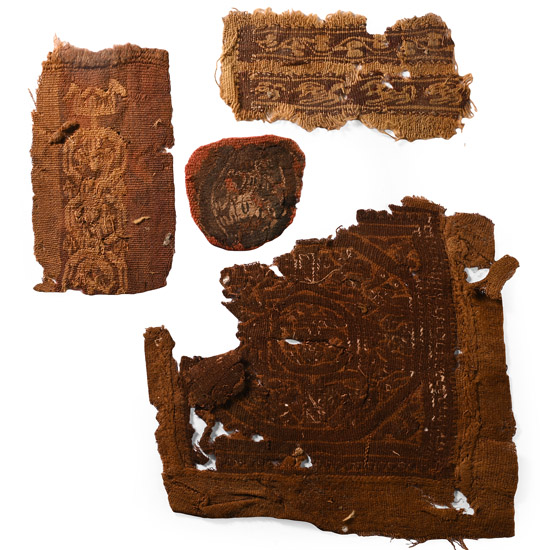
Egyptian Coptic Tunics Textile Fragments of Orbiculus, Segmenta and Tablion with Animals and Geometric Decoration
Circa 6th-7th century A.D.Estimate: £70 - 90 (+bp*)
Bids: 1 | Current Bid: £5
Comprising: a double decorative tunic stripe (clavus) in purple wool over coarse linen, S-twist tapestry, embroidered with stylised plants, from the cuff of a tunic; a large tablion, with floral ornamentation, borders decorated with meanders; a small orbiculus, with a flying putto and a horse; a large part of another clavus, ornamented with a succession of medallions filled with birds. 18 grams total, 6.9-19.5 cm
Acquired 1970s-1996. Property of a North American collector. London collection, 2016.
The fragments are decorative parts of tunics. These are fabrics of great decorative finesse, with some elements displaying an unusual and extremely well-preserved colour palette. The plant designs are related to the so-called Nilotic decorative pattern. The motif of the winged putto is common in Coptic textiles.
