
Loading, please wait...
LOT 0462
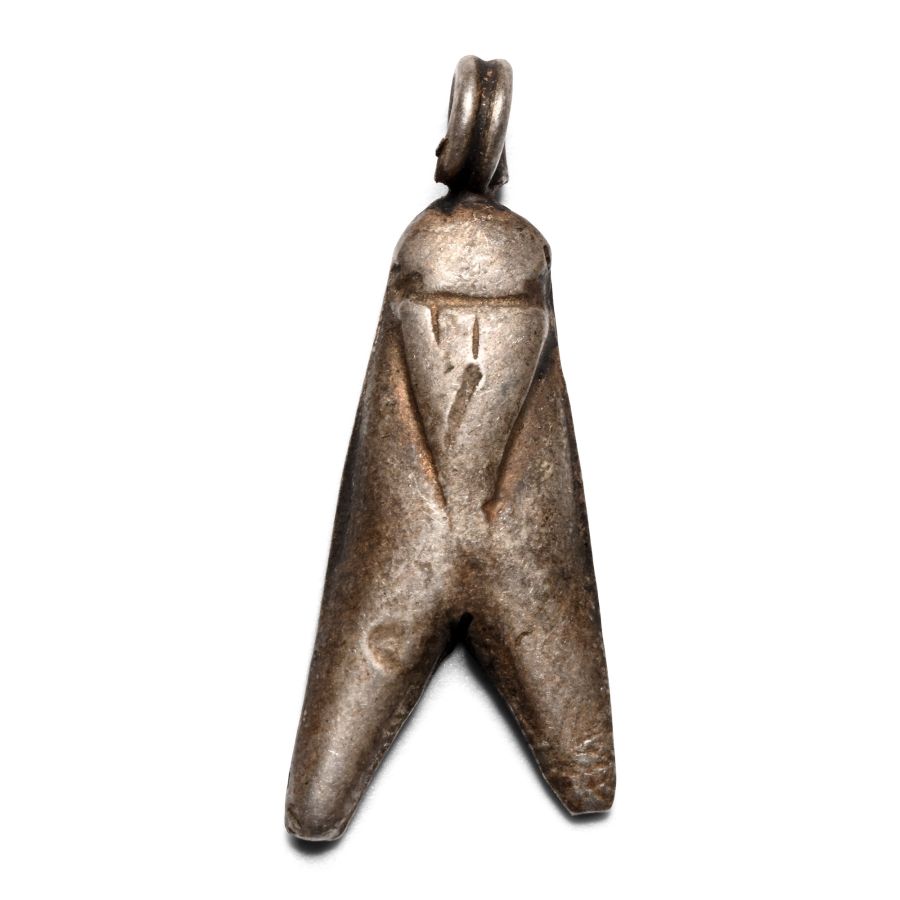
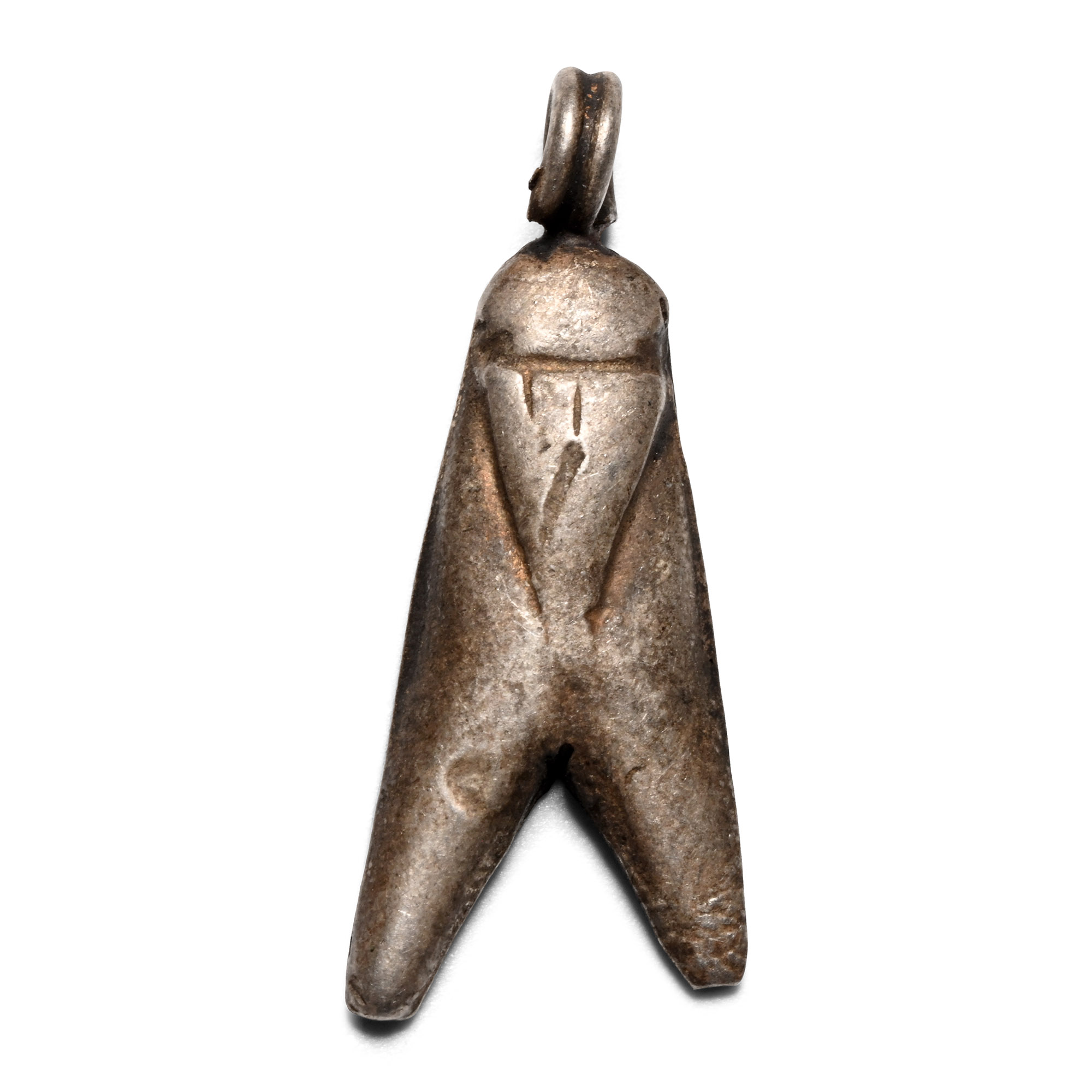
Egyptian Silver Fly Amulet
LATE PERIOD, 664-332 B.C.
3/4 in. (0.94 grams, 19 mm).
With detailing to the body and head, ribbed suspension loop above the head. [No Reserve]
ProvenanceEx London, UK, gentleman, 1990s.
LiteratureCf. Andrews, C., Amulets of Ancient Egypt, London, 1994, pp.62-3.
FootnotesFly amulets were believed to protect against insect bites and to ward off troublesome flying creatures through apotropaic magic. Some believe they may have even symbolised the fly’s fecundity. Additionally, pharaohs would bestow gold fly-shaped pendants as military awards to honour the bravery and persistence of soldiers in battle.
CONDITIONTimeLine Auctions follows a vetting process to ensure the authenticity and legality of all items, reinforcing our commitment to integrity and responsible trading. Each antiquity, antique, and coin lot undergoes thorough examination by a vetting committee of at least ten external specialists, professional trade association members, scientists, and archaeologists: Our Vetting Process
AUCTIONS:
TimeLine is a leading auction house specialising in antiquities, ancient art, collectables, natural history, coins, medals, and books. Our auctions offer museums, collectors, historians, and enthusiasts the opportunity to acquire unique and historically significant pieces.
-
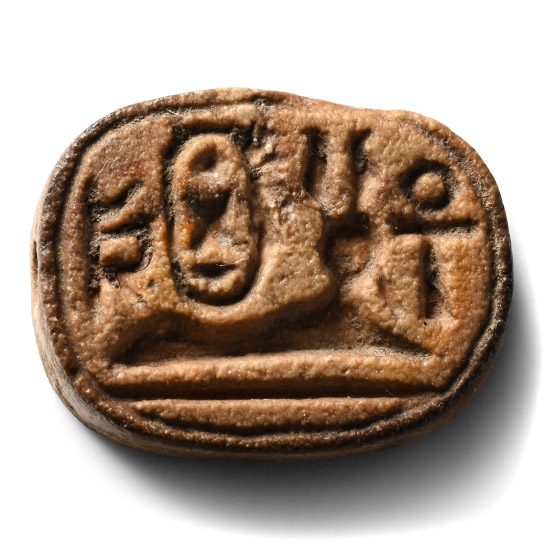
Egyptian Steatite Bifacial Scaraboid Seal
Late Period, 664-332 B.C.Sold for (Inc. bp): £217
An oval plaque pierced longitudinally, one side with a reclining lion, the other with hieroglyphs. 1.92 grams, 18 mm
From the private collection of a European gentleman (1942-2024), formed since the 1970s. -
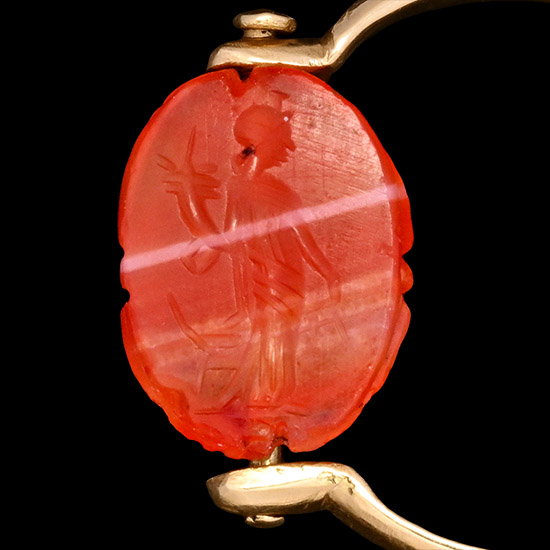
Romano-Egyptian Agate Scarab Engraved with the Goddess Fortuna Mounted in a Gold Ring
1st century B.C.-1st century A.D.Sold for (Inc. bp): £1,170
Scarab with incuse image to the underside of Fortuna with cornucopia and ship's rudder; in later gold swivel ring. 4.34 grams, 22.63 mm overall, 19.34 mm internal diameter (approximate size British N, USA 6 1/2, Europe 13.72, Japan 13)
Private collection, Europe. Acquired on the English art market. -
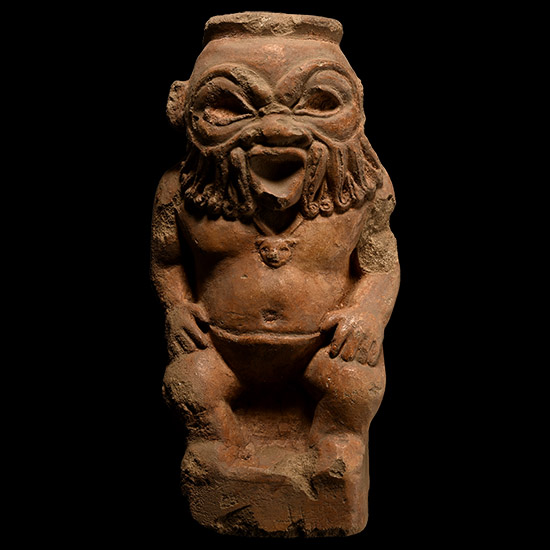
Egypto-Roman Seated Limestone Statuette of Bes
Ptolemaic-Roman Period, circa 332 B.C.-300 A.D.Estimate: £2,000 - 3,000 (+bp*)
Current Winning Bid: £1,000
Modelled in the round in a crouching pose on a rectangular base; the beard modelled in hanks with curled ends, the eyes recessed to accept inserts, mouth gaping; animal head amulet on the chest suspended on a cord; socket to reverse; chipped. 942 grams, 18.5 cm
Bonhams, London, 4 July 1995, no.36. Private collection, New York, USA. This lot has been checked against the Interpol Database of stolen works of art and is accompanied by search certificate number no.13294-255443.
From the New Kingdom onwards, Bes became one of ancient Egypt's most popular apotropaic deities. Despite his somewhat fearsome appearance, Bes served as the patron and protector of pregnant women and children and was also believed to shield them from snakes.
