
Loading, please wait...
LOT 0431
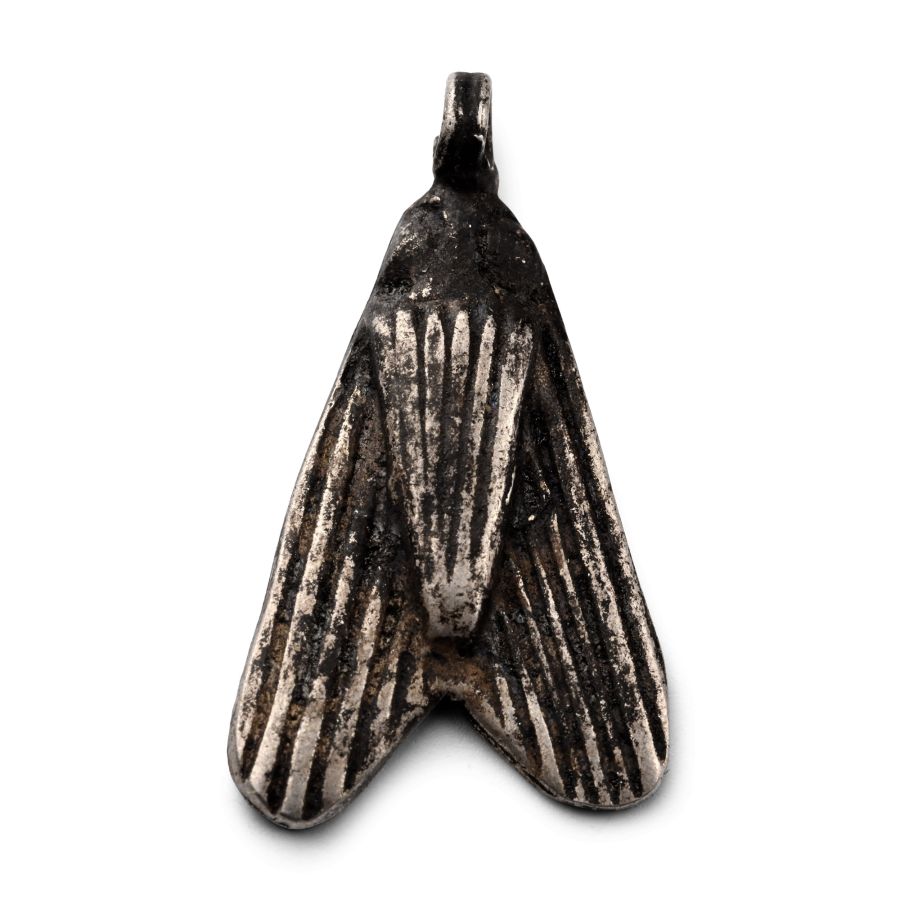
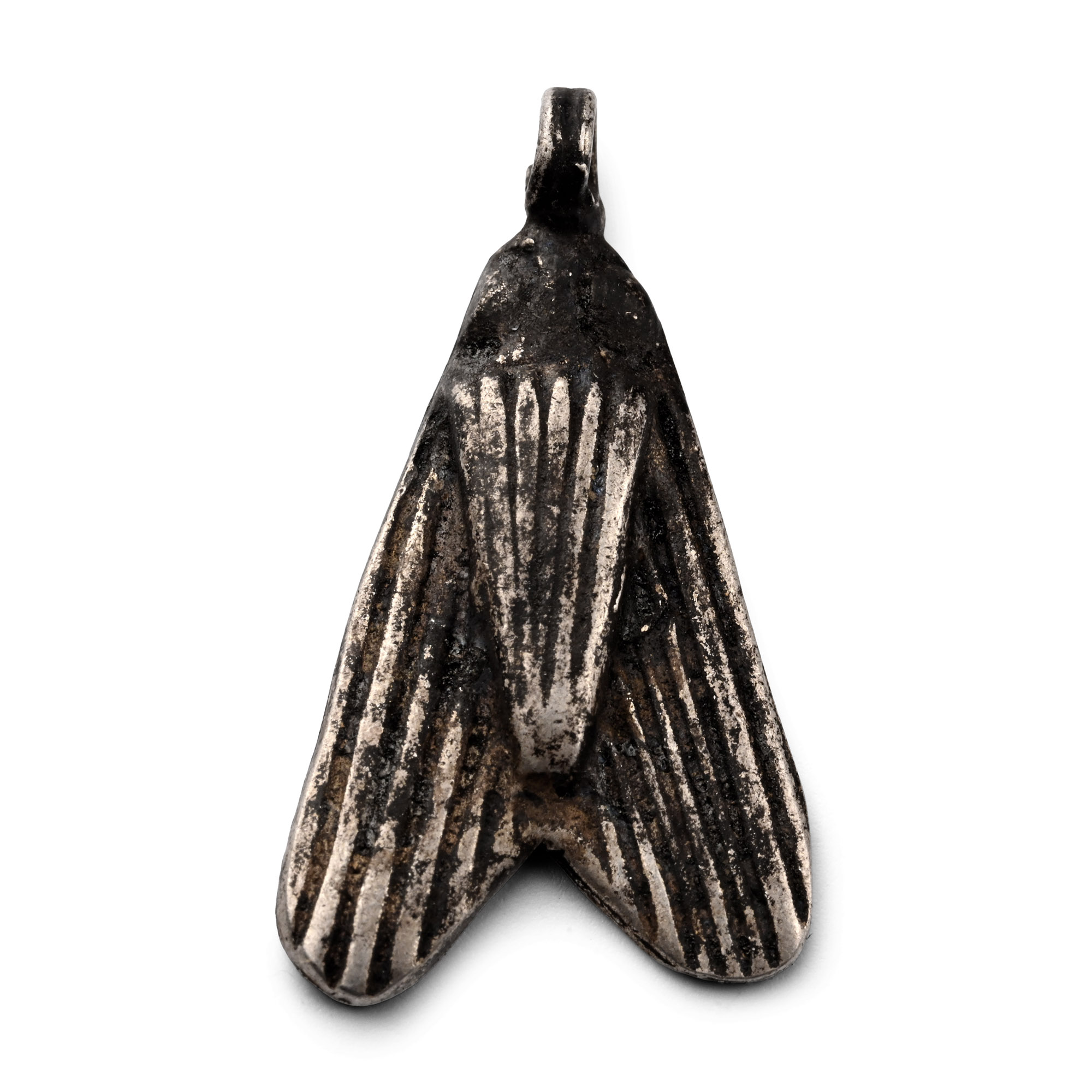
Egyptian Silver Fly Amulet
LATE-PTOLEMAIC PERIOD, 664-30 B.C.
1 in. (2 grams, 24 mm).
With detailing to wings and eyes, loop for suspension above the head. [No Reserve]
ProvenanceEx London, UK, gentleman 1980-1990s.
This lot is accompanied by an illustrated lot declaration signed by the Head of the Antiquities Department, Dr Raffaele D'Amato.
Cf. Andrews, C., Amulets of Ancient Egypt, London, 1994, pp.62-3.
FootnotesConsidering that Egyptian artists often depicted fly whisks in the hands of pharaohs and high officials, one might assume that flies were merely a nuisance. However, the Egyptians held flies in high regard for their speed, quick reactions, and persistence. Small fly amulets first appeared in burials during the Naqada II Period, around 3200 B.C. These amulets gained popularity, and the materials used to make them varied during the New Kingdom. They were crafted from various materials such as gold, silver, lapis lazuli, carnelian, amethyst, faience, and bone. These amulets were believed to protect against insect bites and to ward off troublesome flying creatures through apotropaic magic. Some believe they may have even symbolised the fly’s fecundity. Additionally, pharaohs would bestow gold fly-shaped pendants as military awards to honour the bravery and persistence of soldiers in battle.
CONDITIONTimeLine Auctions follows a vetting process to ensure the authenticity and legality of all items, reinforcing our commitment to integrity and responsible trading. Each antiquity, antique, and coin lot undergoes thorough examination by a vetting committee of at least ten external specialists, professional trade association members, scientists, and archaeologists: Our Vetting Process
AUCTIONS:
TimeLine is a leading auction house specialising in antiquities, ancient art, collectables, natural history, coins, medals, and books. Our auctions offer museums, collectors, historians, and enthusiasts the opportunity to acquire unique and historically significant pieces.
-
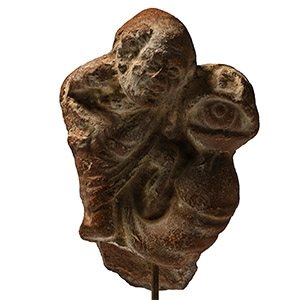
Romano-Egyptian Terracotta Figurine with Large Phallus and Apotropaic Eye
1st century B.C.-2nd century A.D.Estimate: £300 - 400 (‡+bp*)
Opening Bid: £150
Representing a slave or a dwarf in a crouched position, dressed in a short tunic leaving the left shoulder uncovered (exomis), a large curving phallus emerging from underneath the tunic topped with a large apotropaic eye; accompanied by a display stand. 64 grams, 81 mm (80 grams total, 10 cm high including stand)
The Erotica Collection Christian von Faber-Castell, Küsnacgt ZH, Switzerland, since the late 1970s. This lot is accompanied by an illustrated lot declaration signed by the Head of the Antiquities Department, Dr Raffaele D’Amato. This lot is accompanied by an illustrated lot declaration signed by the Head of the Antiquities Department, Dr Raffaele D'Amato.
Except for the enormous phallus, the figure is human in all aspects. The apotropaic aspect, symbolised also by the eye, is combined with the erotic. It should be pointed out that according to the physiognomic conceptions held in the ancient world, from the 4th century B.C. onwards, small-scale sculptures developed a rich repertoire of grotesque types. These so-called grotesques were a development of the Hellenistic interest in the human body and its imperfections. They range from representations of individuals with clinically diagnosable disfigurements to those with exaggerated physical features. According to some scholars, terracotta (and bronze) figurines of this kind were life-like representations of beggars and others who gathered at big feasts in temples or at the houses of the wealthy. In the latter case, they indicated the importance and wealth of the host because the more beggars an event attracted, the greater the fortune of the event organizer. By implication, the bronze and terracotta portraits of these marginal people could have become symbols and charms of good luck that would have been placed in private houses. Christian von Faber-Castell (born 1950) is a renowned German entrepreneur and art collector, best known as a member of the prominent Faber-Castell family, famed for their iconic writing instruments. A passionate advocate for art and culture, Christian von Faber-Castell curated an extensive and diverse private collection of erotica, spanning centuries and cultures. His collection reflects a deep appreciation for the interplay of beauty, sensuality, and artistic expression, bringing together rare and unique works that explore themes of intimacy and human connection. Pieces from this collection have been featured in notable exhibitions and are celebrated for their artistic and historical significance. This offering represents a rare opportunity to acquire works from one of the most fascinating and eclectic private collections of its kind. -
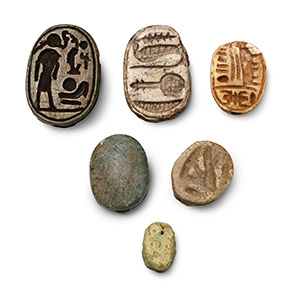
Egyptian Steatite Scarab Collection
New Kingdom-Late Period, 1550-332 B.C.Sold for (Inc. bp): £312
Designs include: a line border encloses the standing figure of a falcon-headed deity wearing a sun disc and uraeus, standing before the hieroglyphs user, Maat, Re, setep, n, Re); a line border enclosing n, cobra, nefer, and neb signs; a line border enclosing numerous hieroglyphs, including those spelling the throne name of Thutmose III (men-kheper-Re); a falcon; and two plain scarabs. 13.18 grams total, 10-21 mm
From a London collection, 2000s, some previously ex Mustaki collection pre 1950. This lot is accompanied by an illustrated lot declaration signed by the Head of the Antiquities Department, Dr Raffaele D'Amato.
The design of the first scarab incorporates Ramesses II’s throne name ‘the justice of Re is powerful, chosen of Re (user-Maat-Re setep-n-Re) -
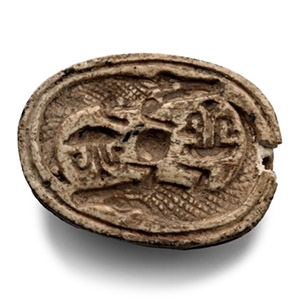
Large Egyptian Steatite Scarab
Late Period, 664-332 B.C.Sold for (Inc. bp): £520
Modelled body of a beetle with detailed carapace and legs; underside with two crocodiles enclosing a central sun disc flanked by two papyrus clumps atop neb signs. 19.8 grams, 38 mm
From the collection of a gentleman, acquired on the London art market in the 1990s. This lot is accompanied by an illustrated lot declaration signed by the Head of the Antiquities Department, Dr Raffaele D'Amato.
The design could be interpreted as ‘Sobek-Ra, lord of the Delta’. Sobek was mainly associated with water, fertility, and the Nile, as well as strength and military prowess. His worship spans much of ancient Egyptian history, from at least the Old Kingdom to the Roman period, and he was honoured not only as a force of nature but also as a god of healing, protection, and royal authority. He was associated with various other deities, most often with the sun god in the form of Sobek-Ra. His primary cult centres were situated in the Faiyum region, especially in the city of Crocodilopolis, and also at Kom Ombo in Upper Egypt.
