
Loading, please wait...


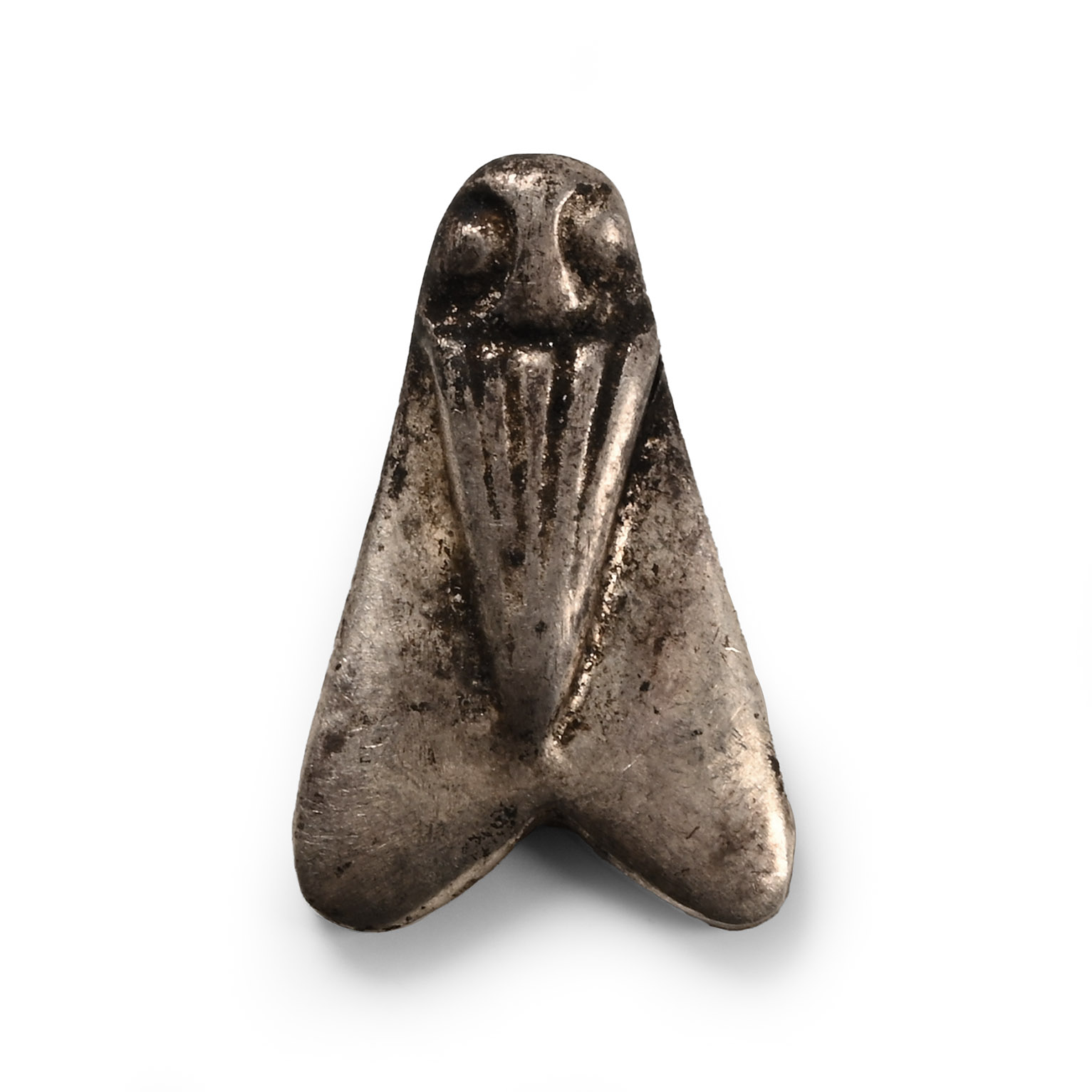
LOT 0472
Egyptian Silver Fly Amulet
LATE PERIOD, 664-332 B.C.
5/8 in. (1.07 grams, 16 mm).
D-shaped in section with two triangular wings and robbed body with pellet eyes. [No Reserve]
ProvenanceFrom an early 20th century collection.
LiteratureCf. Andrews, C., Amulets of Ancient Egypt, London, 1994, pp.62-3.
FootnotesSmall fly amulets first appeared in burials during the Naqada II Period, c. 3200 B.C. These amulets grew in popularity and the materials used to make them expanded during the New Kingdom. They are crafted from a variety of materials such as gold, silver, lapis lazuli, carnelian, amethyst, faience, and bone. These amulets were thought to protect against insect bites and to ward off troublesome flying creatures through apotropaic magic. Some believe they may have even been intended to symbolise the fly’s fecundity. Additionally, pharaohs would bestow gold fly-shaped pendants as military awards to honour the bravery and fly-like persistence of soldiers in battle.
CONDITIONTimeLine Auctions follows a vetting process to ensure the authenticity and legality of all items, reinforcing our commitment to integrity and responsible trading. Each antiquity, antique, and coin lot undergoes thorough examination by a vetting committee of at least ten external specialists, professional trade association members, scientists, and archaeologists: Our Vetting Process
AUCTIONS:
TimeLine is a leading auction house specialising in antiquities, ancient art, collectables, natural history, coins, medals, and books. Our auctions offer museums, collectors, historians, and enthusiasts the opportunity to acquire unique and historically significant pieces.
-
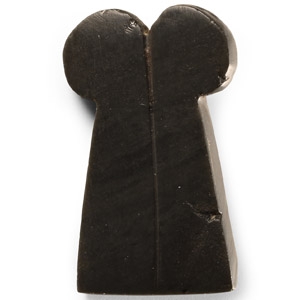
Egyptian Hardstone Double Plume Amulet
Late Period, 664-332 B.C.Estimate: £200 - 300 (+bp*)
Opening Bid: £100
Carved with integral ribbed loop to the reverse; unfinished. 4.4 grams, 31 mm
with Hotel des Ventes, Drouot, Paris, France. From the collection of Mr H. Naudy, Paris, France. Acquired at between 2004-2010. Property of a French collector.
This ancient amulet represents two ostrich feathers or shuty. Interestingly, these feathers were also present on the Atef crown of Osiris, the god of the afterlife and the dead. This suggests the amulet was believed to imbue the wearer with Osiris's divine power and protection. -
.jpg)
Egyptian Bronze Sistrum with Bes and Hathor
Roman Period, 30 B.C.-323 A.D.Sold for (Inc. bp): £14,950
The large liturgical rattle with a columnar handle composed of a bifacial figure of Bes standing on a lotus capital, flanked by seated sphinxes, his feathered crown supporting the bust of goddess Hathor wearing a broad collar and a curling wig, two rearing uraei emerging from the sides to support the base of the rattle, both wearing the pschent crown, above the cobras a standing figure of the goddess Hathor in cow form, wearing a tripartite wig and a sun disc between the horns; the rattle with a looped body with flared outer rims and set with three metal rods to accept metal discs, a pair of reclining lions to the base and the top with three felines surrounding a cockerel, and resting one of their front paws on the bird. 1.52 kg, 39.5 cm
German art market. European private collection, 1970s-early 2000s. Acquired from the above; thence by descent. Private collection, London, UK. Accompanied by an academic report by Dr Raffaele D’Amato. This lot has been checked against the Interpol Database of stolen works of art and is accompanied by search certificate number no.12348-225588.
The sistrum (seshesh in ancient Egyptian) was a rattle-like musical instrument, played exclusively by women in religious ceremonies. It was often decorated with the bust of the goddess Hathor to whom the sistrum was sacred. Their use continued into the Roman period in ceremonies associated with the cult of Isis. -
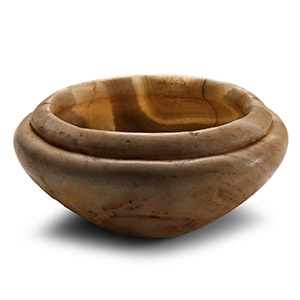
Egyptian Alabaster Bowl
1st Dynasty, circa 3000 B.C.Estimate: £1,500 - 2,000 (‡+bp*)
Opening Bid: £750
Of conical profile with flattened base, carinated shoulder and stepped rounded rim, possibly for accepting a lid. 380 grams, 11.6 cm wide
Property from an American deceased estate, acquired between 19770-1989. with Bonhams, London, 28 October 2009, no.16 (Part). Private European collection. Accompanied by copies of the relevant Bonhams catalogue pages. This lot has been checked against the Interpol Database of stolen works of art and is accompanied by a search certificate number no.12071-215259.
