
Loading, please wait...

LOT 0511
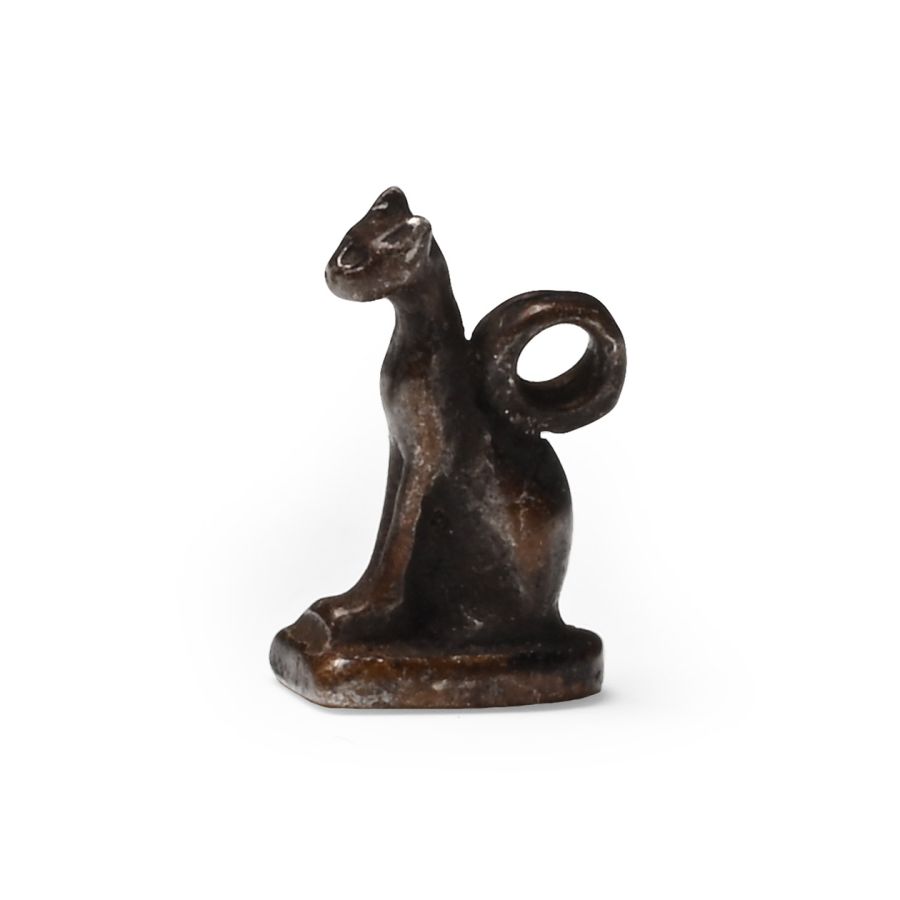
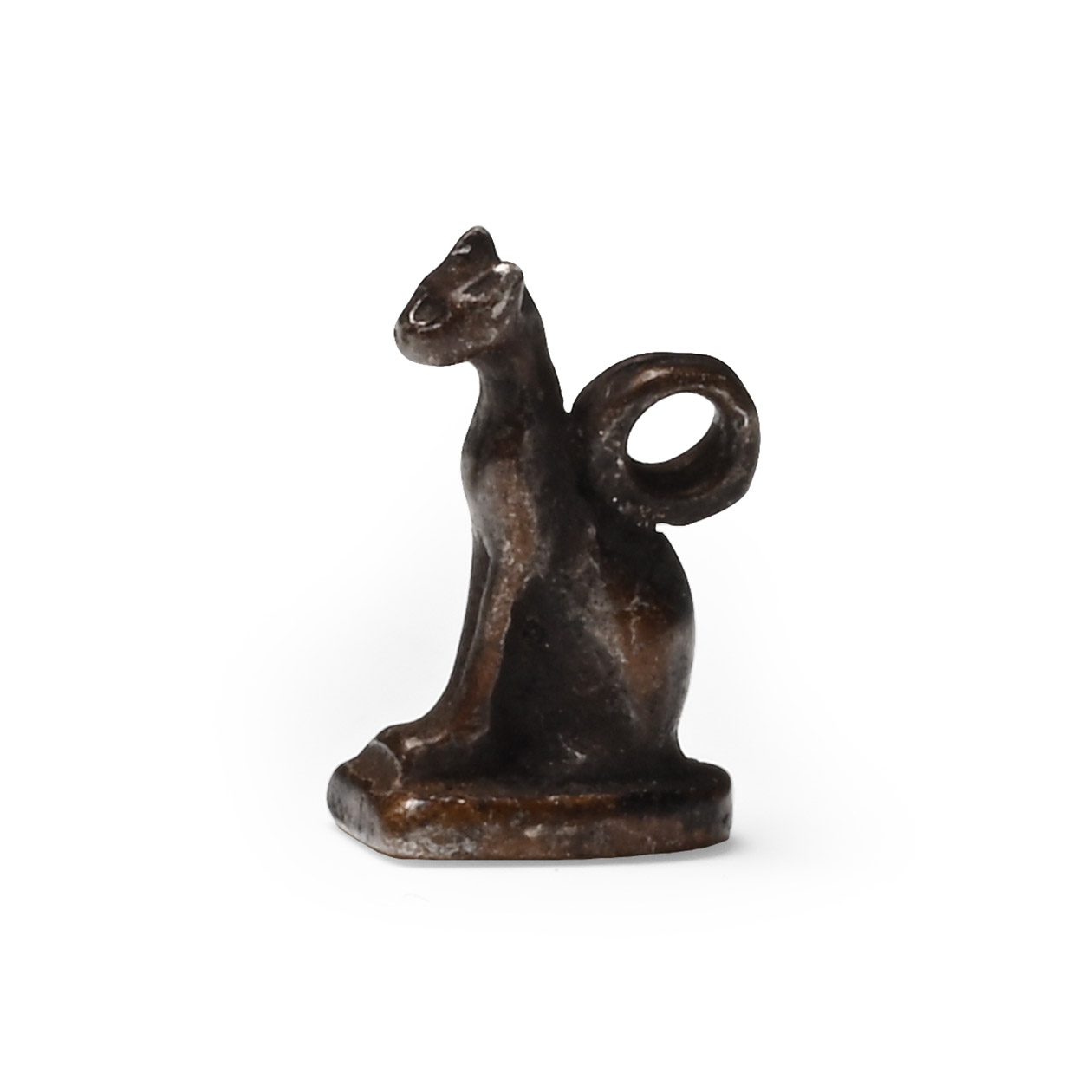
Egyptian Silver Cat Amulet
LATE PERIOD, 664-332 B.C.
3/8 in. (0.33 grams, 8 mm).
Seated figure of a cat with deeply set eyes and pointed ears set on a rectangular base with a rounded end; suspension loop on the back.
ProvenanceFrom an early 20th century collection.
FootnotesThe cat was sacred to Bastet, a protective mother goddess and the daughter of the sun god Re. Amulets provided the wearer with the goddess's protection.
CONDITIONTimeLine Auctions follows a vetting process to ensure the authenticity and legality of all items, reinforcing our commitment to integrity and responsible trading. Each antiquity, antique, and coin lot undergoes thorough examination by a vetting committee of at least ten external specialists, professional trade association members, scientists, and archaeologists: Our Vetting Process
AUCTIONS:
TimeLine is a leading auction house specialising in antiquities, ancient art, collectables, natural history, coins, medals, and books. Our auctions offer museums, collectors, historians, and enthusiasts the opportunity to acquire unique and historically significant pieces.
-
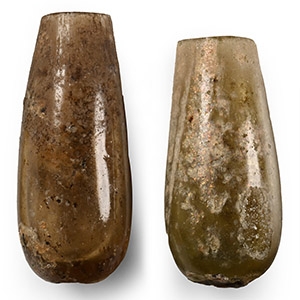
Egyptian Glass Phial Group
1st millennium B.C.Sold for (Inc. bp): £59
Each is a tapering bulb shape with a flat-cut mouth. 13.8 grams total, 35-37 mm
From the collection of Mr S.M., London, UK, formed from 1979-1999. -
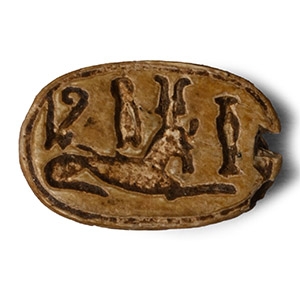
Egyptian Steatite Scarab
1st millennium B.C.Estimate: £400 - 600 (‡+bp*)
Opening Bid: £200
With detailed carapace and mouth, hieroglyphs to the underside depicting a pharaoh-headed recumbent lion, with hes-vase in front and the crowns of Lower and Upper Egypt behind. 0.80 grams, 12 mm
Ex R. Liechti (1934-2010) Geneva, Switzerland, formed between 1950-1990s. -
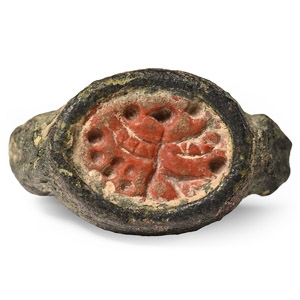
Egypto-Phoenician Hardstone Scaraboid Set in Bronze Pendant
Late 1st millennium B.C.Estimate: £200 - 300 (+bp*)
Opening Bid: £111
Comprising a carnelian scaraboid with a stylised bird with open wings to the underside, pellets to the field; set in an openwork bronze pendant frame with tubular loop. 3.84 grams, 18 mm
From an early 20th century Home Counties, UK, collection.
