
Loading, please wait...


LOT 0451
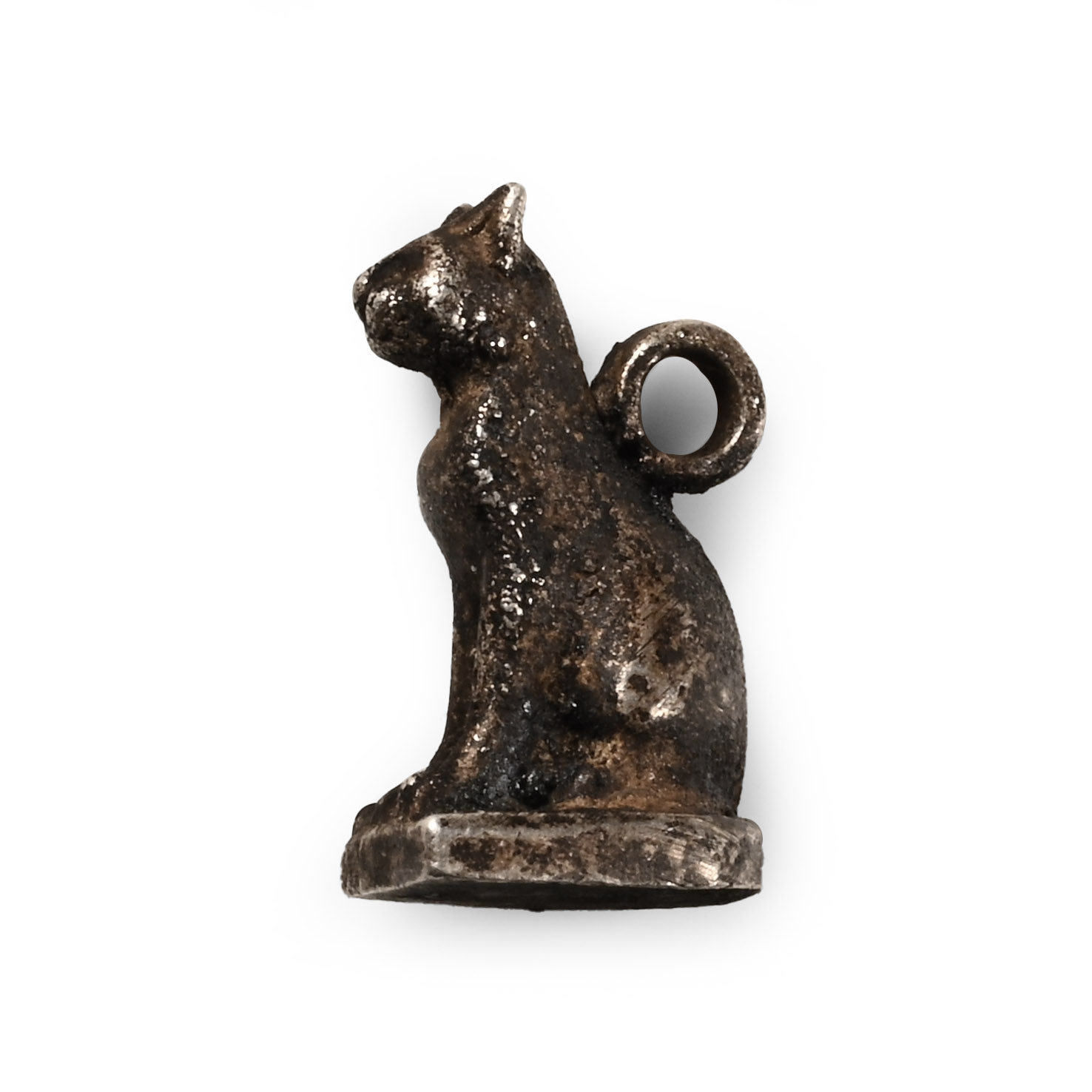
Egyptian Silver Cat Amulet
LATE PERIOD, 664-332 B.C.
1/2 in. (1.57 grams, 12 mm).
Modelled seated on a tongue-shaped base, with facial detailing and suspension loop to the back. [No Reserve]
ProvenanceFrom an early 20th century collection.
LiteratureCf. Andrews, C., Amulets of Ancient Egypt, London, 1994, item 29(c).
FootnotesThe cat was sacred to Bastet, a protective mother goddess and the daughter of the sun god Re. Amulets provided the wearer with the goddess's protection.
CONDITIONTimeLine Auctions follows a vetting process to ensure the authenticity and legality of all items, reinforcing our commitment to integrity and responsible trading. Each antiquity, antique, and coin lot undergoes thorough examination by a vetting committee of at least ten external specialists, professional trade association members, scientists, and archaeologists: Our Vetting Process
AUCTIONS:
TimeLine is a leading auction house specialising in antiquities, ancient art, collectables, natural history, coins, medals, and books. Our auctions offer museums, collectors, historians, and enthusiasts the opportunity to acquire unique and historically significant pieces.
-
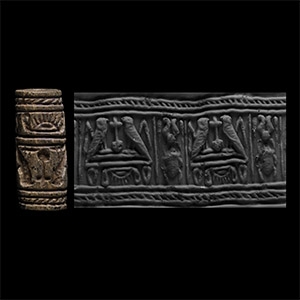
Egyptian Cylinder Seal with Hieroglyphs
Late Period, 664-332 B.C.Sold for (Inc. bp): £390
Steatite cylinder producing a decorative top and bottom border enclosing a scene depicting a nefer sign flanked by two falcons surmounting the hieroglyph for gold, nub, and another scene to the side depicting a scarab beetle with a double plumed sun disc above; with a suspension hole running through the cylinder's centre. 4.65 grams, 25 mm
From the collection of a gentleman, acquired on the London art market in the 1990s. -
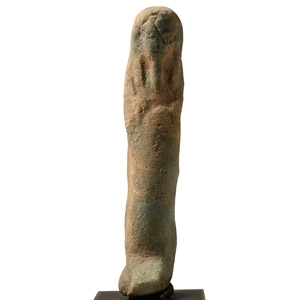
Egyptian Faience Blue Glazed Shabti
Ptolemaic Period, 323-30 B.C.Sold for (Inc. bp): £72
A typical mummiform figure with moulded facial detailing, a lappet wig, and hands holding a pick and hoe, the back with a possible hieratic inscription, mounted on a custom-made stand with label 'Ancient Egypt / (26th Dyn - Ptolem.) / circa 664-332 BC / Turquoise Faience / Ushabti Figure'. 91 grams total, 13 cm high including stand
Ex old UK collection. Acquired from Cestrian Antiques, Chester, UK, 2002. Ex Pemberton collection, Wales, UK. Accompanied by old information labels with collection reference C.234. Accompanied by the original Cestrian Antiques invoice. -
.jpg)
Large Egyptian Bronze Figure of Osiris
Late Period-Ptolemaic Period, 664-30 B.C.Sold for (Inc. bp): £7,150
Bust of Osiris modelled in the round, wearing the white crown with uraeus to the brow, plaited false beard, tiered collar with counterweight to rear; the hands opposed at the chest, holding the nekhakha flail and the heka crook; the eyes with glass inserts; mounted on a custom-made stand. 850 grams total, 35 cm high including stand
Ex R. Liechti (1934-2010) collection, Geneva, Switzerland. Private collection, Europe. This lot has been checked against the Interpol Database of stolen works of art and is accompanied by search certificate number no.12365-226680.
Osiris is a deity who represents death and fertility and is commonly regarded as the quintessential god of rebirth. Though he was once a mortal ruler, as a deceased entity, his domain was the Underworld. Abydos was the primary centre of Osiris’ cult, where a renowned yearly celebration of the god was held. The proliferation of bronze statues of the god indicates his widespread popularity. R. Liechti was a distinguished collector of Egyptian antiquities, known for his discerning eye and passion for ancient artefacts. Active during the mid-20th century, Liechti's collection featured a wide range of objects that showcased the rich cultural heritage of ancient Egypt, from intricately carved statuettes to rare amulets and jewellery. His dedication to preserving and studying these relics earned him a respected reputation among scholars and collectors alike. Many pieces from his collection have since found their way into prominent museum collections and auction houses, further solidifying his legacy in the world of antiquities.
