
Loading, please wait...
LOT 0522
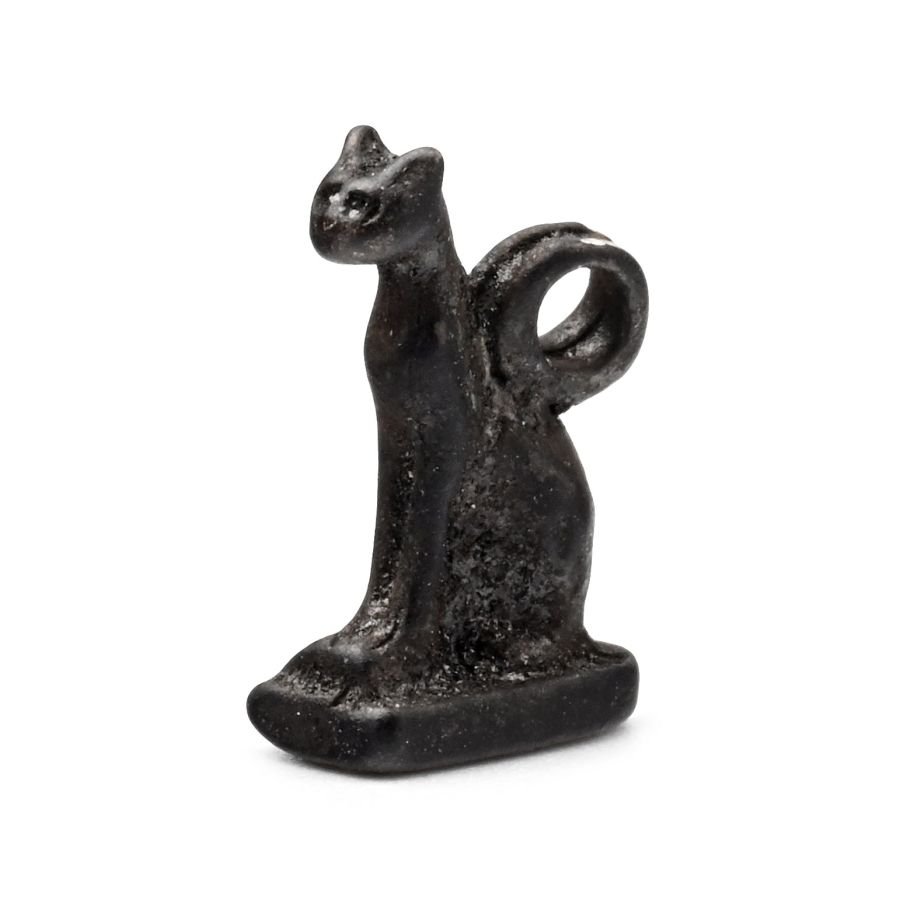
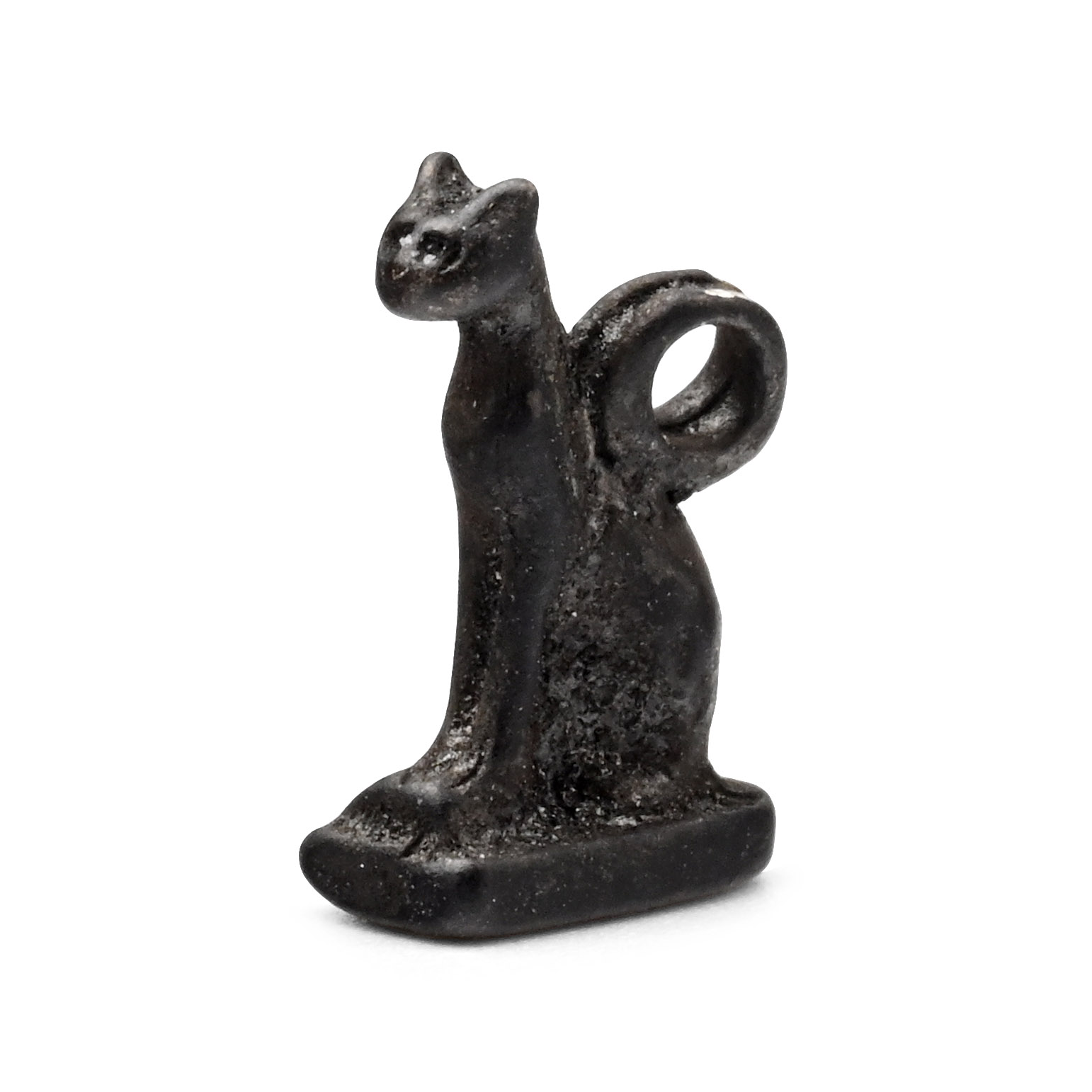
Egyptian Silver Bastet as Seated Cat Amulet
LATE-PTOLEMAIC PERIOD, 664-30 B.C.
1/4 in. (0.34 grams, 8 mm).
Seated figure of a cat with pointed ears mounted on a rectangular base with a rounded end; suspension loop on the back. [No Reserve]
ProvenanceEx London, UK, gentleman 1980-1990s.
This lot is accompanied by an illustrated lot declaration signed by the Head of the Antiquities Department, Dr Raffaele D'Amato.
Cf. Andrews, C., Amulets of Ancient Egypt, London, 1994, item 29(c).
FootnotesThe cat was sacred to Bastet, a protective mother goddess and the daughter of the sun god Re. Amulets offered the wearer the goddess's protection. Her name means ‘she of the bast [ointment jar],’ which may have contained a substance favoured by or exclusive to royalty. Originally, Bastet was depicted as a woman with the head of a lioness, but by the late New Kingdom, she was usually shown with a cat's head. She is sometimes portrayed with kittens, emphasising her maternal role as a fierce protector of offspring.
CONDITIONTimeLine Auctions follows a vetting process to ensure the authenticity and legality of all items, reinforcing our commitment to integrity and responsible trading. Each antiquity, antique, and coin lot undergoes thorough examination by a vetting committee of at least ten external specialists, professional trade association members, scientists, and archaeologists: Our Vetting Process
AUCTIONS:
TimeLine is a leading auction house specialising in antiquities, ancient art, collectables, natural history, coins, medals, and books. Our auctions offer museums, collectors, historians, and enthusiasts the opportunity to acquire unique and historically significant pieces.
-
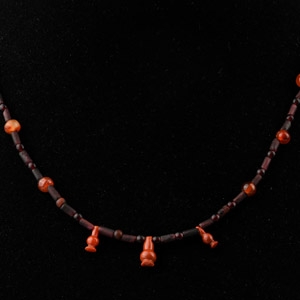
Egyptian Hardstone Bead Necklace with Jasper Poppy Amulets
New Kingdom, circa 1550-1070 B.C.Estimate: £350 - 450 (+bp*)
Opening Bid: £190
Restrung group of spherical, cylindrical, three jasper poppy seed head amulets, and other beads. 14.34 grams, 43 cm
Ex Israel collection, 1990s. This lot is accompanied by an illustrated lot declaration signed by the Head of the Antiquities Department, Dr Raffaele D'Amato. -
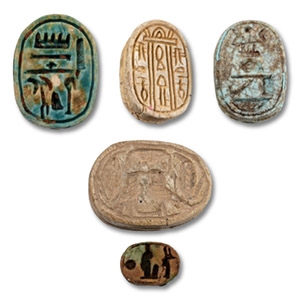
Egyptian Steatite Scarab Group
Mainly Second Intermediate Period-New Kingdom, circa 1600-1069 B.C.Sold for (Inc. bp): £260
Designs include: a line border enclosing the name of Amenhotep III and the epithet ‘Ruler of Thebes’; a line border enclosing a central shrine-like motif containing a sa and nefer sign, flanked by mirrored djed, ro, and nefer signs; a line border enclosing a bark, sun disc, wedjat, and neb signs; a Line border enclosing two facing falcons flanked by rearing cobras and a nwb (gold) sign above; a line border enclosing the phrase ‘powerful is the justice of Re’ (user-Maat-Re), which formed part of the throne name of several Ramesside pharaohs. 11.2 grams total, 9-19 mm
Acquired on the European art market in the early 2000s. with Galerie Rhéa, Zurich, Switzerland. This lot is accompanied by an illustrated lot declaration signed by the Head of the Antiquities Department, Dr Raffaele D'Amato. -
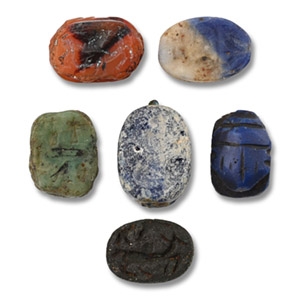
Egyptian Hardstone Scarab Group
Mainly Late Period, 664-332 B.C.Sold for (Inc. bp): £468
Most with an incuse design to the underside including cartouche of Thutmose III, lion attacking a deer, hieroglyphic text and others. 11.5 grams total, 14-18 mm
Acquired on the European art market in the early 2000s. with Galerie Rhéa, Zurich, Switzerland. This lot is accompanied by an illustrated lot declaration signed by the Head of the Antiquities Department, Dr Raffaele D'Amato.
