
Loading, please wait...

LOT 0414
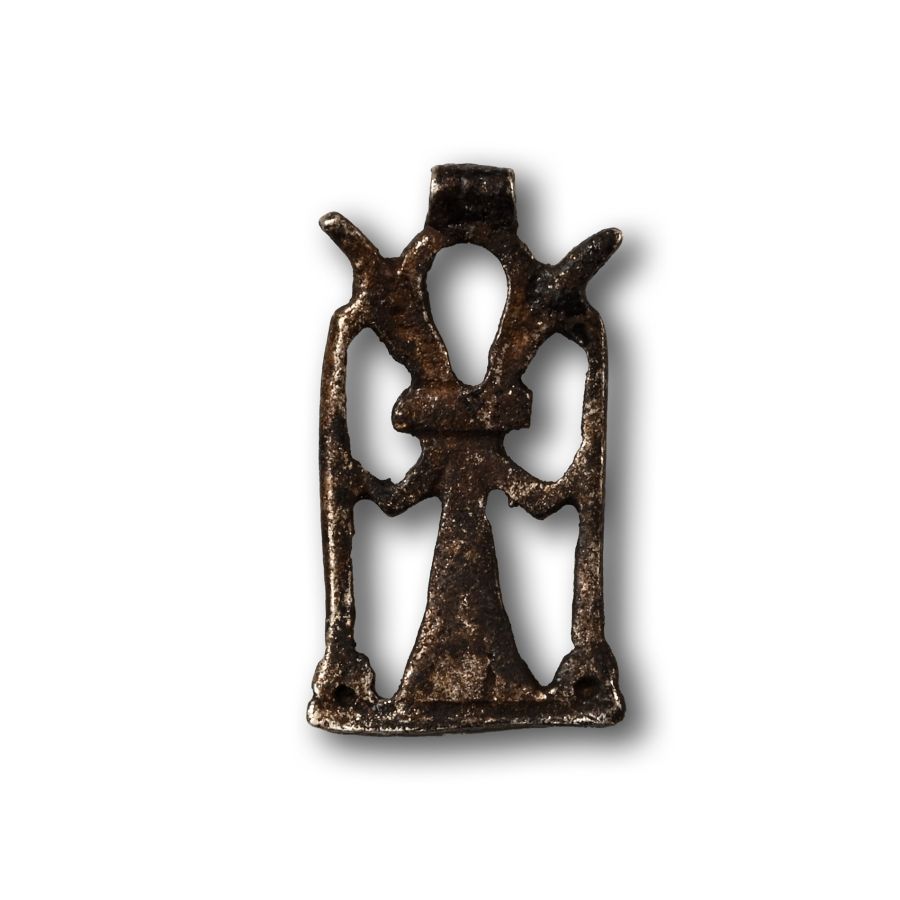
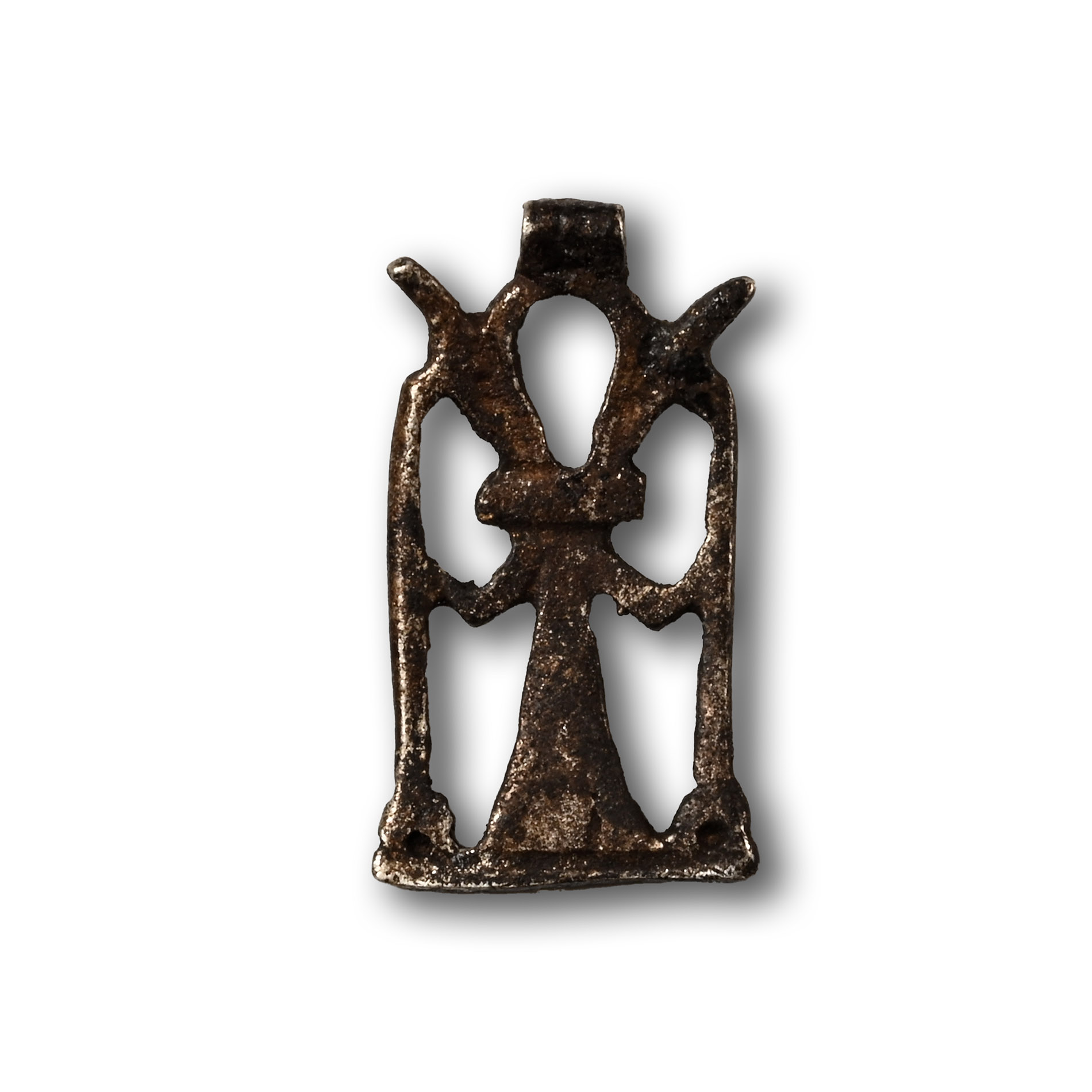
Egyptian Silver Ankh and Was-Sceptre Amulet
LATE-PTOLEMAIC PERIOD, 664-30 B.C. OR EARLIER
1/2 in. (0.31 grams, 13 mm).
A silver openwork amulet featuring an ankh with outstretched arms holding tall was-sceptres. [No Reserve]
ProvenanceFrom an early 20th century collection.
This lot is accompanied by an illustrated lot declaration signed by the Head of the Antiquities Department, Dr Raffaele D’Amato.
Cf. several comparable faience openwork amulets were discovered in the tomb of Amenhotep III (e.g. Metropolitan Museum of Art 26.7.1083), these are discussed in Hayes, W.C., The Scepter of Egypt. A Background for the Study of the Egyptian Antiquities in The Metropolitan Museum of Art, Vol. 2, New York, 1990 (reprint), p.243.
CONDITIONTimeLine Auctions follows a vetting process to ensure the authenticity and legality of all items, reinforcing our commitment to integrity and responsible trading. Each antiquity, antique, and coin lot undergoes thorough examination by a vetting committee of at least ten external specialists, professional trade association members, scientists, and archaeologists: Our Vetting Process
AUCTIONS:
TimeLine is a leading auction house specialising in antiquities, ancient art, collectables, natural history, coins, medals, and books. Our auctions offer museums, collectors, historians, and enthusiasts the opportunity to acquire unique and historically significant pieces.
-
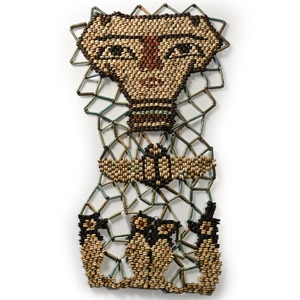
Egyptian Faience Mummy Beadwork Mask
Ptolemaic Period, 332-30 B.C.Sold for (Inc. bp): £676
A netted beadwork panel of annular and tubular glazed composition beads depicting a mummy face mask with a false beard, a scarab with extended wings below, and beneath the 'Four Sons of Horus’, Hapy, Imsety, Qebehsenuef, and Duamutef, joined together with areas of open netting of tubular examples; restrung with some later beads. 145 grams, 32 cm
Mariaud de Serres, Paris, 1990s. This lot is accompanied by an illustrated lot declaration signed by the Head of the Antiquities Department, Dr Raffaele D’Amato.
The Four Sons of Horus were deities responsible for protecting the deceased's internal organs. The human-headed Imsety protected the liver, the baboon-headed Hapy protected the lungs, the jackal-headed Duamutef protected the stomach, and the falcon-headed Qebehsenuef protected the intestines. These internal organs were often placed in canopic jars with the head of the respective Son of Horus. -
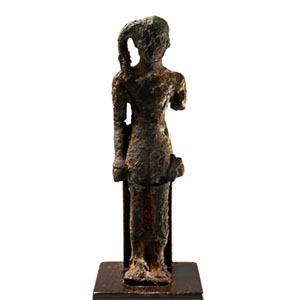
Egyptian Bronze Figurine of Harpocrates
Late Period, 664-332 B.C.Estimate: £200 - 300 (‡+bp*)
Opening Bid: £90
Modelled in the round depicted in a seated pose with bold sidelock reaching to the shoulder; kilt to the thighs, D-shaped base beneath the feet, socket to the middle of the back; provided with a custom-made display stand. 146 grams, 12.2 cm (202 grams total, 13.7 cm including stand)
with Max Hagemann, prior 1964. This lot is accompanied by an illustrated lot declaration signed by the Head of the Antiquities Department, Dr Raffaele D’Amato.
Harpocrates is the Greek rendering of the Egyptian Hor-pa-khered, which translates as 'Horus the Child', referring to Horus as the divine infant of Isis and Osiris. -
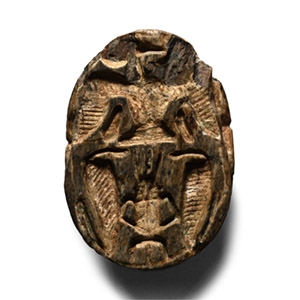
Egyptian Steatite Scarab with Bes, Vulture and Cobras
New Kingdom, 1550-1070 B.C.Sold for (Inc. bp): £247
Naturalistically carved scarab upper; underside carved with vulture atop a figure of Bes flanked by rearing cobras. 9.35 grams, 33 mm
UK private collection before 2000. Acquired on the UK art market. Property of a London gentleman. This lot is accompanied by an illustrated lot declaration signed by the Head of the Antiquities Department, Dr Raffaele D’Amato.
